


_1cbb3979.JPG)
HOA Insurance in Oregon: What Every Board Member and Homeowner Needs to Know
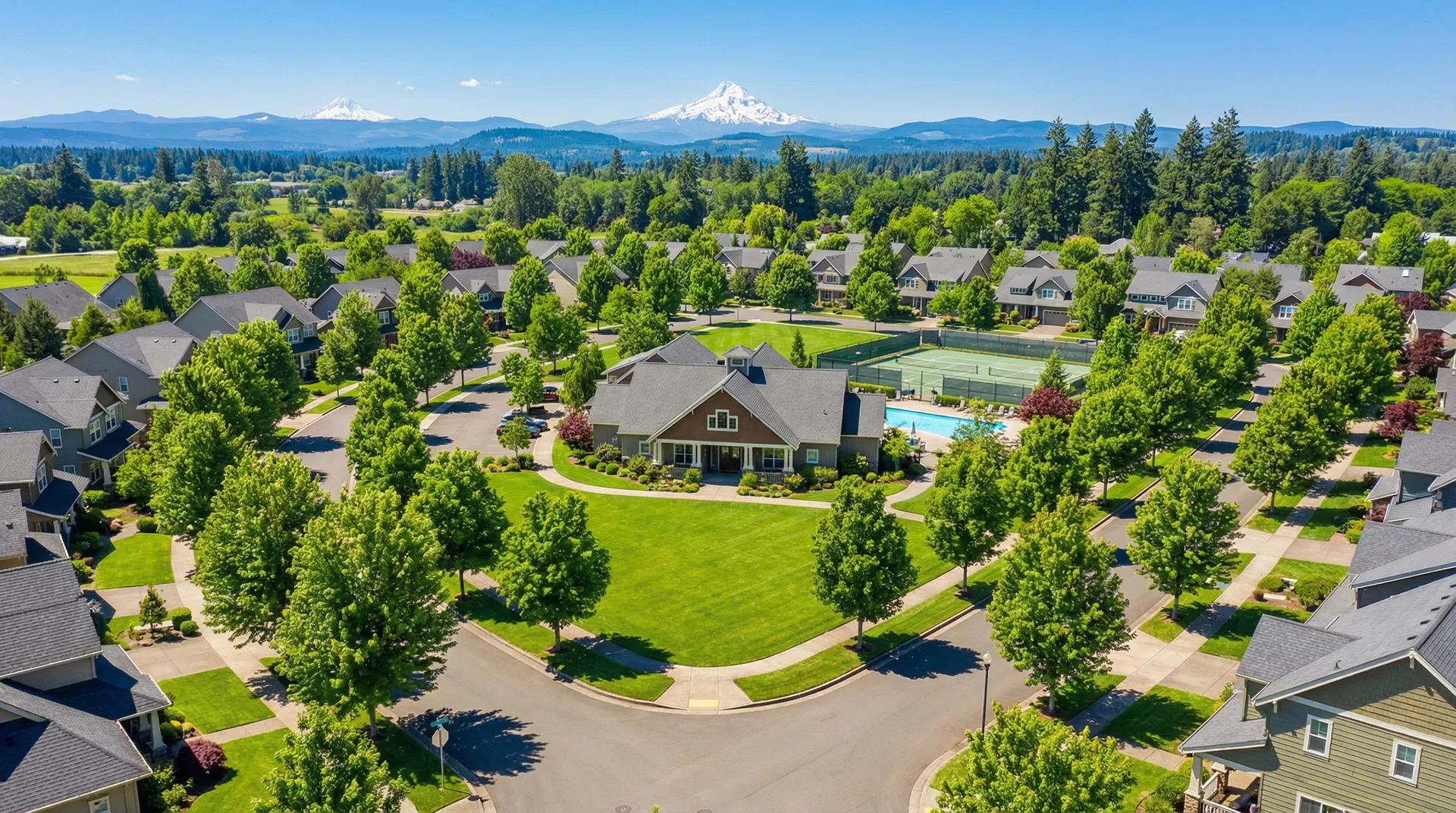
HOA Insurance in Oregon: What Every Board Member and Homeowner Needs to Know

If you serve on your homeowners association board or own a home in an HOA community, insurance is one of the most important — and most misunderstood — aspects of community governance. Oregon has more than 10,000 planned communities and condominium associations, and the number is growing rapidly, particularly in fast-developing areas like Bend, Redmond, and Wilsonville. Yet many HOA boards operate without adequate insurance coverage, and many individual homeowners do not understand the critical gap between what the HOA's master policy covers and what their own HO-6 policy must cover.
This guide explains everything Oregon HOA boards and homeowners need to know about HOA insurance — what Oregon law requires, what coverages are essential, how master policies and individual homeowner policies interact, and how to avoid the gaps that leave communities financially exposed.
What Oregon Law Requires for HOA Insurance
Oregon's Planned Community Act (ORS Chapter 94) and the Oregon Condominium Act (ORS Chapter 100) both contain specific insurance requirements for homeowners associations. Under ORS 94.675, the board of directors of a Class I or Class II planned community must obtain and maintain:
Property insurance covering all insurable improvements in the common property, written for the full replacement cost of the insured property. This means the policy must cover what it would actually cost to rebuild common area structures — not their depreciated market value.
Public liability insurance covering all occurrences commonly insured against for death, bodily injury, and property damage arising out of or in connection with the use, ownership, or maintenance of the common property.
Fidelity bond coverage for all persons who control or disburse funds of the association — including directors, officers, employees, and managing agents. Oregon law specifically requires the fidelity bond to cover computer fraud and funds transfer fraud, reflecting the modern reality that most financial fraud occurs electronically.
These are minimum requirements. Many Oregon HOAs — particularly those with amenities like swimming pools, fitness centers, or clubhouses — need significantly more comprehensive coverage than the statutory minimums provide. Working with an experienced HOA insurance specialist is the best way to ensure your association meets its legal obligations and is adequately protected.
The HOA Master Policy: What It Covers and What It Does Not
The HOA master policy is the association's primary insurance policy, covering the common elements and shared structures of the community. Understanding exactly what your master policy covers — and what it excludes — is essential for both board members and individual homeowners.
Common elements coverage includes the physical structures and amenities that all residents share: the clubhouse, swimming pool, fitness center, tennis courts, parking structures, walkways, landscaping, and the exterior of buildings in a condominium community. These are the assets the association owns and maintains, and they must be insured at full replacement cost.
The scope of building coverage varies significantly between master policies, and this is where confusion most often arises. There are three common approaches:
A bare walls-in policy covers only the structure itself — the studs, concrete, and exterior surfaces — but does not cover any interior improvements, including flooring, cabinets, countertops, or fixtures. This is the most common approach for condominium associations and places the greatest responsibility on individual unit owners to insure their own interiors.
A single entity policy covers the original construction of the building, including the standard fixtures, flooring, and finishes that were installed when the unit was built. Upgrades made by individual owners are not covered.
An all-in or all-inclusive policy covers everything within the unit walls, including owner-installed upgrades. This is the most comprehensive approach and places the least burden on individual unit owners, but it also results in higher premiums for the association.
Every homeowner in an HOA community should obtain a copy of the association's master policy declarations page and understand exactly which type of coverage applies to their community. This information is critical for determining how much coverage you need in your individual HO-6 policy.
Directors and Officers (D&O) Insurance: Protecting Your Board Members
One of the most important — and most frequently overlooked — coverages for Oregon HOAs is Directors and Officers (D&O) liability insurance. This coverage protects individual board members from personal financial liability for decisions made in their capacity as board members.
HOA board members are volunteers who make consequential decisions every day: enforcing CC&Rs, approving budgets, managing vendors, hiring and firing employees, and resolving disputes between neighbors. Any of these decisions can give rise to a lawsuit. A homeowner who believes the board enforced rules selectively, a contractor who claims wrongful termination, a resident who alleges discrimination in rule enforcement — all of these can result in claims against individual board members personally.
Without D&O insurance, board members may be personally liable for legal defense costs and judgments, even if they acted in good faith and in the best interests of the community. Many qualified community members refuse to serve on HOA boards precisely because of this personal liability exposure. D&O insurance removes that barrier and makes it possible to recruit and retain capable, engaged board members.
D&O policies for HOAs typically cover: wrongful acts by directors and officers, breach of fiduciary duty, employment-related claims (if the HOA has employees), discrimination claims in rule enforcement, and errors in financial management. Coverage is usually written on a claims-made basis, meaning the claim must be filed during the policy period to be covered.
At Insure Pacific, we strongly recommend that every Oregon HOA carry D&O insurance, regardless of community size. The cost is modest — typically $1,500 to $5,000 per year for most communities — and the protection it provides is invaluable. Request a quote for your association today.
Fidelity Bond and Crime Insurance: Protecting Association Funds
Oregon law requires HOAs to carry fidelity bond coverage for all persons who control or disburse association funds. This requirement reflects a real and significant risk: employee theft and financial fraud are among the most common claims filed by homeowners associations nationwide.
HOA boards collect monthly assessments, maintain reserve funds, and manage operating budgets that can total hundreds of thousands or even millions of dollars annually. This money passes through the hands of board members, property managers, and employees — all of whom have the opportunity to misappropriate funds. The consequences of financial fraud can be devastating: depleted reserves, special assessments on homeowners, and years of financial recovery.
A comprehensive crime insurance policy for an HOA should cover: employee theft (including theft by board members and property managers), forgery and alteration of checks, computer fraud and funds transfer fraud (specifically required by Oregon law), and theft of money and securities. Coverage limits should reflect the maximum amount of funds the association holds at any given time, including reserve accounts.
Many HOAs purchase fidelity coverage as part of a broader community association insurance package. These packages, offered by carriers who specialize in HOA insurance, bundle property, liability, D&O, and fidelity coverage into a single coordinated program — often at a lower cost than purchasing each coverage separately.
Independent Insurance Agency Since 1935
Not Sure If You Have the Right Coverage?
Our licensed agents compare 50+ carriers to find you the best coverage at the right price — at no extra cost to you.
General Liability: Protecting Against Common Area Injuries
The HOA's general liability policy covers bodily injury and property damage claims arising from the common areas and shared amenities of the community. This is where the association's most frequent claims originate: slip-and-fall accidents on icy walkways, swimming pool injuries, playground accidents, injuries in the fitness center, and incidents in the parking lot.
For Oregon HOAs, general liability coverage limits should reflect the amenities and foot traffic of the community. A small community with no amenities beyond a common green space may be adequately covered with $1 million per occurrence. A community with a swimming pool, fitness center, and clubhouse that hosts regular events should carry at least $2 million per occurrence, and an umbrella policy is strongly recommended.
Swimming pools deserve special attention. Pool-related injuries — drowning, diving accidents, slip-and-fall on pool decks — are among the most severe and costly claims in the HOA insurance world. If your community has a pool, your liability coverage must specifically address pool operations, and your safety protocols (fencing, signage, depth markers, emergency equipment) must meet Oregon's requirements under ORS 431A.
Equipment Breakdown: Protecting Your Community's Infrastructure
Modern HOA communities rely on complex mechanical and electrical systems: HVAC systems in clubhouses, elevators in multi-story buildings, pool filtration and heating equipment, irrigation systems, generators, and security systems. When this equipment fails, the cost of repair or replacement can be substantial — and standard property insurance policies typically exclude mechanical breakdown.
Equipment breakdown insurance (also called boiler and machinery insurance) covers the cost of repairing or replacing equipment that fails due to mechanical or electrical breakdown, including the cost of expediting repairs to minimize downtime. For communities with elevators, this coverage is particularly important — elevator breakdowns can create significant accessibility issues and liability exposure.
Flood and Earthquake Insurance: Oregon's Hidden Risks
Standard HOA master policies do not cover flood or earthquake damage. In Oregon, both of these perils represent significant — and often underestimated — risks.
Flood insurance is essential for HOA communities located near rivers, streams, or in low-lying areas. The Willamette Valley, coastal communities, and many Central Oregon communities near the Deschutes River face meaningful flood risk. Flood insurance is available through the National Flood Insurance Program (NFIP) or through private flood carriers. NFIP policies for commercial properties (including HOA common areas) can be purchased in amounts up to $500,000 for the building and $500,000 for contents. Private flood insurance often provides higher limits and broader coverage.
Earthquake insurance is a critical gap for Oregon HOA communities. Oregon sits atop the Cascadia Subduction Zone, one of the most seismically active fault systems in North America. A major Cascadia earthquake — which scientists estimate has a 10-15 percent probability of occurring in the next 50 years — could cause catastrophic damage to buildings and infrastructure across the Pacific Northwest. The Oregon Office of Emergency Management and FEMA both recommend that Oregon property owners carry earthquake insurance, yet most HOA master policies exclude earthquake damage entirely.
Our earthquake insurance specialists can help your association evaluate the seismic risk in your community and find coverage that addresses this critical gap. We also work with communities on flood insurance solutions tailored to Oregon's diverse geography.
The Gap Between HOA Master Policy and Individual Homeowner Coverage
One of the most important concepts for homeowners in HOA communities to understand is the gap between what the association's master policy covers and what their individual HO-6 policy must cover. This gap can be financially devastating if a homeowner does not understand it before a loss occurs.
If your community has a bare walls-in master policy, your HO-6 policy must cover all interior improvements — flooring, cabinets, countertops, appliances, light fixtures, and any upgrades you have made since purchasing the unit. If a pipe bursts in a common wall and floods your unit, the association's policy will cover the common area damage, but your HO-6 policy must cover the damage to your interior.
Loss assessment coverage is a particularly important component of individual homeowner insurance in HOA communities. If the association suffers a major loss that exceeds its master policy limits — or a loss that is not covered by the master policy — the board may levy a special assessment against all homeowners to cover the shortfall. Loss assessment coverage in your HO-6 policy covers your share of such an assessment, up to your policy limit. Most standard HO-6 policies include only $1,000 in loss assessment coverage, which is rarely adequate. We recommend increasing this limit to at least $25,000 to $50,000.
How Much Does HOA Insurance Cost in Oregon?
The cost of HOA master policy insurance in Oregon depends on the size of the community, the value of common area structures, the amenities present, the community's claims history, and its location. As a general guide:
A small planned community with 20-50 homes, no amenities beyond common green space, and $500,000 in common area improvements might pay $3,000 to $8,000 per year for a comprehensive master policy including property, liability, D&O, and fidelity coverage.
A mid-size community with 100-200 homes, a clubhouse, swimming pool, and fitness center might pay $15,000 to $35,000 per year for comprehensive coverage.
A large condominium association with 200+ units, multiple buildings, elevators, and extensive amenities could pay $50,000 to $150,000 or more annually, depending on building values and claims history.
These are general ranges — your actual premium will depend on your specific community's characteristics. The best way to understand your options and costs is to work with an independent agent who specializes in community association insurance.
Choosing the Right HOA Insurance Agent in Oregon
HOA insurance is a specialty area that requires an agent with specific expertise in community association coverage, Oregon law, and the carriers who specialize in this market. Not every insurance agent has the knowledge or carrier relationships to properly serve an HOA board.
When evaluating agents for your HOA insurance, look for experience with community associations, familiarity with Oregon's statutory requirements under ORS Chapter 94 and ORS Chapter 100, access to carriers who specialize in HOA and condominium association coverage, and the ability to provide a comprehensive coverage review that identifies gaps in your current program.
At Insure Pacific, our commercial insurance team has extensive experience serving Oregon HOA communities of all sizes — from small planned communities in Central Oregon to large condominium associations on the Oregon Coast. We work with carriers who specialize in community association insurance, and we can provide a comprehensive coverage review that ensures your association meets its legal obligations and is protected against the risks that matter most.
Whether your community is in Bend, Redmond, Sisters, Portland, Eugene, or anywhere else in Oregon, Insure Pacific can help you build an HOA insurance program that protects your community, your board members, and your homeowners. Request a free quote online, call us at (541) 238-7775, or visit our contact page to connect with a licensed commercial insurance agent who specializes in Oregon HOA coverage. You can also learn more about our HOA insurance services and our broader commercial insurance offerings for Oregon businesses and organizations.
Ready to Get Protected?
Talk to a Local Oregon Insurance Expert
Insure Pacific has been serving Oregon families and businesses since 1935. We work with 50+ carriers so you get real options — not just one company's answer.
Get in Touch
Ready to protect what matters most? Contact us today for a no-obligation insurance review. Our experienced agents are here to help you find the right coverage for your needs.


Monica
Insurance Specialist
Hi there! 👋
I'm the AI version of Monica here at Insure Pacific!
Ask me anything about insurance — home, auto, farm, commercial, wildfire, and more. I can answer your questions directly or connect you with one of our agents.