



When the Claim Is Denied: How an Independent Agent Fights for You
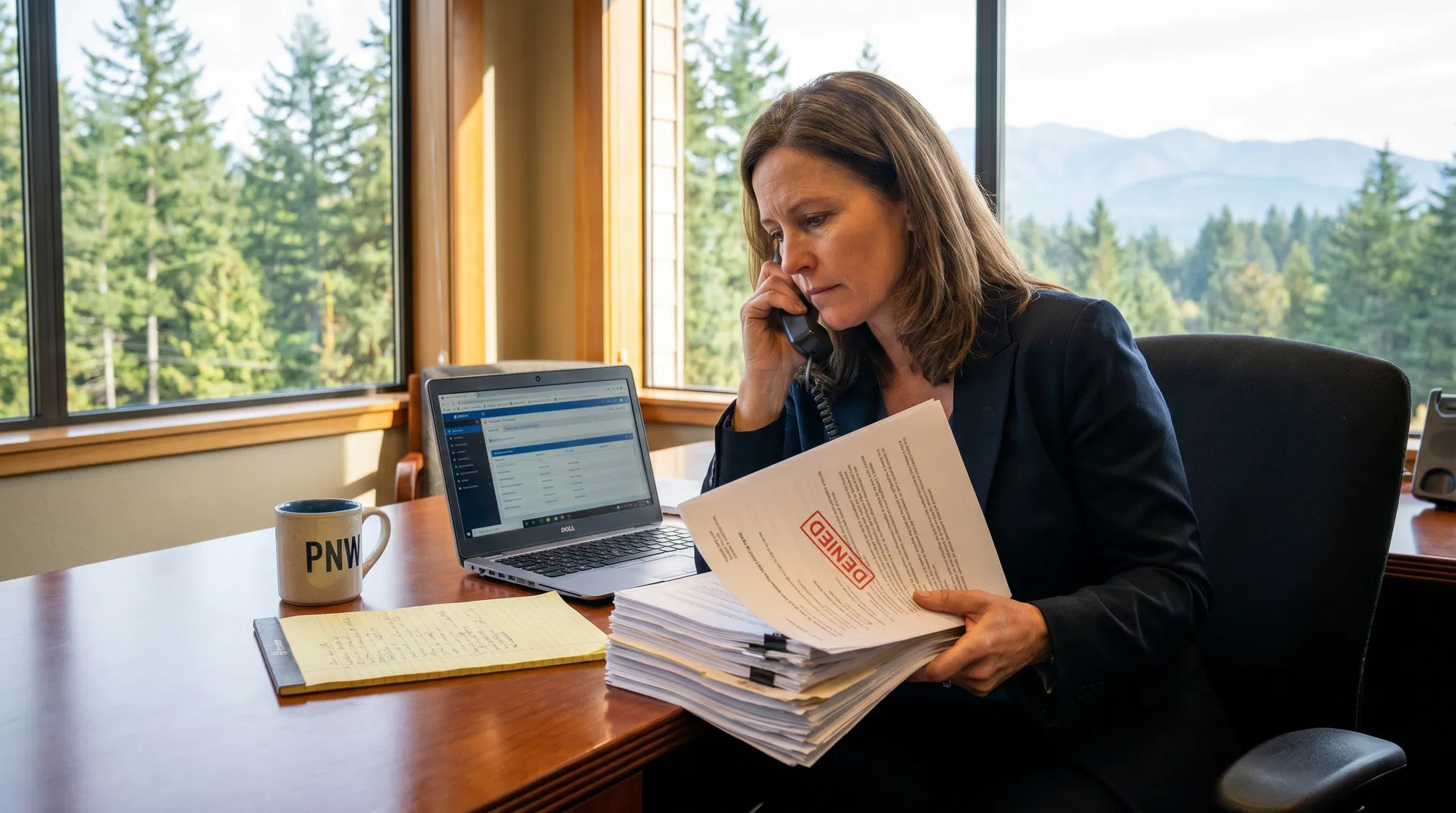
When the Claim Is Denied: How an Independent Agent Fights for You

The letter arrives in the mail — or these days, in your email inbox. "We regret to inform you that your claim has been denied." Or perhaps it's not a flat denial but something almost worse: a settlement offer that is a fraction of what you actually lost. If you purchased your insurance through a direct carrier or an online platform, your next step is to call an 800 number and navigate a phone tree. If you purchased through an independent agent, your next step is to call someone who already knows your name, your policy, and exactly what happened — and who has a direct line to the underwriter.
This is the conversation that rarely happens in insurance marketing, because it requires carriers to acknowledge that claims get denied wrongly, and it requires agents to explain exactly what they do when that happens. We're going to have that conversation here — with real scenarios, real tactics, and a frank look at what the advocacy relationship between an independent insurance agent and a client actually looks like when things go wrong.
Has Your Claim Been Denied or Underpaid?
Insure Pacific's licensed agents have been advocating for Oregon and American West policyholders since 1935. If your claim has been denied, delayed, or settled for less than it should be — call us before you accept anything.
Why Claims Get Denied — And Why "Denied" Isn't Always the Final Word
Insurance carriers deny claims for a range of reasons, some legitimate and some that don't hold up under scrutiny. Understanding the difference is the first thing an experienced agent does when a client calls with a denial letter in hand.
| Denial Reason | Carrier's Argument | Agent's Counter-Move |
|---|---|---|
| Exclusion applied | The policy excludes this specific cause of loss | Review exclusion language for ambiguity; check if endorsements override the exclusion; apply Oregon's concurrent causation doctrine |
| Late notice of claim | You didn't report the loss within the required timeframe | Demonstrate that the carrier suffered no prejudice from the delay; cite Oregon ORS 742.061 which limits late-notice defenses when no prejudice exists |
| Misrepresentation on application | Information on the original application was inaccurate | Review what was actually asked vs. answered; determine if the alleged misrepresentation was material to the loss; check Oregon's rescission statutes |
| Valuation dispute | The settlement offer reflects the property's actual cash value | Invoke the policy's appraisal clause; obtain independent contractor estimates; document replacement cost with current market pricing |
| Wear and tear exclusion | The damage is due to gradual deterioration, not a covered peril | Establish the triggering event (storm, freeze, impact) that caused or accelerated the damage; obtain engineering or contractor documentation |
| Vacancy exclusion | The property was vacant beyond the policy's permitted vacancy period | Review the policy's definition of 'vacancy'; determine if the property meets the legal threshold; check for endorsements that extend the vacancy period |
The key insight here is that a denial letter is a position, not a verdict. Carriers know that a significant percentage of policyholders will accept a denial without challenge. An independent agent changes that calculus immediately — because the agent knows the policy, knows the carrier's claims department, and knows exactly which arguments are worth pursuing.
Scenario 1: The Wildfire Claim and the "Wear and Tear" Denial
Anonymized Client Scenario — Central Oregon Homeowner
A homeowner in a rural Central Oregon community filed a claim after a wildfire caused smoke and ember damage to their roof and HVAC system. The carrier's adjuster inspected the property and issued a partial denial, stating that the roof damage was attributable to "pre-existing wear and deterioration" rather than the fire event. The settlement offer covered only the HVAC replacement — roughly 30% of the total estimated repair cost.
This is one of the most common tactics carriers use after wildfire events: attributing damage to pre-existing conditions to reduce or deny the claim. The homeowner's independent agent immediately requested the full claims file, including the adjuster's field notes and the specific policy language cited in the denial. The agent then arranged for an independent roofing contractor to inspect the property and document that the ember damage had penetrated the roof decking in multiple locations — damage that was clearly not pre-existing.
The agent submitted a formal written appeal to the carrier's claims supervisor, attaching the contractor's report, photographs with timestamps from the day of the fire, and a citation to Oregon's concurrent causation doctrine — which holds that when a covered peril (wildfire) combines with an excluded condition (wear and tear) to produce a loss, the covered peril controls. The carrier reversed the denial within three weeks and issued a full settlement for roof replacement and HVAC. The homeowner's wildfire coverage had worked exactly as intended — but only because someone knew how to make the carrier honor it.
Scenario 2: The Auto Total Loss Lowball
Anonymized Client Scenario — Oregon Auto Policyholder
A client's pickup truck was totaled in a collision. The carrier's initial settlement offer was $24,500 — based on a computer-generated valuation report that used comparable vehicles from out-of-state markets. The client had recently replaced the tires, added a bed liner, and installed a towing package — none of which were reflected in the offer. Comparable trucks in the Central Oregon market were selling for $31,000–$34,000.
Total loss valuations are one of the most contested areas in personal auto claims. Carriers use automated valuation tools that often pull comparable vehicles from lower-cost markets, ignore recent improvements, and apply condition adjustments that favor the carrier. The client's agent pulled local dealer listings for comparable trucks, documented the recent upgrades with receipts, and submitted a formal dispute under the policy's appraisal provision — which requires the carrier to engage an independent appraiser when the parties cannot agree on value.
The appraisal process resulted in a revised settlement of $31,800 — an increase of over $7,300 from the original offer. The process took approximately six weeks. Without an agent who knew to invoke the appraisal clause and how to document the vehicle's actual market value, the client would have accepted a settlement that was thousands of dollars short of what they were owed under their auto insurance policy.
Scenario 3: The Commercial Liability Exclusion That Wasn't
Anonymized Client Scenario — Oregon Small Business Owner
A small landscaping business was sued by a property owner after a crew member allegedly damaged an underground irrigation system during a job. The carrier denied the claim under the "damage to property in the care, custody, or control" exclusion — arguing that the irrigation system was in the contractor's care at the time of the damage. The lawsuit sought $85,000 in damages.
The "care, custody, or control" exclusion is one of the most frequently misapplied exclusions in commercial general liability policies. The exclusion is intended to prevent coverage for property that the insured is directly responsible for — like a contractor who damages a client's furniture while moving it. It is not intended to exclude coverage for incidental damage to property that the insured happens to be working near. The agent reviewed the policy language carefully and found that the exclusion applied only to property "in the care, custody, or control" of the insured — and that an underground irrigation system, which the landscaping crew had no knowledge of and no responsibility for, did not meet that standard.
The agent submitted a written coverage position letter to the carrier's claims supervisor, citing the specific policy language, the ISO CGL form's intent, and two Oregon court decisions interpreting the exclusion narrowly. The carrier reversed the denial and provided a defense. The case ultimately settled for $22,000 — well within the policy's limits. Without an agent who understood the nuances of commercial general liability coverage, the business owner would have faced an $85,000 lawsuit with no defense.
What an Independent Agent Actually Does When Your Claim Is Denied
The advocacy process is not glamorous, and it doesn't always look like a dramatic confrontation. Most of it is methodical, document-intensive work that happens behind the scenes. Here is what a good independent agent does — step by step — when a client calls with a denial:
Request the Full Claims File
Under Oregon law, policyholders have the right to request a complete copy of their claims file, including adjuster notes, internal communications, and the specific policy provisions cited in the denial. Most policyholders don't know this. Agents do.
Read the Policy — All of It
Denial letters cite specific exclusions or conditions. Agents read the actual policy language — not just the exclusion, but the definitions section, the endorsements, and any state-specific amendatory endorsements that may modify the exclusion. Ambiguous policy language is interpreted in favor of the insured under Oregon law.
Document the Loss Independently
Carrier adjusters work for the carrier. An independent agent helps clients obtain their own documentation — contractor estimates, engineering reports, photographs, receipts, and expert opinions — that supports the full value of the claim.
Submit a Formal Written Appeal
A phone call to the claims department is rarely enough. A formal written appeal, citing specific policy language, relevant Oregon statutes, and supporting documentation, creates a record and escalates the matter to a supervisor or coverage counsel.
Invoke Policy Remedies
Most policies contain built-in dispute resolution mechanisms — appraisal clauses for valuation disputes, mediation provisions, and in some cases arbitration. Agents know when and how to invoke these provisions to force a fair resolution without litigation.
Escalate to the Oregon Insurance Division
If a carrier is acting in bad faith — delaying, misrepresenting policy provisions, or failing to conduct a reasonable investigation — a complaint to the Oregon Insurance Division creates regulatory pressure. Oregon's Unfair Claims Settlement Practices Act (ORS 746.230) gives the Division real enforcement authority.
Independent Agent vs. Direct Carrier: The Claim Experience Compared
The difference between having an independent agent and buying direct from a carrier becomes most visible at claim time. Here is an honest comparison of what the experience typically looks like:
| Situation | Direct / 800-Number Carrier | Independent Agent |
|---|---|---|
| First call after a loss | Call center representative reads from a script; opens a claim number | You call your agent directly; they know your policy, your property, and your history |
| Adjuster assignment | Random assignment from a pool; adjuster may have no knowledge of your area | Agent can advocate for a local or specialist adjuster; flags the file for appropriate handling |
| Denial letter received | You receive a letter with a phone number to call; you navigate the appeals process alone | Agent reviews the denial immediately, identifies whether it's defensible, and begins the appeal process |
| Valuation dispute | You negotiate directly with the carrier's adjuster, who works for the carrier | Agent helps document actual value, invokes the appraisal clause, and negotiates from a position of knowledge |
| Coverage gap discovered | You learn about the gap at claim time; no recourse | Agent reviews coverage annually and flags gaps before a loss occurs; may have E&O coverage if a gap was missed |
| Bad faith behavior | You hire an attorney at your own expense | Agent escalates to carrier management, files a regulatory complaint, and connects you with coverage counsel if needed |
Oregon-Specific Policyholder Protections You Should Know
Oregon has some of the strongest policyholder protection statutes in the American West. An experienced Oregon-licensed agent knows how to use these laws as leverage when a carrier is not acting in good faith:
ORS 742.061 — Prompt Payment
Carriers must acknowledge a claim within 10 days and accept or deny within 30 days of receiving proof of loss. Violations can result in attorney fee awards against the carrier.
ORS 746.230 — Unfair Claims Practices
Prohibits carriers from misrepresenting policy provisions, failing to conduct a reasonable investigation, or offering unreasonably low settlements. Violations are reportable to the Oregon Insurance Division.
Concurrent Causation Doctrine
Oregon courts have held that when a covered peril combines with an excluded peril to cause a loss, the covered peril controls. This is especially important in wildfire, water damage, and storm claims.
Policy Ambiguity Rule
Under Oregon law, ambiguous policy language is interpreted in favor of the insured. An experienced agent reads policy language with this principle in mind and identifies ambiguities that support coverage.
Appraisal Clause
Most Oregon property policies contain an appraisal provision that allows either party to demand an independent appraisal of the loss when there is a valuation dispute. This is a powerful tool that many policyholders never use.
Oregon Insurance Division Complaints
Filing a complaint with the Oregon Insurance Division is free, creates a regulatory record, and often prompts carriers to reconsider their position — especially if the carrier has a pattern of similar complaints.
When an Agent Can't Help — And What to Do Next
Honest Disclosure
There are situations where an agent's advocacy reaches its limits. If a claim is legitimately excluded under clear policy language, if the policyholder failed to disclose a material fact at application, or if the loss falls outside the policy's scope, an agent cannot manufacture coverage that doesn't exist. In those cases, a good agent will tell you the truth — and help you understand your options, including whether an attorney or public adjuster might be appropriate.
When a claim dispute cannot be resolved through the agent's advocacy or the policy's internal dispute mechanisms, the next step is typically a public adjuster or a coverage attorney. Public adjusters are licensed professionals who work exclusively for policyholders — not carriers — and are paid a percentage of the final settlement. Coverage attorneys handle bad faith litigation and can pursue attorney fee awards under Oregon's prompt payment statutes. Your independent agent can refer you to reputable professionals in both categories.
The most important thing to understand is that accepting a denial or a lowball settlement without challenge is almost always the wrong move. The cost of challenging a denial — through your agent's advocacy, an appraisal process, or a regulatory complaint — is typically zero or minimal. The cost of accepting a bad settlement can be tens of thousands of dollars. This is especially true for homeowners insurance claims, commercial property claims, and any claim involving significant structural damage.
Why the Relationship Matters More Than the Premium
Insurance is a financial product, and it's tempting to shop it purely on price. But the premium you pay at renewal is not the only cost of your insurance program — the quality of your claims experience is part of the total cost, and it's a cost that only becomes visible when something goes wrong.
An independent agent who has placed your homeowners policy, your auto coverage, and your umbrella policy knows your situation in a way that no call center representative ever will. They know that you added a home office last year, that you have a teenage driver, that you own a vacation property in Idaho, and that your business operates out of your garage. That context matters enormously when a claim is filed — because it shapes how the claim is presented, what documentation is gathered, and which policy provisions are most relevant.
Insure Pacific has been serving Oregon and American West policyholders since 1935. In that time, we've seen carriers come and go, policy forms change, and claims environments shift dramatically. What hasn't changed is the fundamental value of having a licensed, experienced agent who knows your name, knows your coverage, and knows how to fight for you when the system doesn't work the way it should.
Don't Navigate a Denied Claim Alone
Whether your claim was just denied, you received a lowball settlement offer, or you're concerned about a coverage gap — Insure Pacific's licensed agents are here to review your situation and tell you exactly what your options are. No obligation, no cost.
What to Do Immediately After Receiving a Claim Denial
Claim Denial Response Checklist
Frequently Asked Questions
Can my insurance agent really force a carrier to reverse a denial?
Not force — but advocate effectively. An agent can submit formal written appeals, invoke policy dispute mechanisms like appraisal clauses, escalate to carrier management, and file regulatory complaints with the Oregon Insurance Division. In many cases, a well-documented appeal from a licensed agent is enough to prompt a reversal. When it isn't, the agent can connect you with a public adjuster or coverage attorney who has additional legal tools.
How long do I have to appeal a denied claim in Oregon?
It depends on the type of policy and the specific denial. Most property policies require you to file suit within two years of the date of loss. However, internal appeal deadlines can be much shorter — sometimes 30 to 60 days. The most important thing is to act quickly. Contact your agent the day you receive a denial letter.
What is a public adjuster and when should I hire one?
A public adjuster is a licensed professional who works exclusively for policyholders — not carriers — to document, value, and negotiate insurance claims. They are typically paid 10–15% of the final settlement. They are most valuable on large, complex property claims (fire, flood, commercial losses) where the documentation and negotiation process is extensive. Your independent agent can refer you to a reputable public adjuster if your claim warrants it.
Does my agent get paid to help me with a claim?
No — claim advocacy is part of the service relationship, not a separate billable service. Your agent earns a commission when your policy is placed and renewed. Helping you through a claim is part of what that commission covers. This is one of the most important distinctions between an independent agent and a direct carrier: the agent's financial interest is in maintaining your long-term relationship, not in minimizing your claim.
What if my agent placed me in a policy that had a gap that caused my claim to be denied?
Licensed insurance agents carry Errors and Omissions (E&O) insurance specifically for this situation. If your agent failed to recommend appropriate coverage, failed to place coverage you requested, or made a material error in your application, you may have a claim against the agent's E&O policy. A good agent will acknowledge this possibility honestly and help you navigate the process.
Insure Pacific Has Been Fighting for Oregon Policyholders Since 1935
Whether you need a policy review, help with a current claim, or just want to understand what your coverage actually covers — our licensed agents are here. We work with 50+ carriers across 10 states, and we work for you — not for the carrier.
Our Licensed Coverage Area
States highlighted in blue are states where Insure Pacific holds an active insurance license.
Hover to highlight — click a state to visit its insurance page
Our Oregon Office Locations
Hover over a marker to see the office — click to visit their website.
Hover to highlight — click to visit that office's website
Ready to Get Protected?
Talk to a Local Oregon Insurance Expert
Insure Pacific has been serving Oregon families and businesses since 1935. We work with 50+ carriers so you get real options — not just one company's answer.
Related Articles
 Commercial Insurance
Buying a Commercial Building: Insurance Questions to Answer Before Closing
Read Article → Farm & Ranch
One Ranch, Several Policies: Coordinating Home, Farm, Commercial Auto, and Umbrella Insurance
Read Article → Commercial Insurance
Non-Emergency Medical Transportation Insurance: Passenger Injuries, Wheelchair Lifts, Driver Screening, Contracts & Commercial Auto Limits
Read Article → Personal Insurance
Full-Time RV Insurance: When Your Motorhome Becomes Your Primary Home
Read Article →Get in Touch
Ready to protect what matters most? Contact us today for a no-obligation insurance review. Our experienced agents are here to help you find the right coverage for your needs.


