



Gas Station & Convenience Store Insurance Oregon: The Complete Guide (2026)
Gas Station & Convenience Store Insurance Oregon: The Complete Guide (2026)

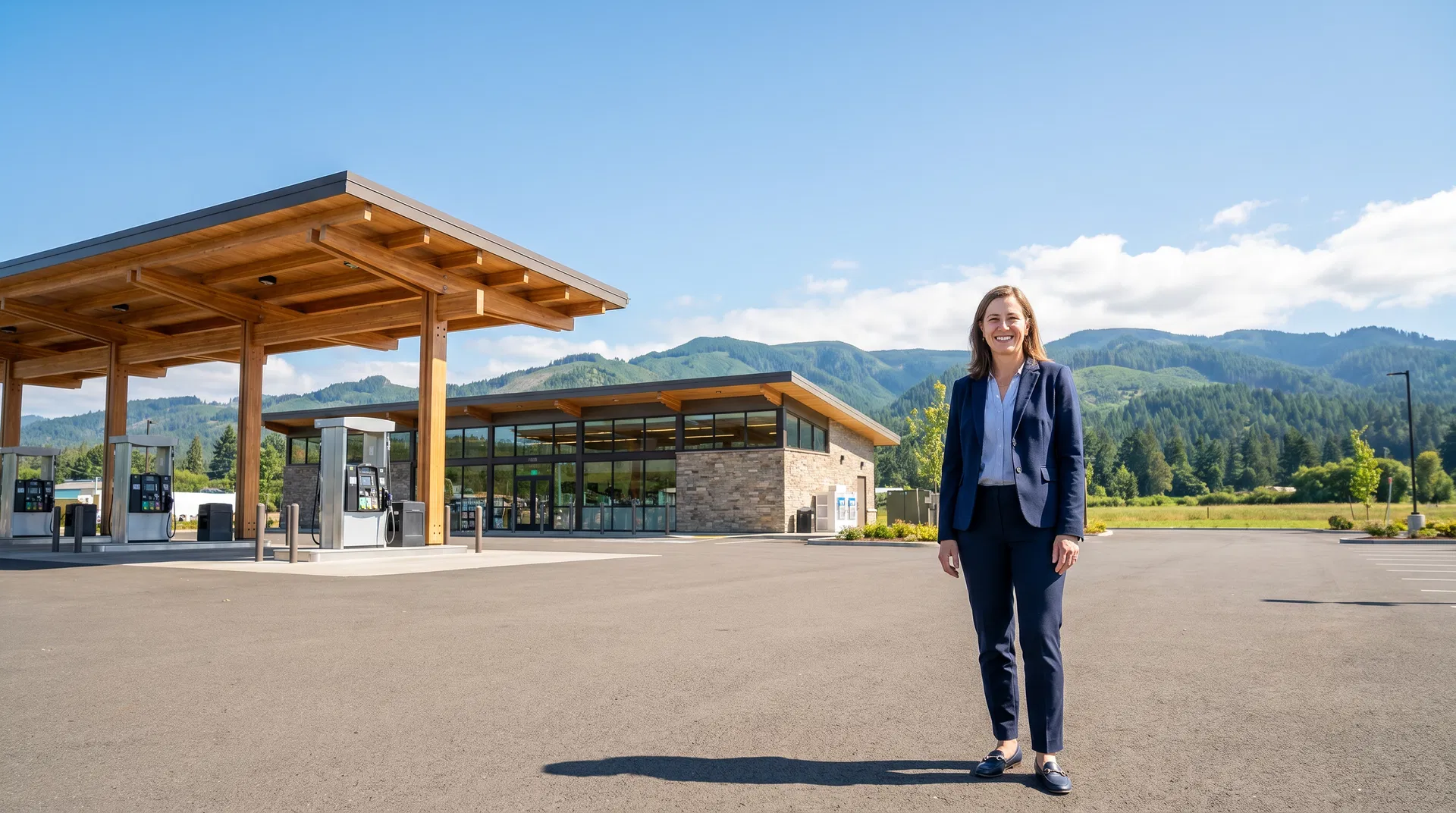
Running a gas station or convenience store in Oregon means managing one of the most complex risk profiles in the small business world. You are simultaneously a fuel retailer, a food service operator, a property owner, and in many cases a tobacco and lottery retailer — all under one roof. This guide explains every coverage type you need, the Oregon-specific exposures that can catch operators off guard, and how an independent commercial insurance agent can find the right program at a competitive price.
Get a Gas Station Insurance Quote
Insure Pacific shops 50+ carriers for Oregon fuel retailers and c-stores.
Why Gas Station Insurance Is Different From Other Commercial Policies
Most commercial insurance programs are designed for businesses that either store hazardous materials or serve the public — not both simultaneously. Gas stations and convenience stores do both, which is why standard Business Owner's Policies (BOPs) often exclude or severely limit the coverage that fuel retailers actually need. Underground storage tanks, fuel spills, tobacco liability, and food service operations each require specific endorsements or standalone policies that a generic commercial package will not automatically include.
Oregon adds another layer of complexity. The Oregon Department of Environmental Quality (DEQ) regulates underground storage tanks under the Underground Storage Tank Program, and operators face strict cleanup liability requirements that can exceed $1 million for a single release event. Without the right pollution liability coverage, a fuel leak from an aging UST can become an existential financial event for an otherwise healthy business. Insure Pacific's commercial insurance specialists understand these Oregon-specific requirements and can structure a program that meets them.
The 10 Essential Coverage Types for Oregon Gas Stations
1. General Liability Insurance
General liability is the foundation of any gas station insurance program. It covers bodily injury and property damage claims arising from your premises and operations — slip-and-fall accidents at the pump, injuries in the convenience store, and damage caused by your employees. For a gas station with significant foot traffic, limits of at least $1 million per occurrence and $2 million aggregate are standard, with many operators carrying a commercial umbrella policy on top for additional protection.
2. Commercial Property Insurance
Commercial property coverage protects your building, canopy, fuel pumps, underground storage tanks (above-ground components), convenience store inventory, refrigeration equipment, point-of-sale systems, and signage. In Central Oregon, where wildfire risk has increased significantly, ensuring your property policy includes wildfire coverage with adequate replacement cost limits is essential. Many gas station operators are underinsured on their canopy and pump equipment — these are expensive to replace and often overlooked in initial policy applications.
3. Underground Storage Tank (UST) Liability
This is the coverage that separates a well-structured gas station program from an inadequate one. UST liability covers third-party bodily injury and property damage claims, as well as cleanup costs, resulting from a release from your underground fuel storage tanks. Oregon DEQ requires UST operators to demonstrate financial responsibility for cleanup costs — typically $1 million per occurrence for petroleum USTs. Most standard commercial policies exclude pollution events entirely, making standalone UST liability coverage non-negotiable for fuel retailers.
4. Pollution Liability
Even with UST coverage, a broader pollution liability policy is worth considering for gas stations. Pollution liability covers fuel spills at the surface (not just from underground tanks), vapor intrusion claims from neighboring properties, and cleanup costs for above-ground releases. If you have a car wash, the discharge from wash water can also create pollution liability exposure that a standard policy will not cover.
5. Workers' Compensation
Oregon requires workers' compensation insurance for virtually all employers with one or more employees. Gas station and convenience store employees face a range of occupational hazards: fuel exposure, slip-and-fall injuries, robbery-related trauma, repetitive motion injuries from cashiering, and burns from food service equipment. Workers' comp pays for medical treatment and lost wages for injured employees and protects the business from direct liability for workplace injuries.
6. Commercial Auto Insurance
If your business owns vehicles — delivery trucks, fuel tankers, service vehicles — you need commercial auto insurance. If employees use their personal vehicles for business purposes (making bank deposits, picking up supplies), hired and non-owned auto coverage fills the gap between their personal policies and your business liability. This is a frequently overlooked exposure for small gas station operators.
7. Business Interruption Insurance
A gas station that cannot pump fuel is generating zero revenue. Business interruption insurance replaces lost income and covers ongoing fixed expenses (rent, loan payments, utilities) when your business is forced to close due to a covered property loss — fire, storm damage, equipment failure, or a DEQ-ordered closure for a UST release. For a high-volume fuel retailer, even a few days of closure can mean tens of thousands of dollars in lost revenue.
8. Equipment Breakdown Coverage
Fuel pumps, point-of-sale systems, refrigeration units, car wash equipment, and HVAC systems are all subject to mechanical and electrical breakdown. Equipment breakdown coverage (sometimes called boiler and machinery coverage) pays for repair or replacement of this equipment and the business interruption losses while it is out of service. Standard property policies cover damage from external causes (fire, theft) but exclude mechanical breakdown — this endorsement fills that gap.
9. Cyber Liability Insurance
Gas stations are high-value targets for payment card skimming and point-of-sale system breaches. A single data breach involving customer payment card data can trigger notification costs, PCI DSS fines, and class action liability that can easily exceed $100,000 for a small operator. Cyber liability insurance covers breach response costs, notification expenses, credit monitoring for affected customers, and third-party liability claims.
10. Liquor Liability (If Applicable)
If your convenience store sells beer and wine, Oregon's dram shop law (ORS 471.565) creates potential liability if a customer purchases alcohol from your store and subsequently causes injury to a third party. Liquor liability coverage protects against these claims and is required by most commercial landlords as a lease condition for alcohol retailers.
| Coverage Type | What It Covers | Required? |
|---|---|---|
| General Liability | Slip-and-fall, premises injuries, property damage to others | Lenders/landlords require it |
| Commercial Property | Building, canopy, pumps, inventory, equipment | Lenders require it |
| UST Liability | Underground tank releases, cleanup costs, third-party claims | Oregon DEQ financial responsibility |
| Pollution Liability | Surface spills, vapor intrusion, above-ground releases | Strongly recommended |
| Workers' Compensation | Employee injuries, medical, lost wages | Required by Oregon law |
| Commercial Auto | Business vehicles, hired/non-owned auto | Required if you own vehicles |
| Business Interruption | Lost income during covered closure | Strongly recommended |
| Equipment Breakdown | Pump failure, POS systems, refrigeration | Strongly recommended |
| Cyber Liability | Data breaches, card skimming, PCI fines | Strongly recommended |
| Liquor Liability | Dram shop claims if you sell alcohol | Required if selling beer/wine |
Oregon-Specific Risks for Gas Station Operators
Oregon DEQ Underground Storage Tank Program
Oregon has approximately 3,500 active underground storage tank systems, and the DEQ's UST Program actively monitors compliance with leak detection, corrosion protection, and spill prevention requirements. Operators who fail to maintain compliant UST systems face civil penalties of up to $10,000 per day per violation, in addition to cleanup liability. The DEQ's Financial Responsibility requirements mandate that UST operators demonstrate the ability to pay for cleanup costs — typically through insurance, a financial test, or a state fund contribution.
Oregon's Full-Service Fueling Law
Oregon is one of only two states (along with New Jersey) that historically required attendant-assisted fueling at gas stations. While Oregon began allowing self-service fueling in rural counties in 2018 and expanded those rules in subsequent years, many Oregon stations still employ fuel attendants — creating workers' compensation and general liability exposures that self-service stations in other states do not have. If your station employs fuel attendants, your workers' comp classification and general liability rating should reflect that operational model.
Wildfire Smoke and Air Quality Events
Central Oregon gas stations face increasing exposure to wildfire smoke events that can force temporary closures or significantly reduce traffic. While standard business interruption policies require a direct physical loss to trigger coverage, some carriers now offer contingent business interruption endorsements that cover losses from nearby wildfire events even without direct property damage. This is worth discussing with your agent if your station is in a wildfire-prone area. Learn more about fire mitigation and wildfire insurance options for Oregon businesses.
Robbery and Crime Exposure
Convenience stores and gas stations are among the most frequently robbed retail businesses in the United States. A crime policy or commercial crime endorsement covers cash losses from robbery, employee theft, and counterfeit currency. It also covers the cost of security system upgrades required after a loss. Employee dishonesty coverage is particularly important for gas stations with multiple employees handling cash transactions.
Have Questions About Gas Station Coverage?
Our commercial specialists understand Oregon fuel retailer risks. Call us today.
How Much Does Gas Station Insurance Cost in Oregon?
Gas station insurance premiums vary widely based on the size of the operation, the number of fuel dispensers, annual fuel volume, convenience store revenue, number of employees, claims history, and the age and condition of underground storage tanks. Here are general benchmarks for Oregon operators:
| Operation Type | Annual Premium Range | Key Cost Drivers |
|---|---|---|
| Small rural station (2–4 pumps, no c-store) | $8,000–$18,000 | UST age, fuel volume, claims history |
| Mid-size station with c-store | $18,000–$40,000 | C-store revenue, employees, alcohol sales |
| High-volume station with car wash | $35,000–$75,000+ | Car wash liability, equipment breakdown, volume |
| Truck stop / travel plaza | $50,000–$150,000+ | Commercial vehicle traffic, food service, scale |
These ranges are estimates only. The best way to get an accurate quote is to work with an independent agent who can shop your risk across multiple specialty carriers. Insure Pacific works with carriers that specialize in petroleum marketing operations — including specialty markets that are not available through direct writers or captive agents. As a small business insurance specialist, we understand the unique pressures facing Oregon fuel retailers.
The Gas Station Insurance Checklist
Before your next renewal, verify that your program includes all of the following:
| Coverage Item | Minimum Recommended Limit | Status |
|---|---|---|
| General Liability | $1M per occurrence / $2M aggregate | Review at renewal |
| Commercial Property | Replacement cost value (not ACV) | Review at renewal |
| UST Liability | $1M per occurrence (DEQ minimum) | Required |
| Pollution Liability | $500K–$1M | Review at renewal |
| Workers' Compensation | Statutory limits (Oregon) | Required |
| Business Interruption | 6–12 months of gross revenue | Review at renewal |
| Equipment Breakdown | Included or endorsed | Review at renewal |
| Cyber Liability | $500K–$1M | Review at renewal |
| Commercial Umbrella | $1M–$5M over primary limits | Strongly recommended |
| Crime / Employee Dishonesty | $25K–$100K | Review at renewal |
How to Lower Your Gas Station Insurance Premium
Carriers evaluate gas station risks based on loss history, safety practices, and the condition of your physical plant. Here are the most effective ways to reduce your premium:
- Maintain current UST compliance records. Carriers price UST liability based on the age, condition, and compliance status of your tanks. Up-to-date leak detection records and corrosion protection documentation can meaningfully reduce your UST premium.
- Install security cameras and lighting. Documented security measures reduce crime losses and can qualify you for credits on your general liability and crime premiums.
- Implement a written safety program. A documented slip-and-fall prevention program, spill response protocol, and employee safety training program demonstrates to underwriters that you take risk management seriously.
- Bundle coverages with a specialty carrier. Carriers that specialize in petroleum marketing operations often offer package discounts when you place your GL, property, UST, and workers' comp with them together.
- Work with an independent agent. Independent agents like Insure Pacific can shop your risk across multiple specialty markets simultaneously, finding the best combination of price and coverage for your specific operation.
Why Insure Pacific for Your Gas Station Insurance
Insure Pacific has been serving Oregon businesses since 1935. Our commercial insurance specialists understand the unique risks of Oregon's petroleum marketing industry — from the DEQ's UST financial responsibility requirements to the state's full-service fueling history and the growing wildfire exposure in Central Oregon. We work with specialty carriers that understand fuel retailer operations and can structure a program that provides genuine protection, not just a certificate of insurance.
As an independent agency, we are not tied to any single carrier. When your risk profile changes — new tanks, expanded food service, a claims event — we can re-shop your coverage across the market to find the best option. That flexibility is something captive agents and direct writers cannot offer. Whether you operate in Bend, Redmond, Prineville, or anywhere across the American West, our team is ready to help.
Ready to Review Your Gas Station Coverage?
Get a free, no-obligation review from Insure Pacific's commercial specialists. We'll find the gaps before they become claims.
Frequently Asked Questions
Does a standard BOP cover a gas station in Oregon?
Most standard Business Owner's Policies exclude or severely limit coverage for petroleum operations. Gas stations need specialty coverage — particularly for UST liability and pollution — that a standard BOP will not provide. Always work with an agent who has access to specialty petroleum marketing markets.
Is UST insurance the same as pollution liability?
No. UST liability specifically covers releases from underground storage tanks and is designed to meet Oregon DEQ financial responsibility requirements. Pollution liability is broader and covers above-ground spills, vapor intrusion, and other pollution events. Many gas stations need both.
What happens if I have a fuel spill and don't have pollution coverage?
You would be personally responsible for cleanup costs, which can range from tens of thousands to millions of dollars depending on the extent of soil and groundwater contamination. Oregon DEQ can also impose civil penalties for cleanup delays. This is one of the most financially devastating uninsured losses a gas station operator can face.
Do I need workers' comp if I only have part-time employees?
Yes. Oregon requires workers' compensation coverage for virtually all employers with one or more employees, including part-time workers. There are very limited exceptions for certain family members and independent contractors — but most gas station employees will be covered workers under Oregon law. Learn more about Oregon workers' compensation requirements for small businesses.
How does Insure Pacific help gas station owners find coverage?
Insure Pacific shops your risk across 50+ carriers, including specialty petroleum marketing markets that are not available through direct writers. We review your current program for gaps, compare options, and present you with the best combination of price and coverage for your specific operation. Contact us for a free, no-obligation review.
Our Licensed Coverage Area
States highlighted in blue are states where Insure Pacific holds an active insurance license.
Hover to highlight — click a state to visit its insurance page
Our Oregon Office Locations
Hover over a marker to see the office — click to visit their website.
Hover to highlight — click to visit that office's website
Ready to Get Protected?
Talk to a Local Oregon Insurance Expert
Insure Pacific has been serving Oregon families and businesses since 1935. We work with 50+ carriers so you get real options — not just one company's answer.
Related Articles
 Commercial Insurance
Buying a Commercial Building: Insurance Questions to Answer Before Closing
Read Article → Commercial Insurance
Non-Emergency Medical Transportation Insurance: Passenger Injuries, Wheelchair Lifts, Driver Screening, Contracts & Commercial Auto Limits
Read Article → Commercial Insurance
General Contractor Insurance and Subcontractor Risk: Certificates, Additional Insured Status, Waivers of Subrogation, and Indemnity
Read Article → Commercial Insurance
Pickleball and Padel Club Insurance: Court Injuries, Leagues, Instructors, Alcohol, and Facility Liability
Read Article →Get in Touch
Ready to protect what matters most? Contact us today for a no-obligation insurance review. Our experienced agents are here to help you find the right coverage for your needs.


