



LRO & Real Estate Investor Insurance in Oregon: The Complete 2026 Guide
LRO & Real Estate Investor Insurance in Oregon: The Complete 2026 Guide

$1,400+
Average annual landlord insurance cost in Oregon for a single-family rental — portfolio investors pay significantly less per property with blanket policies
30–60
Days — how long most standard homeowners and landlord policies cover a vacant property before coverage is suspended or voided
50+
Insurance carriers Insure Pacific works with to find the right coverage for Oregon rental property owners and real estate investors
1935
Year Insure Pacific began serving Oregon property owners — nearly 90 years of landlord and investment property insurance expertise
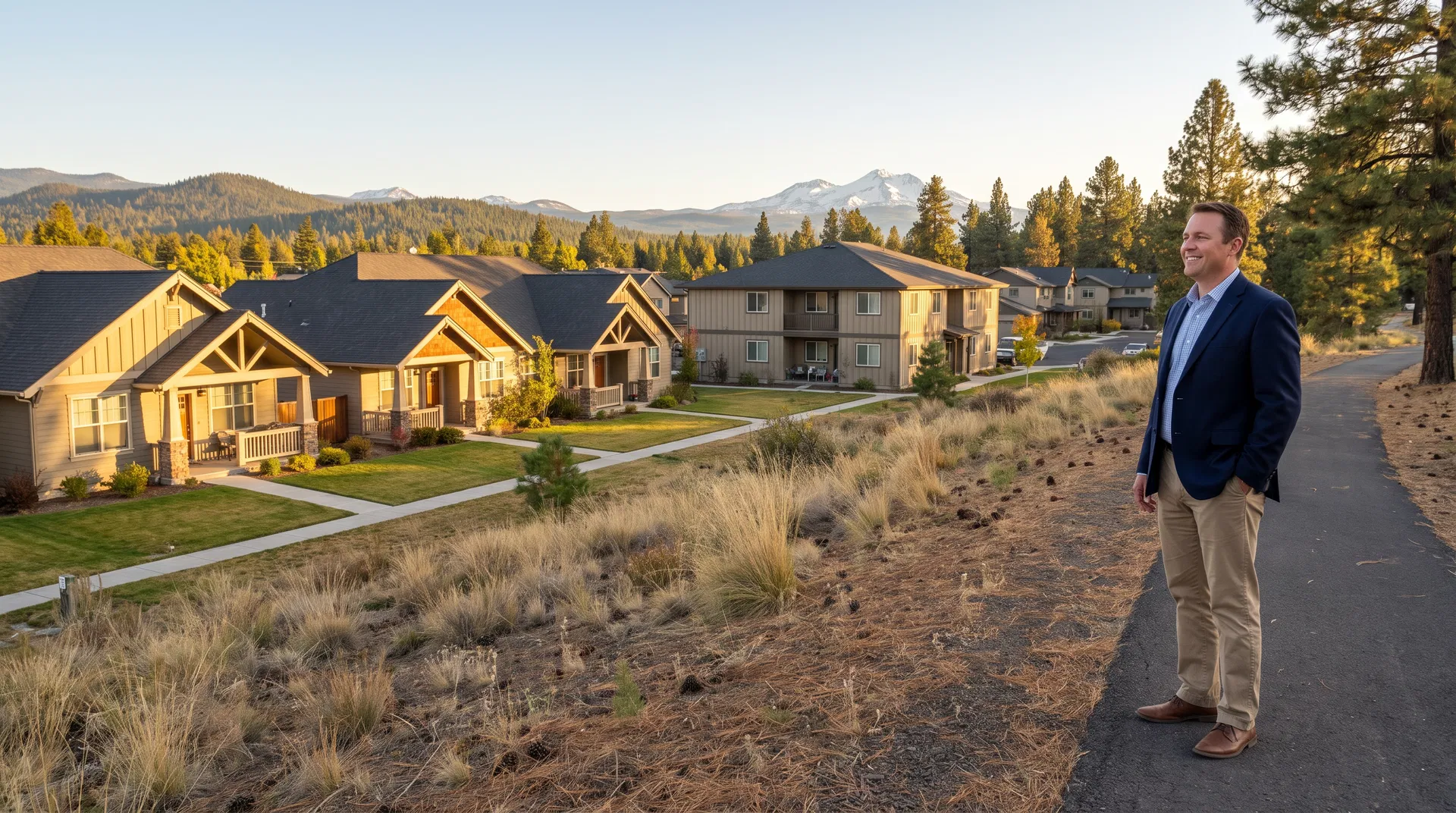
Oregon's rental housing market has grown dramatically over the past decade. Driven by population growth in Bend, Redmond, the Willamette Valley, and the Portland metro, the state now has a large and growing class of real estate investors — from accidental landlords renting out a former primary residence to seasoned portfolio investors managing dozens of properties across multiple counties. What many of these investors share is an insurance program that hasn't kept pace with their portfolio.
LRO (Landlord/Rental Owner) insurance and real estate investor insurance are not the same thing, and neither is a homeowners policy with a rental endorsement. As your portfolio grows from one property to five, ten, or twenty, the insurance structure that worked for your first rental becomes inadequate — and the gaps can be financially catastrophic. This 2026 guide covers the full spectrum of insurance needs for Oregon real estate investors, from your first rental to a mature portfolio, including landlord policies, vacant property coverage, fix-and-flip insurance, portfolio blanket policies, and umbrella liability strategies.
Your Homeowners Policy Does NOT Cover Rental Properties
The moment a tenant moves into a property, most standard homeowners policies either void coverage entirely or severely limit what they'll pay. If you're renting out a property and relying on a homeowners policy, you may discover at claim time that the carrier denies the claim because the property was tenant-occupied. A dedicated landlord insurance policy is required for any property you rent to others.
Get a Rental Property Insurance Review for Your Oregon Portfolio
Insure Pacific's Oregon-licensed agents specialize in landlord and investment property insurance. We'll review your current coverage, identify gaps, and shop 50+ carriers to find the right structure for your portfolio — whether you own one rental or twenty.
LRO Insurance: The Foundation for Every Rental Property Owner
LRO (Landlord/Rental Owner) insurance — also called a dwelling fire policy or non-owner-occupied dwelling policy — is the standard insurance product for residential rental properties. Whether you own a single-family rental in Bend, a duplex in Redmond, or a small apartment building in Prineville, an LRO policy provides three core protections that a homeowners policy does not.
1. Dwelling Coverage
Dwelling coverage protects the physical structure of your rental property — the walls, roof, foundation, built-in appliances, and attached structures — against covered perils including fire, windstorm, hail, lightning, vandalism, and certain water damage events. In Central Oregon, wildfire is the most significant structural risk. Carriers have been tightening underwriting standards in high fire-hazard severity zones, and some are non-renewing policies in the highest-risk areas. Working with an independent agent who has access to specialty and surplus lines carriers is critical for properties in fire-prone zip codes. Learn more about how wildfire mitigation measures can help you qualify for better coverage and lower premiums.
2. Rental Income / Loss of Rents Coverage
If a covered loss — fire, storm damage, burst pipe — makes your rental property uninhabitable, loss of rents coverage reimburses you for the rental income you would have collected during the repair period. This is one of the most valuable and most underutilized coverages in a landlord policy. For real estate investors who depend on rental income to service debt and fund operations, a gap in rental income during a major repair can create serious financial strain. Most LRO policies provide 12 months of lost rent coverage; some extend to 24 months for major losses.
3. Liability Coverage
Landlord liability coverage protects you if a tenant, guest, or visitor is injured on your property and holds you responsible. Common scenarios include slip-and-fall injuries on icy walkways, injuries from broken stairs or railings, and structural failures you were aware of but failed to repair. Most LRO policies include $100,000 to $300,000 in liability coverage. For investors with multiple properties or significant personal assets, this is rarely sufficient — which is why umbrella liability coverage is essential for any serious real estate investor.
Vacant Property Coverage: The Gap Most Investors Don't Know About
One of the most dangerous coverage gaps for real estate investors is the vacancy clause. Most standard landlord policies define a "vacancy" as any period when the property is unoccupied for 30 to 60 consecutive days. Once that threshold is crossed, the policy either suspends coverage for certain perils (vandalism, glass breakage, water damage from frozen pipes) or voids coverage entirely.
For real estate investors, vacancy is a routine part of the business — between tenants, during renovations, while a property is listed for sale, or during seasonal periods when a vacation rental sits empty. Without specific vacant property coverage, you may have no insurance protection during these periods. Vacant properties face elevated risks: vandalism, theft of copper and fixtures, water damage from undetected leaks, and liability from trespassers. A dedicated vacant property policy or a vacancy endorsement on your LRO policy is essential for any investor who regularly has unoccupied properties.
| Property Type / Situation | Recommended Policy | Key Coverages |
|---|---|---|
| Long-term rental (1–4 units) | LRO / Dwelling Fire Policy | Dwelling, liability, loss of rents |
| Multi-family (5+ units) | Commercial Property Policy | Building, liability, business income, umbrella |
| Vacant property (between tenants) | Vacant Property Policy or Endorsement | Dwelling, vandalism, liability for trespassers |
| Fix-and-flip / renovation | Builder's Risk Policy | Structure under renovation, materials, liability |
| Short-term rental (Airbnb/VRBO) | Dedicated STR Policy | Dwelling, liability, loss of rental income |
| Portfolio (5+ properties) | Blanket / Portfolio Policy | All properties under one policy, single premium |
Fix-and-Flip Insurance: Builder's Risk for Renovation Properties
Fix-and-flip investing has become increasingly popular in Oregon's competitive real estate market. But a property under active renovation presents insurance challenges that neither a standard homeowners policy nor a landlord policy is designed to address. Standard policies typically exclude coverage for properties that are vacant and under construction — exactly the situation a fix-and-flip investor faces from acquisition to sale.
Builder's risk insurance is the correct product for fix-and-flip properties. A builder's risk policy covers the structure during renovation, including the existing structure and the materials and work in progress. It also provides liability coverage for the job site — important if contractors, subcontractors, or curious neighbors are injured on the property during construction. Builder's risk policies are typically written for a defined project period (3 to 12 months) and terminate when the property is sold or occupied.
Oregon investors who use the Oregon FAIR Plan for fix-and-flip properties should be aware that the FAIR Plan is designed as a last-resort market for properties that can't obtain standard coverage — it does not cover renovation work or job-site liability, and it provides only basic actual-cash-value coverage. For most fix-and-flip projects, a dedicated builder's risk policy from a specialty carrier is the appropriate solution.
Renovating an Oregon Investment Property? Get the Right Coverage.
Standard landlord policies and homeowners policies don't cover properties under active renovation. Our agents specialize in builder's risk and vacant property coverage for Oregon fix-and-flip investors.
Portfolio Policies: Smarter Coverage as Your Portfolio Grows
When you own one or two rental properties, individual LRO policies for each property are straightforward and cost-effective. But as your portfolio grows to five, ten, or more properties, managing individual policies becomes increasingly complex and expensive. Each property has its own renewal date, premium, and policy terms. A claim on one property doesn't affect the others, but the administrative burden and the cumulative cost of individual policies can be significant.
Portfolio or blanket policies cover multiple investment properties under a single policy with a single premium and a single renewal date. Blanket coverage typically provides a single combined limit across all properties, which can be more efficient than individual per-property limits — particularly if your properties have varying values and you want to avoid over-insuring lower-value properties while under-insuring higher-value ones.
For investors with five or more residential rental properties, or any investor with multi-family properties of five or more units, a commercial property policy may provide more appropriate coverage than stacking individual LRO policies. Commercial policies offer higher limits, broader coverage options, and the ability to include business income coverage, equipment breakdown, and other commercial endorsements that aren't available on residential LRO policies.
Umbrella Liability: Essential Protection for Every Real Estate Investor
Every rental property is a liability exposure. A tenant who slips on an icy walkway, a guest injured by a structural failure, a child hurt by a hazard on the property — any of these events can result in a lawsuit with damages that far exceed the $100,000 to $300,000 liability limits on a standard LRO policy. For investors with multiple properties, the cumulative liability exposure is multiplied with each additional property.
A personal umbrella liability policy provides an additional layer of protection — typically $1 million to $5 million — above the liability limits on your underlying LRO policies, auto policy, and homeowners policy. For real estate investors with significant personal assets, an umbrella policy is not optional — it's a fundamental component of a sound risk management strategy. Commercial umbrella policies are available for investors with large portfolios or commercial properties, providing even higher limits and broader coverage.
Short-Term Rentals: A Separate Insurance Category
Oregon's short-term rental market — Airbnb, VRBO, and similar platforms — has grown substantially in Bend, the Oregon Coast, and other high-demand vacation destinations. But short-term rental properties present unique insurance challenges that neither standard homeowners policies nor traditional LRO policies are designed to address. Guests who stay one to seven nights and rotate through the property dozens of times per year create a different risk profile than long-term tenants with lease agreements.
Most standard LRO policies exclude or severely limit coverage for short-term rental activity. Airbnb's AirCover program provides some protection, but it has significant gaps and is not a substitute for a dedicated insurance policy. Oregon investors operating STRs should look for dedicated short-term rental insurance from carriers that specialize in this market. For investors managing multiple STR properties, a vacation rental property manager policy may provide more efficient portfolio-wide coverage. Learn more about short-term rental insurance in Central Oregon and what to look for in a policy.
Oregon-Specific Risks for Real Estate Investors
Wildfire Exposure in Central Oregon
Investment properties in Bend, Redmond, Sisters, La Pine, and surrounding communities face elevated wildfire risk. Carriers have been tightening underwriting standards in Oregon's fire-prone areas, with some non-renewing policies in the highest-risk zones. Investors in these areas should document defensible space measures, maintain records of any home hardening improvements, and work with an independent agent who can access specialty and surplus lines carriers when standard markets decline coverage.
Cascadia Subduction Zone Earthquake Risk
Oregon sits on the Cascadia Subduction Zone, one of the most seismically active fault systems in North America. A major Cascadia event would cause catastrophic uninsured losses for property owners without earthquake coverage. Standard LRO and commercial property policies exclude earthquake damage. Earthquake coverage must be purchased as a separate policy or endorsement — a coverage gap that no serious Oregon real estate investor should ignore, particularly for older unreinforced masonry buildings in Portland and the Willamette Valley.
Oregon Landlord-Tenant Law
Oregon has some of the most tenant-protective landlord-tenant laws in the country, including strict limits on security deposits, mandatory notice periods, and just-cause eviction requirements in many cities. These legal requirements affect the financial risk profile of Oregon rental properties and can extend the period during which a problem tenant occupies your property. Adequate liability coverage and, for larger portfolios, legal expense coverage are important components of an Oregon investor's insurance program.
How Much Does Real Estate Investor Insurance Cost in Oregon?
Insurance costs for Oregon real estate investors vary significantly based on portfolio size, property types, locations, and coverage structure. As a general benchmark:
| Coverage Type | Typical Annual Cost (Oregon) | Key Variables |
|---|---|---|
| Single-family LRO policy | $1,200 – $2,800/year | Location, wildfire risk, property value, age |
| Vacant property policy | $1,500 – $3,500/year | Duration of vacancy, location, property condition |
| Builder's risk (fix-and-flip) | $2,000 – $6,000/project | Renovation scope, project duration, property value |
| Multi-family (5–20 units) | $3,500 – $12,000/year | Number of units, location, building age, claims history |
| Personal umbrella ($1M) | $200 – $500/year | Number of properties, underlying liability limits |
| Portfolio blanket (10 properties) | $8,000 – $20,000/year | Total insured value, locations, property types |
The best way to find competitive pricing is to work with an independent agent who can compare quotes from multiple carriers. Insure Pacific works with 50+ carriers and can often find coverage options that direct-to-consumer carriers don't offer — particularly for properties in wildfire-prone areas, properties with prior claims, or investors building larger portfolios who benefit from commercial-lines pricing.
Building a Sound Insurance Program as Your Portfolio Grows
The most common insurance mistake Oregon real estate investors make is not reviewing their coverage structure as their portfolio grows. The LRO policy that worked for your first rental may be inadequate for your fifth, and the individual-policy approach that made sense at five properties may be inefficient and expensive at fifteen. A sound investor insurance program evolves with the portfolio.
Insure Pacific has been placing landlord and investment property insurance in Oregon since 1935. Our agents understand the local market, the specific risks facing Central Oregon investors, and the insurance structures that work best at each stage of portfolio growth. Whether you're insuring your first rental property or reviewing coverage for a mature portfolio, we can help you find the right program at a competitive price.
Ready to Build a Smarter Insurance Program for Your Oregon Portfolio?
Our licensed Oregon agents specialize in landlord, vacant property, fix-and-flip, and portfolio insurance. We'll review your current coverage and build a program that protects your investment at every stage of growth.
Our Licensed Coverage Area
States highlighted in blue are states where Insure Pacific holds an active insurance license.
Hover to highlight — click a state to visit its insurance page
Our Oregon Office Locations
Hover over a marker to see the office — click to visit their website.
Hover to highlight — click to visit that office's website
Ready to Get Protected?
Talk to a Local Oregon Insurance Expert
Insure Pacific has been serving Oregon families and businesses since 1935. We work with 50+ carriers so you get real options — not just one company's answer.
Related Articles
 Personal Insurance
Full-Time RV Insurance: When Your Motorhome Becomes Your Primary Home
Read Article → Personal Insurance
ADU Insurance: Is Your Backyard Cottage Covered by Your Homeowners Policy?
Read Article → Personal Insurance
Water Damage Insurance: Hidden Leaks, Sewer Backups, Service Lines, Sump Pumps, Mold, and Smart Shutoff Devices
Read Article → Personal Insurance
Home Insurance Replacement Cost in 2026: Why Rebuilding Your Home Could Cost More Than Its Market Value
Read Article →Get in Touch
Ready to protect what matters most? Contact us today for a no-obligation insurance review. Our experienced agents are here to help you find the right coverage for your needs.


