



ADU Insurance: Is Your Backyard Cottage Covered by Your Homeowners Policy?
ADU Insurance: Is Your Backyard Cottage Covered by Your Homeowners Policy?

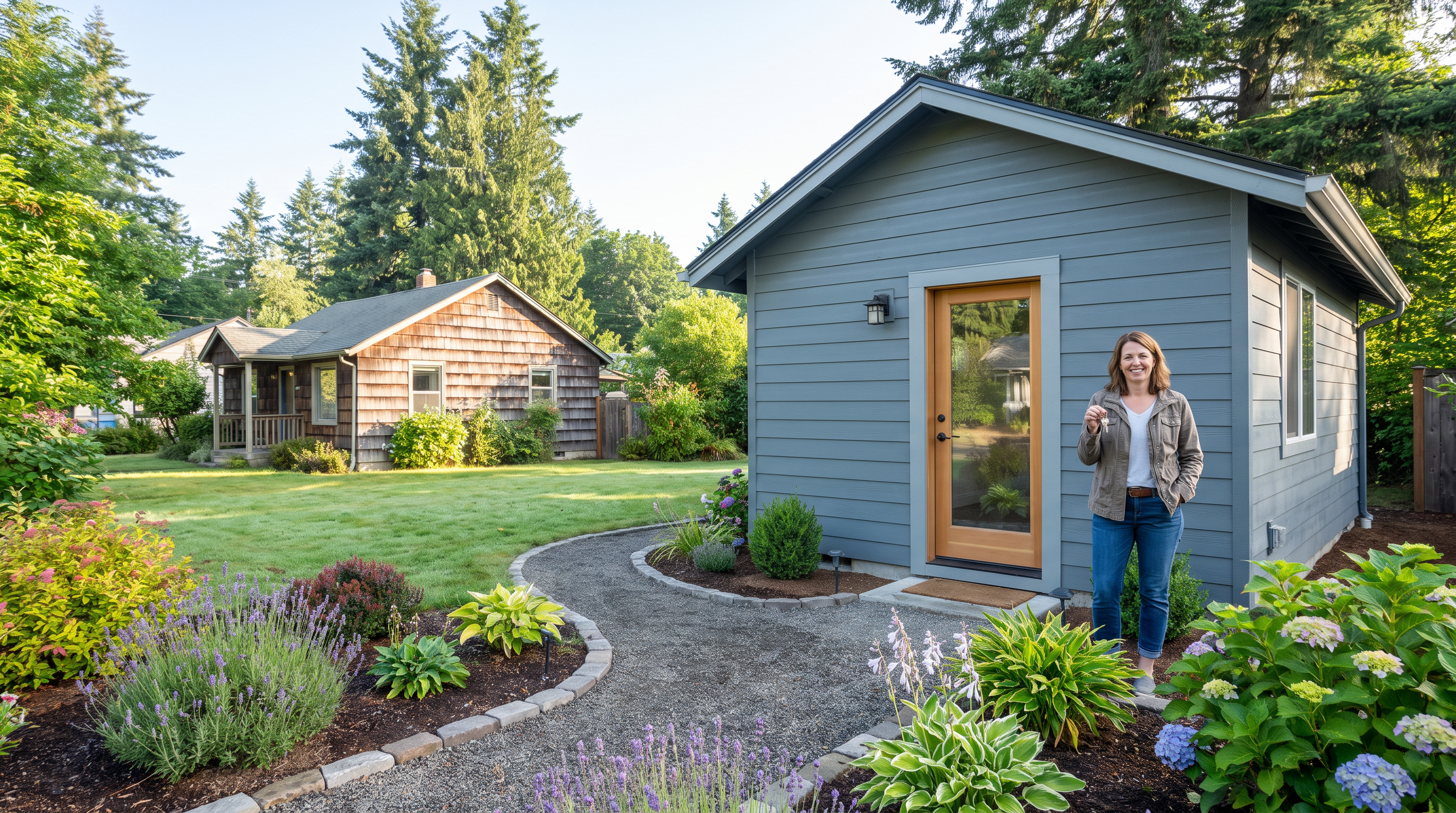
A couple finishes a backyard cottage for an aging parent. The cottage has a kitchen, bathroom and its own entrance. A year later, their parent moves elsewhere and they advertise the same unit as a monthly rental. Did the family's homeowners policy cover the cottage when the parent lived there? Does that answer still apply once a tenant pays rent? The building did not move, but its occupancy—and the insurer's exposure—changed.
An accessory dwelling unit (ADU) can be a detached backyard cottage, a garage conversion, an addition, or an independent suite inside the home. It is not automatically insured merely because it sits on the homeowner's parcel, has a permit, or appears in a property appraisal. Coverage depends on how the unit is built, who occupies it, how it is used, which structures and liability limits apply, and what the insurer agreed to insure. This 2026 guide is for households in Oregon and the other Western states served by Insure Pacific. It is educational, not a reading of your issued policy or a promise that any carrier will accept a particular ADU.
Quick answer: will homeowners insurance cover an ADU?
Possibly, but confirm it before construction or a change in occupants. An interior or attached conversion may be treated as part of the main dwelling when accurately reported and the dwelling limit updated. A detached cottage may be considered an “other structure” under one form, need a scheduled increase or specific endorsement under another, or require different insurance. If the unit is rented, the carrier may require a landlord form, a rental endorsement or a separate policy. Short-term hosting is another underwriting question altogether. The Massachusetts Division of Insurance, Travelers and Liberty Mutual all caution owners to discuss the unit and its use with the insurer; their examples illustrate possibilities rather than a rule for every Western-state policy.
| ADU setup | Property question | Occupancy and liability question |
|---|---|---|
| Interior basement apartment or attached addition | Is the finished unit within the dwelling description and replacement-cost estimate? | Does the policy accept the actual family or rental use? |
| Detached backyard cottage used by a family member | Does other-structures coverage include a dwelling, and is its limit sufficient? | Are all occupants and premises liability exposures disclosed? |
| Detached cottage leased to a long-term tenant | Does the insurer require a rental-dwelling endorsement or a separate landlord policy? | Whose policy responds to tenant injuries, owner furnishings and lost rent? |
| ADU listed for brief guest stays | Is home-sharing/short-term rental use expressly accepted? | Are guest injuries, turnover, amenities, platform protection and income addressed? |
These are review prompts, not a coverage chart. Start with our homeowners insurance overview and ask the agent to identify the specific declarations, endorsements and forms that would apply to your cottage.
First determine what kind of ADU you actually have
“ADU” describes a living arrangement, not a universal insurance classification. A finished basement with its own exterior door is physically part of the insured house. A backyard cottage across a patio is a separate building. A room above a detached garage introduces both a garage and an occupied unit. A prefabricated structure on a permanent foundation raises construction, utility, location and inspection questions. Local definitions and permits matter to lawful use, but the permit alone does not add insurance coverage.
Send the insurer a simple description: a site plan or photos; whether the new unit is interior, attached or detached; its square footage, year built, kitchen and bathroom, foundation, roof and construction materials; how electricity, water and sewer connect; whether it has its own address; and its current and planned occupants. Ask: “Which coverage section insures this exact unit, at what limit, for what use?” Document the answer in an updated policy or written endorsement rather than relying on a verbal assumption.
Attached versus detached: two different limit conversations
The National Association of Insurance Commissioners (NAIC) describes dwelling coverage as applying to the house and structures attached to it, while other-structures coverage can address detached structures including guest cottages. The NAIC's consumer guide gives 10% of the dwelling limit as a *typical* other-structures limit, but warns that actual limits vary. An attached ADU may increase the amount needed to rebuild the main dwelling; a detached unit may strain an already-shared other-structures limit also used by a garage, shed or fence.
Illustrative arithmetic, not a quote: if a policy has a $500,000 dwelling limit and sets other structures at 10%, that pool would be $50,000. If a permitted detached cottage would cost substantially more than $50,000 to reconstruct, and a garage shares that pool, the declarations warrant immediate review. A carrier may offer increased Coverage B, a scheduled ADU, a separate dwelling limit or another arrangement. Do not assume that an increase in your property's resale value automatically increases any of these limits. Our rebuilding cost versus market value guide explains why real estate value is the wrong substitute for an insurance-to-value estimate.
Family occupancy: helpful context, not a blanket exemption
An adult child, parent or other relative living in the ADU may look like personal residential use to an insurer. Travelers says attached or renovated granny flats can be insured within homeowners coverage and detached units may need more coverage; Liberty Mutual describes possible family-use homeowners treatment. That does not guarantee a family member is automatically included under every definition of “insured.” A relative living independently in a separate unit—especially one with a lease, rent payment, separate utilities or independent address—should be described accurately to the carrier. Some insurers distinguish a visiting relative from a separate household or a paying occupant.
Check three separate interests. The owner needs an adequate rebuilding limit for the unit, coverage for any owner-provided appliances and furnishings, and premises liability. The occupant needs protection for possessions and their own potential liability; do not assume the owner's property or liability terms extend to everything belonging to a separate household. The whole property needs accurate disclosure of shared paths, steps, gates, yards, garages, pets, heating and water systems. The Oregon Division of Financial Regulation explains that a property owner's insurance does not cover a renter's own belongings or liability; where occupancy is technically not a rental, ask the insurer how the relative's status is treated. Our renters insurance overview helps frame the occupant's personal-property question.
When family use turns into rent
Suppose a son lives in the cottage without charge while finishing school, then moves away and an unrelated tenant signs a one-year lease. The unit is physically unchanged; the ownership and liability picture is not. Notify the agent before the new tenant moves in, send the lease and ask the insurer to confirm acceptable rental use, owner property, landlord liability and any available fair-rental-value coverage. A security deposit, relative's occasional visit or listing delay does not determine insurance classification; the policy's terms and actual use do.
Long-term rentals: landlord property, occupant property and lost rent
For a leased cottage, review whether the existing homeowners carrier will endorse the rental exposure or whether a separate rental-dwelling policy is needed. This decision varies by insurer, attached versus detached design, local underwriting and how the primary home is insured. The Massachusetts regulator explicitly advises reviewing property damage, liability and loss of rental income for rented ADUs. AAA's California example shows why owner–relative occupancy and a detached unit leased to a non-relative may be treated differently by a particular insurer, but California carrier practice should not be extrapolated as a universal rule.
A landlord form or endorsement can address the owner's building and specified furnishings; a tenant's renters policy generally addresses the tenant's own possessions and liability. Additional living expenses for an owner forced out of the primary home are not automatically the same coverage as lost rental income when the ADU cannot be occupied after a covered loss. Confirm the trigger, waiting period, restoration period and limit for each. Read the landlord insurance page for a wider rental-property review. Ask the tenant to provide proof of an appropriate policy, but do not mistake a certificate for protection of the owner's building or a waiver of the owner's duties.
Review landlord liability in practical terms: Does a guest's fall on the ADU steps implicate the homeowner, the tenant or both? Who maintains the shared walkway and exterior lighting? Are a dog, hot tub, wood stove, EV charger or detached workshop disclosed? A serious injury could exceed basic liability limits. A personal umbrella insurance review may be appropriate, but ask whether the umbrella accepts the rental exposure and what underlying homeowners or landlord liability limits it requires. Umbrella coverage does not replace insurance for the ADU building.
Weekend guests and short-term rental platforms are a different exposure
A cottage advertised for nightly bookings has turnover, guest access and possibly business activity that a household or annual tenant arrangement does not. NAIC warns that standard homeowners and dwelling policies may not be designed for accidents arising from short-term rentals; a platform's host protection can have conditions and limits. Some insurers offer an expressly approved home-sharing endorsement; others require a rental or commercial arrangement or decline the exposure. Do not assume an Airbnb or other platform's protection makes the homeowner's insurer irrelevant.
Before the first listing, give the agent the platform name, approximate number of nights per year, maximum guests, any owner-furnished contents, cleaning or management arrangements, amenities and shared spaces. Ask how a guest-caused fire, a guest injury, theft of owner property and loss of bookings after insured damage would be treated. If you switch between family use, annual leasing and nightly stays, tell the carrier the actual schedule; approval for one use does not automatically approve the others. See our short-term rental insurance page and the landlord and short-term rental risk guide for deeper coverage and vacancy considerations.
Seven coverage gaps to settle before someone moves in
1. Structure and valuation. Obtain an ADU-specific rebuild estimate, not only the construction invoice or assessor's number. Include foundation, utilities, roof, attached porch, debris removal, contractor labor and possible code-required upgrades. Ask whether a shed or garage consumes the same other-structures limit and whether the full cottage is described on the declarations.
2. Contents and systems. List the owner's supplied refrigerator, stove, washer, furniture, heat pump and electronics separately from an occupant's property. Check equipment breakdown, water-backup, service-line and electrical-surge terms rather than assuming appliances and utility connections are automatically protected.
3. Water, sewer and shared utilities. A cottage's plumbing can damage the unit, the primary house or a neighbor's property. Identify who owns the buried lines and how shutoffs work. A slow concealed leak, a sewer backup and a sudden burst pipe may be treated differently. Our water-damage insurance guide walks through those distinctions.
4. Liability around both homes. Ask about access routes, parking, stairs, lighting, fences, snow/ice duties, pools, decks, pets and professional property management. Liability limits should be evaluated across all occupied structures, not solely the square footage of the cottage.
5. Loss of use versus lost rent. If fire makes the owner's home unlivable, additional living expense language may apply after an insured loss. If the ADU's tenant stops paying because the ADU is damaged, a separate fair-rental-value or rental-income provision may be needed. Ask for each limit and trigger in writing; ordinary vacancy and a bad tenant are not necessarily covered losses.
6. Catastrophe exposures. Homeowners policies commonly exclude flood and earthquake, per NAIC. In Western wildfire-prone locations, ask about underwriting, defensible space, access for firefighters and each structure's replacement value. Our Western wildfire home insurance guide provides a starting point. Separate flood and earthquake policies or endorsements may be needed when offered; an ADU must be described appropriately on each.
7. Construction and change of use. Do not wait for a certificate of occupancy. A renovation, garage conversion or newly erected cottage can change the insurer's underwriting before anyone lives there. Discuss construction-stage property, contractors' insurance, any temporary vacancy or builder's-risk need, then request updated owner-occupancy or rental documentation once work finishes. A contractor's certificate does not prove your building itself is insured against every construction loss.
A step-by-step ADU insurance review before building, buying or renting
Before construction: Tell the agent what you plan to build, where it will be, whether a relative or paying occupant will use it, and the projected completion date. Check local permits, utility work, builder qualifications and whether the homeowners insurer will keep writing the combined property. Request written advice about construction-stage protection and whether a new appraisal or rebuild estimate is needed.
When the cottage is finished: Send final plans and photos, square footage, address if assigned, construction details, replacement estimate, final permit/inspection status and owner-furnished property inventory. Ask for the updated declarations and any ADU or rental endorsement; verify the effective date, not just a pending quote. Walk the shared routes for trip hazards, lighting, fire access and water shutoffs.
Before a family member moves in: Give the carrier the occupant's identity and relationship, expected duration and whether money changes hands. Have the occupant review their own contents and liability position. If the unit includes a home business, disclose that too; it is another possible use change.
Before a long-term tenant or first short-term guest: Send the lease or listing details, guest frequency, management arrangements, shared amenities and estimated rental receipts. Compare the owner's property, owner-furnished contents, tenant/guest liability, lost-rent options and any umbrella terms. Require the occupant's own policy when appropriate and permitted by local rules, but do not substitute it for landlord coverage.
At each renewal and change of use: Revisit rebuilding costs, rent amount, occupants, pets, additions, utility connections and liability limits. Ask for confirmation when the unit changes from relative occupancy to rental or from monthly leases to nightly stays. Preserve the email and the insurer's written reply with your policy records.
Three practical claim scenarios
Fire in the detached cottage: The first questions are whether the structure is listed and insured for its actual use, whether its other-structures or scheduled limit is enough to rebuild, and whose furnishings were lost. If a tenant must move out, their temporary housing and the owner's missed rent are different claims. The applicable deductible and code-upgrade coverage may differ from what the owner expected.
A tenant falls on the shared walkway: Liability will turn on facts such as maintenance, lighting, ownership and negligence as well as the policy's rental language. The tenant's renters insurance is not a substitute for the property owner's premises liability. Report the incident promptly, retain photos and maintenance records, and let the insurer handle defense questions under the applicable form.
A weekend guest leaves water running: The platform may advertise a host benefit, but its exclusions, conditions and claim order must be read alongside an insurance policy that actually accepts short-term rental use. Document the cause, protect both buildings from additional damage, record who owned damaged property, and notify the carrier. Whether water damage or lost bookings are insured depends on the wording, not on the presence of an online booking receipt.
Independent Insurance Agency Since 1935
Not Sure If You Have the Right Coverage?
Our licensed agents compare 50+ carriers to find you the best coverage at the right price — at no extra cost to you.
Questions to take to your insurance agent
Have plans or photos for an existing or proposed ADU? Send them and your current declarations through Insure Pacific's contact page. Tell us whether it is attached or detached, who will occupy it and whether it will be rented. Ask for a policy-by-policy comparison of the building limit, property use, liability and any rental-income option. You can also use the quote, phone and text buttons on this page to request a review before construction or the first booking.
Frequently asked questions
Is my new backyard cottage automatically included in homeowners insurance?
No automatic assumption is safe. A detached guest cottage may be a covered other structure under some homeowners forms, but occupancy restrictions, a potentially inadequate shared limit and insurer notice still matter. A new, occupied dwelling may need a scheduled endorsement or other policy. Give the carrier details before building and get written confirmation of the agreed structure and use.
Is an attached garage conversion different from a detached ADU?
It can be. An attached or interior conversion may increase the main dwelling's rebuilding cost. A detached conversion may be insured under other structures, scheduled separately or require different coverage depending on the insurer and intended occupancy. Both can change liability and require the carrier to update its records.
Can my parent live in the cottage under my homeowners policy?
Possibly; some carriers accept family occupancy with an updated homeowners policy. Confirm the relative's independent-household status, the cottage's rebuild limit, the family's belongings, any rent arrangement and liability for both homes. The word “family” alone does not amend the policy.
Does charging rent change my ADU insurance?
It can materially change eligibility, liability and property terms. The insurer may offer a rental endorsement, require a landlord form or a separate rental dwelling policy, or decline the risk. Disclose the arrangement before the tenant arrives, even if the tenant is a relative. Ask whether lost rent after a covered event is available.
Does Airbnb's host protection replace my own ADU policy?
Do not rely on that assumption. NAIC advises home-sharing hosts to examine both platform protection and their personal policy; paying-guest incidents can be limited or excluded under personal insurance. Ask your agent about coverage that expressly accepts short-term rental activity and review platform terms separately.
Does the typical 10% other-structures limit pay to rebuild any backyard cottage?
No. Ten percent is a common example in NAIC's guide, not a universal ADU limit or guarantee of coverage. The amount can be shared with fences, sheds and garages, and actual rebuilding costs may be much higher. The carrier must confirm whether an inhabited ADU is eligible and what limit it requires.
Does the tenant's renters insurance insure my cottage?
Usually not: the tenant's policy is designed mainly for their possessions and liability, while the owner insures their building and owner property. Confirm the actual policies, particularly if the occupant is a relative who might not be treated as a conventional tenant.
When should I tell the insurance company about an ADU?
Before construction or conversion, again when the unit is complete, and before a significant change in occupancy or rental duration. The Massachusetts regulator specifically recommends notifying the insurer before work begins; Western-state notice and nonrenewal rules differ. Keep written confirmation of whatever coverage the carrier offers for your actual situation.
Sources and further reading
*Coverage depends on the issued policy, actual use, eligibility, state rules, cause of loss and underwriting approval. This article is general educational information, not a coverage determination, permit approval or legal advice.*
Our Licensed Coverage Area
States highlighted in blue are states where Insure Pacific holds an active insurance license.
Hover to highlight — click a state to visit its insurance page
Our Oregon Office Locations
Hover over a marker to see the office — click to visit their website.
Hover to highlight — click to visit that office's website
Ready to Get Protected?
Talk to a Local Oregon Insurance Expert
Insure Pacific has been serving Oregon families and businesses since 1935. We work with 50+ carriers so you get real options — not just one company's answer.
Related Articles
 Personal Insurance
Full-Time RV Insurance: When Your Motorhome Becomes Your Primary Home
Read Article → Personal Insurance
Water Damage Insurance: Hidden Leaks, Sewer Backups, Service Lines, Sump Pumps, Mold, and Smart Shutoff Devices
Read Article → Personal Insurance
Home Insurance Replacement Cost in 2026: Why Rebuilding Your Home Could Cost More Than Its Market Value
Read Article → Personal Insurance
Wildfire Insurance in the West: Defensible Space, Home Hardening, Renewals & What to Do After a Non-Renewal
Read Article →Get in Touch
Ready to protect what matters most? Contact us today for a no-obligation insurance review. Our experienced agents are here to help you find the right coverage for your needs.


