



Home Insurance Replacement Cost in 2026: Why Rebuilding Your Home Could Cost More Than Its Market Value
Home Insurance Replacement Cost in 2026: Why Rebuilding Your Home Could Cost More Than Its Market Value

Your home's sale price is not its rebuilding price
A house can sell for $500,000 and still require $650,000 to reconstruct after a total loss. Another house can sell for $1.2 million but cost substantially less than that to rebuild because much of its market value comes from the land, location, school district, view, or scarcity of nearby homes. Market value and replacement cost measure different things, and home insurance is generally concerned with the cost of reconstructing the dwelling—not buying the land again.
That distinction matters more in 2026 because labor, materials, transportation, permitting, code compliance, debris removal, and catastrophe-related demand can move differently from local home prices. A mortgage balance, tax assessment, online real-estate estimate, or recent sale price may be useful for other decisions, but none is a reliable substitute for a current reconstruction estimate.
Oregon's Division of Financial Regulation says that higher labor, lumber, and building-material costs have increased the expense of repairing and rebuilding structures. The National Association of Insurance Commissioners advises homeowners to select dwelling coverage based on the home's full replacement cost. Your own policy language, limits, deductible, exclusions, and loss-settlement conditions still control every claim.
Replacement cost, market value, and other numbers homeowners see
| Number | What it is designed to measure | Why it can mislead an insurance decision |
|---|---|---|
| Replacement cost | Estimated cost to rebuild the insured dwelling with materials and workmanship of like kind and quality at current prices | It must be based on accurate property details and updated as costs or the home change |
| Market value | What a buyer may pay for the house and land in the current real-estate market | It includes land and location influences that a dwelling policy does not rebuild |
| Mortgage balance | What the borrower still owes the lender | The loan can be much lower or higher than reconstruction cost |
| Property-tax assessment | A value calculated under state and local tax rules | Assessment formulas and timing are not construction estimates |
| Purchase price | The negotiated price for the property at one moment | It bundles land, location, market demand, and the structure together |
| Appraisal | An opinion of property value for a particular purpose and date | A lending or sale appraisal is not necessarily a detailed reconstruction estimate |
A good Home Insurance review begins by separating these numbers instead of treating them as interchangeable.
Why rebuilding can cost more than buying an existing home
One house is not a subdivision
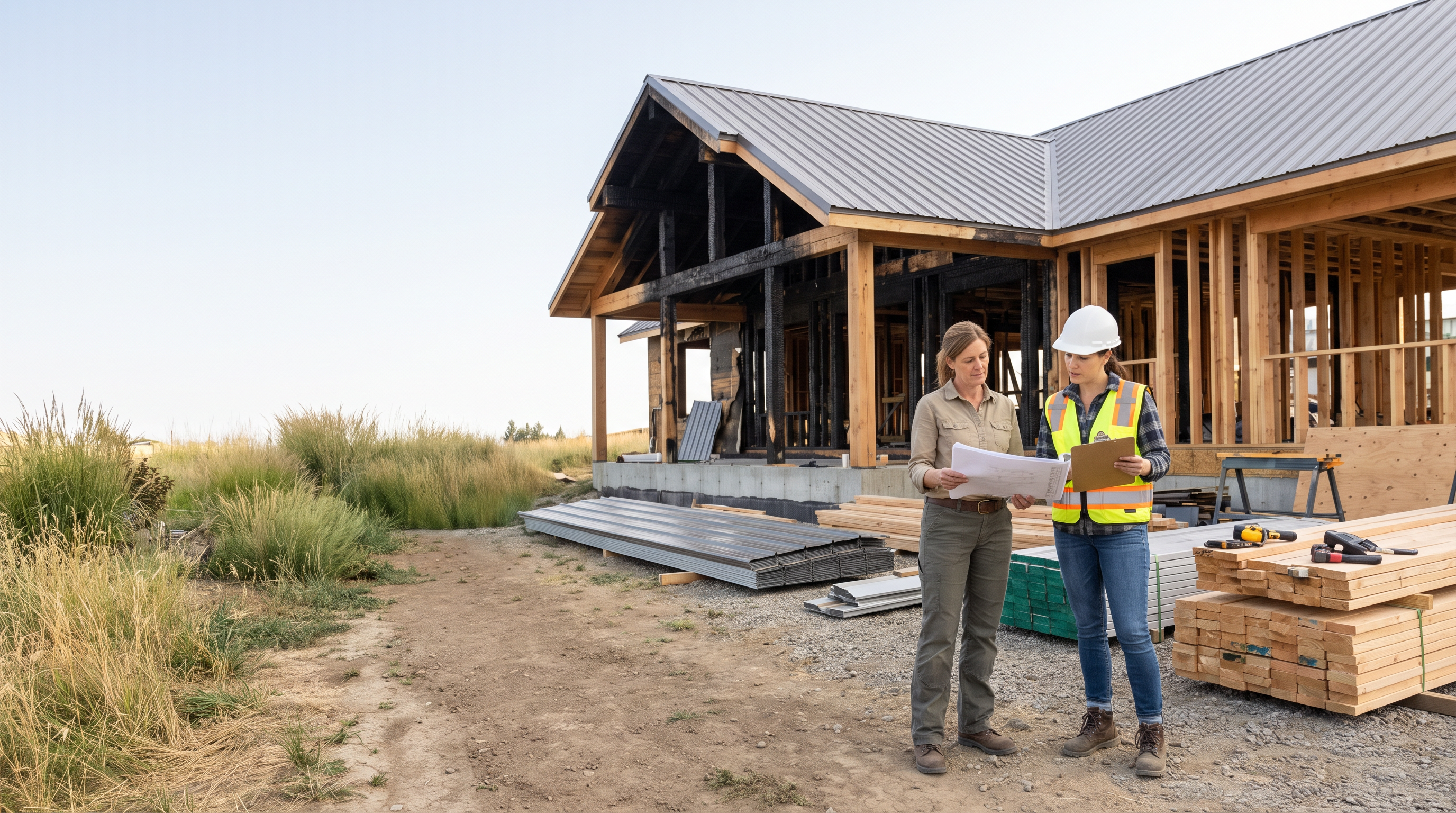
A production builder can purchase materials in volume, keep trades moving through several similar homes, and spread supervision and equipment costs across an entire project. Reconstructing one damaged home is a custom job. The contractor must work around an existing site, match surviving construction, coordinate inspections, source compatible finishes, and manage the project without the efficiencies of building many similar homes at once.
Demolition, debris removal, and site preparation come first
Before framing begins, a total-loss site may require engineering, hazardous-material review, demolition, sorting, hauling, disposal fees, utility safety work, foundation assessment, tree removal, temporary fencing, erosion control, or access improvements. These costs do not make the new home larger or more luxurious, but they can consume part of the amount available for the insured loss. Ask how your policy treats debris removal and whether the provision is inside or outside the dwelling limit.
Current building codes can add work the original house never had
An older home may have been legal when constructed yet fail to satisfy the codes that apply when it is rebuilt. Depending on the jurisdiction and the loss, reconstruction may require electrical, energy-efficiency, seismic, wildfire, ventilation, accessibility, roof, glazing, or structural changes. Base replacement cost and ordinance or law coverage are related but not identical; a policy can limit the added cost of code-mandated upgrades.
FEMA's Building Codes Save research demonstrates that modern codes reduce future disaster losses. That resilience is valuable, but the additional work still has to be funded after a loss. Homeowners should ask for the exact ordinance-or-law percentage or dollar limit, what triggers it, and whether demolition of an undamaged portion is addressed.
Labor and materials do not move in a straight line
Rebuilding relies on framers, electricians, plumbers, roofers, HVAC technicians, drywall crews, finish carpenters, engineers, architects, permit staff, equipment, fuel, and freight. Prices can rise at different rates and at different times. The U.S. Bureau of Labor Statistics reported that final-demand producer prices were 5.4% higher over the 12 months ending August 2026. Its broad intermediate-demand measures also showed continued pressure and volatility. Those indexes are not a home-rebuilding calculator, but they explain why an estimate prepared several renewals ago may not track today's complete reconstruction market.
Regional disasters create demand surge
After a wildfire, windstorm, freeze, or other widespread event, many property owners may need the same contractors, temporary housing, equipment, disposal capacity, and materials simultaneously. Local crews may be booked, specialist trades may travel from another area, and delivery times can lengthen. A standard estimate prepared during normal conditions may not fully anticipate that post-catastrophe environment.
Some policies offer extended or guaranteed replacement-cost features intended to provide additional protection, but the wording, percentage, eligibility rules, and homeowner duties vary. These features should be read, not assumed.
Access and property features can change the estimate
A steep driveway, remote location, narrow bridge, gated access, winter conditions, limited staging space, long utility runs, wildfire-zone requirements, custom millwork, masonry, large windows, imported finishes, solar and battery systems, attached decks, or complex roof geometry can all affect reconstruction. Square footage alone cannot describe the work.
How insurers estimate dwelling replacement cost
Insurers commonly use reconstruction-cost software informed by local labor and material data. An agent or insurer enters details about the home, and the system develops an estimate. Different carriers can produce different results because they may use different models, assumptions, update schedules, and underwriting rules.
An estimate is only as useful as the information entered. A generic “two-story frame home” description can miss a finished basement, vaulted great room, attached garage, covered porch, premium windows, upgraded cabinets, stone veneer, custom staircase, detached structures, heat pump, wood stove, or recent addition.
Before accepting a Coverage A dwelling limit, verify at least these details:
A detailed contractor estimate can be useful for a custom, historic, high-value, remote, or unusually constructed home. It does not replace the insurer's underwriting process, but it can create a better documented conversation. Owners of distinctive properties should also review High-Value Home Insurance options rather than forcing a custom home into assumptions meant for standard construction.
Dwelling replacement cost is not the same as replacement-cost loss settlement
The phrase “replacement cost” is used in two connected but different ways. First, there is the replacement-cost estimate used to select a dwelling limit. Second, there is the loss-settlement provision that determines how a covered claim is paid.
A policy can have a reasonable dwelling limit but still settle some property on actual cash value. It can also offer replacement-cost settlement but stop paying at an inadequate limit. Both the number and the settlement language matter.
| Term | General meaning | Question to ask |
|---|---|---|
| Replacement cost value | Cost to repair or replace with like kind and quality without the same depreciation deduction, subject to policy conditions | Must I complete repairs or replacement before receiving the full amount? |
| Actual cash value | Replacement cost less depreciation based on age, condition, and other factors | Which dwelling components or personal-property categories use ACV? |
| Functional replacement cost | Cost to repair or replace using functionally equivalent but potentially less costly materials or methods | Is this form appropriate for my older or architecturally distinctive home? |
| Stated dwelling limit | Maximum shown for Coverage A before any applicable extension | What costs and sublimits are inside that amount? |
Oregon DFR explains that replacement-cost coverage generally uses materials of like kind and quality at current prices, while actual-cash-value coverage reflects depreciation. In a covered loss, an insurer may initially pay actual cash value and then release recoverable depreciation after qualifying repair or replacement documentation is provided. Deadlines and conditions vary, so ask how your policy works before a claim.
Four features that can change the rebuilding outcome
1. Inflation guard
An inflation-guard feature may increase the dwelling limit at renewal or during the policy term according to the policy's method. It is useful, but it is not a substitute for accurate home details. A standard percentage cannot know that you added a bedroom, replaced builder-grade finishes with custom materials, enclosed a porch, or installed a large solar-and-battery system.
2. Extended replacement cost
Extended replacement cost may provide a stated percentage above the Coverage A limit when a covered dwelling loss qualifies. For example, a 25% extension on a $600,000 dwelling limit creates a different ceiling than a 50% extension—but the actual wording matters more than the label. Conditions may require insuring the home to the carrier's estimate, reporting improvements, rebuilding at the same location, or meeting a deadline.
3. Guaranteed replacement cost
True guaranteed replacement cost is designed to pay the qualifying cost to rebuild even when it exceeds the stated dwelling limit. It is not available from every insurer, for every home, or in every location. It still does not erase deductibles, exclusions, coverage conditions, or excluded causes of loss. Confirm what the carrier means by “guaranteed,” because marketing terms and contract terms must match.
4. Ordinance or law coverage
Ordinance-or-law coverage can address specified costs created by enforcement of current building codes. Depending on the form, it may involve demolition of an undamaged part, the value of that part, or increased construction cost. A percentage that appears generous may be insufficient for an older home facing major electrical, structural, energy, or wildfire-resistance upgrades.
A simple example: the market falls while rebuilding costs rise
Assume a home and land could sell for $575,000 in a slower real-estate market. The land represents part of that value. A current reconstruction estimate for the dwelling is $690,000 because the house has custom windows, a complicated roof, upgraded finishes, a steep site, and higher local trade costs.
| Item | Illustrative amount | Insurance significance |
|---|---|---|
| Home-and-land market value | $575,000 | Not the amount required to reconstruct the dwelling |
| Mortgage balance | $360,000 | Protects the lender's interest but does not set rebuilding cost |
| Dwelling reconstruction estimate | $690,000 | Starting point for reviewing Coverage A |
| 25% extension, if applicable | Up to $172,500 above the base limit | Only available when policy conditions are satisfied |
| Ordinance-or-law limit | Separate policy-defined amount or percentage | May be needed for code-driven added cost |
This example is not a quote or recommendation. It shows why reducing dwelling coverage simply because a home's sale price has fallen can create a serious gap. The reverse can also occur: land scarcity may push market value far above reconstruction cost. The correct limit depends on the house, location, policy, and current estimate.
The underinsurance problem is bigger than a total loss
Homeowners sometimes assume an inadequate dwelling limit matters only when the structure is completely destroyed. Some policies contain insurance-to-value or replacement-cost conditions that can affect partial losses when coverage falls below a required percentage of the home's full replacement cost. The NAIC consumer guide cautions that a claim payment may be reduced when the home is not insured to the required percentage.
Ask your agent to identify the specific provision in your policy and explain it with a partial-loss example. Do not rely on a general statement that “you have replacement cost.” Confirm the dwelling limit, required insurance-to-value percentage, loss-settlement method, and any extension.
Coverage A is only one part of the rebuilding plan
A complete review should separate several policy buckets:
A home inventory supports the personal-property claim, but it does not calculate dwelling reconstruction cost. Oregon DFR recommends photographing each room and recording identifying details. Store the inventory, receipts, remodel records, and exterior photographs away from the home or in secure cloud storage.
If liability limits also need attention, review Umbrella Insurance separately. Increasing liability coverage does not increase the amount available to rebuild the dwelling.
Western homes need a location-specific estimate
Insure Pacific serves homeowners across ten Western states, where rebuilding conditions vary significantly. The following characteristics deserve special attention:
Wildfire interface and home-hardening requirements
A home near vegetation or public land may need ember-resistant vents, ignition-resistant exterior materials, roof or deck changes, defensible-space work, or other upgrades when rebuilt. These measures can reduce future risk, but the added construction cost should not be assumed to fit automatically within a stale estimate. Pair the valuation conversation with a Wildfire Insurance review and, where appropriate, explore Wildfire Protection Technology and home-hardening options.
Remote, mountain, coastal, and rural access
Distance from suppliers and fire protection, winter access, steep terrain, crane or pump-truck access, coastal corrosion, wind exposure, private bridges, wells, septic systems, propane equipment, outbuildings, and long utility runs can complicate reconstruction. A contractor building in town may use different assumptions than one mobilizing crews and equipment to a remote property.
Earthquake and flood remain separate questions
Replacement-cost valuation does not create coverage for a cause of loss the homeowners policy excludes. Standard homeowners insurance generally excludes flood and earthquake. Homeowners should review Flood Insurance and Earthquake Insurance as separate coverage decisions. Landslide and other earth-movement exclusions require their own discussion as well.
Remodels and lifestyle changes that should trigger a new estimate
Do not wait for the annual renewal when the structure has materially changed. Contact the agent before or promptly after:
Some changes alter reconstruction cost; others change occupancy, liability, eligibility, or the policy form itself. A broad Personal Insurance review can coordinate the home policy with vehicles, valuables, rental exposures, and umbrella liability.
Independent Insurance Agency Since 1935
Not Sure If You Have the Right Coverage?
Our licensed agents compare 50+ carriers to find you the best coverage at the right price — at no extra cost to you.
A 20-minute replacement-cost review for 2026
Step 1: Find the current declarations page
Write down the Coverage A dwelling limit, other-structures limit, personal-property limit, additional-living-expense provision, deductible, and any separate wind, wildfire, or named-storm deductible.
Step 2: Identify every valuation and extension endorsement
Look for replacement cost, actual cash value, extended replacement cost, guaranteed replacement cost, inflation guard, ordinance or law, roof or siding settlement, matching limitations, and personal-property replacement cost. Ask for help locating the actual forms and endorsements.
Step 3: Compare the property description with the real house
Verify square footage, stories, basement finish, garage, roof, exterior, interior grade, bathrooms, fireplaces, decks, porches, systems, and custom features. Correct errors in writing.
Step 4: Report improvements
Provide dates, scope, receipts, plans, photographs, and contractor information for meaningful changes. Ask for a new estimate and keep the updated report with the policy records.
Step 5: Stress-test the result
Ask what happens if reconstruction costs are 15%, 25%, or 40% above the base estimate after a regional disaster. Then ask which policy provision—not a verbal assurance—addresses that difference.
Step 6: Check the timeline around a major claim
Confirm how long additional living expense can continue, whether the policy uses time or dollar limits, how recoverable depreciation is paid, whether rebuilding must occur at the same location, and what deadlines apply.
Questions to ask your insurance agent
Request answers in writing and retain the estimate used. If two carriers return very different dwelling limits, compare their inputs before choosing the lower number.
Common replacement-cost myths
“My lender approved the limit, so I am fully covered.”
A lender is focused on its secured interest and required insurance. The mortgage amount does not establish reconstruction cost or guarantee that the owner's equity and rebuilding needs are protected.
“My real-estate appraisal tells me what Coverage A should be.”
An appraisal usually values the complete property, including land and market influences. Coverage A is intended to address the dwelling under the policy definition.
“Inflation guard means I never need another review.”
Inflation guard cannot detect unreported remodels, incorrect square footage, custom features, local access problems, or a major change in construction quality.
“Replacement cost means the insurer will pay any amount.”
Most replacement-cost policies remain subject to stated limits. Extended and guaranteed forms are separate and contain conditions. Every claim is also subject to deductibles, exclusions, and policy terms.
“If my home is older, rebuilding should be cheaper because the materials are old.”
Reconstruction uses current labor and materials. Older homes can be more complex because of custom construction, matching challenges, code upgrades, hazardous materials, or specialized craftsmanship.
Frequently asked questions
Can replacement cost be higher than market value?
Yes. Market value includes land and local real-estate conditions. Replacement cost reflects the work and materials needed to reconstruct the insured dwelling. Either number can be higher depending on the property and market.
Should I insure my home for the purchase price?
Not automatically. The purchase price combines the structure, land, location, and market demand. Ask for a current reconstruction estimate based on the actual features of the home.
Does replacement-cost coverage pay the entire claim immediately?
Not always. Many policies initially pay actual cash value and then pay recoverable depreciation after qualifying repairs or replacement are documented. Limits, deadlines, deductibles, and conditions apply.
What is extended replacement cost?
It is generally an endorsement or policy feature that may provide an additional stated percentage above the dwelling limit for a qualifying covered loss. Availability, percentages, and conditions vary.
What is guaranteed replacement cost?
It is a form designed to cover qualifying rebuilding cost beyond the dwelling limit, but it is not universally available and does not override exclusions or policy conditions. Confirm the carrier's exact form.
How often should I review the dwelling limit?
Review it at least annually and whenever you remodel, add square footage, install major systems, or materially change the home. In a fast-changing construction market, ask whether the insurer can rerun the estimate during the policy term.
Does homeowners insurance cover flood or earthquake rebuilding?
A standard homeowners policy generally excludes flood and earthquake, even when the dwelling is insured on a replacement-cost basis. Separate policies or endorsements may be available.
Build the insurance limit around the house—not the listing price
The safest replacement-cost conversation is specific. It uses the home's actual construction, current local costs, access, code requirements, special features, and a clear understanding of how the policy settles a covered loss. It also recognizes that market value, loan balance, and reconstruction cost can move in different directions.
Insure Pacific can help homeowners compare reconstruction inputs and policy features across available carriers. To request a 2026 home-insurance review, start a quote, call (541) 238-7775, text (541) 447-6372, or contact the Insure Pacific team.
Sources and further reading
Coverage availability, eligibility, valuations, endorsements, limits, deductibles, exclusions, and claim outcomes vary by insurer, jurisdiction, property, and policy wording. This article is general educational information, not legal, construction, appraisal, or claims advice.
Our Licensed Coverage Area
States highlighted in blue are states where Insure Pacific holds an active insurance license.
Hover to highlight — click a state to visit its insurance page
Our Oregon Office Locations
Hover over a marker to see the office — click to visit their website.
Hover to highlight — click to visit that office's website
Ready to Get Protected?
Talk to a Local Oregon Insurance Expert
Insure Pacific has been serving Oregon families and businesses since 1935. We work with 50+ carriers so you get real options — not just one company's answer.
Related Articles
 Personal Insurance
Full-Time RV Insurance: When Your Motorhome Becomes Your Primary Home
Read Article → Personal Insurance
ADU Insurance: Is Your Backyard Cottage Covered by Your Homeowners Policy?
Read Article → Personal Insurance
Water Damage Insurance: Hidden Leaks, Sewer Backups, Service Lines, Sump Pumps, Mold, and Smart Shutoff Devices
Read Article → Personal Insurance
Wildfire Insurance in the West: Defensible Space, Home Hardening, Renewals & What to Do After a Non-Renewal
Read Article →Get in Touch
Ready to protect what matters most? Contact us today for a no-obligation insurance review. Our experienced agents are here to help you find the right coverage for your needs.


