



Full-Time RV Insurance: When Your Motorhome Becomes Your Primary Home
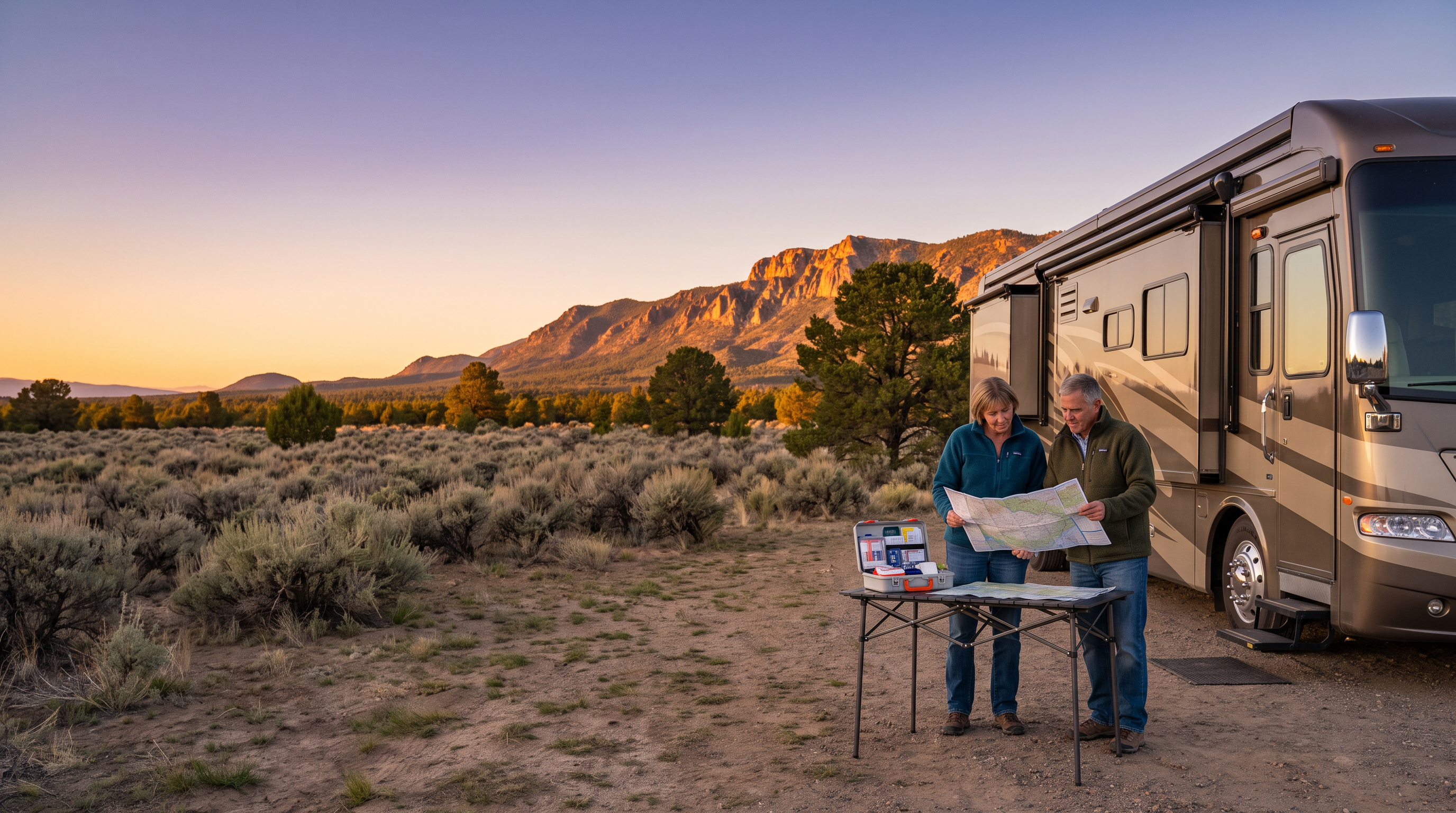
Full-Time RV Insurance: When Your Motorhome Becomes Your Primary Home

An RV can be a vacation vehicle, a seasonal retreat, a cross-country work base, or the place where you sleep most nights. Those are not interchangeable facts when insurance is being arranged. Once a motorhome or travel trailer becomes the place where you live, receive mail, keep most belongings, host visitors, work remotely, or return to between travels, the insurance discussion should become more deliberate than a quick recreational-vehicle quote.
This guide explains the questions full-time RVers should take to a licensed agent, carrier, lender and, where relevant, an RV park, campground, storage facility or attorney. It is educational information, not a policy, coverage determination, domicile or residency opinion, tax advice, legal advice, road-safety certification, or claim promise. Availability and claim results depend on the actual policy, declarations, endorsements, limits, deductibles, state, underwriting, location, use, named insureds, lender requirements and loss facts.
Start with Insure Pacific’s RV insurance overview, then make sure the conversation describes your real life rather than the trip you took five years ago. A trustworthy review begins with how many nights you live in the unit, where it is normally parked, who drives it, whether it is financed, whether it is a motorhome or towable RV, what is kept inside, what is attached or added, and how you would continue living if a covered loss took the unit out of service.
The key change: an RV can be a vehicle and your home at the same time
A motorhome is generally subject to driving, road liability, comprehensive and collision questions. But a full-time RV also creates home-like questions when it is parked: visitor injuries, personal belongings, space in an RV park, association assessments, temporary living needs, water intrusion, fire, smoke, theft, and liability that arises around the unit rather than while it moves. A towable travel trailer or fifth wheel adds another layer because the tow vehicle and trailer can be insured, titled, financed and used differently.
Progressive’s consumer explanation describes full-time RV use as using a motorhome or travel trailer as a permanent residence, typically for more than six months in a year. It identifies personal liability, medical payments and loss-assessment features as examples that may be available in a full-time package. That is useful terminology, but it is not a universal definition or coverage promise. Another carrier may use a different occupancy threshold, policy form, eligibility rule, limit, endorsement, territory or underwriting standard. The only safe assumption is that an RV used as a residence deserves a specific conversation.
Some insurers define full-time RV use by the number of months occupied, while others will focus on the facts of the residence, normal garaging, travel pattern, RV type, ownership, named insureds or planned activity. Do not try to fit your situation into a label that sounds convenient. Explain the number of nights you expect to live in the unit, whether you retain another residence, where the unit will be parked for extended periods, whether it will cross state lines, and what changes are likely in the next policy term. A clear application helps the carrier evaluate the actual exposure and gives you a better chance to identify a mismatch before a claim.
A good first question is not “Do I have full-timer insurance?” It is “What exact use has the insurer agreed to insure?” Be able to explain whether the RV is your only residence, your main residence with frequent travel, a long-term seasonal dwelling, a stationary unit at an RV park, a unit used in multiple states, a short-term rental, a unit shared with other drivers, or a trailer that stays in one place while another vehicle provides transportation. It is much easier to correct a classification or address issue before a loss than to explain a mismatch after one.
Your living arrangement is more than an address line
A full-time RVer may have a mailing address, a state of registration, a state used for voting or licensing, a family member’s address, a campground address, and a sequence of places where the RV stays. Those concepts can have different legal, tax, licensing and insurance implications. Do not assume one of them automatically decides every other issue. Tell the insurance professional the facts and ask which address, garaging location, storage location, physical location and state-specific information must appear in the application or policy.
For Oregon owners, the DMV identifies motor homes, travel trailers and campers as recreational vehicles for title-and-registration context and calls for applicable recreational-vehicle standards documentation or certification. Keep your title, VIN, lienholder information, purchase documents and serial numbers in a secure digital location. That record does not create insurance coverage, but it can make an application, renewal or claim much easier to document. If Oregon is your home base, Insure Pacific’s Oregon insurance information is one starting point for a multi-policy review.
Build the policy review around the risks of living in the RV
The right program is not a list of labels. It is a coordinated set of policy questions. A full-time RVer should understand what is insured, which causes of loss are addressed, what property is subject to a limit or special deductible, who is an insured, when the policy is effective, and what the policy requires after an accident, theft, water loss, fire, windstorm or liability allegation.
Liability while moving and liability while parked
Driving liability helps address a different set of risks than a guest falling near your steps while the motorhome is parked for months. Ask the agent to explain the policy’s treatment of bodily injury and property damage while driving, while parked, during setup, at a campground, in a driveway, in storage, and during loading or unloading. Ask whether medical-payments coverage is available and what it does or does not do. A visitor’s claim can involve very different facts from a highway crash, and the policy should be reviewed in that light.
Your personal auto program also matters. The car you drive behind the motorhome, the pickup that pulls the trailer, a rental car, a permitted driver, a friend borrowing the unit, and a vehicle used for errands each raise separate questions. Review auto insurance alongside the RV policy rather than treating it as an unrelated bill. Identify every titled vehicle, who uses it, where it is garaged, whether a vehicle is towed, whether a trailer is attached, and whether anyone uses a personal vehicle for business or delivery activity.
Personal belongings do not all have the same limit
When a motorhome is home, the contents are no longer just camping chairs and a cooler. They may include clothing for every season, computers, cameras, tools, bikes, kitchen equipment, medical equipment, hearing aids, jewelry, art, sporting gear, dog supplies, solar gear, a satellite system, furniture, documents and financial records. A policy can distinguish between permanently attached equipment, awnings, accessories, detached property, property in a storage compartment, property in an outbuilding, and property temporarily away from the RV.
Create a realistic inventory. Take wide photos of each interior area and close photos of serial numbers, upgrades and valuable items. Keep receipts, appraisal records and installation invoices when available. If you work remotely, tell the agent about employer-owned equipment, inventory, tools, business samples, online sales, professional cameras or other commercial use. Do not assume that personal-property wording automatically extends to every business item or every expensive category.
Traditional homeowners insurance can be a useful comparison point because it familiarizes people with personal property, personal liability and additional-living-expense concepts. It is not proof that a homeowners policy covers a full-time RV. The correct question is how the RV policy, any retained home policy, renters policy, storage contract, park agreement and any separate endorsements apply to the facts of your household.
Loss assessment, park rules and place-based responsibility
Some full-time RVers stay in a park, membership community, resort or association that has common property and community rules. Ask for the written rules and any insurance requirements before relying on an assumption about common areas, utilities, trees, docks, gates, laundry facilities, clubhouses, sidewalks, pads, mail areas or shared amenities. A full-time RV package may offer loss-assessment coverage in some circumstances, but the trigger, eligible assessment, amount, exclusions and policy conditions can be narrow.
Also review the park’s rules on guests, pets, exterior equipment, decks, sheds, skirting, seasonal occupancy, renter use, subleasing, propane, generators, fire pits, storm preparation and emergency evacuation. A park agreement does not replace your policy, and your policy does not excuse a breach of a park rule. Keep a copy of the agreement with your insurance records so you can ask informed questions before an incident.
Valuation, financing and the problem a total loss can create
A total loss is a financial event as well as a transportation problem. An owner may have a loan balance, a trade-in balance, a long list of upgrades, depreciation, a specialized floor plan, a vehicle that is difficult to replace, and nowhere else to live. It is risky to learn the policy’s valuation method after an accident, fire, theft or major storm.
Washington’s insurance regulator notes that collision coverage generally pays actual cash value when a motorhome is totaled and may not pay the amount still owed to a lender. It describes GAP coverage as a way to address, subject to its terms, the difference between the loan balance and actual cash value. That explanation points to an important review exercise: write down the payoff amount, stated or purchase value, improvements, deductible, valuation basis and the price of a comparable replacement before asking whether the policy and finance agreement line up.
Actual cash value, replacement cost, agreed value and GAP are not synonyms
Actual cash value generally reflects the value of a comparable used unit and may take depreciation into account. Replacement-cost wording, where available, can have its own eligibility criteria, age limits, settlement procedures and conditions. Agreed-value or stated-value language can work differently depending on the policy form. GAP relates to the difference between a covered total-loss payment and an outstanding loan or lease amount; it does not necessarily pay every finance-related charge, missed payment, service contract, late fee or upgrade.
Ask the agent to show you the applicable valuation language and ask the lender what happens after a total loss. Do not accept a sales conversation as a substitute for the policy, endorsement and finance documents. If the RV has solar panels, inverters, a battery system, a wheelchair lift, custom cabinetry, upgraded tires, satellite equipment, a special hitch, a generator, an awning, custom electronics or other expensive additions, keep invoices and clarify whether they are part of the unit’s scheduled value, insured under an accessory limit, or subject to another condition.
A higher liability limit and a coordinated personal umbrella policy may also deserve discussion when you have substantial assets, frequent visitors, a long travel footprint, a towed vehicle, rental exposure, or activity that creates a larger liability risk. Umbrella coverage is not automatic and does not simply increase every policy limit. Underlying-policy requirements, exclusions, territory, eligible vehicles and insured status all matter.
Water, freeze, roof and electrical losses: a home on wheels has mobile weak points
Water damage is a common reason to take RV maintenance seriously. A roof seam, slide-out seal, window, plumbing connection, water heater, refrigerator line, sink fitting, toilet valve, exterior shower, holding-tank connection or freeze-damaged pipe can turn a small problem into extensive interior damage. The fact that a loss begins with water does not tell you whether it is covered. Sudden and accidental discharge, long-term seepage, wear and tear, inadequate maintenance, freezing, mold, flood, backup, surface water and mechanical breakdown can be treated very differently by policy terms.
Read Insure Pacific’s guide to water damage, hidden leaks and backup coverage questions for concepts that may help you prepare the right questions. Then adapt those questions to the RV: Where is the unit parked in winter? Is it occupied? Is heat maintained? Are tanks drained or heated? Is water shut off during absences? Who checks the unit? Are roof and slide seals inspected? Do you have photos of current condition? Is a storage facility responsible for anything beyond a parking space?
Fire, propane, generator and carbon-monoxide readiness
The U.S. Fire Administration reports an estimated annual average of 4,200 RV fires from 2018 through 2020. Its safety guidance calls for checking propane supply lines, directing generator exhaust away and downwind from the RV, avoiding overloaded electrical outlets, maintaining accessible extinguishers, keeping exits clear, and having the vehicle inspected by a trained technician at least annually. Those are life-safety steps, not insurance requirements or coverage guarantees, but they are exactly the sort of habits that can reduce both severity and disruption.
Set a documented routine. Test smoke and carbon-monoxide alarms as the manufacturer directs. Confirm that every person can open the main door and emergency exits. Know the location and operation of extinguishers. Inspect battery systems, shore-power connections, adapters, cords, generator exhaust, propane fittings and appliances with qualified professionals when needed. Keep service records and replacement dates. Do not alter electrical or fuel systems beyond your competence; have work performed and documented by qualified technicians.
If you carry a motorcycle, scooter or similar recreational vehicle with the RV, its insurance may require its own review. A bike stored on a carrier, inside a toy hauler, at a campground or in storage can still have its own liability, theft, comprehensive, collision, accessory and transportation questions. Insure Pacific’s motorcycle insurance page is a helpful place to begin when the RV lifestyle includes another vehicle.
American West travel means preparing for wildfire, wind, smoke and fast route changes
Full-time RV life in Oregon and the broader American West can mean wildfire-prone forests, dry grasslands, mountain passes, high winds, long distances between services, winter storms, extreme heat and smoke. The right insurance conversation should account for where you actually spend time—not just the state printed on an older quote.
USFA wildfire-evacuation guidance encourages people to plan and practice primary and alternate routes, sign up for local alerts, keep fuel available, pack essentials and leave promptly when directed. It specifically cautions against driving trailers or large RVs during evacuation if you are unfamiliar with operating them. A large vehicle needs turning room, fuel, reliable tires, visibility, route awareness and a calm plan. A stalled or abandoned RV can create danger for you and other evacuees.
Review Insure Pacific’s wildfire insurance information before fire season, then make a written RV evacuation plan. Include alert sources, two route options, an out-of-area contact, pet supplies, medication, identification, titles, policy information, a charged phone, backup power, water, cash, vehicle keys, a current fuel threshold and a safe place to meet. Photograph the exterior and interior before peak season. Store copies of insurance and ownership records outside the RV and in a secure cloud location.
Ask the carrier how the policy treats smoke, ash, heat, wind, falling trees, wildfire-related road closures, temporary lodging, vehicle evacuation, storage location, park closure and loss of use. Do not assume a word such as “wildfire” answers every question. The cause of loss, location, policy form, coverage part, limit, deductible, duration and facts can all affect a claim.
Independent Insurance Agency Since 1935
Not Sure If You Have the Right Coverage?
Our licensed agents compare 50+ carriers to find you the best coverage at the right price — at no extra cost to you.
Storage, lending, renting and business use can all change the answer
Full-time does not mean the RV is occupied every day. You may fly to see family, take an overseas trip, stay in a hospital, lease an apartment temporarily, or place the unit in winter storage. Tell the insurer if the RV will be unoccupied or stored for an extended period, where it will be stored, whether it has power or heat, whether someone checks it, and whether water is drained or shut off. A storage facility’s agreement may have its own limits of responsibility. Read it before parking the RV there.
Lending the RV to a family member, putting it on a peer-to-peer rental platform, delivering it for a fee, using it as a short-term rental, operating a mobile business, transporting customers, or using it as a work office can create underwriting and coverage issues. A personal policy may exclude or restrict certain commercial, rental, delivery, passenger-for-hire or business activities. Ask before the first rental or work trip—not after a guest damages the unit or an accident occurs.
It can also be wise to coordinate the RV discussion with broader household planning. If the RV is a major asset and a home, think about emergency contacts, beneficiaries, powers of attorney, digital accounts, health information and replacement needs. Insure Pacific’s life insurance resources can support a separate family-protection conversation; life insurance does not replace RV coverage, but both can be part of a responsible household plan.
What to do after an accident, fire, theft or major water loss
Safety comes first. Get medical help, call emergency services when appropriate, move out of immediate danger, protect the scene if it is safe, and follow instructions from law enforcement, fire officials, park management or emergency management authorities. Do not drive a damaged RV if it is unsafe. Do not run a generator or propane system when damage or a leak is suspected. Do not discard damaged property until the carrier says it is appropriate, except where safety, sanitation or emergency mitigation requires action.
Then preserve facts. Take photos and video of the unit, damage, exterior, interior, campsite or road scene, serial numbers, contents, related vehicles, weather conditions and temporary repairs. Save towing, hotel, repair, storage, park, cleanup and replacement receipts. Write a short factual timeline while details are fresh. Keep a copy of the police or incident report number, witness information, service invoices and communications with the lender or campground.
Report a potential claim promptly through the policy’s required channel. Insure Pacific’s claims center explains how to begin that process. Do not admit liability, promise payment, accept a settlement, authorize major repairs, or assume coverage based on a verbal estimate. A claim professional needs the policy, facts, evidence and applicable endorsements to evaluate what may apply.
A full-time RV insurance review checklist
Use this checklist before a move, purchase, renewal, major upgrade or long trip:
1. Confirm the RV’s real use: full-time, seasonal, recreational, stationary, travel-heavy, rented, business-related or a combination.
2. Confirm the named insureds, drivers, garaging location, usual parked location, storage location, mailing address, state information and lienholder are accurate.
3. Review liability while driving and while parked, medical-payments options, visitor exposure and any association or park assessment questions.
4. Inventory personal belongings, expensive categories, electronics, tools, business property, accessories and permanently attached upgrades.
5. Ask how the RV is valued after a total loss and compare actual cash value, replacement cost, agreed value, deductibles, loan payoff and GAP options.
6. Review comprehensive and collision terms, roadside assistance, towing, temporary-living or transportation support where available, and any limitation that matters to a full-time household.
7. Document roof, slide, plumbing, heating, battery, electrical, propane, generator and alarm maintenance. Ask how freeze, seepage, water, mold, backup and maintenance-related losses are treated.
8. Make an RV-specific wildfire and weather plan with alerts, routes, fuel, records, pets, medicines and an early-departure threshold.
9. Ask before lending, renting, listing, using the RV for work, transporting people for a fee, or changing the unit’s location or occupancy pattern.
10. Store digital copies of policies, titles, registrations, loan documents, receipts, serial numbers, service records, photos and emergency contacts outside the RV.
Before the RV becomes your primary home—or before another renewal passes—ask Insure Pacific for a full-time RV insurance review. A licensed agent can compare carrier options and help turn the facts of your use, property, travel and financial responsibilities into focused coverage questions. No coverage is bound, changed or guaranteed until the appropriate carrier issues the policy or endorsement.
Frequently asked questions about full-time RV insurance
Is an RV policy the same as homeowners insurance when I live in the motorhome full time?
No. An RV used as a primary residence can raise home-like liability, personal-property, visitor and loss-of-use questions, but the policy is still governed by its own form, declarations, definitions, exclusions, endorsements, limits and conditions. Ask the agent what full-time use means for the particular carrier and which coverage features are actually offered.
How many months can I live in an RV before I should tell the insurer?
Tell the insurer before the use changes, not after a threshold has already been crossed. Some carriers may use a six-month benchmark for full-time use, but definitions and underwriting vary. Explain your actual occupancy, route, usual parking location and ownership situation so the insurer can determine the appropriate program.
Does a full-time RV policy cover everything inside the motorhome?
Do not assume that it does. Personal-property limits, sublimits, deductibles, proof-of-ownership requirements, business-property restrictions, special categories and location conditions can apply. Build an inventory and ask about the categories that matter most to you.
If my financed motorhome is totaled, will insurance pay off the loan?
Not necessarily. A total-loss settlement may use actual cash value, subject to the policy and deductible, while the loan balance can be higher. Discuss the valuation method, payoff amount and whether GAP is available and appropriate. Read the actual insurance and finance documents rather than relying on a sales description.
Does RV insurance cover wildfire smoke, evacuation and a park closure?
Coverage can depend on the cause of loss, policy form, location, specific coverage part, limit, deductible and facts. Ask your agent to review the policy before fire season. Separate evacuation planning from insurance planning: make a route, fuel, alert and records plan even if you have strong insurance.
Can I rent out or lend my full-time RV?
Possibly, but you should ask first. Peer-to-peer rental, short-term rental, casual lending, business use, delivery and passenger use can change underwriting and may be restricted or excluded under a personal RV policy. Get clear guidance before keys are handed over.
Sources and further reading
*This article provides general educational information only. It is not insurance, legal, tax, residency, domicile, financial, DMV, safety, maintenance or claims advice. Insurance availability and claim outcomes depend on the actual policy, declarations, endorsements, exclusions, limits, deductibles, named insureds, underwriting, location, use, jurisdiction and facts. Review your specific situation with a licensed insurance professional and qualified advisers before relying on any coverage or residency conclusion.*
Our Licensed Coverage Area
States highlighted in blue are states where Insure Pacific holds an active insurance license.
Hover to highlight — click a state to visit its insurance page
Our Oregon Office Locations
Hover over a marker to see the office — click to visit their website.
Hover to highlight — click to visit that office's website
Ready to Get Protected?
Talk to a Local Oregon Insurance Expert
Insure Pacific has been serving Oregon families and businesses since 1935. We work with 50+ carriers so you get real options — not just one company's answer.
Related Articles
 Personal Insurance
ADU Insurance: Is Your Backyard Cottage Covered by Your Homeowners Policy?
Read Article → Personal Insurance
Water Damage Insurance: Hidden Leaks, Sewer Backups, Service Lines, Sump Pumps, Mold, and Smart Shutoff Devices
Read Article → Personal Insurance
Home Insurance Replacement Cost in 2026: Why Rebuilding Your Home Could Cost More Than Its Market Value
Read Article → Personal Insurance
Wildfire Insurance in the West: Defensible Space, Home Hardening, Renewals & What to Do After a Non-Renewal
Read Article →Get in Touch
Ready to protect what matters most? Contact us today for a no-obligation insurance review. Our experienced agents are here to help you find the right coverage for your needs.


