

Classic Car and High-Performance Vehicle Insurance in Oregon: The Complete 2026 Guide
Classic Car and High-Performance Vehicle Insurance in Oregon: The Complete 2026 Guide

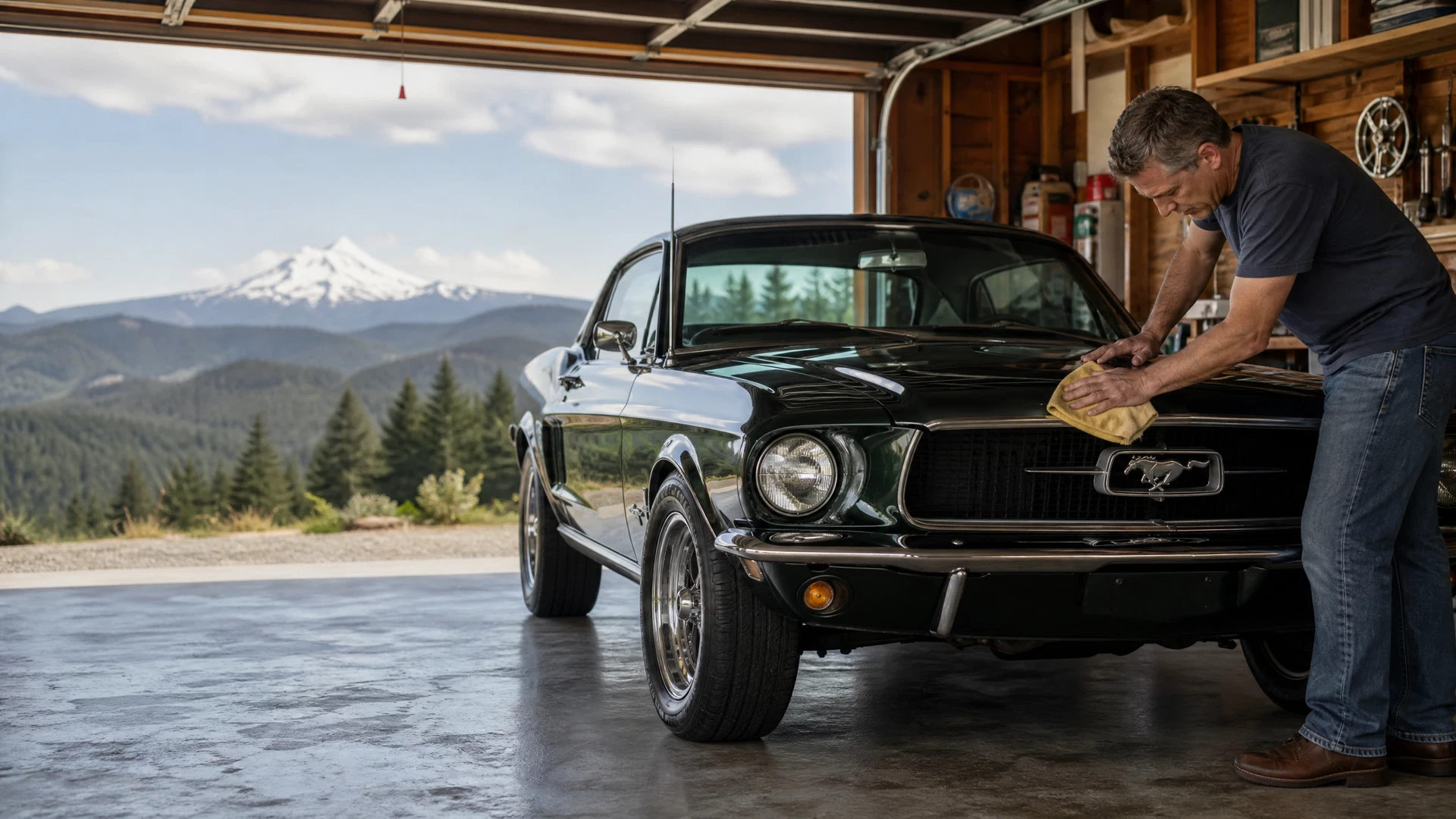
You spent years tracking down the perfect 1967 Mustang Fastback. Or maybe you finally pulled the trigger on that Porsche 911 GT3 you've been dreaming about since college. Either way, the moment you drove it home, one thing became clear: your standard auto insurance policy was not built for this car.
Classic cars appreciate in value. High-performance vehicles carry repair costs that standard carriers struggle to price accurately. Both face risks — theft, track day incidents, storage damage, specialized parts — that everyday auto policies either exclude outright or dramatically underpay. In Oregon and across the American West, where car culture runs deep from the coastal cruises of Brookings to the mountain roads above Bend, getting the right coverage for a special vehicle requires a different approach entirely.
This guide covers everything Oregon and American West owners of classic cars, muscle cars, exotic vehicles, and high-performance sports cars need to know about specialty auto insurance in 2026 — including the carriers that actually understand these vehicles, the coverage gaps that cost owners thousands, and why an independent insurance agent is the only way to access the best specialty markets.
Classic Car vs. Standard Auto Insurance: The Core Difference
The fundamental problem with insuring a classic or high-performance vehicle under a standard auto policy comes down to one concept: how your car's value is calculated after a total loss.
Standard auto insurance pays out based on Actual Cash Value (ACV) — the market value of your vehicle at the time of the loss, minus depreciation. For a 2018 Honda Civic, that system works fine. For a 1969 Corvette Stingray that has appreciated to $85,000, or a 2020 Porsche 911 GT3 RS that holds its value because of its limited production run, ACV can leave you dramatically short of what you actually lost.
Specialty classic and collector car insurance pays out on an Agreed Value basis. Before the policy is issued, you and the insurer agree on the car's value — factoring in condition, rarity, modifications, and market comparables. If the car is totaled or stolen, you receive that full agreed amount with no depreciation deduction. For a vehicle that took you 15 years to restore or $120,000 to acquire, that difference is not academic.
ACV vs. Agreed Value — A Real Example
A 1967 Ford Mustang Fastback purchased for $45,000 in 2018 is now worth $72,000 after restoration. Under a standard ACV policy, the insurer might pay $38,000 after depreciation. Under an agreed value policy, you receive the full $72,000 you and the insurer agreed on at policy inception.
Is Your Classic or Performance Car Properly Valued?
Standard auto policies routinely underpay on specialty vehicles. Insure Pacific works with Hagerty, Grundy, Chubb, and other specialty carriers to get your vehicle properly insured at agreed value — at no extra cost to you.
What Qualifies as a Classic, Collector, or Specialty Vehicle?
Insurance carriers use slightly different definitions, but the general framework is consistent across the industry:
- Classic cars: Typically 25+ years old, in good to excellent condition, driven primarily for pleasure, exhibitions, or club events — not as a daily commuter
- Collector cars: May be newer than 25 years if they have significant market value, limited production runs, or historical significance (e.g., a 2005 Ford GT, a 2017 Dodge Viper ACR)
- Muscle cars: American performance vehicles from the 1960s–1970s — Mustangs, Camaros, Chevelles, Chargers, Barracudas — regardless of whether they are stock or modified
- Exotic and luxury cars: Ferrari, Lamborghini, McLaren, Aston Martin, Bentley, Rolls-Royce — vehicles where repair costs, replacement parts, and total value require specialty underwriting
- High-performance sports cars: Porsche 911 GT3/GT4, Corvette Z06/ZR1, Shelby GT500, BMW M3/M4 Competition — vehicles where standard carriers charge punishing rates due to elevated crash and theft risk
- Hot rods and custom builds: Modified vehicles where the value of custom work, fabrication, and aftermarket components must be specifically scheduled and agreed upon
In Oregon and the American West, specialty vehicles are everywhere — from the classic car shows in Bend and Medford to the mountain road drives organized by Porsche Club of America's Oregon Region chapter. The Pacific Northwest's relatively mild climate (outside of the Cascades) and scenic driving routes make it a natural home for car enthusiasts, and the insurance needs of that community are distinct from everyday auto coverage.
The 6 Biggest Coverage Gaps for Classic and Performance Car Owners
1. Actual Cash Value Payouts on Appreciating Vehicles
As covered above, this is the most financially damaging gap. A standard policy will depreciate your 1970 Chevelle SS 454 or your limited-production Dodge Viper just like it would depreciate a used Camry. The result: a payout that may be $20,000, $40,000, or more below the vehicle's actual market value. Agreed value coverage eliminates this problem entirely.
2. Track Day and HPDE Exclusions
If you take your Porsche 911 or Corvette to a High Performance Driver Education (HPDE) event at Portland International Raceway or any other track facility, your standard auto policy almost certainly will not cover damage that occurs on the track. Most standard policies contain explicit exclusions for any damage sustained during racing, speed contests, or organized track events — even non-competitive HPDE events where you are simply learning performance driving techniques.
Specialty carriers like RLI and EPIC Motorsports offer dedicated HPDE/track day insurance that covers damage to your vehicle during these events. This is a separate policy from your regular coverage and must be obtained specifically for track use. If you drive your performance car on track even once a year without this coverage, you are self-insuring a vehicle that may be worth $80,000 or more.
3. Modified Vehicle Coverage Gaps
Aftermarket modifications — supercharger kits, custom exhaust systems, performance suspension, carbon fiber body panels, custom wheels, upgraded brakes — add significant value to a vehicle that a standard policy will not recognize. If your car is totaled and you have $15,000 in documented modifications, a standard ACV policy will typically pay out the stock vehicle value only. Specialty policies can schedule specific modifications and include their value in the agreed amount.
4. Spare Parts and Tools Coverage
Classic car owners often accumulate significant inventories of spare parts — NOS (new old stock) components, rebuilt carburetors, period-correct trim pieces, specialized tools. Standard auto policies provide zero coverage for parts stored in your garage. Specialty classic car policies from carriers like Hagerty ($750), American Modern ($2,000), and OpenRoad ($1,000) include specific coverage for spare parts and automotive tools.
5. Specialized Repair and Restoration Coverage
If your 1965 Shelby Cobra replica or your numbers-matching 1969 Camaro Z/28 is damaged, you do not want it repaired at a standard body shop. Specialty policies allow you to choose your own repair facility — whether that is a marque-specific restoration shop in Portland or a trusted classic car specialist in Bend — and cover the cost of period-correct parts and expert labor. Standard policies may require you to use in-network shops that have no experience with your vehicle.
6. Theft Risk for High-Performance Vehicles
High-performance vehicles are disproportionately targeted by thieves. According to the Insurance Institute for Highway Safety, the Chevrolet Camaro ZL1 has a vehicle theft rate 39 times higher than the average for all vehicles. Exotic and luxury vehicles are frequently targeted for both outright theft and catalytic converter theft. Comprehensive coverage limits on a standard policy may not reflect the true replacement cost of a stolen exotic or collector vehicle.
The Best Specialty Carriers for Classic and Performance Vehicles
As an independent agency working with 50+ carriers, Insure Pacific has access to the full spectrum of specialty auto markets. Here is how the leading specialty carriers compare for Oregon and American West vehicle owners:
| Carrier | Best For | Mileage Limit | Spare Parts |
|---|---|---|---|
| Hagerty | Restored vehicles, club use, in-restoration coverage | 7,500/yr | $750 |
| Grundy | Unlimited mileage, muscle cars, exotics of any age | Unlimited | $500 |
| American Collectors | Nationwide availability, disaster relocation | 7,500/yr | $500 |
| American Modern | Flexibility, bundling, restoration-only coverage | Up to unlimited | $2,000 |
| Chubb | High-value vehicles, OEM parts, no mileage limit | Unlimited (hobby) | $1,000 |
| Safeco | Regular drivers, bundling with home/auto | Up to 10,000/yr | Not included |
The right carrier depends on how you use your vehicle, its value, whether you take it to track events, and how it is stored. An independent agent can run your specific vehicle and usage profile through multiple specialty markets simultaneously — something a captive agent or direct writer simply cannot do.
Oregon-Specific Considerations for Specialty Vehicle Owners
Storage Requirements and Oregon's Climate
All specialty carriers require that covered vehicles be stored in a locked, enclosed structure — a garage, barn, or dedicated storage facility. In Oregon, this requirement intersects with several regional realities. Coastal humidity in areas like Brookings can accelerate rust and corrosion on unprotected vehicles. Eastern Oregon's temperature swings can stress seals, gaskets, and rubber components. And wildfire smoke — increasingly a summer reality across Central Oregon — can damage paint, seals, and interior materials even on vehicles stored in partially open structures.
If you store your classic or performance vehicle in a structure that is not fully enclosed, or in a location with elevated wildfire risk, discuss this with your agent before binding coverage. Some carriers will require additional documentation or may adjust terms based on storage conditions.
Oregon's Minimum Liability Requirements
Oregon requires minimum liability coverage of $25,000 per person / $50,000 per accident / $20,000 property damage for all registered vehicles, including classic cars. However, for a high-performance vehicle capable of significant damage in an accident, these minimums are dangerously low. If you cause an accident in your Porsche 911 that results in serious injuries and totals another vehicle, a $50,000 per-accident limit will be exhausted quickly. Most specialty vehicle owners should carry at minimum $100,000/$300,000 liability, and many should consider a personal umbrella policy for additional protection.
Car Shows, Rallies, and Club Events in Oregon
Oregon has a vibrant car culture — from the annual Bend Car Show to Porsche Club of America Pacific Northwest Region events, Cars and Coffee gatherings in Portland, and the classic car cruises along the Oregon Coast. Most specialty policies cover participation in exhibitions, club events, and pleasure driving. However, any event that involves timed runs, competitive racing, or autocross requires separate event coverage. Confirm with your agent before participating in any organized event that involves speed or competition.
Insuring a Collection? We Can Help Structure the Whole Program
Whether you have one classic car or a collection of ten, Insure Pacific can structure a comprehensive specialty auto program — agreed value coverage, spare parts, HPDE endorsements, and umbrella liability — all coordinated through one independent agency with access to every major specialty market.
Talk to a Specialty Auto Expert →High-Performance Sports Cars: A Special Case
High-performance sports cars — Porsche 911 GT3, Corvette Z06, Shelby GT500, BMW M3 Competition, Ferrari 488, McLaren 570S — present a unique insurance challenge. They are not necessarily old enough to qualify as "classic" vehicles, but they carry risks that standard carriers price very aggressively.
Standard carriers charge more for performance vehicles because the data supports it: Corvette owners are involved in crashes 4.8 times more often than average drivers, and Porsche 911 owners are close behind at 4.6 times. Theft rates for high-performance vehicles are dramatically elevated. Repair costs for carbon fiber body panels, performance brakes, and specialized suspension components far exceed those for standard vehicles.
The result is that many performance car owners end up paying high premiums through standard carriers while still having significant coverage gaps — no agreed value protection, no track day coverage, no spare parts coverage, and repair shop restrictions that prevent them from using specialists who actually understand their vehicle.
Specialty carriers that focus on performance and collector vehicles approach these risks differently. They understand that a Porsche 911 GT3 owner is typically an experienced, financially stable driver who uses the car for weekend pleasure driving and occasional track days — not a 22-year-old commuting to work at high speed. The result is often better coverage at comparable or lower premiums than a standard carrier would charge.
How to Get the Right Coverage: A Step-by-Step Guide
Step 1: Document Your Vehicle's Value
Before approaching any insurer, gather documentation of your vehicle's current market value. For classic cars, this means recent comparable sales data from Barrett-Jackson, Mecum, or Bring a Trailer auction results. For modified vehicles, compile receipts for all aftermarket work. For exotics, reference current dealer asking prices and recent private sale data. This documentation supports the agreed value negotiation with the carrier.
Step 2: Assess Your Usage Pattern
Be honest about how you use the vehicle. Do you drive it to car shows? Take it to track days? Drive it on weekend mountain road runs? Use it for occasional longer trips? Your usage pattern determines which carrier and which coverage options are the right fit. Misrepresenting usage — claiming a vehicle is "garage queen" when it regularly attends track events — can result in denied claims.
Step 3: Confirm Your Storage Situation
Document your storage facility. Specialty carriers require locked, enclosed storage. If you store the vehicle in a shared facility, a storage unit, or a barn, confirm that the structure meets the carrier's requirements before binding coverage.
Step 4: Work with an Independent Agent
This is the most important step. Specialty auto markets — Hagerty, Grundy, Chubb, American Collectors, American Modern — are not accessible through direct writers or captive agents. They are distributed primarily through independent agents who have established relationships with these carriers. An independent agent can simultaneously quote your vehicle through multiple specialty markets, compare coverage terms, and identify the carrier that best matches your specific vehicle, usage, and storage situation.
Insure Pacific works with all of the major specialty auto carriers and has experience placing coverage for classic cars, muscle cars, exotics, and high-performance sports cars across Oregon and the American West. Our agents understand the difference between a numbers-matching restoration and a restomod, between a street-driven track car and a garage queen, and between the coverage needs of a single collector vehicle and a multi-car collection.
Frequently Asked Questions
Does my classic car need to be a daily driver to qualify for specialty coverage?
No — in fact, most specialty carriers require that you have a separate vehicle for daily use. Classic and collector car policies are designed for vehicles used primarily for pleasure driving, exhibitions, and club events, not daily commuting.
Can I insure a car that is currently being restored?
Yes. Carriers like Hagerty offer in-restoration coverage that increases the agreed value by 10% per quarter (up to $25,000) as the restoration progresses. American Modern offers comprehensive-only coverage for vehicles undergoing restoration.
What happens if I take my car to a track day without separate HPDE coverage?
You are self-insuring. Standard auto policies and most classic car policies explicitly exclude damage sustained during track events, racing, or timed speed contests. If you damage your $90,000 Porsche GT3 at Portland International Raceway without HPDE coverage, you pay for repairs out of pocket. HPDE-specific policies from RLI or EPIC Motorsports are available and relatively affordable compared to the risk.
How does wildfire risk affect classic car storage in Oregon?
Wildfire is an increasing concern for vehicle storage in Central and Eastern Oregon. Most specialty policies cover fire damage, including wildfire, as part of comprehensive coverage. However, if your storage facility is in a high-risk fire zone, discuss this with your agent — some carriers may require additional documentation or may adjust terms. Some policies, like OpenRoad, even offer evacuation expense reimbursement to help you move your vehicle out of harm's way before a fire reaches your property.
Can I bundle my classic car policy with my home or regular auto insurance?
In some cases, yes. Carriers like Safeco and Chubb offer both classic car and homeowners insurance, allowing bundling discounts. American Modern also offers homeowners coverage. However, the best classic car carrier for your vehicle may not be the same company that offers the best rate on your home insurance or regular auto policy — an independent agent can run the numbers both ways to determine whether bundling or separating produces better overall value.
Do I need a personal umbrella policy if I own a high-performance vehicle?
Strongly recommended. A high-performance vehicle capable of significant speed and damage in an accident creates elevated liability exposure. Oregon's minimum liability limits ($25,000/$50,000) are inadequate for a vehicle that could cause a serious multi-vehicle accident. A personal umbrella policy providing $1 million or more in additional liability coverage is a cost-effective way to protect your assets. Insure Pacific can quote umbrella coverage alongside your specialty auto policy.
Ready to Properly Protect Your Special Vehicle?
Whether it's a 1967 Mustang, a Porsche 911 GT3, or a collection of ten classics, Insure Pacific has access to every major specialty auto market — Hagerty, Grundy, Chubb, American Collectors, and more. We'll find the right agreed value coverage at the right price, with no obligation.
Our Licensed Coverage Area
States highlighted in blue are states where Insure Pacific holds an active insurance license.
Hover to highlight — click a state to visit its insurance page
Our Oregon Office Locations
Hover over a marker to see the office — click to visit their website.
Hover to highlight — click to visit that office's website
Ready to Get Protected?
Talk to a Local Oregon Insurance Expert
Insure Pacific has been serving Oregon families and businesses since 1935. We work with 50+ carriers so you get real options — not just one company's answer.
Related Articles
 Auto Insurance
Electric Vehicle Insurance in Oregon and the American West: What EV Owners Need to Know in 2026
Read Article →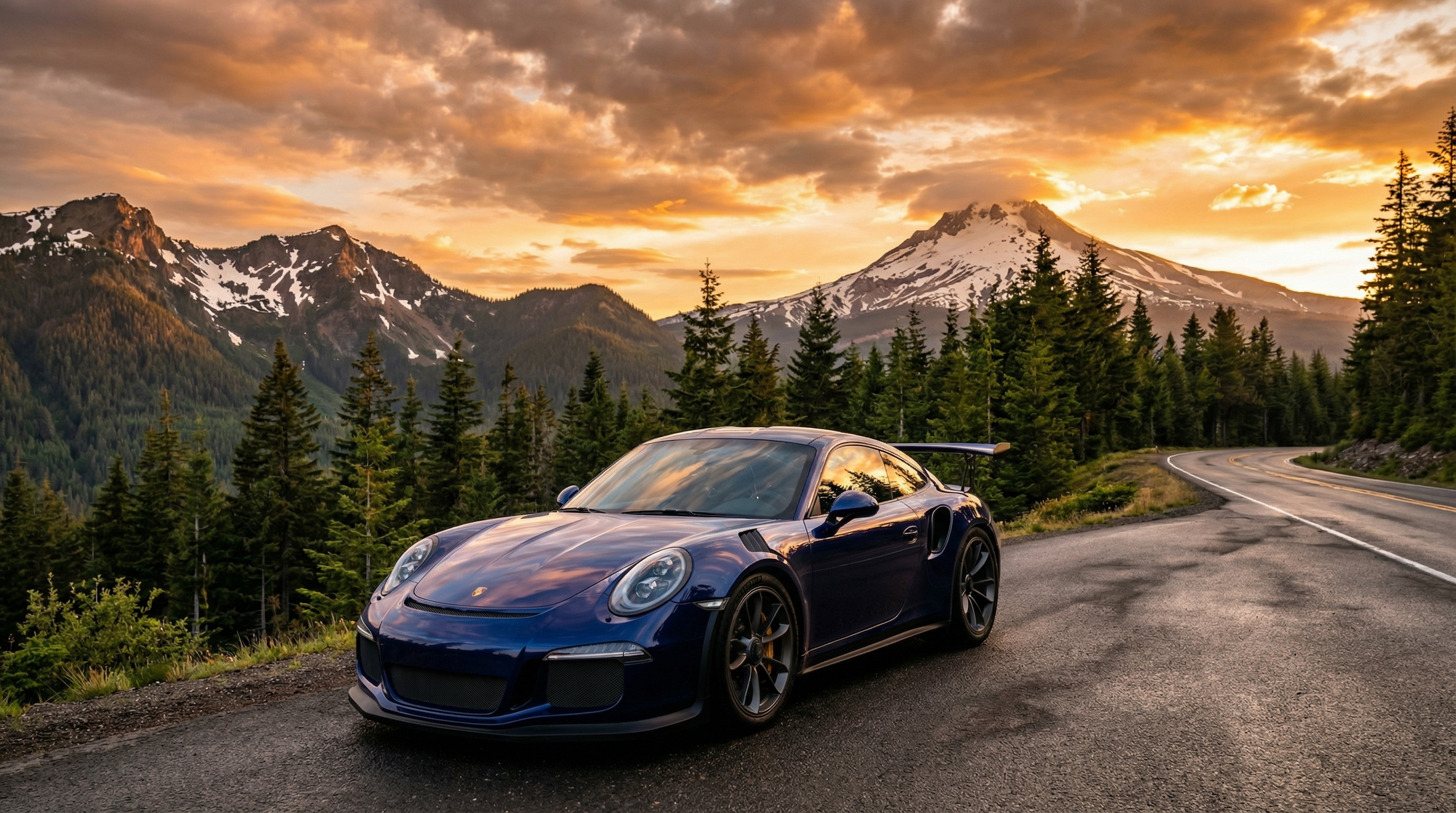 Auto Insurance
High-End Luxury & Exotic Car Insurance in Oregon: What Every Owner Needs to Know
Read Article → Auto Insurance
 in Bend and Central Oregon: What Every Driver Needs to Know
Read Article →Auto InsuranceTeen Drivers in Oregon: How to Add Your Child to Your Auto Policy Without Breaking the Budget
Read Article →Get in Touch
Ready to protect what matters most? Contact us today for a no-obligation insurance review. Our experienced agents are here to help you find the right coverage for your needs.