

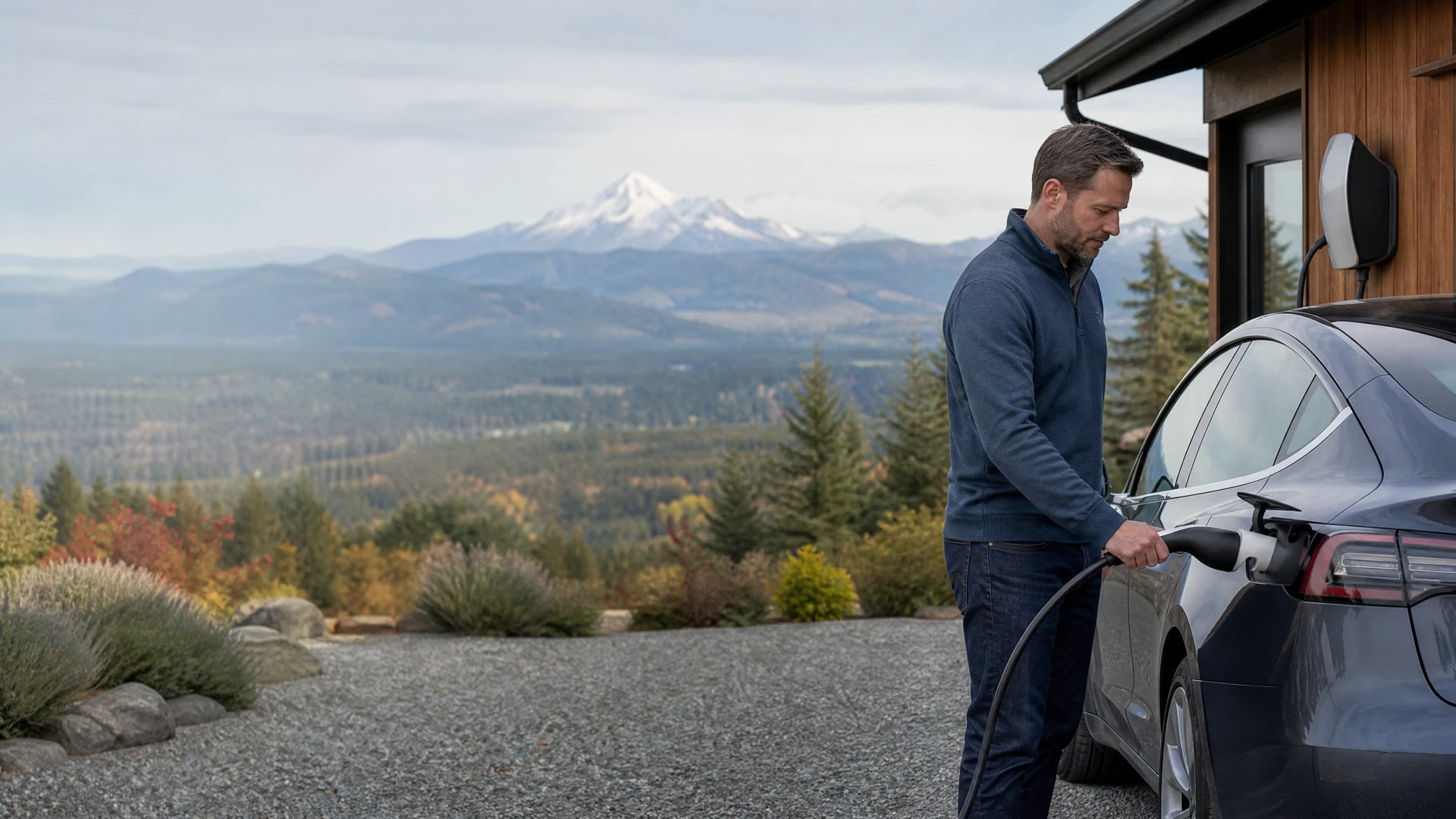

Oregon has one of the highest electric vehicle adoption rates in the country — and one of the highest EV insurance cost gaps. According to Insurify's 2026 analysis of over 235 million quotes, Oregon EV owners pay 36% more to insure their electric vehicles than drivers of comparable gas-powered cars, ranking 4th highest nationally. The average annual cost of insuring a newer EV in Oregon is $3,346, compared to $2,454 for a gas-powered vehicle.
Across the American West, the story is similar. Idaho ranks 6th nationally at 31% higher EV insurance costs. Washington comes in at 30% higher. Nevada, Utah, Colorado, and Arizona all show meaningful EV premium gaps. If you drive an electric vehicle in the West, understanding why your insurance costs more — and how to reduce it — can save you hundreds of dollars a year.
As an independent insurance agency licensed in 10 Western states, Insure Pacific works with 50+ carriers to find the best EV insurance rates for drivers across Oregon, Washington, Idaho, Nevada, California, Arizona, Utah, Colorado, Montana, and South Dakota. This guide covers everything you need to know.
Shopping for EV Insurance in Oregon or the American West?
We compare rates from 50+ carriers to find you the best coverage for your electric vehicle. No pressure, no obligation.
Why Does EV Insurance Cost More?
Electric vehicles cost more to insure for several interconnected reasons. Understanding them helps you make smarter coverage decisions and find ways to reduce your premium.
Higher Vehicle Value
EVs carry higher sticker prices than comparable gas cars, which means higher replacement costs and higher comprehensive/collision premiums.
Expensive Battery Replacement
A 75-kWh Tesla battery pack costs $5,999–$15,500 to replace. Even partial battery damage can result in a total loss declaration.
Specialized Repair Shops
Not every body shop can work on EVs. Limited certified repair networks mean longer wait times and higher labor costs — both of which drive up claim costs.
Scarce Parts
EV-specific components are harder to source than standard auto parts, increasing repair times and costs when claims are filed.
Higher Theft Risk in Oregon
The Portland-Vancouver-Hillsboro metro ranked in the top 25 nationally for auto theft volume in 2025, per the NICB. EV theft often results in total loss.
Wildfire and Weather Exposure
Oregon's wildfire risk and subsequent flooding events increase comprehensive claims. EVs exposed to fire or flood often result in total losses due to battery damage.
EV Insurance Costs Across the American West (2026)
Here's how EV insurance costs compare to gas car insurance across Insure Pacific's 10 licensed states, based on Insurify's 2026 data for newer model year vehicles:
| State | EV Premium Gap | Avg Annual EV Cost | Avg Annual Gas Car Cost |
|---|---|---|---|
| Oregon | 36% | $3,346 | $2,454 |
| Idaho | 31% | $2,063 | $1,573 |
| Washington | 30% | $3,260 | $2,515 |
| Nevada | 26% | $4,142 | $3,286 |
| Colorado | 22% | $3,977 | $3,249 |
| California | 21% | $3,584 | $2,969 |
| Utah | 17% | $2,142 | $1,838 |
| Arizona | 14% | $2,622 | $2,305 |
| Montana | -4% | $2,242 | $2,339 |
| South Dakota | ~5% | ~$2,100 | ~$2,000 |
Source: Insurify 2026 EV Insurance Cost Report. Newer model year (2024+) vehicles. Montana and South Dakota show minimal or negative gaps due to lower EV adoption and rural driving patterns.
What Coverage Does Your EV Actually Need?
EV insurance uses the same fundamental coverage types as standard auto insurance, but several coverages take on added importance for electric vehicle owners.
Liability Coverage
Required in all 10 Western states. Covers bodily injury and property damage you cause to others. Oregon minimums: $25,000/$50,000/$20,000. Higher limits strongly recommended for EV owners given vehicle values.
Comprehensive & Collision
Critical for EV owners. Collision covers accident damage; comprehensive covers theft, fire, flood, and wildfire. Given Oregon's wildfire risk and Portland's theft rates, both are essential for EV owners.
Battery Coverage
Some carriers offer specific battery replacement coverage beyond standard comprehensive. A damaged or degraded battery pack can cost $6,000–$15,500 to replace — verify your policy covers this.
Charging Equipment Coverage
Home charging equipment (Level 2 chargers cost $500–$2,000 installed) may not be covered under standard homeowners policies. Some auto insurers and home insurers offer specific charging equipment endorsements.
Gap Insurance
EVs depreciate quickly in the first 1–2 years. If your EV is totaled, gap insurance covers the difference between what you owe and what the car is worth. Especially important for financed EVs.
Roadside Assistance / Emergency Charging
Standard roadside assistance may not include EV-specific services like flatbed towing (EVs can't be flat-towed) or emergency charging. Look for EV-specific roadside coverage.
The Most Expensive EVs to Insure in Oregon
Not all EVs cost the same to insure. Luxury and high-performance models carry significantly higher premiums. Here are the most expensive EV models to insure nationally, according to Insurify:
More affordable EVs to insure include the Chevrolet Bolt, Nissan Leaf, and Hyundai Ioniq 5.
7 Ways to Lower Your EV Insurance Premium in Oregon
Shop multiple carriers through an independent agent
Direct writers like Tesla Insurance or Geico only offer one rate. An independent agent like Insure Pacific compares 50+ carriers to find the best rate for your specific EV, driving history, and location.
Bundle home and auto insurance
Bundling your EV insurance with your homeowners or renters policy typically saves 15–25% on both policies. Travelers, Safeco, and several other carriers Insure Pacific works with offer strong EV bundling discounts.
Raise your deductible
Increasing your deductible from $500 to $1,000 can reduce your comprehensive and collision premium by 15–30%. Make sure you have savings to cover the higher deductible if needed.
Ask about EV-specific discounts
Many carriers offer discounts for EV or hybrid ownership. Travelers offers discounts for both hybrid and fully electric vehicles. Ask your agent specifically about EV discounts.
Consider usage-based or pay-per-mile insurance
If you drive fewer than 10,000 miles per year, usage-based insurance (Lemonade, Nationwide SmartRide, Progressive Snapshot) can significantly reduce your premium.
Maintain a clean driving record
A single at-fault accident can increase your EV insurance premium by 40–60%. Defensive driving and avoiding tickets keeps your base rate as low as possible.
Review coverage annually
EV values depreciate, repair costs change, and carrier rates shift. An annual review with your independent agent ensures you're not over-insured on an older EV or under-insured on a new one.
Let Us Find You the Best EV Insurance Rate
We work with 50+ carriers including Travelers, Safeco, Progressive, and more to find the best rate for your electric vehicle in Oregon and across the American West.
Learn About Auto Insurance →Oregon-Specific EV Insurance Considerations
🔥 Wildfire Risk
Oregon's wildfire seasons have intensified significantly. EVs exposed to wildfire heat often suffer battery damage that results in total loss. Comprehensive coverage is essential, and some carriers now require wildfire mitigation measures for properties in high-risk zones.
🚗 Portland Theft Risk
The Portland-Vancouver-Hillsboro metro ranked in the top 25 nationally for auto theft volume in 2025 (NICB data). EV theft typically results in total loss. Comprehensive coverage with a reasonable deductible is strongly recommended for Portland-area EV owners.
⚡ Oregon EV Incentives
Oregon's strong EV incentive history has driven high adoption rates. The federal EV tax credit expired September 30, 2025, but Oregon's Clean Vehicle Rebate Program and utility rebates remain available. Higher adoption means more repair infrastructure is developing, which may gradually reduce Oregon's insurance cost gap.
🏔️ Rural Oregon Challenges
Central Oregon EV owners in Bend, Prineville, and surrounding areas face limited EV repair infrastructure compared to Portland. When your EV needs a specialist and the nearest qualified shop has a multi-week wait, that translates directly into higher claim costs and premiums.
EV Insurance Across Insure Pacific's 10 Licensed States
Insure Pacific is licensed in 10 Western states, and EV insurance requirements and costs vary meaningfully across them. Here's what EV owners need to know in each state:
Frequently Asked Questions
Related Insurance Guides
Ready to Find the Best EV Insurance Rate?
Insure Pacific is an independent insurance agency licensed in 10 Western states. We compare 50+ carriers to find the best coverage and price for your electric vehicle — at no extra cost to you.