



Contractors Insurance in Oregon: What Builders, Roofers, and Trades Professionals Must Know Before Taking the Next Job
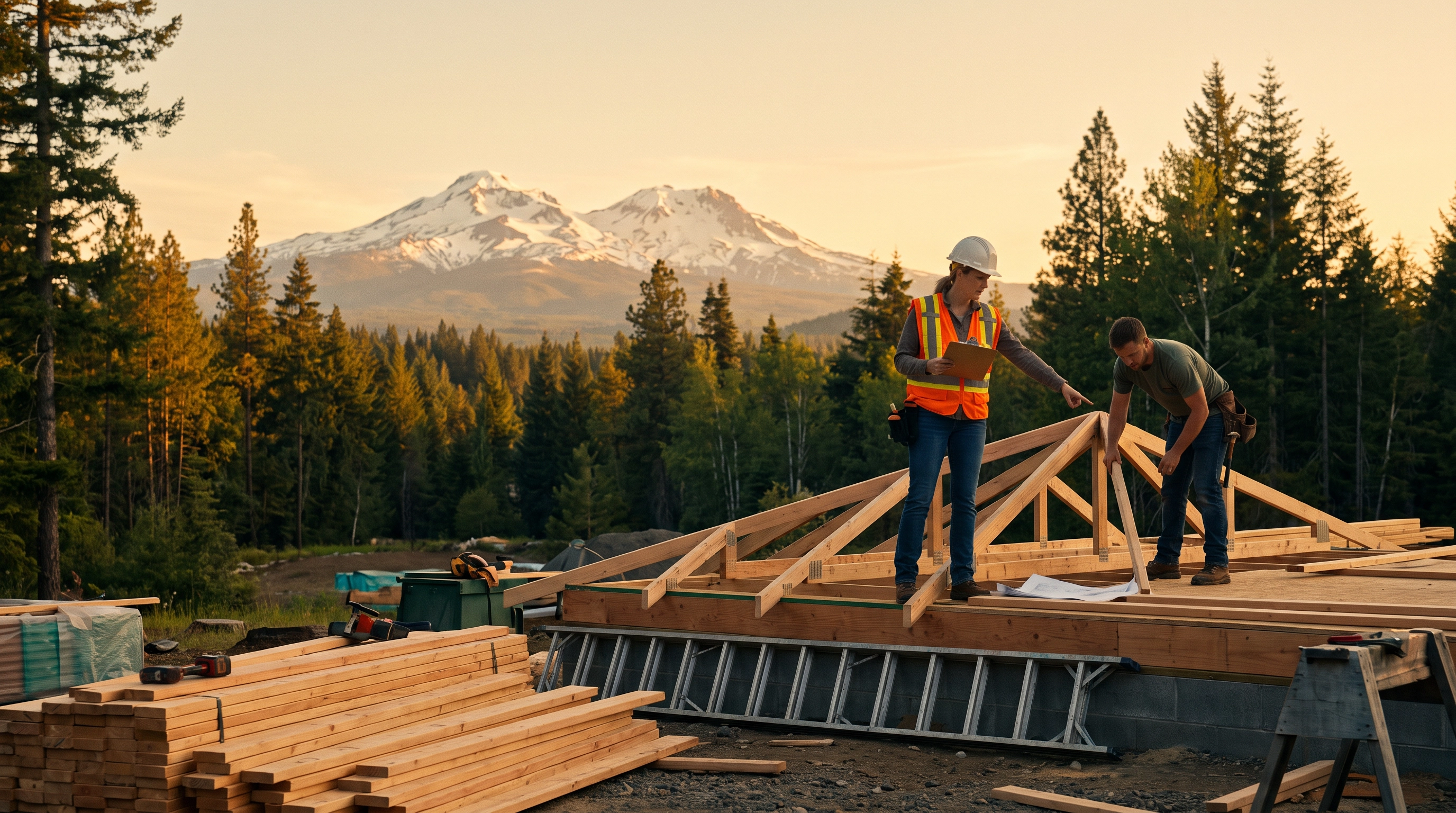
Contractors Insurance in Oregon: What Builders, Roofers, and Trades Professionals Must Know Before Taking the Next Job

You have a general liability policy. You have workers' comp. You have a CCB license and a bond. You are legal, licensed, and ready to work.
But are you actually covered for the job you are about to take?
For most Oregon contractors — roofers, framers, electricians, plumbers, HVAC technicians, painters, and landscapers — the answer is more complicated than it should be. The insurance industry has a habit of selling policies that look complete on a certificate of insurance but contain gaps that only become visible after a claim. And in construction, claims do not always happen on the day of the work. They happen six months later when a roof leaks. Two years later when faulty wiring causes a fire. Three years later when a plumbing connection fails behind a finished wall.
This guide is not a repeat of the basics. If you want a comprehensive overview of every policy type Oregon contractors need, see our Complete Guide to Contractor Insurance in Oregon. This guide is about the five specific coverage questions you need to answer before you take the next job — the gaps that catch Oregon trades professionals off guard, and what to do about them.
Question 1: Does Your Policy Cover Completed Operations?
Completed operations coverage is the part of your general liability policy that responds to claims arising from work you have already finished. It is, in many ways, the most important coverage a contractor can have — and it is the one most frequently undercut by cheaper policies.
Here is why it matters: Oregon's statute of repose for construction defects is six years. That means a homeowner can file a lawsuit against you for defective work up to six years after the project is completed. If a roofer installs flashing incorrectly in 2024 and the resulting water intrusion damages the home's structure in 2027, the roofer faces a completed operations claim — not an operations claim. If the roofer's policy has inadequate completed operations limits, or if the policy was allowed to lapse in the intervening years, there may be no coverage at all.
The problem is that completed operations coverage is often sublimited or excluded in lower-cost general liability policies. A policy that advertises $1 million per occurrence in general liability may have only $100,000 or $250,000 in completed operations coverage — or may require a separate endorsement to activate it at full limits. Adding completed operations to an additional insured endorsement (which most project owners and general contractors require) typically increases the premium by 15 to 25 percent, and some carriers make this endorsement difficult to obtain.
What to check before the next job: Ask your agent to confirm that your completed operations aggregate limit equals your general liability aggregate limit — typically $2 million. If you are adding a project owner or general contractor as an additional insured, confirm that the additional insured endorsement includes completed operations coverage (CG 2010 or CG 2037 form language). If your policy uses a CG 2010 form without a CG 2037 endorsement, your additional insured does not have completed operations protection — and many project owners will reject your certificate.
Trades most exposed: Roofers, electricians, plumbers, HVAC technicians, and any trade whose work is concealed behind finished surfaces. The longer the lag between installation and failure, the more critical completed operations coverage becomes.
Question 2: Are Your Tools and Equipment Actually Covered?
Here is a scenario that plays out regularly in Oregon: a contractor parks a work truck overnight at a job site in Bend. The next morning, $8,000 in tools — nail guns, a circular saw, a drill press, a laser level — are gone. The contractor files a claim with their general liability carrier. Denied. Files a claim with their commercial property carrier. Denied — the tools were not at the insured premises. Files a claim with their personal auto carrier. Denied — the tools were not part of the vehicle.
This is not a coverage dispute. This is a coverage gap. General liability insurance covers damage you cause to others. Commercial property insurance covers property at your business location. Neither covers tools and equipment while they are in transit, at a job site, or in a vehicle.
The correct coverage is an inland marine policy — commonly called contractor's tools and equipment insurance. This policy follows your equipment wherever it goes: job site, vehicle, storage unit, or your shop. It covers theft, vandalism, fire, and accidental damage. For most Oregon contractors, a basic tools and equipment policy runs $300 to $1,500 per year — a small fraction of the replacement cost of a professional tool inventory.
For contractors with larger equipment — excavators, skid steers, compressors, generators, scissor lifts — the inland marine policy should be structured as a scheduled equipment floater, with each piece of equipment listed individually at its replacement value. Equipment theft is a significant and growing problem in Oregon's construction market, particularly in the Bend, Redmond, and Medford areas where construction activity is high and job sites are often remote.
What to check before the next job: Confirm that you have an active inland marine or tools and equipment policy. Review the per-item and aggregate limits to ensure they reflect the current replacement value of your tool inventory. If you have recently purchased new equipment, update the schedule. If you are renting equipment for a specific job, confirm whether your policy covers rented equipment or whether you need a separate endorsement.
Insure Pacific's commercial insurance agents work with Oregon contractors every day. We will review your current policy, identify completed operations gaps, tools coverage holes, and subcontractor exposure — and compare options across 50+ carriers to close them. No cost, no obligation.
Get a Free Coverage Review → (541) 238-7775 Text Us!Question 3: What Happens If a Subcontractor Gets Hurt — or Causes Damage?
Subcontractor management is one of the most complex insurance issues in Oregon construction, and it is one that general contractors and specialty contractors alike frequently get wrong.
Oregon law requires any employer with one or more employees to carry workers' compensation insurance. But the definition of "employee" in Oregon's workers' compensation statutes is broader than most contractors expect. If you hire a subcontractor who does not carry their own workers' compensation policy, Oregon's Workers' Compensation Division may treat that subcontractor as your employee — which means you are responsible for their medical costs, lost wages, and permanent disability benefits if they are injured on your job site.
The financial exposure is not theoretical. A fall from a roof, a saw injury, or an electrical accident can generate medical bills of $50,000 to $300,000 or more. If the injured worker is classified as your employee because their subcontractor did not have workers' comp, you are on the hook for those costs — plus potential fines from the Oregon Workers' Compensation Division for operating without required coverage.
The same issue applies to general liability. If a subcontractor causes property damage or injures a third party on your job site, and the subcontractor does not have adequate general liability insurance, the project owner or injured party will look to you as the general contractor. Your GL policy may respond, but your insurer will then seek to recover from the subcontractor — and if the subcontractor has no assets or coverage, you may ultimately bear the cost.
What to do before the next job: Require every subcontractor to provide a current certificate of insurance showing general liability at $1 million per occurrence and workers' compensation at statutory limits before they set foot on your job site. Verify that the certificate names you as an additional insured on their general liability policy. Keep copies of all certificates on file. If a subcontractor cannot provide current certificates, either require them to obtain coverage or do not hire them — the risk is not worth the cost savings.
For general contractors managing multiple subcontractors on large projects, consider a commercial umbrella policy to provide additional liability limits above your GL and employer's liability. Umbrella coverage at $1 million typically runs $400 to $1,200 per year and can be the difference between a manageable claim and a business-ending one.
Question 4: Does Your Builder's Risk Policy Cover Wildfire — Especially in Central Oregon?
Builder's risk insurance covers a structure under construction against damage from fire, theft, vandalism, wind, and other perils. It is required by most lenders on financed construction projects and by most project owners. And in Oregon's current insurance market, it has become significantly more complicated to obtain — particularly in Central Oregon.
The problem is wildfire. Central Oregon — including Bend, Redmond, Sisters, Prineville, La Pine, and the communities along the eastern slope of the Cascades — sits in or adjacent to the Wildland-Urban Interface (WUI). The fire risk in these areas has driven many standard insurance carriers to add wildfire exclusions, sublimits, or significant deductibles to builder's risk policies. A builder's risk policy that appears to provide comprehensive coverage may exclude the single peril most likely to destroy a structure under construction in Central Oregon.
The consequences of a wildfire exclusion in a builder's risk policy are severe. A structure under construction has no finished walls, no fire suppression systems, and no occupants to detect a fire early. A wildfire that reaches a construction site typically results in a total loss. If the builder's risk policy excludes wildfire, the contractor and project owner are left with nothing — and the lender still expects to be repaid.
What to check before the next job: If you are building or managing construction in Central Oregon or any other high fire risk area, review the builder's risk policy for wildfire exclusions before construction begins. Ask specifically: Is wildfire covered? Are there sublimits for wildfire losses? Is there a separate wildfire deductible? If the policy has wildfire gaps, work with your agent to find a carrier that provides full wildfire coverage — even if it costs more. The cost of a wildfire exclusion, discovered after a loss, is the entire value of the structure.
For projects in the WUI, also review your fire mitigation practices during construction. Defensible space, ember-resistant venting, and proper material storage can reduce wildfire risk and may affect your ability to obtain coverage in the first place.
Question 5: Are You Covered When Driving to the Job Site?
This is the question most contractors do not think to ask — until they are in an accident.
If you drive a personal vehicle to job sites, haul tools and materials in your personal truck, or use your personal vehicle for any business purpose, your personal auto insurance policy almost certainly does not cover you for business use. Personal auto policies typically exclude coverage for vehicles used in the course of a business or profession. If you are in an accident while driving to a job site, hauling a trailer full of equipment, or picking up materials for a client's project, your personal insurer may deny the claim.
The correct solution depends on how you use your vehicles. If you own or lease vehicles primarily for business use, you need a commercial auto policy. Commercial auto covers owned, leased, and borrowed vehicles used in your business, and it provides the liability limits that most project owners and general contractors require.
If you use your personal vehicle occasionally for business purposes, a hired and non-owned auto (HNOA) endorsement on your general liability policy provides some coverage for non-owned vehicles used in your business. But HNOA is not a substitute for commercial auto — it covers liability only, not physical damage to the vehicle, and it does not cover vehicles you own.
For contractors who employ workers who drive their own vehicles to job sites, HNOA coverage is particularly important. If an employee causes an accident while driving their personal vehicle on company business, your business can be held liable — and without HNOA coverage, your GL policy will not respond.
What to check before the next job: Identify every vehicle that will be used in connection with the project — owned, leased, rented, or employee-owned. Confirm that each vehicle is covered by either a commercial auto policy or an HNOA endorsement. If you are renting vehicles for a project, confirm whether your commercial auto policy covers rented vehicles or whether you need a separate endorsement.
Independent Insurance Agency Since 1935
Not Sure If You Have the Right Coverage?
Our licensed agents compare 50+ carriers to find you the best coverage at the right price — at no extra cost to you.
A Trades-by-Trade Checklist
Different trades face different coverage priorities. Here is a quick reference for the most common Oregon trades:
Roofers carry the highest workers' compensation rates of any trade because of fall risk. Completed operations coverage is critical — roof failures can take years to manifest. Confirm that your GL policy does not exclude roofing operations, as some carriers specifically exclude roofing from standard GL policies. Review your workers' comp classification codes to ensure they accurately reflect your work.
Electricians and Plumbers face significant completed operations exposure. Faulty wiring can cause fires years after installation. Plumbing failures behind finished walls can cause extensive water damage. Both trades should confirm that their completed operations aggregate equals their GL aggregate and that additional insured endorsements include completed operations. Plumbers should also review their policy for water damage exclusions, which some carriers apply to plumbing contractors.
HVAC Contractors should review their policy for pollution liability exclusions. Refrigerant leaks, carbon monoxide exposure, and combustion byproducts can trigger pollution claims that standard GL policies exclude. If your work involves refrigerants, gas lines, or combustion equipment, a pollution liability endorsement or standalone policy is worth the cost.
Framers and General Contractors managing multiple subcontractors need to focus on subcontractor certificate management and umbrella coverage. The larger the project and the more subcontractors involved, the greater the exposure to claims that originate with a sub. A surety bond is also required for most commercial projects and provides an additional layer of financial protection for project owners.
Painters and Landscapers often underestimate their liability exposure. A painter who damages a client's flooring or furniture faces a property damage claim. A landscaper who installs an irrigation system that fails and damages a foundation faces a completed operations claim. Both trades should confirm that their GL policy covers the full scope of their work and that completed operations coverage is included.
What Oregon's CCB Requires — and What It Does Not
The Oregon Construction Contractors Board (CCB) requires all licensed contractors to carry general liability insurance and a surety bond as a condition of licensure. The minimum GL limits vary by endorsement type: $500,000 per occurrence for most residential endorsements, $1 million per occurrence for commercial endorsements. Workers' compensation is required for any contractor with one or more employees.
What the CCB does not require — and what most contractors do not have unless they specifically seek it out — is completed operations coverage at adequate limits, tools and equipment insurance, hired and non-owned auto coverage, and builder's risk with wildfire coverage. The CCB minimum is a floor, not a ceiling. Meeting the CCB minimum means you can legally operate. It does not mean you are adequately protected against the real risks of construction work in Oregon.
The gap between the CCB minimum and adequate coverage is where most contractor insurance claims fall. A contractor with $500,000 in GL coverage and no completed operations endorsement may be fully CCB-compliant and completely unprotected against a $400,000 completed operations claim filed three years after a project is finished.
How to Review Your Coverage Before the Next Job
The practical steps are straightforward, but they require time and attention before the contract is signed — not after the claim is filed.
First, pull out your current certificates of insurance and read them. Confirm the policy limits, the policy period, and the coverage types. Look for any exclusions or endorsements that modify the standard coverage. If you do not understand what you are reading, call your agent.
Second, review the contract requirements for the specific job you are bidding. Most project owners and general contractors include insurance requirements in their contracts — minimum GL limits, additional insured requirements, waiver of subrogation, and sometimes specific endorsements. If the contract requires coverage you do not have, you need to either obtain it before signing or negotiate the requirements.
Third, if you are hiring subcontractors, collect their certificates of insurance before they begin work. Do not accept certificates that are expired, that do not name you as an additional insured, or that show limits below what your contract requires.
Fourth, if you are working in Central Oregon or any other high fire risk area, review your builder's risk policy for wildfire exclusions before construction begins.
Finally, if you have not had a comprehensive insurance review in the past 12 months, schedule one with an independent agent who specializes in contractor coverage. Insurance markets change, carrier appetites shift, and your business has likely changed since your policy was last reviewed.
Related Resources
Insure Pacific has been serving Oregon contractors since 1935. Our independent agents understand CCB requirements, completed operations exposure, and the carrier markets that specialize in trades coverage. We will review your current program, identify the gaps, and compare options across 50+ carriers — at no cost to you. Call us at (541) 238-7775 or request a free review online.
Request a Free Coverage Review → Contact Our Commercial TeamOur Licensed Coverage Area
States highlighted in blue are states where Insure Pacific holds an active insurance license.
Hover to highlight — click a state to visit its insurance page
Our Oregon Office Locations
Hover over a marker to see the office — click to visit their website.
Hover to highlight — click to visit that office's website
Ready to Get Protected?
Talk to a Local Oregon Insurance Expert
Insure Pacific has been serving Oregon families and businesses since 1935. We work with 50+ carriers so you get real options — not just one company's answer.
Related Articles
 Commercial Insurance
Import and Export Cargo Insurance: Ocean Freight, Ports, Customs, and Inland Transportation
Read Article → Commercial Insurance
Has Your Business Outgrown Its Insurance? Revenue, Payroll, New Locations, and New Services
Read Article → Commercial Insurance
Buying a Commercial Building: Insurance Questions to Answer Before Closing
Read Article → Commercial Insurance
Non-Emergency Medical Transportation Insurance: Passenger Injuries, Wheelchair Lifts, Driver Screening, Contracts & Commercial Auto Limits
Read Article →Get in Touch
Ready to protect what matters most? Contact us today for a no-obligation insurance review. Our experienced agents are here to help you find the right coverage for your needs.


