



Equipment Breakdown Insurance: Hidden Risks in HVAC, Refrigeration, Electrical Panels, Pumps & Smart Building Systems
Equipment Breakdown Insurance: Hidden Risks in HVAC, Refrigeration, Electrical Panels, Pumps & Smart Building Systems

A commercial building can look stable from the street while a single internal failure threatens operations inside it. A compressor can burn out, a panel can sustain electrical damage, a circulation pump can stop, or a building-management controller can take an HVAC or refrigeration system offline. For a restaurant, grocer, landlord, manufacturer, medical office, warehouse, or professional-service business, the cost is often more than the repair invoice. The loss can include spoiled product, tenant disruption, emergency work, lost income, and the pressure of reopening quickly.
Equipment breakdown insurance is designed for a different question than ordinary maintenance: what happens after a sudden, accidental mechanical, electrical, or pressure-system failure? It is usually written as an endorsement or as part of a commercial package, and it is always subject to the actual policy, deductible, limits, exclusions, valuation, and carrier underwriting. This guide explains the conversation to have before a critical building system fails.
Start by separating breakdown from wear, weather, and ordinary property damage
A useful insurance review begins with the cause of loss. Equipment breakdown coverage commonly addresses certain sudden and accidental physical damage caused by a covered mechanical, electrical, or pressure-system breakdown. It is not a substitute for preventive maintenance, and regular wear and tear is commonly treated differently. A roof leak, surface-water flood, gradual corrosion, poor installation, utility outage, or deferred service may raise separate coverage and causation questions.
Nationwide describes the core exposure as an unexpected electrical, mechanical, or pressure-system failure that is not regular wear and tear, with examples that include HVAC, electrical panels, refrigeration, water-heating, security, smart-lighting, and filtration systems.1 The examples are educational, not a promise that any particular commercial policy responds. Bring the policy form and the system failure facts to the insurer and agent rather than assuming that “equipment” means every failure is covered.
For businesses, this review should sit beside Business Property Insurance, because a fire, wind event, theft, or other external property cause of loss may follow a different coverage path. It should also sit beside your maintenance program, service contracts, warranty records, and a current inventory of systems that the business cannot operate without.
HVAC failure can become an occupancy, product, and income problem
Heating, ventilation, air conditioning, heat pumps, boilers, chillers, rooftop units, thermostats, and associated controls affect more than comfort. For offices and retail locations, an extended outage can affect tenants, customers, sensitive electronics, and the ability to keep the doors open. For hospitality, senior housing, food service, and health-related operations, temperature control may have more immediate operational consequences.
Record the make, model, installation date, maintenance vendor, filters, refrigerant information, service history, and expected replacement lead time for critical HVAC equipment. Identify any single point of failure: one rooftop unit serving a dining room, one boiler serving a multifamily building, or one controller managing a large portion of a commercial property. Ask whether emergency rental equipment, temporary cooling, extra expense, and property damage caused by a covered failure are addressed by the policy.
The U.S. Consumer Product Safety Commission’s June 2026 recall involving certain air conditioners and heat pumps—where a heating element could remain energized during a ground fault—also illustrates why equipment records and recall monitoring belong in an operations file, not only in a maintenance file.2 Follow manufacturer and regulator instructions, preserve service records, and do not keep operating equipment subject to a safety recall solely because an insurance discussion is pending.
Refrigeration losses move quickly: plan for product, temperature, and continuity
Restaurants, grocers, florists, laboratories, breweries, farm operations, pharmacies, and specialty retailers may depend on refrigeration, walk-in coolers, freezers, ice equipment, and temperature-monitoring systems. When a compressor, control board, motor, electrical component, or power-conditioning component fails, the first decision may be operational: can product be protected, transferred, documented, or safely disposed of?
Create a refrigeration-response checklist now. Assign who receives temperature alerts, who can access the location after hours, which vendor responds first, where backup cold storage may be available, how to photograph and inventory affected stock, and who has authority to stop sales. Review whether the policy has spoilage, contamination, utility-service, business-income, or extra-expense provisions and whether they are subject to separate causes-of-loss language or sublimits. For food and beverage operations, coordinate the insurance review with Restaurant Insurance, product-handling procedures, and local health requirements.
Electrical panels and connected controls deserve their own reliability conversation
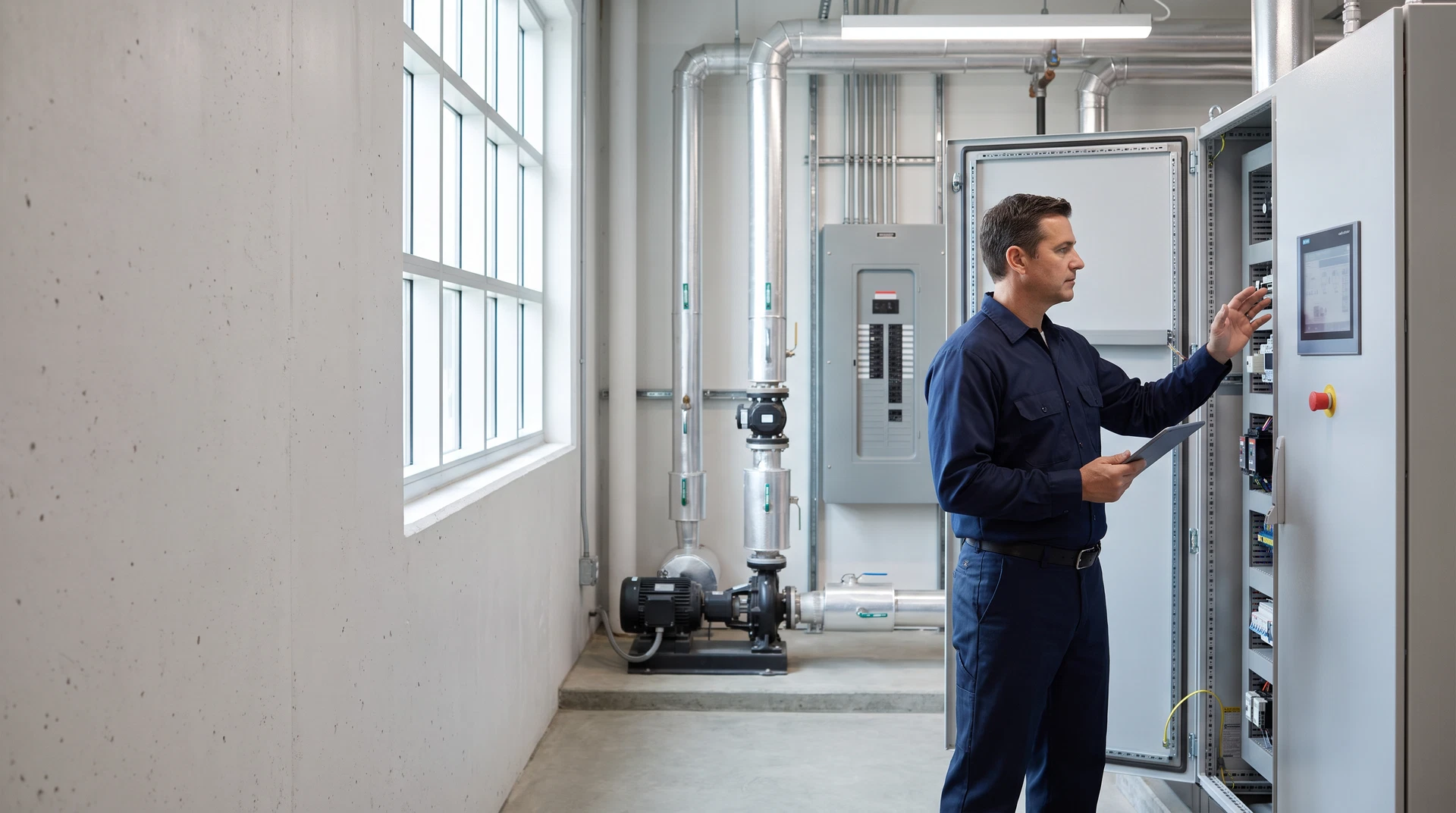
Electrical distribution is often invisible until a breaker, transformer, switchgear component, circuit board, drive, or panel fails. A minor-looking interruption can shut down point-of-sale equipment, pumps, refrigeration, production machinery, lighting, security, access controls, and networked building systems at once. The business question is not merely “What does the panel cost?” but “What processes stop, what equipment is downstream, and how long would a replacement take?”
NFPA explains that NFPA 70B is now a standard for electrical equipment maintenance and frames proactive maintenance as preferable to unplanned shutdowns for both reliability and safety.3 A qualified electrical-maintenance program may include documentation, inspection, cleaning, thermal scanning where appropriate, testing, corrective work, and safe work practices. An insurance policy does not replace code compliance or a properly trained electrical contractor.
Ask the agent how electrical arcing, short circuit, surge, transformer damage, and service-interruption events are treated. Consider whether Commercial Property Insurance, equipment breakdown, utility-service interruption, and Business Interruption Insurance work together—or leave a gap—under the actual forms. Never open or service energized equipment without appropriately qualified professionals and established safety procedures.
Pumps, pressure equipment, and water systems can affect the whole building
Circulation pumps, well pumps, booster pumps, sewer ejectors, sump pumps, hydronic systems, boilers, compressors, pressure vessels, and fire-protection-related equipment can be business-critical. A pump failure may affect heat, cooling, water availability, sanitation, drainage, irrigation, tenant services, or production. The damage may occur at the component itself, but the consequential loss can reach floors, stored property, adjacent tenants, or customers.
For a commercial landlord, map which systems serve which units and who controls access to mechanical spaces. For a business owner, identify whether backup pumps, bypasses, alarms, spare parts, rental equipment, or manual workarounds exist. For agricultural or rural operations, tie the conversation to Farm & Ranch Insurance when irrigation, livestock water, refrigeration, or agricultural processing depends on the system. Water from a failed internal system and water entering from outside can raise different coverage questions, so coordinate the discussion with Water Damage Insurance and flood planning rather than treating all water events alike.
Independent Insurance Agency Since 1935
Not Sure If You Have the Right Coverage?
Our licensed agents compare 50+ carriers to find you the best coverage at the right price — at no extra cost to you.
Smart buildings create efficiency—and new points of dependency
Smart thermostats, building automation, remote monitoring, access control, cameras, lighting systems, sensor networks, connected refrigeration alarms, payment systems, and cloud dashboards can improve visibility. They also create dependencies on controllers, firmware, networks, vendor support, credentials, and secure configuration. A building may have functioning mechanical equipment but still lose useful control when the network, controller, or gateway fails.
Document the system architecture at a level useful during an emergency: vendor contacts, service agreements, administrator access, backup credentials, network diagrams, manual override procedures, and whether alarm notifications reach more than one person. Review the business’s Cyber Liability Insurance separately. Equipment breakdown and cyber coverage can address different triggers, definitions, and resulting costs; neither should be assumed to replace the other.
Business income and extra expense are often the deciding coverage questions
The repair may be manageable while downtime is not. A cooler failure can halt inventory sales. A boiler outage can make leased space unusable. A panel failure can close a restaurant’s kitchen. A failed pump can force a business to relocate work. Business-income coverage generally requires careful attention to the covered cause of loss, waiting period, period of restoration, financial records, and policy wording. Extra-expense coverage may be relevant when a business spends more to keep operating, but it also depends on the form.
Prepare before the loss by keeping monthly financial statements, sales reports, payroll data, seasonal revenue patterns, utility records, maintenance invoices, vendor estimates, and photographs of critical equipment. For a building owner, maintain a rent roll, lease schedule, tenant contact list, and records of common-area and mechanical expenses. Review Loss of Rents Insurance with the same care when rental income is central to the property’s cash flow.
A practical equipment-breakdown review checklist
| Review area | Questions to bring to the insurance and maintenance conversation |
|---|---|
| Critical equipment | Which HVAC, refrigeration, electrical, pump, pressure, and control systems stop the operation if they fail? |
| Documentation | Are make/model records, service logs, warranties, vendor contacts, and replacement lead times current? |
| Coverage structure | What triggers, exclusions, deductibles, sublimits, valuation terms, and causes of loss apply? |
| Income continuity | What income would stop, what expenses continue, and what temporary measures could reduce downtime? |
| Connected systems | Which controls rely on internet, credentials, a third-party vendor, or a single controller? |
| Claim readiness | Who may authorize emergency work, preserve damaged parts, report a claim, and maintain loss documentation? |
The next step is a property-specific conversation, not an assumption
Equipment breakdown coverage can be a valuable part of a property-risk strategy, but the right answer depends on the building, equipment, occupancy, limits, maintenance history, carrier appetite, and policy form. Start the review before peak heating, cooling, harvest, holiday, or tourism season—not during an outage when vendors and replacement equipment may be harder to obtain.
For help reviewing commercial systems and coverage options, request a quote, call Insure Pacific at (541) 238-7775, or send a message. Our team can help you organize the systems, documents, and coverage questions for a clearer discussion with multiple carriers.
References
[1] Nationwide — Equipment Breakdown Coverage
[2] U.S. Consumer Product Safety Commission — Air Conditioners and Heat Pumps Recall
[3] National Fire Protection Association — NFPA 70B and Electrical Reliability and Safety
Our Licensed Coverage Area
States highlighted in blue are states where Insure Pacific holds an active insurance license.
Hover to highlight — click a state to visit its insurance page
Our Oregon Office Locations
Hover over a marker to see the office — click to visit their website.
Hover to highlight — click to visit that office's website
Ready to Get Protected?
Talk to a Local Oregon Insurance Expert
Insure Pacific has been serving Oregon families and businesses since 1935. We work with 50+ carriers so you get real options — not just one company's answer.
Related Articles
 Commercial Insurance
General Liability Insurance: What It Covers—and What It Doesn’t
Read Article → Commercial Insurance
Multi-State Workers’ Compensation: Remote Employees, Traveling Crews, and Out-of-State Jobs
Read Article → Commercial Insurance
Import and Export Cargo Insurance: Ocean Freight, Ports, Customs, and Inland Transportation
Read Article → Commercial Insurance
Has Your Business Outgrown Its Insurance? Revenue, Payroll, New Locations, and New Services
Read Article →Get in Touch
Ready to protect what matters most? Contact us today for a no-obligation insurance review. Our experienced agents are here to help you find the right coverage for your needs.


