



High-Value Home Insurance in the Mountain West: What Owners of Luxury Homes in Oregon, Idaho, Montana, and Colorado Need to Know
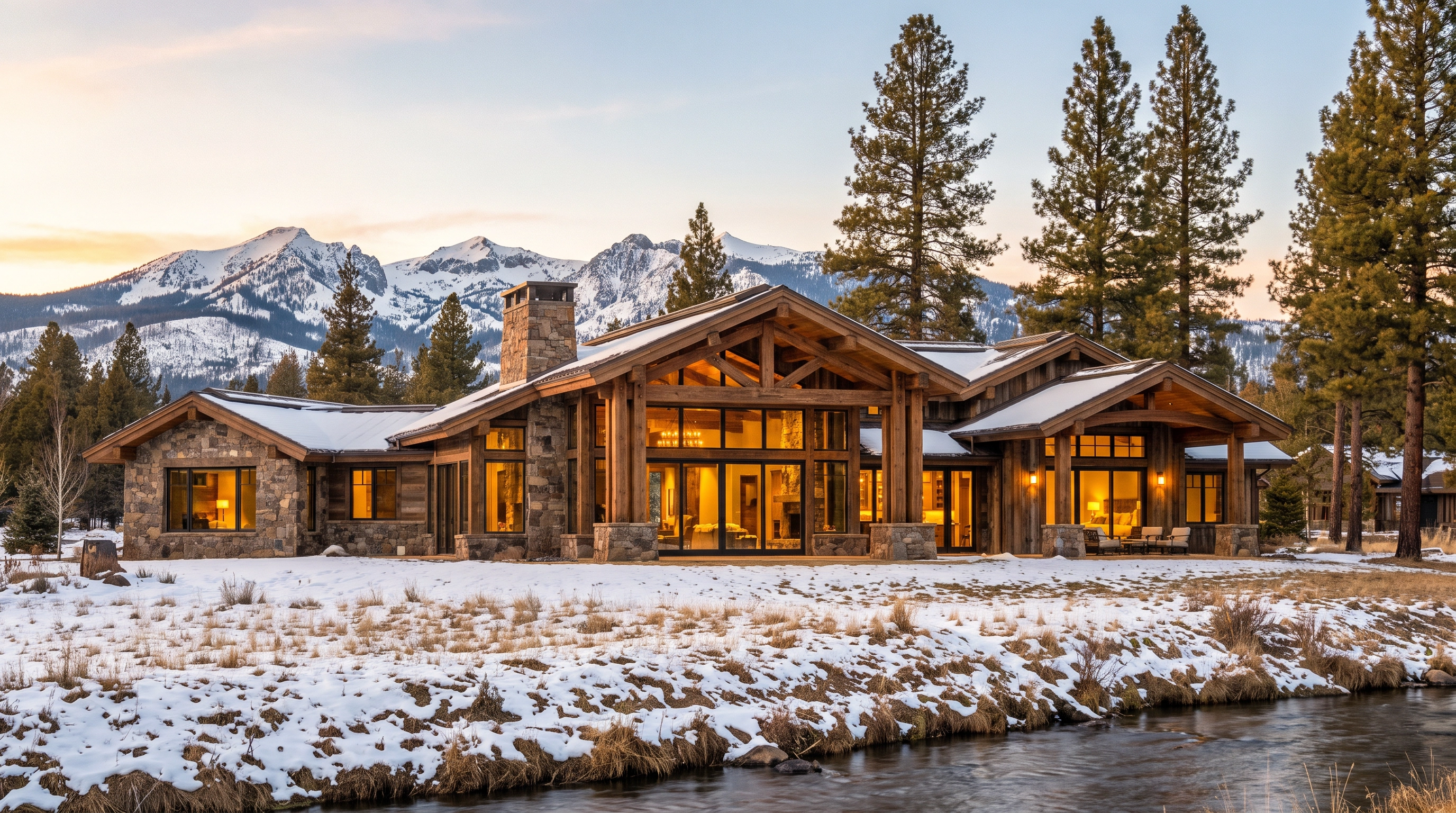
High-Value Home Insurance in the Mountain West: What Owners of Luxury Homes in Oregon, Idaho, Montana, and Colorado Need to Know

The Mountain West has quietly become one of the most dynamic luxury real estate markets in the United States. Bend, Oregon. Boise, Idaho. Whitefish, Montana. Jackson Hole, Wyoming. Aspen and Telluride, Colorado. Sun Valley, Idaho. These communities have attracted a wave of high-net-worth buyers — many relocating from California, Seattle, and other coastal markets — who are purchasing custom homes with replacement costs well above $1 million.
What many of these homeowners do not realize until it is too late: the standard homeowners insurance policy they purchased — or the policy that transferred from their previous home — is almost certainly inadequate for a property of this value. After a total loss, they would receive a fraction of what it actually costs to rebuild. The gap between what they thought they were covered for and what their insurer actually pays can easily reach $300,000, $500,000, or more.
This is not a hypothetical risk. It is the documented reality of virtually every major wildfire and natural disaster that has swept through the Mountain West in recent years. The Marshall Fire in Boulder County, Colorado destroyed hundreds of luxury homes in December 2021. A stunning 74% of affected homeowners were underinsured — by an average of $139,000 each, according to University of Colorado researchers. Many had not begun to rebuild more than a year later.
If you own a high-value home in Oregon, Idaho, Montana, Colorado, or anywhere in the Mountain West, this guide is for you.
The Underinsurance Crisis in Mountain West Luxury Real Estate
The underinsurance problem has three interconnected causes, all of which have accelerated dramatically since 2020.
Construction cost inflation. Between 2014 and 2024, residential reconstruction costs in the United States rose by 63.7%, according to data from the Bureau of Labor Statistics. Building materials — lumber, steel, copper, stone — have been hit by supply chain disruptions, tariffs, and sustained demand. Labor costs have risen even faster in Mountain West markets, where skilled tradespeople are in short supply. The median cost to rebuild a home in the U.S. is now approximately $280 per square foot — but in Mountain West markets with custom construction, timber framing, natural stone, and high-end finishes, that number routinely exceeds $400 to $600 per square foot.
Policies that have not kept pace. Most standard homeowners policies include an inflation guard provision that adjusts coverage limits by a fixed percentage each year — typically 2% to 4%. When actual construction cost inflation runs at 8% to 12% annually, as it did in 2021 and 2022, a policy that was adequate when written becomes significantly inadequate within two or three years. A home that was properly insured at $800,000 in 2019 may require $1.3 million to rebuild in 2026 — but the policy may only carry $950,000 in dwelling coverage.
Custom homes are inherently harder to value. A standard home can be valued using actuarial tables based on square footage, construction type, and zip code. A custom Mountain West home — with hand-hewn timber beams, reclaimed wood flooring, custom stone masonry, a geothermal heating system, and a chef's kitchen with commercial appliances — cannot be accurately valued using a standard calculator. The replacement cost of these homes is almost always higher than what a standard insurer estimates, and the gap grows larger the more custom and distinctive the home is.
Why Standard Home Insurance Fails High-Value Homes
Standard homeowners insurance — the kind sold by State Farm, Allstate, Farmers, USAA, and most regional carriers — was designed for the median American home. It works reasonably well for a $350,000 ranch house in a suburban subdivision. It is structurally inadequate for a $2 million custom craftsman estate on 10 acres outside Bend.
The structural problems are not just about coverage limits. They include:
Extended replacement cost, not guaranteed replacement cost. Most standard policies offer extended replacement cost coverage — typically 125% to 150% of the stated dwelling limit. If your home is insured for $1 million and the extended replacement cost provision is 125%, you can receive up to $1.25 million. But if the actual cost to rebuild is $1.6 million — a realistic scenario for a custom Mountain West home after a total loss — you are still $350,000 short.
Sub-limits on personal property. Standard policies cap jewelry coverage at $1,500 to $2,500 and fine art at $2,500 to $5,000. For a high-net-worth household with a meaningful jewelry collection, original artwork, wine cellar, or collectibles, these sub-limits represent a fraction of actual value. Scheduling individual items adds cost and complexity, and many homeowners simply do not do it.
No cash settlement option. After a total loss, many homeowners — particularly those who experienced a wildfire — choose not to rebuild at the same location. Standard policies typically require you to rebuild in order to receive replacement cost. If you choose to take the cash and move on, you receive only the actual cash value of the home, which accounts for depreciation and is significantly less than replacement cost.
Claims service designed for volume, not complexity. A total loss on a $2 million custom home is a complex claim. It involves custom material sourcing, specialized subcontractors, extended timelines, and significant temporary housing costs. Standard carriers route these claims through the same adjusting process as a $300,000 house fire — with predictable results.
Insure Pacific works with Chubb, AIG Private Client, and other high-value home carriers to find the right coverage for luxury homes in Oregon and across the Mountain West. Our independent agents will review your current policy, identify coverage gaps, and compare options across 50+ carriers — at no cost to you.
Get a Free Coverage Review → (541) 238-7775 Text Us!The High-Value Home Insurance Market: What Is Available
There is a separate insurance market specifically designed for high-value homes — and it is only accessible through licensed independent agents. The primary carriers in this market are Chubb, PURE Insurance, AIG Private Client, and Cincinnati Insurance. Each has a distinct coverage model and pricing approach.
Chubb Masterpiece is the largest high-value homeowners program in the United States and the benchmark against which other carriers are measured. Chubb's Masterpiece policy offers guaranteed replacement cost on the dwelling — meaning Chubb pays the full cost to rebuild, regardless of whether that cost exceeds the stated policy limit. This is the most important structural difference from standard insurance. Chubb also provides blanket personal property coverage with no per-item or per-category sub-limits, cash settlement at replacement value for total losses, and dedicated major case units for complex claims. Chubb is typically the right choice for homes above $1.5 million, custom construction, and homeowners with significant personal property.
PURE Insurance (Privilege Underwriters Reciprocal Exchange) is a member-owned reciprocal insurer — a structure that distinguishes it from every other carrier in this market. Members are both policyholders and owners of the exchange. When the exchange runs a surplus, members receive a return of premium. PURE offers guaranteed replacement cost on the dwelling, $50,000 in base jewelry coverage without a separate scheduled endorsement, and a standalone flood program covering up to $2 million in building value. PURE is typically the right choice for homes in the $1 million to $4 million range, particularly for homeowners who will actively use loss prevention programs.
AIG Private Client serves the ultra-high-net-worth segment, with a product suite designed for homeowners whose complexity extends beyond a single primary residence to include multiple properties, substantial collections, significant liability exposure, and coordinated wealth management needs. AIG offers both agreed value and replacement cost valuation elections — making it the primary option for homeowners with documented appraisals who want a fixed payout. AIG is typically the right choice for homes above $2 million, multi-property households, and homeowners with significant art and collectibles.
Cincinnati Insurance is consistently the most competitively priced option in the $750,000 to $1.5 million replacement cost range without sacrificing meaningful coverage features. Cincinnati offers extended replacement cost at 125% of the stated dwelling limit, replacement cost on personal property, and higher liability limits than standard policies. For homeowners in this tier without significant personal property complexity, Cincinnati's pricing can represent meaningfully better value than tier-one carriers.
None of these carriers sell directly to consumers. They are available exclusively through licensed independent agents who hold active appointments with each carrier. This is not a marketing restriction — it is a structural feature of the high-value home insurance market. The underwriting of a $2 million custom home requires the expertise of an agent who understands both the property and the carrier's specific underwriting appetite.
Mountain West Wildfire Risk and High-Value Homes
The wildfire risk dimension of high-value home insurance in the Mountain West deserves specific attention. Many of the most desirable luxury home locations in Oregon, Idaho, Montana, and Colorado are in or adjacent to the Wildland-Urban Interface (WUI) — the zone where developed land meets undeveloped wildland. Bend's western neighborhoods, the Sisters area, the Whitefish area of Montana, the foothills west of Boise, and the mountain communities of Colorado are all in high or very high fire risk zones.
Standard carriers have been withdrawing from WUI locations across the Mountain West. State Farm stopped writing new homeowners policies in California in 2023 and has tightened underwriting in Oregon, Idaho, and Montana. Allstate, Farmers, and others have followed. For high-value homes in WUI locations, the standard market may not be available at all — leaving homeowners dependent on the surplus lines market or state FAIR plans, neither of which provides the coverage quality of a high-value carrier program.
The high-value carriers — Chubb, PURE, and AIG — have not universally withdrawn from WUI locations. They have tightened their underwriting criteria and, in some cases, require documented evidence of wildfire mitigation measures. Chubb's Wildfire Defense Services program deploys private firefighting resources to protect insured properties during active wildfire events — a service not available through any standard carrier. For high-value homeowners in fire-prone areas, this level of loss prevention support can make the difference between a home that survives a wildfire and one that does not.
Insure Pacific's wildfire mitigation program helps high-value homeowners document their defensible space improvements, qualify for preferred underwriting with high-value carriers, and maintain the documentation required to keep coverage in force. If you own a luxury home in a WUI location, this documentation is not optional — it is essential.
The Coverage Gap: How Much Are Mountain West Luxury Homeowners Underinsured?
The numbers are striking. According to United Policyholders, a nonprofit consumer advocacy organization that has worked on every major Western wildfire disaster since 2003, underinsurance has been a problem in every single disaster they have responded to. After the Marshall Fire in Boulder County, 74% of affected homeowners were underinsured by an average of $139,000.
For high-value homes, the gap is typically larger in absolute dollar terms. A $1.5 million custom home in Bend that was insured for $1.2 million in 2021 — and whose policy has been adjusted by 3% annually since then — carries approximately $1.35 million in dwelling coverage in 2026. But the actual cost to rebuild that home in 2026, accounting for construction cost inflation, custom materials, and the labor market in Central Oregon, may be $1.8 million or more. The gap: $450,000.
That $450,000 gap is the homeowner's problem. The insurer pays its limit and closes the claim. The homeowner either funds the gap out of pocket, takes on debt, or accepts a smaller rebuilt home than the one they lost.
The solution is straightforward: a guaranteed replacement cost policy from a high-value carrier, with an annual replacement cost appraisal to ensure the stated limit keeps pace with actual construction costs. This is standard practice in the high-value home insurance market. It is not available in the standard market.
What High-Value Homeowners Should Review Immediately
If you own a home with a replacement cost above $750,000 in Oregon or anywhere in the Mountain West, there are five things you should review immediately:
1. Your dwelling coverage limit vs. actual replacement cost. The number on your policy is not the same as what it would cost to rebuild your home today. Get a current replacement cost estimate from a qualified appraiser or your insurance agent. If the gap is more than 10%, your policy needs to be updated.
2. Whether you have guaranteed or extended replacement cost. Extended replacement cost (125% to 150% of the stated limit) is not the same as guaranteed replacement cost (full cost to rebuild, no cap). For a custom home, only guaranteed replacement cost provides true protection.
3. Your personal property sub-limits. Check the specific sub-limits for jewelry, fine art, wine, collectibles, and other high-value items. If you have meaningful assets in these categories, a blanket high-value policy or scheduled endorsements are essential. Insure Pacific's home insurance specialists can review your personal property coverage and identify gaps.
4. Your liability coverage. Standard policies carry $100,000 to $300,000 in personal liability. For a high-net-worth household, this is inadequate. A personal umbrella policy providing $1 million to $5 million in additional liability coverage is essential — and is typically available for $200 to $500 per year.
5. Your wildfire mitigation documentation. If you own a home in a WUI location, document your defensible space, ember-resistant venting, fire-resistant roofing, and any other mitigation measures. This documentation is increasingly required by high-value carriers and can affect both coverage availability and premium.
Independent Insurance Agency Since 1935
Not Sure If You Have the Right Coverage?
Our licensed agents compare 50+ carriers to find you the best coverage at the right price — at no extra cost to you.
Oregon-Specific Considerations for High-Value Homeowners
Oregon's luxury home market is concentrated in a handful of communities, each with distinct risk profiles:
Bend and Central Oregon — The Bend area has seen explosive growth in high-value residential real estate. The neighborhoods west of Bend — including Awbrey Butte, Northwest Crossing, and the areas adjacent to the Deschutes National Forest — are in high wildfire risk zones. Carrier availability has tightened significantly. Insure Pacific's Bend office specializes in high-value home coverage for Central Oregon properties and has access to the full range of high-value carriers.
Sisters and the Cascade foothills — The Sisters area combines stunning mountain views with significant wildfire exposure. Many high-value homes in this area are in the WUI and require specialty underwriting. The combination of custom construction and wildfire risk makes standard insurance particularly inadequate here.
Southern Oregon Coast (Brookings area) — Insure Pacific's Brookings office serves the Southern Oregon Coast, where high-value oceanfront and coastal properties face a different risk profile — wind, water intrusion, and coastal erosion — that requires specific coverage considerations.
The Willamette Valley — Oregon's wine country, including the Dundee Hills and Chehalem Mountains, has seen significant investment in high-value residential properties associated with the wine industry. Insure Pacific's wine country insurance guide covers the specific considerations for these properties.
How Insure Pacific Helps High-Value Mountain West Homeowners
Insure Pacific is an independent insurance agency with offices in Bend, Prineville, and Brookings, Oregon. As an independent agency, we are not captive to any single carrier — we work with the full range of high-value home insurance carriers, including Chubb, AIG Private Client, and others, to find the right coverage for each client's specific property and situation.
Our approach to high-value home insurance is built on three principles. First, we conduct a comprehensive replacement cost analysis before recommending any coverage — not a quick online estimate, but a detailed assessment of your home's construction type, custom features, and local labor and material costs. Second, we present competing quotes from multiple high-value carriers with a side-by-side coverage comparison, not just premium totals. Third, we review your coverage annually to ensure your limits keep pace with construction cost inflation.
If you are currently insured through a standard carrier and have not had a high-value coverage review, the probability is high that you are underinsured. The review costs nothing. The gap it reveals could save you hundreds of thousands of dollars.
Related Resources
Insure Pacific's high-value home specialists serve luxury homeowners across Oregon and the Mountain West. We work with Chubb, AIG Private Client, and other high-value carriers to find coverage that actually protects what your home is worth. Call us at (541) 238-7775, visit our contact page, or request a free coverage review online — no obligation, no cost.
Request a Free Coverage Review → Contact Our Home Insurance TeamOur Licensed Coverage Area
States highlighted in blue are states where Insure Pacific holds an active insurance license.
Hover to highlight — click a state to visit its insurance page
Our Oregon Office Locations
Hover over a marker to see the office — click to visit their website.
Hover to highlight — click to visit that office's website
Ready to Get Protected?
Talk to a Local Oregon Insurance Expert
Insure Pacific has been serving Oregon families and businesses since 1935. We work with 50+ carriers so you get real options — not just one company's answer.
Related Articles
 Home Insurance
The Real Cost of Being Underinsured: 5 American West Claims That Didn't Pay Out What Homeowners Expected
Read Article → Home Insurance
Navigating Insurance in the Pacific Northwest: What Oregon & Washington Homeowners Need to Know
Read Article → Home Insurance
Oregon Wildfire Insurance: Homeowners, Business & Fire Mitigation Guide 2026
Read Article → Home Insurance
Short-Term Rental Insurance in Oregon: Airbnb, VRBO & Vacation Rental Host Guide 2026
Read Article →Get in Touch
Ready to protect what matters most? Contact us today for a no-obligation insurance review. Our experienced agents are here to help you find the right coverage for your needs.


