



Inland Marine Insurance: Why Contractors, Installers & Distributors Need Coverage for Tools, Equipment & Property in Transit
Inland Marine Insurance: Why Contractors, Installers & Distributors Need Coverage for Tools, Equipment & Property in Transit

A property policy is built around a place. Your work is not.
Contractors, installers and distributors often depend on property that moves every day: tools in a truck, rental equipment at a jobsite, materials waiting to be installed, goods loaded onto a delivery vehicle, or customer property temporarily in the business’s care. A standard commercial property policy is usually designed around property at the scheduled premises. A commercial auto policy is designed around liability arising from a vehicle. Neither description automatically answers what happens to valuable mobile property between locations.
That is the purpose of inland marine insurance. It is a family of commercial-property coverages that can be tailored to property that moves, is temporarily stored away from the main location, is installed for a customer, or is held for someone else. The correct form, limit, deductible, valuation method, territory and exclusions depend on the actual operations and contract commitments.
This article is educational rather than a substitute for policy language or legal advice. Before signing a contract, compare its insurance requirements with the actual policy forms and endorsements in force.
The mobile-property gap in everyday operations
Consider a finish carpenter whose trailer with saws and compressors is stolen overnight at a jobsite. Consider an electrical contractor whose switchgear is damaged while awaiting installation. Consider a plumbing distributor that sends a high-value order with a third-party carrier. Consider an installer who accidentally damages a customer’s equipment while it is being moved into place. Each situation involves property, but the property is mobile, temporary, in transit, or owned by someone other than the insured.
General liability responds primarily to certain third-party bodily injury and property-damage claims. It is not a broad insurance policy for the contractor’s own tools and equipment. A building policy may provide limited off-premises coverage, but it is often not designed for the values, schedules or transit exposures that a mobile operation carries. Inland marine coverage is the conversation that joins these gaps together.
What inland marine insurance may cover
Inland marine is not one standardized promise. It is a category containing multiple forms. A program can include only the forms relevant to the business.
| Exposure | Coverage discussion to have | Operational detail that changes the answer |
|---|---|---|
| Contractor-owned tools and equipment | Contractors equipment or equipment floater | Scheduled versus blanket limits, theft controls, jobsite storage, rental or borrowed items |
| Materials headed to or held at a jobsite | Installation floater or builders risk coordination | When responsibility transfers, storage conditions, testing, and whether the project is renovation or new construction |
| Goods moved by the business | Motor truck cargo or transit coverage | Owned fleet versus common carrier, temperature sensitivity, delivery radius, loading and unloading |
| Customer property in the business’s possession | Bailee, warehouse legal liability, or care-custody-control review | Who owns the item, the contract, storage procedures, and whether liability is assumed |
| High-value stock moving between sites | Transit or stock-throughput discussion | Packaging, origin/destination, international legs, warehouse controls, and values at peak season |
An agent should start with a property-flow map. List what the business owns, whose property it handles, when it moves, where it is stored, who transports it, and when the business assumes contractual responsibility. That map is more useful than asking only, “Do we need inland marine?”
Tools, mobile equipment and contractor trailers
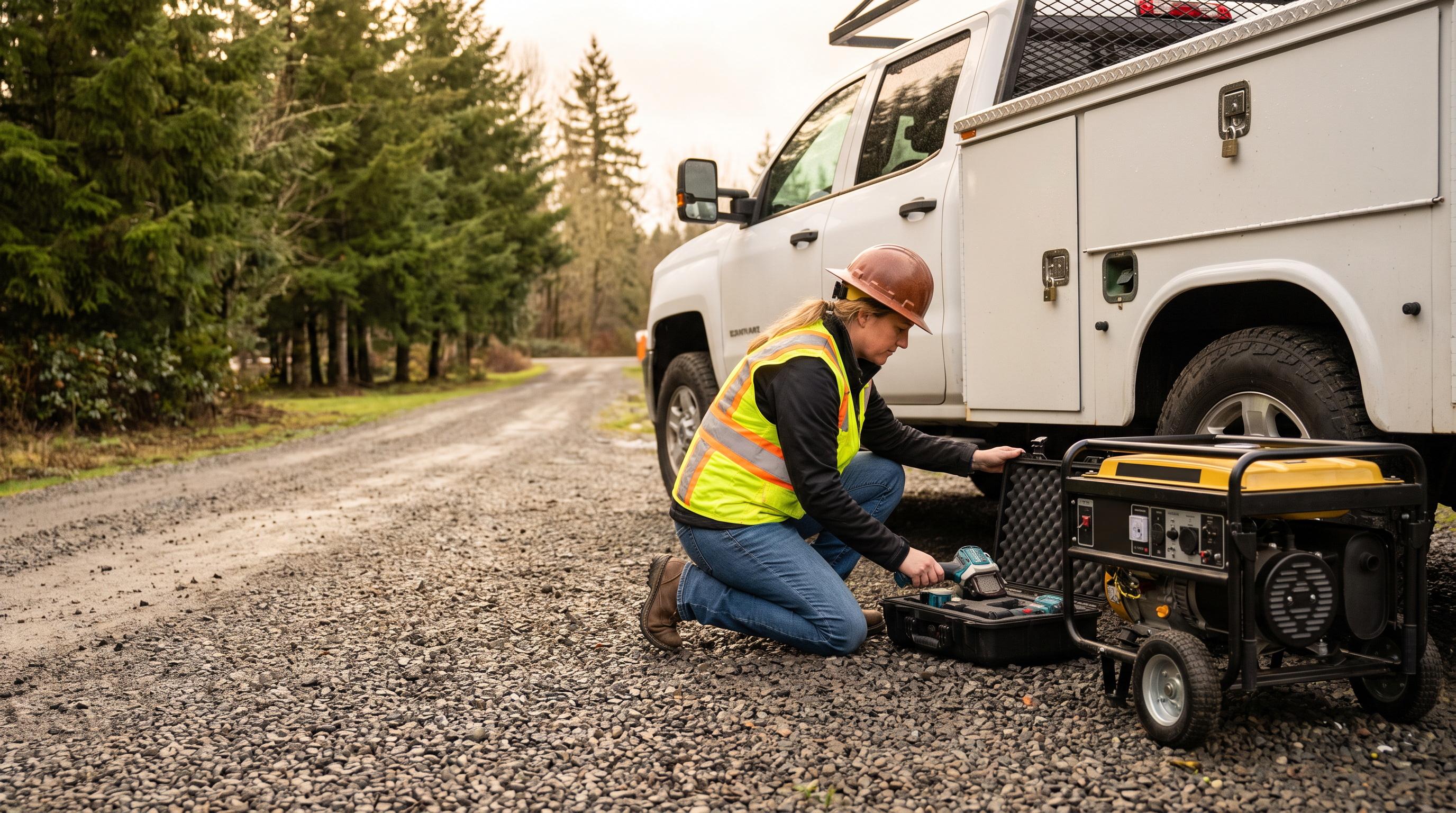
Tools may be scattered among employees, trailers, warehouses and jobsites. Mobile equipment can include generators, compressors, aerial equipment, compact machinery, testing devices, portable refrigeration units, surveying equipment and specialized trade tools. Theft, overturn, collision, vandalism, fire and water damage may all be relevant causes of loss, but availability varies by form and endorsement.
The schedule matters. A blanket limit can simplify frequent purchases, but it must be adequate at peak values. A scheduled approach can improve documentation for distinctive, expensive equipment. Review replacement-cost versus actual-cash-value settlement, the deductible, unscheduled-item sublimits, theft requirements, employee-tool treatment, rented or borrowed equipment, and the territorial limits. If the business leases equipment, read the rental agreement before assuming a damage waiver or existing policy resolves every obligation.
Keep purchase records, serial numbers, photographs and current values in an accessible cloud location. Lock trailers, document who receives keys, and make the return process for shared tools clear. Those practices support operations whether or not a claim occurs.
Installation floaters and the period before a job is complete
An installation floater can be especially important when materials, fixtures or equipment are intended to become part of a customer’s project. The exposure can begin when the contractor assumes responsibility under a purchase order or contract, continue while property is in transit or staged, and end only when the policy definition of completion is met.
The most important question is often not “What did we install?” but “When did we become responsible?” Contract language may shift risk before delivery, after delivery, during installation, or until final acceptance. A change order can alter values. A project delay can extend the time materials are exposed. A renovation may require coordination with an existing building policy and a Builders Risk Insurance discussion.
Ask to compare the installation floater’s completion language, off-site storage provisions, defective-work exclusions, testing provisions, flood or earthquake treatment, and limits for materials supplied by the owner. Do not assume that builders risk, inland marine, general liability and a property policy overlap perfectly; gaps can occur at handoffs between forms.
Property in transit: delivery is not a simple handoff
For a distributor, the commercial transaction continues after an invoice is issued. Goods may be damaged in loading, collide in a delivery vehicle, be stolen from a stop, get wet at a cross-dock, or disappear after a carrier interchange. The business may use its own fleet, a courier, a parcel carrier, a common carrier or a customer pickup. Each route changes the contract and insurance discussion.
Businesses operating their own delivery vehicles should coordinate Commercial Auto Insurance with cargo or transit coverage rather than assuming physical-damage coverage protects the shipment. A company relying on third-party carriers should review bills of lading, carrier limits, declared values, claims procedures, packing standards and insurance certificates. A standard carrier limit may be far below the value of a specialized shipment.
Loading and unloading deserves attention as well. Forklift operators, secured loads, liftgates, dock plates, weather exposure and driver training affect both property damage and liability. For a company that delivers stock regularly, a written chain-of-custody process can establish who inspected the shipment, when it was loaded, and when it was accepted.
Distributor inventory, warehouses and customer goods
Wholesale and distribution operations often need a more detailed conversation because their inventory can be held in multiple locations or briefly in the custody of others. A single fire, burst pipe, roof leak or theft event can affect stock owned by the distributor, stock sold but not delivered, property awaiting return, and customer goods stored under a service agreement.
A standard property policy may insure owned inventory at scheduled premises, subject to limits and terms. Inland marine forms may address property in transit or specific mobile exposure. If a business stores property belonging to customers, supplier agreements may impose obligations that a simple property policy does not meet. A Warehouse Legal Liability Insurance or care-custody-control review may be relevant depending on the actual storage and contractual role.
Cycle counts, bin locations, shipment scans, temperature records where needed, sprinkler clearance, pallet-rack inspections and vendor documentation are practical loss-control records. During a coverage review, bring peak-season inventory values, a list of satellite locations, any bonded or leased storage, and the largest single shipment value.
Customer property and care, custody or control
One of the most misunderstood exposures arises when a business touches or controls someone else’s property. A repair shop may have a customer machine in its bay. An installer may move a client’s equipment. A contractor may work directly on a component that is then damaged. A distributor may temporarily store a customer-owned item while resolving an order.
General liability policies frequently include limitations or exclusions for property in the insured’s care, custody or control. The exact wording varies. A business should not infer that a client-property loss is covered simply because it has general liability. The right approach is to review the service agreement, scope of work, property values, storage role and the relevant liability or inland-marine form with an agent and, when appropriate, legal counsel.
Independent Insurance Agency Since 1935
Not Sure If You Have the Right Coverage?
Our licensed agents compare 50+ carriers to find you the best coverage at the right price — at no extra cost to you.
Inland marine, general liability, property and auto: how they work together
An insurance program works best when each policy’s job is understood. General Liability Insurance is typically central for third-party injury and property-damage allegations. Commercial Property Insurance protects certain owned property at covered locations. Commercial auto addresses vehicle-related exposures. Inland marine helps address property that is mobile, in transit, at a jobsite or otherwise outside the ordinary scheduled-premises model.
There can be gaps, overlaps, deductibles and different definitions. For example, a vehicle collision involving an owned truck and the goods it carries may involve auto and cargo considerations. A fire at a project may trigger builders risk or installation-floater questions depending on the facts. A theft from a parked trailer may turn on protective safeguards, scheduling and territorial language. Claims are fact-specific, so the purpose of planning is not to predict an outcome but to reduce unanswered questions before the loss.
Contracts, certificates and additional insured requests
Contracts may ask for certificates, additional insured status, primary and noncontributory wording, waivers of subrogation, specific limits, or proof of inland marine. Each request should be read against the policy—not simply copied from a prior project. A certificate summarizes information; it generally does not amend coverage or prove that every contract term is satisfied.
For a more detailed discussion of contractual requests, see Commercial Lease Insurance Requirements. Contractors should also coordinate their inland-marine discussion with Contractor Insurance, Workers’ Compensation Insurance, and a current Business Insurance program review.
A practical annual review checklist
Before renewal—or before a large project, new warehouse, or new delivery contract—assemble a short working file:
The goal is a coverage conversation that reflects the business actually being operated now—not the business that existed when the policy was first purchased.
Talk with Insure Pacific before property moves
Whether the business is sending a small tool kit across town or coordinating a high-value installation, the key is to understand when it owns the exposure and whether the policy addresses it. Insure Pacific can review the way property moves through your operation, compare limits and endorsements, and help identify questions to bring to contract partners or counsel.
For an inland-marine, tools-and-equipment or property-in-transit review, request a commercial insurance quote, call (541) 238-7775, send a text message, or contact our team. We serve businesses in Oregon and throughout our licensed Western states.
Sources and further reading
Coverage availability, eligibility, endorsements, sublimits and claim outcomes vary by insurer, jurisdiction and policy language. This article is general information only.
Our Licensed Coverage Area
States highlighted in blue are states where Insure Pacific holds an active insurance license.
Hover to highlight — click a state to visit its insurance page
Our Oregon Office Locations
Hover over a marker to see the office — click to visit their website.
Hover to highlight — click to visit that office's website
Ready to Get Protected?
Talk to a Local Oregon Insurance Expert
Insure Pacific has been serving Oregon families and businesses since 1935. We work with 50+ carriers so you get real options — not just one company's answer.
Related Articles
 Commercial Insurance
Multi-State Workers’ Compensation: Remote Employees, Traveling Crews, and Out-of-State Jobs
Read Article → Commercial Insurance
Import and Export Cargo Insurance: Ocean Freight, Ports, Customs, and Inland Transportation
Read Article → Commercial Insurance
Has Your Business Outgrown Its Insurance? Revenue, Payroll, New Locations, and New Services
Read Article → Commercial Insurance
Buying a Commercial Building: Insurance Questions to Answer Before Closing
Read Article →Get in Touch
Ready to protect what matters most? Contact us today for a no-obligation insurance review. Our experienced agents are here to help you find the right coverage for your needs.


