



Product Liability Insurance for Oregon Businesses: Complete Guide 2026
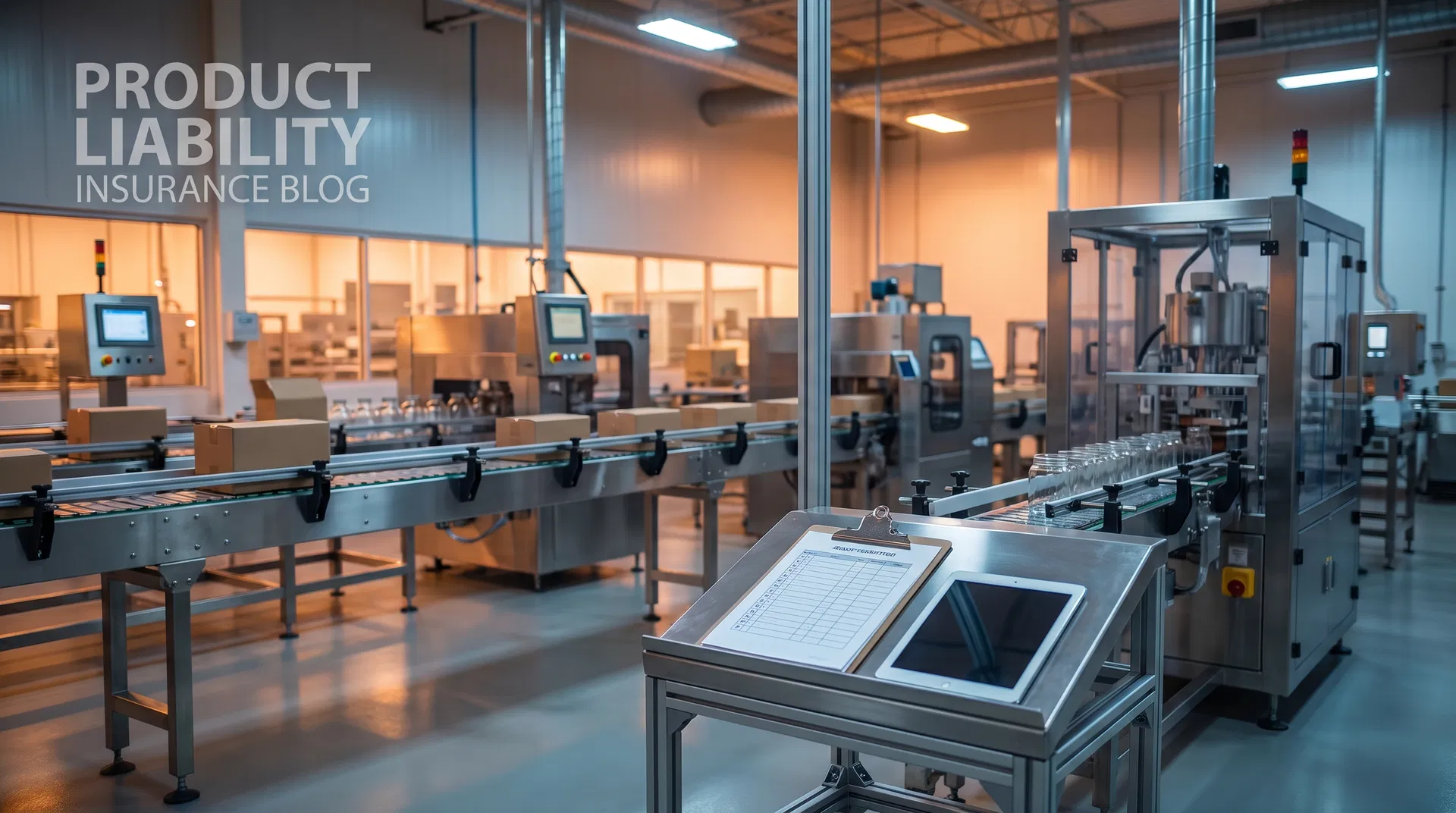
Product Liability Insurance for Oregon Businesses: Complete Guide 2026

Does Your Oregon Business Have Product Liability Coverage?
One product claim can cost hundreds of thousands of dollars — or more. Insure Pacific's Oregon-licensed commercial agents can review your current coverage and find the right product liability policy for your business.
1. What Is Product Liability Insurance? How It Works for Oregon Businesses
Product liability insurance protects businesses from financial losses arising from claims that a product they manufactured, distributed, or sold caused bodily injury or property damage. In Oregon, any business in the product supply chain — from the original manufacturer to the retailer who placed the item on a shelf — can be held legally responsible for product-related harm.
Unlike general liability insurance, which covers a broad range of third-party claims, product liability insurance specifically addresses claims tied to the products your business makes or sells. It covers legal defense costs, settlements, and court-awarded judgments — expenses that can easily reach six or seven figures even when your business did nothing wrong.
How Product Liability Insurance Works: A Real-World Example
The Incident
A Bend, Oregon outdoor gear retailer sells a climbing harness. A customer is injured when the harness fails during a climb and sues for $800,000 in medical costs and lost wages.
Who Gets Sued
Even though the retailer didn't manufacture the harness, Oregon law allows the injured party to sue every business in the supply chain — manufacturer, distributor, and retailer.
Insurance Responds
The retailer's product liability policy covers legal defense costs ($120,000), the settlement ($680,000), and related expenses — protecting the business from financial ruin.
2. Three Types of Product Liability Claims Oregon Businesses Face
Oregon courts recognize three primary theories of product liability. Understanding each type helps you appreciate why coverage is essential regardless of how careful your business is in its operations.
Manufacturing Defect
The product was designed correctly but something went wrong during production. A single batch of food products contaminated during processing is a classic example. Even one defective unit leaving your facility can trigger a major claim.
Example: A Medford food manufacturer ships a batch of salsa with undeclared allergens due to a labeling error. Multiple customers suffer allergic reactions.
Design Defect
The entire product line is inherently dangerous because of how it was designed — even when manufactured perfectly. These claims are often the most expensive because they can involve every unit ever sold.
Example: A Portland furniture maker's bookshelf design is inherently unstable and prone to tipping. Multiple households report tip-over injuries.
Failure to Warn
The product didn't include adequate warnings or instructions about known risks. Oregon courts have held businesses liable even when the product itself was safe, simply because the warnings were insufficient.
Example: An Oregon supplement company fails to warn that its product interacts dangerously with common blood thinners. A customer is hospitalized.
3. Who Needs Product Liability Insurance in Oregon?
If your Oregon business touches a physical product at any point in its journey from creation to consumer, you have product liability exposure. Many business owners are surprised to learn that they can be held liable for products they didn't manufacture — simply because they were part of the distribution chain.
| Business Type | Product Liability Exposure | Risk Level |
|---|---|---|
| Manufacturers | Directly liable for design and manufacturing defects in every product produced | Very High |
| Food & Beverage Producers | Contamination, allergen labeling, foodborne illness claims | Very High |
| Retailers & Wholesalers | Can be sued even for defects in products they didn't make | High |
| Importers & Distributors | Treated as the manufacturer if the original maker is foreign or unreachable | High |
| Cannabis Businesses (Oregon) | Product potency, contamination, and labeling claims in a heavily regulated market | High |
| E-Commerce Sellers | Selling third-party products online creates the same liability as a physical retailer | High |
| Contractors Using Products | Installing a defective product can make a contractor liable for resulting damage | Medium |
| Agricultural Operations | Pesticide residue, contaminated produce, and livestock product claims | Medium |
Oregon's Strict Liability Standard
Oregon follows a strict liability standard for product liability claims under ORS 30.900. This means an injured party does not need to prove negligence — only that the product was defective and caused harm. Your business can be held liable even if you exercised every reasonable precaution. This makes product liability insurance essential, not optional.
4. What Product Liability Insurance Covers — and What It Doesn't
Understanding the scope of your product liability coverage is critical to making sure you have adequate protection. Here is a detailed breakdown of what a standard product liability policy covers and the common exclusions you need to be aware of.
What Is Typically Covered
- Bodily injury caused by a defective product
- Property damage caused by a defective product
- Legal defense costs (attorney fees, court costs)
- Settlements and court-awarded judgments
- Medical payments for injured parties
- Claims from products already sold (completed operations)
- Personal and advertising injury related to products
- Recall-related liability (with endorsement)
Common Exclusions
- Damage to the product itself (covered by property insurance)
- Intentional acts or fraud
- Professional errors (covered by E&O/professional liability)
- Pollution or environmental contamination
- Workers' compensation claims (separate policy required)
- Contractual liability beyond what the law requires
- Product recall costs (requires separate recall insurance)
- Claims in jurisdictions excluded by the policy
5. Product Liability vs. General Liability: What Oregon Businesses Need to Know
Many Oregon business owners assume their commercial general liability (CGL) policy covers all product-related claims. While a standard CGL policy does include a "products-completed operations" coverage component, it may not be sufficient for businesses with significant product exposure. Here is how the two coverages compare:
| Feature | General Liability (CGL) | Standalone Product Liability |
|---|---|---|
| Product coverage included? | Yes — as part of products-completed ops | Yes — as the primary focus |
| Coverage limits | Shared with all other GL claims | Dedicated limits for product claims only |
| Best for | Low-to-medium product exposure businesses | Manufacturers, food producers, high-risk sellers |
| Recall coverage | Not included | Available as an endorsement |
| International coverage | Often limited or excluded | Can be endorsed for global distribution |
| Cost | Lower — bundled with general coverage | Higher — but limits are dedicated |
| Carrier appetite | Most carriers offer standard CGL | Specialty carriers for high-risk products |
For most Oregon small businesses with limited product exposure — a retail shop, a service contractor who occasionally installs products — the products-completed operations coverage within a standard CGL policy is adequate. However, if your business manufactures products, distributes food or supplements, imports goods, or sells products with high injury potential, a standalone product liability policy with dedicated limits is strongly recommended. Insure Pacific's agents can help you determine which approach is right for your specific situation.
6. How Much Does Product Liability Insurance Cost in Oregon? (2026 Benchmarks)
Product liability insurance costs in Oregon vary widely based on the type of product, your annual revenue, claims history, and the coverage limits you choose. Here are 2026 cost benchmarks for common Oregon business types:
| Business Type | Annual Revenue | Typical Annual Premium | Coverage Limit |
|---|---|---|---|
| Retail (low-risk products) | $500K–$2M | $500–$1,500 | $1M/$2M |
| Food & Beverage Producer | $500K–$2M | $2,000–$6,000 | $1M/$2M |
| Supplement/Nutraceutical | $500K–$2M | $4,000–$12,000 | $1M/$2M |
| Outdoor/Sporting Goods Mfr. | $1M–$5M | $5,000–$15,000 | $2M/$4M |
| Cannabis Product Manufacturer | $1M–$5M | $8,000–$25,000 | $1M/$2M |
| Medical Device Manufacturer | $2M–$10M | $15,000–$50,000+ | $5M/$10M |
| Agricultural/Food Importer | $1M–$5M | $3,000–$10,000 | $2M/$4M |
Key Factors That Affect Your Oregon Product Liability Premium
7. Oregon-Specific Product Liability Considerations
Oregon has several unique legal and regulatory factors that affect product liability exposure for businesses operating in the state. Understanding these nuances is essential for ensuring your coverage is adequate.
Oregon's Strict Liability Standard (ORS 30.900)
Oregon's product liability statute imposes strict liability on sellers in the business of selling products. Unlike negligence claims, strict liability does not require the injured party to prove the seller was careless — only that the product was in a defective condition unreasonably dangerous to the user. This significantly lowers the bar for successful claims against Oregon businesses.
Oregon's Two-Year Statute of Limitations
Under ORS 30.905, product liability claims in Oregon must be filed within two years of when the injury was discovered or reasonably should have been discovered. However, there is an ultimate repose period of 10 years from the date the product was first purchased. This means your coverage needs to extend beyond the immediate sale period.
Cannabis Product Liability in Oregon
Oregon's legal cannabis industry faces unique product liability challenges. The Oregon Liquor and Cannabis Commission (OLCC) requires licensed cannabis businesses to carry product liability insurance. Claims related to mislabeled potency, contamination, or adverse reactions are increasingly common and require specialized cannabis product liability coverage.
Oregon Food Safety and Labeling Requirements
Oregon food producers and distributors must comply with both state (Oregon Department of Agriculture) and federal (FDA) food safety regulations. Failure to comply with labeling requirements — particularly allergen declarations — creates significant product liability exposure. Oregon courts have awarded substantial damages in food labeling cases.
Oregon's Comparative Fault System
Oregon uses a modified comparative fault system under ORS 31.600. If the injured party is found to be more than 50% at fault, they cannot recover damages. However, if they are less than 50% at fault, their recovery is reduced proportionally. This can work in your favor, but it also means claims with shared fault can still result in significant payouts.
8. Product Recall Insurance: The Coverage Most Oregon Businesses Overlook
Standard product liability insurance covers claims from consumers who are harmed by a defective product. But what about the cost of recalling the product before it harms more people? Product recall insurance — also called product contamination or product withdrawal insurance — covers the direct costs of recalling a product from the market.
What Product Recall Insurance Covers
- Costs to notify customers and retailers
- Shipping and destruction of recalled products
- Replacement product costs
- Lost profits during the recall period
- Crisis management and PR costs
- Government-mandated recall compliance costs
- Third-party recall costs (if your product is in another company's product)
Oregon Industries Where Recall Coverage Is Critical
- Food and beverage manufacturers and distributors
- Cannabis product manufacturers (OLCC-licensed)
- Supplement and nutraceutical companies
- Children's product manufacturers and retailers
- Pet food and pet product companies
- Agricultural product exporters
- Medical device and health product companies
9. Related Coverage Oregon Product Businesses Should Consider
Product liability insurance is rarely sufficient on its own. Most Oregon businesses that manufacture, distribute, or sell products need a comprehensive commercial insurance program that includes several interconnected coverages. Here is what Insure Pacific typically recommends alongside product liability:
Commercial General Liability
The foundation of your commercial coverage — covers premises liability, completed operations, and personal/advertising injury in addition to products.
Learn About Commercial General LiabilityCommercial Umbrella Insurance
Adds a large layer of additional liability coverage above your underlying policies — essential for businesses with significant product exposure.
Learn About Commercial UmbrellaCommercial Property Insurance
Protects your manufacturing facility, equipment, inventory, and business personal property from fire, theft, and other covered perils.
Learn About Commercial PropertyEPLI Insurance
Employment Practices Liability Insurance protects against employee claims — a separate but equally important coverage for Oregon businesses with staff.
Learn About EPLI InsuranceCyber Liability Insurance
If your business collects customer data or processes online orders, cyber liability coverage protects against data breaches and cyber attacks.
Learn About Cyber LiabilityWorkers' Compensation
Oregon law requires workers' compensation coverage for most employers. Insure Pacific can bundle this with your commercial package for cost savings.
Learn About Workers' Comp10. Frequently Asked Questions: Product Liability Insurance in Oregon
Is product liability insurance required by law in Oregon?
Oregon does not require most businesses to carry product liability insurance by law. However, certain industries — including licensed cannabis businesses regulated by the OLCC — are required to carry it. Additionally, many retailers, distributors, and large buyers will contractually require their suppliers to carry product liability coverage with minimum limits before doing business with them.
Does my general liability policy cover product liability claims?
Most standard commercial general liability (CGL) policies include a 'products-completed operations' coverage component that covers product liability claims. However, the coverage limits are shared with all other general liability claims. If your business has significant product exposure — manufacturing, food production, or high-risk products — a standalone product liability policy with dedicated limits is strongly recommended.
Can an Oregon retailer be sued for a defect in a product they didn't make?
Yes. Under Oregon's strict liability statute (ORS 30.900), any business in the chain of distribution — including retailers who simply sold the product — can be held liable for product defects. This is why even retailers with no manufacturing involvement need product liability coverage. In practice, the retailer may be able to seek indemnification from the manufacturer, but they must first defend themselves.
What is the difference between product liability and product recall insurance?
Product liability insurance covers claims from consumers who are injured or whose property is damaged by a defective product. Product recall insurance covers the direct costs of recalling a product from the market — notification costs, shipping, destruction, replacement, and lost profits. The two coverages are complementary; many businesses need both.
How much product liability coverage does my Oregon business need?
The right amount depends on your product type, annual revenue, and distribution reach. A small local retailer selling low-risk goods may be adequately covered by the $1M/$2M products-completed operations coverage within a standard CGL policy. A manufacturer or food producer typically needs $2M to $5M in dedicated product liability limits, with a commercial umbrella adding another $5M to $25M on top. Insure Pacific's agents can help you assess your specific exposure.
Does product liability insurance cover international sales?
Standard product liability policies often limit or exclude coverage for products sold outside the United States. If your Oregon business exports products internationally, you need to specifically request international product liability coverage or a global policy. This is particularly important for Oregon agricultural exporters and manufacturers who sell through Amazon or other global e-commerce platforms.
Protect Your Oregon Business from Product Claims
Insure Pacific's Oregon-licensed commercial agents work with 50+ carriers to find the right product liability coverage for your business — whether you're a manufacturer, distributor, retailer, or food producer. Get a competitive quote today.
Serving Oregon manufacturers, retailers, food producers, and distributors statewide since 1935. View all commercial insurance options →
Our Licensed Coverage Area
States highlighted in blue are states where Insure Pacific holds an active insurance license.
Hover to highlight — click a state to visit its insurance page
Our Oregon Office Locations
Hover over a marker to see the office — click to visit their website.
Hover to highlight — click to visit that office's website
Ready to Get Protected?
Talk to a Local Oregon Insurance Expert
Insure Pacific has been serving Oregon families and businesses since 1935. We work with 50+ carriers so you get real options — not just one company's answer.
Related Articles
 Commercial Insurance
Buying a Commercial Building: Insurance Questions to Answer Before Closing
Read Article → Commercial Insurance
Non-Emergency Medical Transportation Insurance: Passenger Injuries, Wheelchair Lifts, Driver Screening, Contracts & Commercial Auto Limits
Read Article → Commercial Insurance
General Contractor Insurance and Subcontractor Risk: Certificates, Additional Insured Status, Waivers of Subrogation, and Indemnity
Read Article → Commercial Insurance
Pickleball and Padel Club Insurance: Court Injuries, Leagues, Instructors, Alcohol, and Facility Liability
Read Article →Get in Touch
Ready to protect what matters most? Contact us today for a no-obligation insurance review. Our experienced agents are here to help you find the right coverage for your needs.


