



Solar & Renewable Energy Insurance: An Oregon and American West Guide for 2026
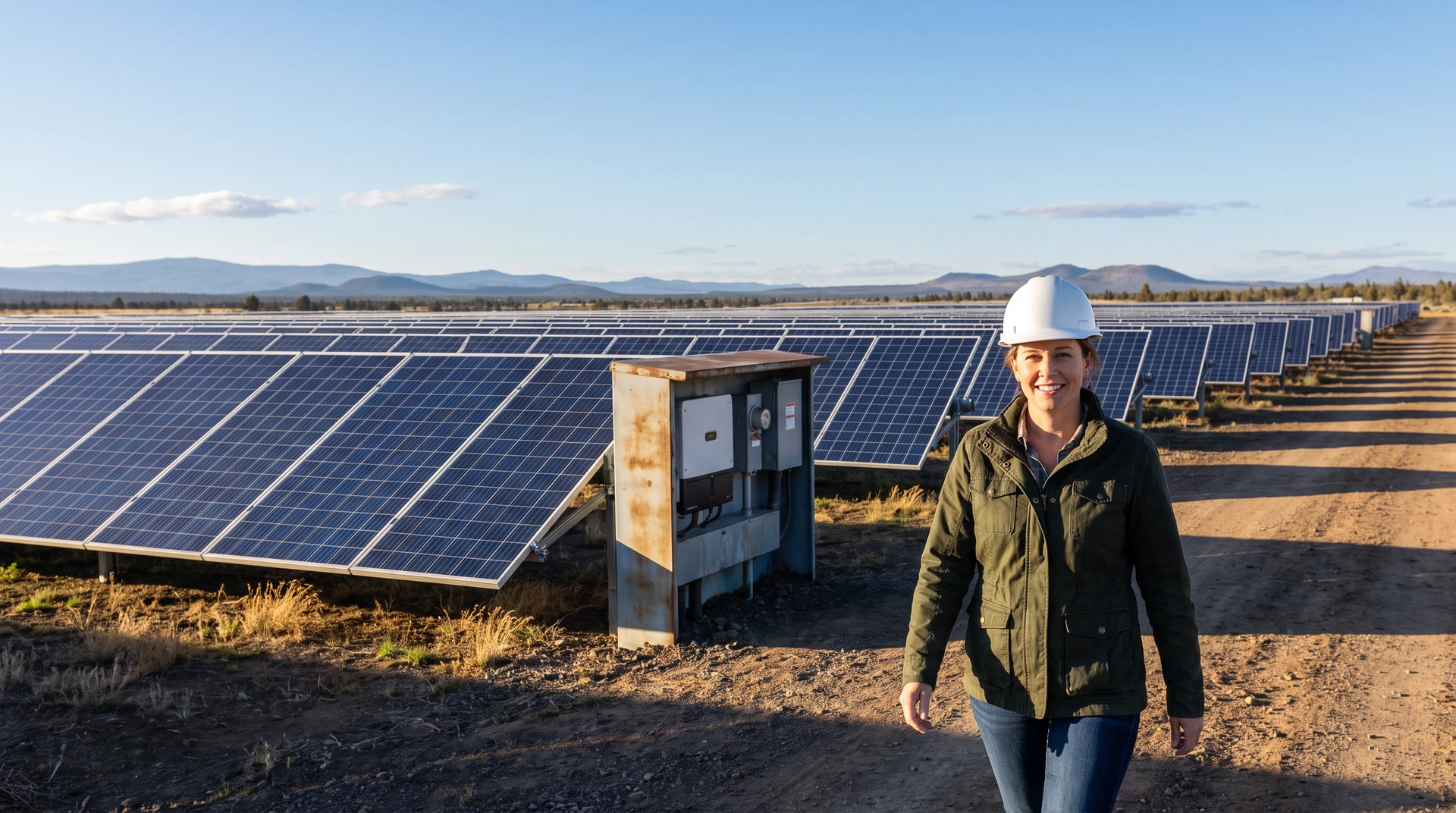
Solar & Renewable Energy Insurance: An Oregon and American West Guide for 2026

Solar and renewable-energy projects create a risk profile that changes as the work moves from design and procurement to installation, commissioning, and ongoing operations. A rooftop installer, a community-solar developer, a battery-storage operator, and an owner of a utility-scale array may all use solar technology, but their contracts, property values, job-site controls, revenue dependencies, and insurance needs are not the same. A disciplined insurance discussion starts with the business role, the assets at risk, and the contracts that allocate responsibility—not with a generic list of policy names.
This guide is designed for Oregon and American West solar contractors, developers, property owners, operators, and businesses reviewing renewable-energy exposure. It is educational only. Actual coverage depends on policy wording, endorsements, values, construction contracts, project location, lender requirements, and the facts of a loss.
Start with the role you play in the project
Renewable-energy risk is easier to map when everyone is clear about the company’s role. A contractor may be responsible for electrical installation, racking, excavation, commissioning, monitoring, or maintenance. A developer may assemble land rights, permits, financing, engineering, procurement, and subcontractors. An owner may operate the asset after turnover and depend on its output, while a host business may have an on-site system that affects its building, operations, and contractual obligations.
Travelers identifies developers, owners/operators, and installation or maintenance contractors as separate solar insurance audiences, and lists property/inland marine, builders risk, equipment breakdown, commercial auto, general liability, workers’ compensation, and umbrella considerations among the coverage conversations.1 Use your actual scope of work—not a label on a proposal—to frame an insurance review. For a project-specific starting point, compare the operation with the questions on Insure Pacific’s Solar Energy Company Insurance page and your broader commercial insurance program.
Construction phase: protect the work, materials, and timeline
During construction, the project can include modules, inverters, racking, electrical gear, cabling, tools, temporary works, and materials in transit or staged at a job site. The key questions are who owns each item at each stage, when risk transfers under the contract, which values are included in the project budget, and who is responsible for a delay after a covered physical loss.
Marsh notes that renewable-energy projects may involve construction all-risk, delay-in-startup, cargo/transit, liability, workers’ compensation, environmental, property, business interruption, and catastrophe considerations, depending on the project and phase.2 That does not mean all of those coverages apply to every project. It means the insurance and contract review should address the real schedule, delivery path, site conditions, lenders, contractors, and maximum loss values.
A Builders Risk Insurance review can help a project team ask whether the completed value, materials, temporary storage, testing and commissioning, soft costs, deductibles, and delay exposure have been addressed. For tools, mobile equipment, and property that moves among sites, an inland marine insurance conversation can be equally important. The answer depends on policy forms and contract language; an installation contract does not automatically make a property policy respond.
Operating phase: property values, equipment, and revenue continuity
After a project is placed in service, the discussion usually shifts to the physical asset, the host site, and the income or operations tied to production. A properly organized property schedule should reflect the asset that is actually being insured, including panels, inverters, racking, transformers, monitoring equipment, substations, storage batteries where applicable, spare parts, and any related buildings or contents. Review whether values are current and whether the location’s hazard profile—such as wind, hail, wildfire, flood, earthquake, theft, or vandalism—has been analyzed with the carrier.
A commercial property insurance review should be paired with an equipment breakdown insurance discussion. Property coverage and equipment breakdown coverage can address different causes of loss and may have different triggers, exclusions, sublimits, waiting periods, and deductible structures. Ask how a mechanical or electrical failure, an inverter outage, or a damaged monitoring component would be evaluated—not merely whether the system appears on a schedule.
The continuity question matters as much as the repair question. A contractor may lose the ability to work; an operator may lose expected project revenue; a host business may face interruption, contract penalties, or a need to buy replacement power. Bring the actual revenue assumptions, power-purchase arrangements, lease obligations, lender requirements, and restoration timeline to the insurance discussion. No policy should be assumed to cover every production or financial loss.
Liability: job-site controls, completed work, and contractual risk transfer
Solar installation and operation can involve energized electrical work, rooftop access, trenching, lifting, traffic exposure, customer premises, public access, and subcontractors. A general liability insurance discussion should be tied to the work actually performed, the states served, subcontractor controls, additional-insured requirements, completed-operations exposure, and any work near existing structures or occupied premises.
Liability insurance does not replace careful risk transfer. Gather executed contracts, scopes of work, certificates, indemnity language, additional-insured requests, waiver requirements, warranties, and project-specific insurance specifications before renewal or bid submission. The goal is to see where the contract assigns risk and where the insurance program may need to be tested. Insurance and contractual indemnity are different promises; ask qualified legal and insurance advisers to review both.
For projects with significant property values, public exposure, or contractually required limits, consider whether a commercial umbrella insurance review belongs in the program. Availability and attachment depend on the underlying policies, operations, loss history, contract obligations, and insurer underwriting.
Workforce and contractor selection: verify before work starts
Safety procedures, training, subcontractor vetting, site-specific controls, and payroll classification influence both operational risk and the underwriting conversation. A workers’ compensation insurance review should reflect the actual workforce, including electricians, roof crews, field technicians, equipment operators, project managers, office teams, and temporary or seasonal labor where applicable.
For Oregon homeowners or commercial hosts choosing a solar contractor, Energy Trust of Oregon recommends verifying the contractor’s Construction Contractors Board license and checking the business history before entering an agreement.3 Businesses should take a similarly disciplined approach to subcontractor onboarding: maintain current agreements, certificates, applicable licenses, safety documentation, scopes, limits, and a process for responding when a required policy or endorsement changes.
Independent Insurance Agency Since 1935
Not Sure If You Have the Right Coverage?
Our licensed agents compare 50+ carriers to find you the best coverage at the right price — at no extra cost to you.
Digital controls, monitoring, and payment risk
Modern renewable-energy operations often depend on cloud monitoring, remote access, connected inverters, vendor portals, customer data, invoices, bank details, and project-management systems. This creates operational dependencies beyond the physical site. A cyber incident, compromised credential, fraudulent payment request, or loss of monitoring access can disrupt communications even when no panel is damaged.
A cyber insurance review can help the business consider its incident response, access controls, multifactor authentication, data handling, vendor relationships, payment-verification process, and the possible business interruption caused by a network event. Coverage and services vary widely, so use the actual systems and vendor contracts rather than a broad description of “technology” when seeking options.
A practical solar and renewable-energy renewal checklist
| Review area | Questions to prepare before the insurance conversation |
|---|---|
| Business role | Are we an installer, developer, owner/operator, maintenance provider, host business, or a combination? |
| Construction | What materials, equipment, testing, transit, storage, subcontractors, and completion-date commitments are at risk? |
| Asset values | Are modules, inverters, racking, transformers, storage, monitoring equipment, buildings, and spares correctly scheduled? |
| Contracts | Which agreements require specific limits, additional-insured terms, waivers, indemnity language, or proof of coverage? |
| Location | What wind, hail, wildfire, theft, flood, earthquake, roof, access, and utility-interface conditions affect the site? |
| Liability | What electrical, rooftop, excavation, traffic, public-access, and completed-operations exposures exist? |
| People | Are payroll, job classifications, subcontractor files, training, and safety controls current? |
| Continuity | What revenue, contract, lender, customer, or operational consequences follow an extended equipment or network outage? |
| Digital operations | Which monitoring systems, credentials, vendor portals, customer data, and payment workflows would be affected by an incident? |
Put the insurance review alongside the project plan
Before a new build, acquisition, refinancing, expansion into another state, or annual renewal, bring the current project documents to the insurance conversation. The most useful file usually includes contracts, scopes, schedules, certificates, property values, serial-number or equipment lists, payroll, subcontractor information, loss history, utility or power-purchase arrangements, and lender requirements.
Insure Pacific can help solar contractors, renewable-energy businesses, project owners, and commercial clients organize these questions and compare coverage options from multiple carriers. Use the quote and contact options on this page to begin a project-specific insurance review before the next contract, delivery, commissioning date, or renewal.
Coverage, eligibility, limits, deductibles, exclusions, contractual obligations, and claim outcomes depend on the actual policies, project facts, and loss circumstances. This guide is educational and is not legal, regulatory, engineering, or coverage advice.
References
[1] Travelers — Solar Energy Insurance
[2] Marsh — Renewable Energy Projects: Risk and Insurance Issues
Our Licensed Coverage Area
States highlighted in blue are states where Insure Pacific holds an active insurance license.
Hover to highlight — click a state to visit its insurance page
Our Oregon Office Locations
Hover over a marker to see the office — click to visit their website.
Hover to highlight — click to visit that office's website
Ready to Get Protected?
Talk to a Local Oregon Insurance Expert
Insure Pacific has been serving Oregon families and businesses since 1935. We work with 50+ carriers so you get real options — not just one company's answer.
Related Articles
 Commercial Insurance
Buying a Commercial Building: Insurance Questions to Answer Before Closing
Read Article → Commercial Insurance
Non-Emergency Medical Transportation Insurance: Passenger Injuries, Wheelchair Lifts, Driver Screening, Contracts & Commercial Auto Limits
Read Article → Commercial Insurance
General Contractor Insurance and Subcontractor Risk: Certificates, Additional Insured Status, Waivers of Subrogation, and Indemnity
Read Article → Commercial Insurance
Pickleball and Padel Club Insurance: Court Injuries, Leagues, Instructors, Alcohol, and Facility Liability
Read Article →Get in Touch
Ready to protect what matters most? Contact us today for a no-obligation insurance review. Our experienced agents are here to help you find the right coverage for your needs.


