



Brewery and Winery Insurance in Oregon and the Pacific Northwest: The Complete Coverage Guide for 2026
Brewery and Winery Insurance in Oregon and the Pacific Northwest: The Complete Coverage Guide for 2026

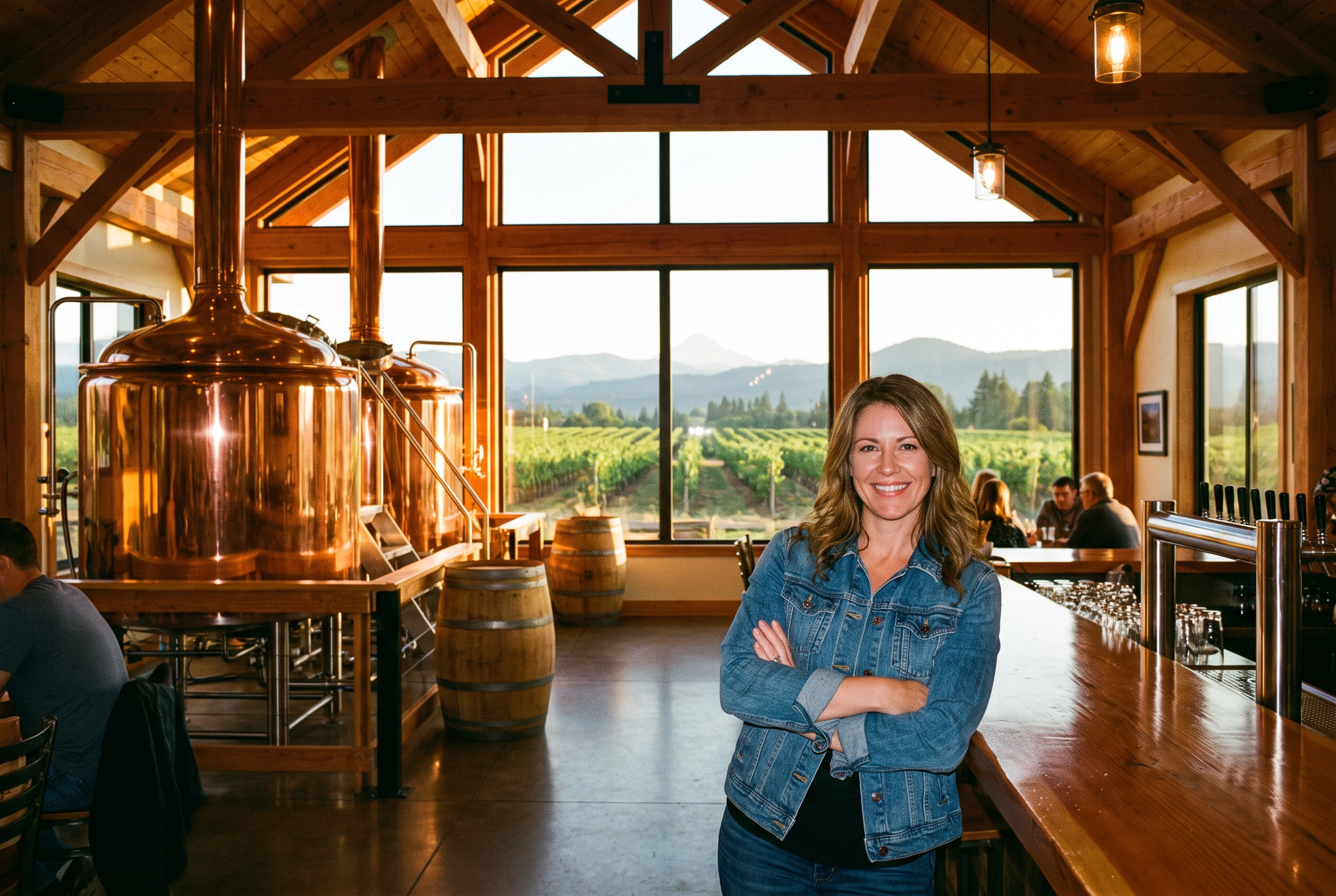
Oregon has built one of the most celebrated craft beverage cultures in the United States. The state is home to more than 300 craft breweries — ranking it among the top five nationally per capita — and more than 900 licensed wineries, with the Willamette Valley, Umpqua Valley, and Rogue Valley producing wines that compete on the world stage. Central Oregon's Bend and Redmond have become craft brewery destinations in their own right, drawing visitors from across the Pacific Northwest.
But behind every great pint and every celebrated vintage, there is a business carrying a set of risks that most standard commercial insurance policies are not designed to handle. Liquor liability. Product contamination. Equipment breakdown during the critical harvest window. Wildfire smoke drifting across a vineyard and ruining an entire vintage. A taproom slip-and-fall on a busy Saturday. A product recall that costs $200,000 before a single lawsuit is filed.
This guide explains what a complete insurance program for Oregon breweries and wineries looks like in 2026 — and why working with an independent agent who understands the beverage industry is the only way to build it correctly.
Why Standard Commercial Policies Fall Short
The most common mistake brewery and winery owners make is purchasing a standard business owner's policy (BOP) and assuming it covers their operation. A standard BOP is designed for low-risk retail and service businesses. It covers general liability, commercial property, and business interruption — but it typically excludes or severely limits the coverages that matter most to beverage producers:
Liquor liability is almost always excluded from a standard BOP. For any Oregon business that manufactures, sells, or serves alcohol, this is not optional coverage — it is a legal requirement under the Oregon Liquor and Cannabis Commission (OLCC) licensing process.
Product contamination and recall coverage is excluded from standard general liability policies. A contaminated batch of beer or wine can trigger a recall that costs $50,000 to $500,000 in direct expenses before any lawsuits are filed.
Agricultural property — including grapevines, trellises, and growing crops — is excluded from standard commercial property policies. Vineyard owners need dedicated crop insurance to protect the asset that generates their revenue.
Equipment breakdown coverage for fermentation tanks, chillers, bottling lines, and barrel storage systems is typically excluded from standard property policies, which cover fire and theft but not mechanical or electrical failure.
The solution is a specialty beverage industry insurance program — either a dedicated brewery or winery package policy, or a carefully constructed combination of commercial lines policies assembled by an agent who understands the industry.
The Core Coverages Every Oregon Brewery and Winery Needs
1. Liquor Liability — The Non-Negotiable Foundation
Oregon's Dram Shop law makes any business that sells or serves alcohol legally liable when an intoxicated patron causes injury or death after leaving the premises. This exposure applies to brewery taprooms, winery tasting rooms, event venues, and any business that hosts events where alcohol is served.
The OLCC requires all licensees to carry liquor liability insurance with a minimum of $300,000 per occurrence, with the OLCC named as a certificate holder on an ACORD form. This requirement applies to annual license renewals — you cannot renew your license without proof of compliant coverage.
However, $300,000 is a floor, not a recommendation. A single Dram Shop lawsuit in Oregon can easily exceed $1 million in damages and legal fees. Most independent agents who work with breweries and wineries recommend $1 million per occurrence as a practical minimum, with a commercial umbrella policy providing additional limits above that.
For more detail on Oregon's Dram Shop law and liquor liability requirements, see our dedicated guide: Liquor Liability Insurance in Oregon: What Bars, Breweries, and Restaurants Must Know.
2. General Liability — Protecting Your Taproom and Tasting Room
Every brewery taproom and winery tasting room is a public-facing venue with real slip-and-fall, premises liability, and advertising injury exposure. A visitor who trips on a barrel hose in the taproom, a guest injured during a vineyard tour, or a delivery driver who falls at your loading dock — all of these are general liability claims.
Commercial general liability insurance covers bodily injury, property damage, and personal and advertising injury arising from your premises and operations. For most Oregon breweries and wineries, a $1 million per occurrence / $2 million aggregate limit is the standard starting point, with higher limits recommended for operations that host large events or have high visitor volumes.
3. Product Liability and Product Recall
Product liability insurance covers claims arising from the products you produce, sell, or distribute. For a brewery, that means a customer who gets sick from a contaminated batch, an allergic reaction to an undisclosed ingredient, or an injury caused by a defective can or bottle. For a winery, it means a contaminated vintage, a labeling error, or a spoilage event that affects distributed inventory.
What product liability does not cover is the cost of the recall itself — pulling product from shelves, notifying distributors, managing logistics, and handling public relations. That requires a separate product recall endorsement, sometimes called recall expense coverage. A single recall event can cost $50,000 to $500,000 in direct expenses, and most standard policies exclude these costs entirely.
Oregon breweries and wineries that distribute through retail channels, restaurants, or direct-to-consumer shipping have the highest product liability exposure and should prioritize recall coverage as part of their program.
Insure Pacific works with Oregon craft breweries and wineries across the Pacific Northwest. We compare specialty beverage programs across 50+ carriers to find the right combination of liquor liability, product recall, equipment breakdown, and crop coverage for your operation. No cost, no obligation.
Get a Free Coverage Review → (541) 238-7775 Text Us!4. Commercial Property and Equipment Breakdown
Your brewery or winery facility — the production building, barrel storage, tasting room, and all the equipment inside — needs commercial property coverage. But standard property policies have two critical gaps for beverage producers:
Equipment breakdown is excluded from most commercial property policies. A chiller that fails during a summer heat event, a fermentation tank that malfunctions mid-batch, or a bottling line that breaks down during your peak production window — none of these are covered by a standard property policy. Equipment breakdown coverage (sometimes called boiler and machinery insurance) fills this gap and covers the cost of repair or replacement plus the resulting business income loss.
Spoilage and contamination coverage protects your wine or beer inventory if it is ruined by a covered equipment failure — for example, a refrigeration system failure that spoils a barrel room full of aging wine. This coverage is typically added as an endorsement to a commercial property policy and is essential for any operation with significant inventory value.
For wineries, property coverage should also include the tasting room building, production facility, and any wine in transit to distributors or special events — the latter requiring an inland marine policy to cover inventory off-premises.
5. Vineyard and Crop Insurance — The Winery-Specific Risk
For Oregon wineries that grow their own grapes, the vineyard itself is the most valuable and most vulnerable asset — and it is excluded from every standard commercial property policy. Grapevines, trellises, and the growing crop require dedicated agricultural insurance.
Multi-Peril Crop Insurance (MPCI) through the USDA's Risk Management Agency covers Oregon wine grapes against a wide range of perils including frost, hail, wind, drought, and excessive moisture. MPCI is federally subsidized, making it one of the most cost-effective risk management tools available to Oregon vineyard operators.
Wildfire smoke damage has become an increasingly significant concern for Oregon and Washington vineyard operators. Smoke taint — the absorption of smoke compounds by grape skins during critical ripening periods — can render an entire vintage unsellable. The 2020 wildfire season caused an estimated $500 million in smoke-tainted wine losses in Oregon and Washington alone. Some specialty carriers now offer smoke taint endorsements as part of vineyard crop programs, though availability and pricing vary significantly by location and fire risk score.
For a deeper look at how wildfire risk affects Oregon agricultural operations, see our guide on Oregon Farm and Ranch Insurance in Wildfire Season 2026.
6. Workers' Compensation
Oregon law requires workers' compensation coverage for any business with employees — including seasonal harvest workers, tasting room staff, and part-time taproom employees. The Oregon workers' comp system is administered through SAIF Corporation (the state fund) and a competitive private market.
For breweries and wineries, workers' comp exposure includes production injuries (equipment, chemical handling, lifting), tasting room slip-and-falls, vineyard harvest injuries, and heat-related illness during summer operations. Oregon's workers' comp base rate is among the most competitive in the Western United States, but the experience modification factor (EMR) — which adjusts your premium based on your claims history — makes safety programs and incident documentation critical to managing long-term costs.
For a comprehensive overview of Oregon workers' comp requirements and cost management, see our guide: Workers' Compensation in Oregon: What Every Employer Must Know.
Independent Insurance Agency Since 1935
Not Sure If You Have the Right Coverage?
Our licensed agents compare 50+ carriers to find you the best coverage at the right price — at no extra cost to you.
7. Commercial Auto
If your brewery or winery operates delivery vehicles, a company van for event catering, or any vehicle used for business purposes, you need commercial auto insurance. Personal auto policies exclude business use, and the gap is significant — a delivery driver involved in an accident while transporting kegs or wine cases to a restaurant account is not covered under a personal policy.
For operations where employees occasionally use personal vehicles for business purposes — driving to a farmers market, delivering a case to a client — hired and non-owned auto (HNOA) coverage fills the gap between personal auto policies and commercial auto.
8. Umbrella and Excess Liability
Given the combined exposure of liquor liability, product liability, premises liability, and event hosting, most Oregon breweries and wineries benefit significantly from a commercial umbrella policy. An umbrella policy sits above your underlying liability policies and provides additional limits — typically $1 million to $5 million — that activate when underlying limits are exhausted.
For a taproom or tasting room that hosts 500 visitors on a busy weekend, a single serious incident can generate a claim that exceeds $1 million in underlying coverage. An umbrella policy is one of the most cost-effective ways to protect against catastrophic liability exposure.
Special Considerations for Oregon Breweries and Wineries
Event hosting and agritourism. Many Oregon wineries and some breweries have expanded into event hosting — weddings, corporate events, harvest dinners, and public festivals. Each of these activities creates additional liability exposure that may not be covered under a standard commercial policy. Event liability endorsements or separate special event policies are typically required for venues that host third-party events.
Direct-to-consumer shipping. Oregon wineries that ship wine directly to consumers in other states face a patchwork of state regulations and insurance requirements. DTC shipping programs should be reviewed with an agent to confirm that product liability coverage extends to out-of-state shipments and that the policy does not contain geographic exclusions.
Cyber liability. Taprooms and tasting rooms that process credit card payments, maintain customer databases, or operate wine club subscription programs face cyber liability exposure. A data breach affecting customer payment information can trigger notification costs, regulatory fines, and third-party claims. Cyber liability insurance is increasingly important for any beverage business with a digital customer relationship.
Business interruption. A fire, equipment failure, or natural disaster that forces a temporary closure can be financially devastating for a brewery or winery with ongoing fixed costs — lease payments, loan servicing, employee wages, and supplier contracts. Business interruption coverage pays for lost revenue and continuing expenses during a covered shutdown period. For wineries, this coverage should be structured to account for the long production cycle — a winery that loses a vintage may not feel the full financial impact for 12 to 18 months.
How Oregon Breweries and Wineries Can Manage Insurance Costs
The craft beverage industry has seen significant insurance market hardening over the past three years, driven by rising liquor liability claims, wildfire-related property losses, and product recall events. However, there are concrete steps Oregon brewery and winery operators can take to manage costs without sacrificing coverage:
Bundle policies with a single carrier. Consolidating general liability, property, liquor liability, and product liability with a single specialty carrier typically reduces total premium by 10 to 15 percent compared to purchasing each policy separately. Specialty beverage programs from carriers like Philadelphia Insurance, Travelers, and The Hartford are designed for this bundling approach.
Document safety practices. Carriers reward documented safety programs — staff training records, incident logs, equipment maintenance schedules, and OLCC-compliant alcohol service training (such as TEAM Oregon certification). Presenting this documentation when requesting quotes can qualify your operation for safety discounts of 5 to 20 percent.
Work with an independent agent. Unlike captive agents who represent a single carrier, an independent agent like Insure Pacific can access specialty beverage programs from multiple carriers and compare options across the market. This is particularly important for operations with unusual risk profiles — a winery in a high wildfire-risk zone, a brewery that hosts large public events, or a craft distillery that also operates a tasting room.
The Independent Agent Advantage for Craft Beverage Businesses
The craft beverage insurance market is specialized, and the difference between a policy that covers your operation and one that leaves you exposed often comes down to the specific endorsements, exclusions, and coverage triggers written into the policy language.
Insure Pacific has been serving Oregon businesses since 1935. Our agents work with craft breweries, wineries, distilleries, and agritourism operations across Oregon, Washington, Idaho, and the broader Pacific Northwest. We access specialty beverage programs from 50+ carriers and build coverage programs that address the specific risks of your operation — whether you are a small craft brewery with a taproom in Bend, a Willamette Valley estate winery with a vineyard and event venue, or a regional craft beverage producer with distribution across multiple states.
For a comprehensive overview of commercial insurance options for Oregon businesses, visit our Commercial Insurance page. To speak with an agent about your brewery or winery coverage, visit our Winery Insurance Oregon page or contact us directly.
Insure Pacific's independent agents specialize in Oregon craft beverage businesses. We compare specialty brewery and winery programs across 50+ carriers — liquor liability, product recall, equipment breakdown, vineyard crop, and more — and find the right combination for your operation. No cost, no obligation, no pressure.
Our Licensed Coverage Area
States highlighted in blue are states where Insure Pacific holds an active insurance license.
Hover to highlight — click a state to visit its insurance page
Our Oregon Office Locations
Hover over a marker to see the office — click to visit their website.
Hover to highlight — click to visit that office's website
Ready to Get Protected?
Talk to a Local Oregon Insurance Expert
Insure Pacific has been serving Oregon families and businesses since 1935. We work with 50+ carriers so you get real options — not just one company's answer.
Related Articles
 Commercial Insurance
Multi-State Workers’ Compensation: Remote Employees, Traveling Crews, and Out-of-State Jobs
Read Article → Commercial Insurance
Import and Export Cargo Insurance: Ocean Freight, Ports, Customs, and Inland Transportation
Read Article → Commercial Insurance
Has Your Business Outgrown Its Insurance? Revenue, Payroll, New Locations, and New Services
Read Article → Commercial Insurance
Buying a Commercial Building: Insurance Questions to Answer Before Closing
Read Article →Get in Touch
Ready to protect what matters most? Contact us today for a no-obligation insurance review. Our experienced agents are here to help you find the right coverage for your needs.


