



Commercial Insurance for Battery Storage and EV Charging Sites: Thermal Runaway, Property Damage, Pollution, Cyber Risk, and Business Interruption
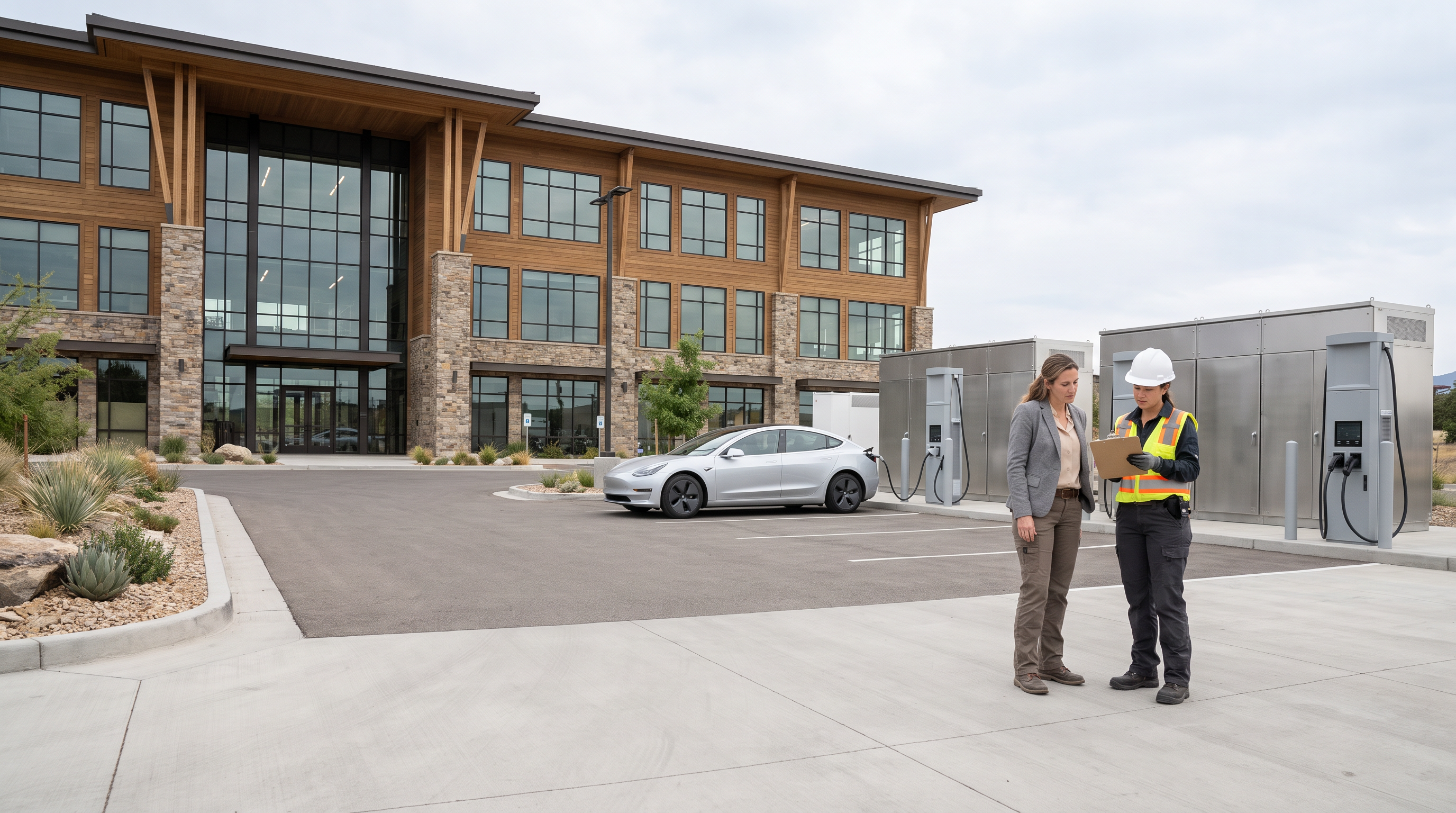
Commercial Insurance for Battery Storage and EV Charging Sites: Thermal Runaway, Property Damage, Pollution, Cyber Risk, and Business Interruption

A commercial battery storage or EV charging project is not just an electrical upgrade. It can be a high-voltage property asset, networked payment platform, environmental exposure, construction project, vendor ecosystem, and revenue operation at the same time.
That combination is what makes insurance design difficult.
A fire may begin inside a battery module but damage switchgear, transformers, chargers, buildings, landscaping, pavement, utility equipment, and neighboring property. A charger outage may involve no fire at all—it may begin with a failed connector, stolen cable, disabled payment reader, cloud-service interruption, software update, transformer failure, or network compromise. A serious incident can also create air-monitoring, runoff, cleanup, transportation, disposal, public-relations, and business-income costs that do not fit neatly inside one policy.
This guide is for commercial property owners, charging-site hosts, fleet operators, real estate developers, retailers, hospitality businesses, solar and storage operators, municipalities, contractors, and investors reviewing their commercial insurance program in 2026.
> Important: This article is educational. It does not determine whether a particular incident is covered. Policy wording, endorsements, exclusions, values, deductibles, waiting periods, contracts, cause of loss, applicable law, and claim facts control. Fire protection, electrical design, environmental response, cybersecurity, and code compliance should be reviewed with qualified professionals and the local authority having jurisdiction.
Quick answer: What insurance may a battery storage or EV charging site need?
A complete review may involve:
The correct combination depends on who owns the equipment, who operates it, how revenue is earned, where the site is located, what contracts require, and which causes of loss each policy actually addresses.
Table of contents
1. Why these sites create an unusual insurance problem
2. Map ownership and responsibility before comparing policies
3. Thermal runaway, fire spread, and delayed reignition
4. UL 9540, UL 9540A, NFPA 855, and local approval
5. Property and equipment-breakdown exposures
6. Pollution, runoff, cleanup, and damaged-battery disposal
7. Cyber risk, payments, cloud platforms, and remote access
8. Theft, vandalism, vehicle impact, and public access
9. Business interruption and revenue-model risk
10. Construction, commissioning, and delay exposure
11. How the coverage stack may fit together
12. Contracts, certificates, warranties, and risk transfer
13. What underwriters may request
14. Incident response and claim documentation
15. A 2026 renewal checklist
16. Frequently asked questions
1. Why these sites create an unusual insurance problem
A conventional parking lot has premises liability and property exposures. A conventional electrical room has electrical-fire and equipment-breakdown exposures. A conventional retail payment terminal has cyber and payment-card exposures. A battery storage and EV charging site can combine all three—and add utility interconnection, remote control, high-voltage direct current, lithium-ion chemistry, public vehicle traffic, mobile apps, cloud vendors, and multiple contractors.
That produces five overlapping risk layers.
The physical asset layer
The insured property may include battery cells, modules, racks, containers, thermal-management equipment, power-conversion systems, inverters, transformers, switchgear, relays, meters, charging pedestals, cables, payment readers, networking equipment, canopies, concrete pads, fencing, bollards, drainage improvements, and landscaping.
Some of that property may belong to the site owner. Some may belong to the utility, charging network, tenant, fleet customer, equipment lessor, or project company.
The operating layer
Revenue may depend on charging-session volume, demand-charge savings, grid services, capacity payments, energy arbitrage, tenant rent, customer traffic, fleet availability, or a contractual uptime promise. A site can be physically intact and still lose revenue because its payment platform, telecom connection, cloud service, firmware, or network operator is unavailable.
The safety and environmental layer
A serious battery incident can involve heat, smoke, flammable gases, hazardous air emissions, water application, runoff, damaged batteries, debris, monitoring, temporary isolation, specialized contractors, transportation, and disposal. Those are not merely repair costs.
The digital layer
EV chargers communicate with vehicles, cloud platforms, payment systems, mobile apps, building networks, utilities, and service vendors. NIST describes this as an interconnected cyber-physical ecosystem. A compromised or unavailable system can affect data, payments, charging availability, equipment control, and—under some circumstances—the physical environment.
The contractual layer
The owner, host, EPC contractor, electrical contractor, battery manufacturer, charger manufacturer, network provider, maintenance vendor, payment processor, utility, recycler, lender, and landlord may each accept different duties. Insurance will not fix a contract that assigns a major obligation to a party without matching coverage, limits, evidence, or financial capacity.
2. Map ownership and responsibility before comparing policies
The first useful document is not an insurance application. It is a responsibility matrix.
For every major asset and function, identify:
| Item or duty | Owner | Operator | Maintainer | Emergency authority | Insurance responsibility |
|---|---|---|---|---|---|
| Battery containers and modules | Who holds title? | Who dispatches them? | OEM or O&M contractor? | Who can isolate them? | Which property schedule? |
| Transformer and switchgear | Host, utility, or project company? | Who monitors? | Who inspects? | Who can de-energize? | Property or utility exposure? |
| EV charging pedestals and cables | Host, network, or lessor? | Who handles customers? | Who repairs vandalism? | Who disables a port? | Property, equipment, crime? |
| Payment system and app | Network provider? | Who is merchant of record? | Who patches it? | Who handles breach response? | Cyber and PCI responsibility? |
| Site drainage and runoff | Property owner? | Facility manager? | Environmental contractor? | Who calls regulators? | Pollution and cleanup review? |
| Damaged batteries and debris | Who becomes generator? | Who selects vendor? | Licensed transporter/recycler? | Who authorizes removal? | Transport and disposal coverage? |
This matrix often reveals issues that a simple certificate request misses.
For example, a hotel may host chargers owned by a network company. The hotel controls lighting, snow removal, cameras, vehicle flow, and customer interaction. The network company controls the charger software and payment platform. A third party maintains the chargers. The utility owns the transformer. If a cable is cut, a customer is injured, payment data is exposed, or a charger is offline for six weeks, responsibility may not follow ownership in a simple way.
A battery project can be even more fragmented. The project company may own the battery but rely on an EPC contractor, OEM warranty, cloud analytics platform, O&M provider, grid aggregator, and landowner. Each contract should align with the insurance program.
3. Thermal runaway, fire spread, and delayed reignition
Thermal runaway is a self-heating process in which a battery cell’s temperature rises rapidly and can trigger additional chemical reactions. Heat can propagate to nearby cells or modules, creating fire, gas release, and—in some conditions—deflagration or explosion hazards.
Thermal runaway can be initiated by different conditions, including:
The insurance concern is not only whether a battery burns. It is how far the event spreads and what it disables.
A contained module event may still require investigation, isolation, monitoring, component replacement, testing, and temporary shutdown. A container fire can expose adjacent containers, transformers, buildings, vehicles, or public areas. Smoke and corrosive byproducts can affect sensitive electronics beyond the visibly burned area. Responders may need an exclusion zone, air monitoring, specialized PPE, and extended scene control.
Reignition changes the recovery timeline
EPA and the U.S. Fire Administration warn that damaged lithium-ion systems may reignite after the visible fire appears controlled. That changes decisions about:
A property estimate that includes only the burned cabinet may therefore be incomplete. The claim file may also need responder costs, engineering review, air or water testing, temporary security, debris management, replacement electrical work, recommissioning, customer communication, and lost income.
One response tactic does not fit every incident
Do not turn general fire-safety guidance into a universal operating instruction. EPA discusses focusing on preventing spread in large BESS incidents, while other guidance may differ by enclosure, installation, electrical condition, and responder strategy. The incident commander, local fire department, manufacturer information, emergency response plan, and actual conditions control.
The commercial risk-management objective is to have a current, site-specific plan before the event—not to improvise one while equipment is smoking.
4. UL 9540, UL 9540A, NFPA 855, and local approval
These names are often used interchangeably, but they do different jobs.
UL 9540
UL describes UL 9540 as the product-safety standard for complete energy storage systems and equipment. A system listing should be reviewed against the actual installed configuration, not assumed from the presence of a listed component.
UL 9540A
UL 9540A is a test method for evaluating thermal-runaway fire propagation and related fire or explosion behavior. Test information can help engineers and authorities evaluate enclosure behavior, gas and heat release, separation, suppression, and installation design.
A test report should match the battery chemistry, module, unit, enclosure, firmware, protection features, and installation arrangement under review. A report for a different configuration may not answer the site’s question.
NFPA 855
NFPA 855 addresses the installation of stationary energy storage systems. Its criteria vary by technology, location, size, separation, and protection features. The 2026 edition and newer UL testing developments place additional attention on large-scale fire behavior, but adoption takes time.
The authority having jurisdiction matters
Codes and standards become enforceable through state or local adoption and may be amended. The authority having jurisdiction may be a fire marshal, building official, electrical inspector, planning department, or another agency.
Before installation or expansion, document:
This file supports safety, underwriting, lender diligence, contract compliance, and claim investigation.
5. Property and equipment-breakdown exposures
A BESS loss is not always a battery-cell loss. Travelers BoilerRe notes that switchgear, breakers, fuses, relays, cables, busways, transformers, and other electrical distribution equipment can be central equipment-breakdown exposures.
Commercial property coverage
A commercial property policy may respond to covered physical damage, but the schedule and valuation must be accurate. Review whether insured property includes:
Replacement cost should reflect current equipment, engineering, freight, skilled labor, commissioning, and lead time—not only the original invoice.
Equipment breakdown coverage
Property forms often treat internal electrical or mechanical breakdown differently from fire or other external causes of loss. Equipment breakdown can be important for:
Review the site’s equipment breakdown insurance alongside the property form. Ask how the policies coordinate when an internal failure causes ensuing fire, smoke, or other damage.
Defect, degradation, and warranty questions
A policy may exclude or limit wear, gradual deterioration, corrosion, faulty design, defective material, or poor workmanship. A warranty may cover a defined repair or replacement but exclude consequential loss, labor, transport, business interruption, or third-party damage.
Build a three-column recovery plan:
| Potential issue | Possible commercial remedy | Insurance question |
|---|---|---|
| Defective module | OEM warranty or contract claim | Is resulting covered damage treated differently from the defective part? |
| Failed inverter | Service agreement or warranty | Does equipment breakdown apply, and is lost income included? |
| Capacity degradation | Performance guarantee, if any | Is gradual performance loss excluded? |
| Installer error | Contract indemnity or contractor policy | Is faulty work excluded, and is ensuing damage addressed? |
| Software failure | Vendor SLA or cyber claim | Is non-physical network interruption covered? |
Warranty and insurance should complement each other. Neither should be assumed to replace the other.
6. Pollution, runoff, cleanup, and damaged-battery disposal
A serious battery incident can produce more than charred equipment. EPA identifies air emissions, application-water runoff, damaged batteries, cleanup, transport, and disposal as planning issues.
Potential environmental cost categories
Depending on the event and site, costs may include:
The existence of those costs does not establish that a policy covers them.
Pollution exclusions and dedicated environmental coverage
Commercial general liability and property policies often define pollutants broadly and may contain pollution exclusions or limited exceptions. A pollution or environmental liability policy may be designed for certain unexpected pollution conditions, but its terms still matter.
Ask whether the environmental program addresses:
Runoff planning begins with a map
Map every catch basin, drain, stormwater path, sanitary connection, waterway, low point, and containment feature. Pre-plan which drains can be isolated, where temporary barriers or storage can be placed, and who has authority to act. Any containment method must be coordinated with responders and local authorities so it does not create a different hazard.
Damaged batteries are a transportation issue too
EPA says commercial entities must determine whether discarded batteries are hazardous waste, and PHMSA imposes specific rules for damaged, defective, or recalled lithium batteries transported in commerce. Do not place a damaged pack on a truck as ordinary salvage.
Use qualified contractors who understand assessment, residual energy, packaging, marking, shipment, recycling, and disposal requirements. Review whether the transporter, environmental contractor, and recycler carry appropriate insurance and whether contracts allocate responsibility for a later release.
7. Cyber risk, payments, cloud platforms, and remote access
A modern charging station is a computer attached to high-voltage equipment.
NIST identifies four connected parts of the fast-charging ecosystem:
1. the charger;
2. the electric vehicle;
3. the cloud or third-party operator; and
4. utility and building networks.
Attack paths and failure points may include:
A practical control baseline
Use current federal EV-charging and OT guidance to ask for:
Argonne’s EV charging research emphasizes network segmentation and separation of charging infrastructure from enterprise, IoT, user, and other operational-technology networks. The Joint Office’s procurement guidance also calls for lifecycle security, incident reporting, subcontractor controls, update management, continuity, and recovery.
Payment systems create a separate exposure
Public chargers may process cards, tokens, mobile-wallet transactions, account credentials, or fleet payments. The Joint Office and NREL recommend compatible, tested payment hardware, PCI-aligned solutions, network segregation, coordinated software updates, active monitoring, tamper protection, and recurring compliance review.
A failed payment system can cause:
Review cyber liability insurance for privacy response, digital forensics, ransomware, restoration, network business interruption, dependent cloud providers, payment-card assessments where available, and operational-technology wording. Many cyber policies exclude or restrict bodily injury and physical property damage, so property, equipment breakdown, liability, and cyber forms should be read together.
8. Theft, vandalism, vehicle impact, and public access
CISA’s May 2026 alert says copper-wire theft from EV charging stations can cause costly damage, public-safety concerns, and service disruption. That is a current, practical loss scenario.
Other physical exposures include:
Controls may include lighting, cameras, tamper alarms, cable-protection systems, reinforced or retractable cables, impact-rated barriers, wheel stops, housekeeping, accessible placement, routine inspection, rapid shutdown, and clear customer reporting.
Insurance questions include whether vandalism or theft is covered, whether cable or component theft is subject to a special deductible or sublimit, whether crime coverage is relevant, and whether lost income after physical damage is included.
9. Business interruption and revenue-model risk
The most expensive part of a loss may be the time required to diagnose, obtain parts, obtain regulatory or utility approval, rebuild, recommission, and restore customer confidence.
Identify every revenue stream
Depending on the operation, revenue or economic value may come from:
A business-income worksheet should not simply copy last year’s sales. It should show which revenue depends on which asset and vendor.
Independent Insurance Agency Since 1935
Not Sure If You Have the Right Coverage?
Our licensed agents compare 50+ carriers to find you the best coverage at the right price — at no extra cost to you.
Covered trigger comes before amount
Business income usually requires a covered cause of loss and may require direct physical damage at an insured location. A cloud outage, utility curtailment, interconnection delay, performance shortfall, or unavailable supplier may not satisfy that trigger.
Possible extensions or separate coverages may include:
Each can have its own waiting period, deductible, sublimit, period of restoration, covered dependency, and exclusion.
The site’s supplier and dependent-property plan should identify single-source transformers, power modules, battery-management components, connectors, payment readers, software platforms, and qualified service firms.
Illustrative loss estimate
Assume a site loses $4,600 per day in documented contribution and contracted revenue for 45 days. It spends $85,000 on temporary measures and expedited repair, while avoiding $20,000 of normal operating expense.
Illustrative estimate:
$4,600 × 45 days + $85,000 − $20,000 = $272,000
That estimate is not automatically the covered amount. The adjustment may change based on the covered trigger, waiting period, continuing expenses, savings, mitigation requirements, sublimits, restoration period, and policy definition of business income.
Build the evidence before the outage
Maintain:
Those records support operations, warranty enforcement, vendor claims, and insurance adjustment.
10. Construction, commissioning, and delay exposure
Before a site is operational, the risk may sit in a builders risk, installation, inland marine, contractor, or project-specific program.
Construction-phase exposures
A commercial solar or storage project may require the same phase discipline used for solar farm insurance, with added attention to battery chemistry, fire testing, controls, and emergency response.
Define the handoff date
Coverage can change at substantial completion, acceptance, occupancy, first energization, commercial operation, or another defined milestone. Confirm:
A one-day gap can become a major dispute if a loss occurs during commissioning.
11. How the coverage stack may fit together
No single policy label proves that the project is protected. Use the table below as a review map, not a coverage promise.
| Coverage | Questions to review |
|---|---|
| Commercial property | Are all owned assets, locations, values, debris, code upgrades, catastrophe perils, and replacement costs addressed? |
| Equipment breakdown | Are switchgear, transformers, chargers, inverters, BMS/controls, arcing, and resulting income loss included? |
| Builders risk / installation | Are transit, storage, testing, commissioning, soft costs, delay, and handoff addressed? |
| General liability | Are premises, public charging, completed operations, contracts, and bodily injury/property damage exposures addressed? |
| Pollution liability | Are emergency response, runoff, cleanup, transport, disposal, and third-party environmental claims addressed? |
| Cyber liability | Are privacy, payments, ransomware, restoration, vendor/cloud interruption, and OT consequences addressed? |
| Business income / extra expense | What physical or cyber trigger, waiting period, revenue definition, restoration period, and sublimit apply? |
| Inland marine / cargo | Who covers equipment while moving, staged, or awaiting installation? |
| Commercial auto | Who transports equipment or damaged batteries, and what hazmat and hired/non-owned exposures exist? |
| Umbrella / excess | Which underlying policies are scheduled, and do exclusions or conditions follow through the tower? |
A commercial general liability policy can address important premises and operations claims, but it is not a replacement for property, cyber, pollution, or equipment-breakdown coverage. A commercial umbrella policy can add limits over scheduled underlying coverage, but it may not fill an exclusion or attach over every specialized policy.
> Mid-project insurance review: Before ordering equipment or signing a host agreement, request a commercial insurance review, call (541) 238-7775, or text (541) 447-6372. Bring the site plan, asset schedule, contracts, revenue model, testing information, and emergency plan so the discussion can focus on the real project.
12. Contracts, certificates, warranties, and risk transfer
A charging or storage project can have more contracts than major pieces of equipment. Review them as one system.
Owner and site-host agreement
Clarify:
EPC, installer, and electrical contractor agreement
Review design responsibility, code compliance, testing, commissioning, defective work, completed operations, subcontractors, delay, damage to existing property, change orders, warranties, evidence retention, and incident cooperation.
OEM and O&M agreement
Review:
Charging-network and payment agreement
Define uptime, help-desk service, payment disputes, chargebacks, data ownership, privacy, logging, API access, cybersecurity, vulnerability notice, patching, outage reporting, business continuity, transition assistance, and post-termination operation.
Utility and interconnection agreement
Confirm ownership at the point of interconnection, outage and curtailment rights, utility upgrades, metering, restoration, export limits, demand charges, control access, notice, insurance, indemnity, and responsibility for transformer or switchgear damage.
Certificates are not endorsements
A certificate of insurance is evidence, not the policy. It does not create additional-insured status, waiver of subrogation, primary and noncontributory wording, completed-operations protection, or cancellation notice.
Request and review the actual endorsements. Confirm that the named entities, operations, policy periods, limits, and contract requirements match.
13. What underwriters may request
A strong submission helps the broker explain the risk rather than leaving the insurer to assume the worst.
Project and ownership information
Technical information
Emergency and environmental information
Insurance and contract information
14. Incident response and claim documentation
Safety comes first. After emergency notifications and life-safety actions, activate a coordinated incident and claim process.
First hours
1. Follow the emergency plan and incident-command direction.
2. Isolate the area and preserve responder access.
3. Notify the operator, utility, OEM, and qualified technical contacts.
4. Give timely notice to the broker and potentially responsive insurers.
5. Notify environmental or other authorities when required.
6. Begin a contemporaneous incident log.
7. Preserve video, alarms, BMS, SCADA, payment, cloud, and access logs.
8. Photograph conditions only when safe and authorized.
First days
Avoid common claim mistakes
Do not discard damaged components before inspection. Do not reset or overwrite logs unnecessarily. Do not sign a broad release from a vendor without reviewing insurance and subrogation implications. Do not assume a warranty claim satisfies policy notice. Do not describe cause as final before the investigation is complete.
15. A 2026 renewal checklist
Use this checklist at least 90 to 120 days before renewal.
Values and operations
Safety and engineering
Cyber and payment
Contracts and insurance
16. Frequently asked questions
Does a standard commercial property policy cover a battery storage system?
It may cover scheduled BESS property against certain covered causes of loss, but no universal answer exists. Confirm that every component and location is insured at an adequate value, then review exclusions, equipment-breakdown treatment, fire or ensuing-loss wording, flood and earthquake, debris removal, code upgrades, deductibles, and business income.
Is thermal runaway automatically covered?
Thermal runaway describes a physical process, not an insurance coverage grant. The initiating cause and resulting damage matter. A claim may implicate property, equipment breakdown, liability, pollution, builders risk, warranty, or cyber coverage. Actual policy language and facts control.
What is the difference between UL 9540 and UL 9540A?
UL 9540 addresses product safety for complete energy storage systems and equipment. UL 9540A is a test method used to evaluate thermal-runaway fire propagation and related behavior. Neither should be described as automatic proof that every installation satisfies local requirements. Match the evidence to the installed configuration and the authority having jurisdiction.
Does pollution liability cover battery smoke or firewater runoff?
Possibly, depending on the policy. Review the definitions, covered pollution condition, location, on-site and off-site cleanup, emergency response, third-party claims, transport and disposal, exclusions, retroactive date, reporting requirements, and sublimits. Do not assume a property or general liability policy fills the gap.
Why does an EV charging site need cyber insurance?
Networked chargers can depend on cloud platforms, remote management, payment systems, mobile apps, APIs, telecom services, and building or utility networks. Cyber coverage may address privacy response, ransomware, restoration, network interruption, and dependent providers, but physical property damage, bodily injury, and operational-technology consequences may be excluded or limited.
Can battery storage keep chargers operating during a grid outage?
Only if the system is designed and configured for that purpose. Available state of charge, power limits, islanding or transfer equipment, control logic, prioritized loads, charger demand, and safe restoration procedures matter. A battery next to a charger does not automatically create backup service.
What business-income records should a charging operator keep?
Keep port-level uptime, sessions, pricing, energy delivered, payment records, customer contracts, grid-service statements, utility notices, alarm logs, repair tickets, vendor response times, parts orders, invoices, and mitigation decisions. Separate revenue streams so the loss can be measured rather than estimated from a single top-line number.
Does an umbrella policy fill every gap?
No. Umbrella or excess coverage generally depends on scheduled underlying policies and its own exclusions. It may not cover pollution, cyber, professional, property, or equipment-breakdown losses unless specifically written to do so.
When should the insurance review begin?
Before signing the site-host, EPC, equipment, network, utility, or financing agreements. Early review can align ownership, insurance requirements, limits, indemnity, data rights, warranties, construction coverage, and operating coverage before those terms become expensive to change.
Build the insurance program around the actual site
Battery storage and EV charging projects are evolving quickly, but the core insurance discipline is familiar: identify the assets, map the contracts, quantify the revenue, understand the failure modes, document the controls, and read the policies together.
Insure Pacific can help commercial property owners, charging hosts, fleet operators, developers, and energy businesses compare options across multiple carriers and identify questions that deserve policy-specific answers.
> Ready for a project-specific review? Contact Insure Pacific, call (541) 238-7775, or text (541) 447-6372. Bring your site plan, asset schedule, contracts, revenue model, maintenance program, cyber controls, and emergency response plan.
Sources
U.S. Fire Administration — Responding to Fires that Include Energy Storage Systems
UL Solutions — Understanding UL 9540A, NFPA 855 and Large-Scale Fire Testing
NIST NCCoE — Cybersecurity Framework Profile for EV Extreme Fast Charging Infrastructure
Joint Office of Energy and Transportation — Cybersecurity for EV Charging Infrastructure
Pacific Northwest National Laboratory — Sample Cybersecurity Clauses for EV Charging Infrastructure
Joint Office/NREL — Best Practices for Payment Systems at Public EV Charging Stations
CISA — Cross-Sector Alert on Copper Wire Theft from EV Charging Stations
NREL — Best Practices for Operation and Maintenance of Photovoltaic and Energy Storage Systems
Travelers BoilerRe — What Policyholders Should Know About BESS Risks
AIG — Property Risk Engineering Insight: Utility Battery Energy Storage Systems
PHMSA — Transporting Lithium Batteries
DOE Alternative Fuels Data Center — EV Charging Infrastructure Development
Our Licensed Coverage Area
States highlighted in blue are states where Insure Pacific holds an active insurance license.
Hover to highlight — click a state to visit its insurance page
Our Oregon Office Locations
Hover over a marker to see the office — click to visit their website.
Hover to highlight — click to visit that office's website
Ready to Get Protected?
Talk to a Local Oregon Insurance Expert
Insure Pacific has been serving Oregon families and businesses since 1935. We work with 50+ carriers so you get real options — not just one company's answer.
Related Articles
 Commercial Insurance
Buying a Commercial Building: Insurance Questions to Answer Before Closing
Read Article → Commercial Insurance
Non-Emergency Medical Transportation Insurance: Passenger Injuries, Wheelchair Lifts, Driver Screening, Contracts & Commercial Auto Limits
Read Article → Commercial Insurance
General Contractor Insurance and Subcontractor Risk: Certificates, Additional Insured Status, Waivers of Subrogation, and Indemnity
Read Article → Commercial Insurance
Pickleball and Padel Club Insurance: Court Injuries, Leagues, Instructors, Alcohol, and Facility Liability
Read Article →Get in Touch
Ready to protect what matters most? Contact us today for a no-obligation insurance review. Our experienced agents are here to help you find the right coverage for your needs.


