



Commercial Insurance for Rural Manufacturers and Fabrication Shops in Oregon
Commercial Insurance for Rural Manufacturers and Fabrication Shops in Oregon

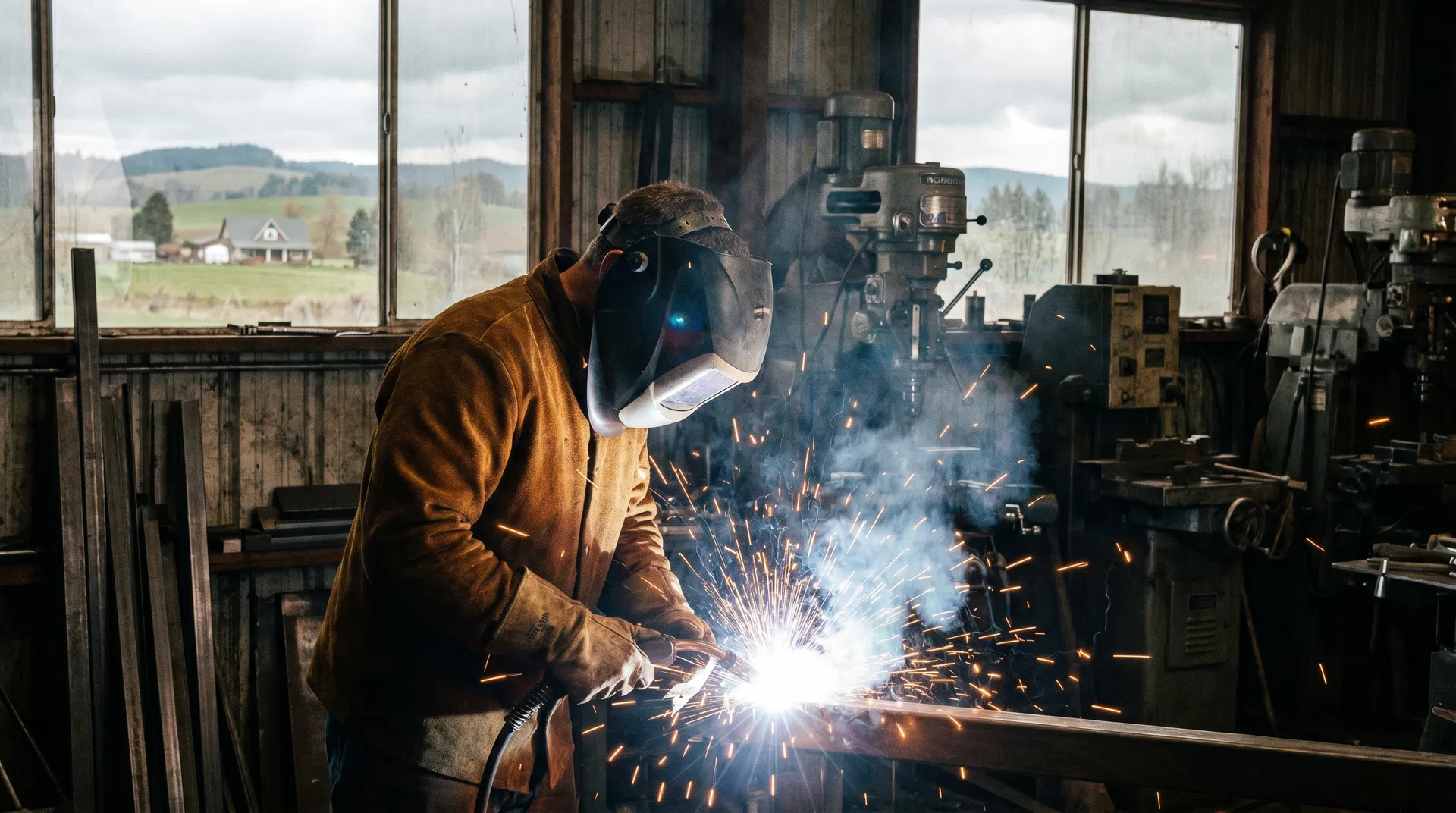
Oregon's rural manufacturing sector — welding shops, machine shops, metal fabricators, and specialty manufacturers — forms the backbone of the state's industrial economy outside the Willamette Valley. These businesses face a unique combination of insurance challenges: the fire and explosion risks of welding and cutting operations, the precision liability exposure of machined components, the product liability tail of fabricated metal parts, and the property coverage challenges of rural locations with limited fire department response times.
Insure Pacific works with manufacturers and fabrication shops across Central Oregon, eastern Oregon, and the rural communities of the Pacific Northwest. This guide covers the four primary insurance considerations for rural manufacturers: welding operations and fire risk, machine shop and precision manufacturing liability, metal fabrication and product liability, and the specific challenges of insuring rural manufacturing facilities.
Rural Location = Higher Property Risk and Harder-to-Place Insurance
Rural manufacturers face a double challenge: higher fire risk from manufacturing operations combined with longer fire department response times. Many standard commercial property carriers either decline rural manufacturing risks or charge significantly higher premiums. Working with an independent agent who has access to specialty manufacturing markets is essential for rural Oregon manufacturers.
Welding Operations: Managing the Highest Fire Risk in Manufacturing
Welding, cutting, and brazing operations are among the leading causes of industrial fires in the United States, accounting for approximately 6% of all structure fires in manufacturing facilities. For Oregon rural manufacturers, this risk is compounded by the wildfire environment — a welding spark that escapes a rural shop can ignite dry grass or timber in ways that an urban facility would never face.
From an insurance standpoint, welding operations affect virtually every coverage line. Commercial property premiums are higher for welding shops than for non-welding manufacturers, and some carriers require specific fire suppression systems, hot work permit programs, and combustible material separation distances as conditions of coverage. General liability policies for welding contractors and shops often include "hot work" endorsements that specify the conditions under which coverage applies.
Oregon welding shops should ensure their commercial property coverage includes adequate limits for the building, equipment, and inventory — and that the policy does not contain exclusions for welding-related fires that would leave them unprotected for their primary operations. A hot work permit program — documenting each welding operation, the fire watch procedures, and the post-work inspection — is both a best practice for fire prevention and a requirement of many commercial property policies.
Key Insurance Requirements for Oregon Welding Shops
Commercial Property: Verify welding operations are not excluded; check for hot work requirements
General Liability: Confirm "products-completed operations" covers welded assemblies and repairs
Workers' Comp: Welding classification codes affect premium; verify accuracy
Equipment Floater: Covers welding equipment, generators, and tools on and off premises
Pollution Liability: Welding fumes and metal dust may create environmental liability
Welding contractors who work off-site — at customer facilities, construction sites, or agricultural operations — need to ensure their coverage follows them. A commercial general liability policy with a "completed operations" endorsement and an inland marine policy for their equipment provides the foundation for off-site welding work. Our commercial insurance specialists can review your current coverage and identify gaps specific to welding operations.
Machine Shops: Precision Manufacturing and Precision Liability
Oregon machine shops — CNC machining centers, turning operations, grinding shops, and precision fabricators — face a liability exposure that is directly proportional to the precision of their work. When a machined component fails in service, the consequences can range from minor inconvenience to catastrophic injury, depending on the application. A machined shaft that fails in an agricultural implement is a very different risk than one that fails in an aircraft or medical device.
Products liability for machine shops is a complex area of insurance. The coverage protects against claims arising from defective products — but the definition of "defective" in a machining context can be nuanced. A part that is machined to specification but specified incorrectly by the customer may not be covered under the machine shop's products liability policy. A part that is machined out of tolerance due to operator error almost certainly is. Understanding these distinctions — and ensuring your policy covers the types of claims your operations actually generate — requires working with an agent who understands manufacturing.
Oregon machine shops that serve aerospace, defense, medical device, or automotive customers face the most stringent insurance requirements. These customers typically require their suppliers to carry $2 million to $5 million in products liability coverage, with the customer named as an additional insured. They may also require quality management certifications (ISO 9001, AS9100) and documented inspection programs as conditions of the insurance requirement.
| Industry Served | Typical Products Liability Requirement | Additional Requirements |
|---|---|---|
| Agricultural Equipment | $1M–$2M per occurrence | Products-completed operations; named insured |
| Construction Equipment | $1M–$2M per occurrence | Products-completed operations; waiver of subrogation |
| Automotive / Tier 1 Suppliers | $2M–$5M per occurrence | AIAG requirements; recall expense coverage |
| Aerospace / Defense | $5M–$10M per occurrence | AS9100 certification; government contract requirements |
| Medical Devices | $5M–$25M per occurrence | FDA compliance; recall expense; professional liability |
| General Industrial | $1M–$2M per occurrence | Standard products-completed operations |
Machine shops should also consider professional liability (errors and omissions) coverage if they provide engineering services, design assistance, or material selection recommendations to customers. Standard products liability covers defective manufacturing — it does not cover professional errors in design or specification. Our commercial insurance team can help you identify whether your operations require professional liability coverage.
Metal Fabrication: Product Liability Across a 10-Year Tail
Metal fabrication shops — structural steel fabricators, sheet metal shops, custom fabricators — face a products liability exposure that extends well beyond the date of delivery. A structural steel component fabricated today may be in service for 20, 30, or 50 years. A weld defect that isn't discovered until the structure fails years later can still generate a products liability claim against the original fabricator — and the statute of repose in Oregon provides some protection, but not absolute immunity.
The "products-completed operations" component of a general liability policy is the coverage that protects metal fabricators against these long-tail claims. It covers bodily injury and property damage that occurs after the product has been delivered and the work has been completed. For metal fabricators, this coverage should be maintained continuously — even if the fabricator stops taking new work — because claims can arise from products delivered years earlier.
Oregon metal fabricators who work on construction projects face additional exposure through the construction contracts they sign. General contractors typically require fabricators to carry $1 million to $2 million in general liability with products-completed operations, name the GC and owner as additional insureds, and provide a waiver of subrogation. Fabricators who don't review their insurance requirements before signing contracts may find themselves in breach — or worse, uninsured for a claim that arises from the project.
Metal fabricators should also consider whether their property coverage adequately covers their raw material inventory, work-in-progress, and finished goods. Steel prices have been volatile, and a property loss that occurred when steel was at $600/ton may generate a much larger replacement cost claim at today's prices. Review your property limits annually to ensure they reflect current material costs. Learn more about our commercial property insurance programs for Oregon manufacturers.
The Unique Challenges of Rural Manufacturing Insurance in Oregon
Rural Oregon manufacturers face insurance challenges that their urban counterparts don't encounter. Fire department response times in rural areas can be 20 to 45 minutes — compared to 5 to 8 minutes in urban areas. This dramatically increases the severity of fire losses and affects both property insurance availability and premium rates. Some rural locations are in areas with limited or no water supply for firefighting, which further complicates property insurance placement.
Fire Protection Class
Oregon's rural areas are often in Protection Class 9 or 10 — the highest-risk categories. This significantly affects property insurance rates and availability. Installing a private fire suppression system or water storage tank can improve your protection class and reduce premiums.
Building Valuation
Rural manufacturing buildings are often older and may have been expanded over time. Ensuring your building is insured to its full replacement cost — not its market value — is critical. Rural construction costs can be higher than urban costs due to material transport.
Equipment and Machinery
Specialized manufacturing equipment in rural shops may have long replacement lead times. Equipment breakdown coverage with expediting expense provisions is particularly valuable for rural manufacturers who can't quickly source replacement equipment.
Workers' Compensation
Manufacturing workers' comp rates reflect the injury risk of specific operations. Welding, machining, and metal fabrication all have distinct classification codes. Misclassification — common in small rural shops — can result in significant premium adjustments at audit.
Inventory and Raw Materials
Rural manufacturers often carry larger raw material inventories due to supply chain logistics. Ensure your property coverage includes adequate limits for raw materials, work-in-progress, and finished goods — not just the building and equipment.
Business Interruption
A fire or major equipment failure at a rural manufacturing facility can result in months of downtime — longer than urban facilities due to contractor availability and supply chain logistics. Business interruption coverage should reflect an extended restoration period.
Rural Oregon manufacturers need an insurance partner who understands both the manufacturing risk and the rural Oregon environment. Insure Pacific has been serving rural Oregon businesses since 1935, and we have access to specialty manufacturing markets that can provide coverage for operations that standard carriers decline. Whether you're a welding shop in Prineville, a machine shop in Bend, or a metal fabricator in La Grande, we can build a program that fits your operations and your budget.
Building a Complete Insurance Program for Rural Oregon Manufacturers
A complete insurance program for a rural Oregon manufacturing or fabrication shop typically includes six core coverages, each addressing a distinct exposure. The specific limits and endorsements required depend on the type of manufacturing, the customers served, and the location of the facility.
Commercial Property
Covers the building, equipment, inventory, and business personal property. For rural manufacturers, ensure limits reflect full replacement cost and that the policy covers your specific manufacturing operations without exclusions for your primary processes.
General Liability with Products-Completed Operations
Covers bodily injury and property damage claims from your operations and your products. For metal fabricators and machine shops, products-completed operations is often the most important coverage — ensure limits are adequate for your customer base.
Workers' Compensation
Required by Oregon law for any employer with one or more employees. Manufacturing workers' comp rates reflect the specific injury risks of your operations — ensure your employees are classified correctly to avoid premium adjustments at audit.
Commercial Auto
Covers vehicles owned by the business, including delivery trucks, forklifts used on public roads, and employee vehicles used for business purposes. If employees use personal vehicles for business, add HNOA coverage.
Equipment Breakdown
Covers sudden and accidental mechanical or electrical failure of manufacturing equipment. For rural manufacturers, the expediting expense provision — which pays for emergency repairs and parts air freight — is particularly valuable.
Umbrella / Excess Liability
Provides additional liability limits above your primary policies. For manufacturers with significant products liability exposure, a $2M–$5M umbrella is strongly recommended. Some customers require umbrella coverage as a contract condition.
Rural Oregon manufacturers deserve the same quality of insurance coverage as their urban counterparts — and with the right independent agent, they can get it. Insure Pacific works with 50+ carriers and has access to specialty manufacturing markets that can cover operations that standard carriers decline. To review your current coverage or build a new program, get a free quote or contact our commercial team. You may also find our guides on commercial insurance for Oregon businesses and equipment breakdown insurance helpful for understanding your full coverage picture.
Our Licensed Coverage Area
States highlighted in blue are states where Insure Pacific holds an active insurance license.
Hover to highlight — click a state to visit its insurance page
Our Oregon Office Locations
Hover over a marker to see the office — click to visit their website.
Hover to highlight — click to visit that office's website
Ready to Get Protected?
Talk to a Local Oregon Insurance Expert
Insure Pacific has been serving Oregon families and businesses since 1935. We work with 50+ carriers so you get real options — not just one company's answer.
Related Articles
 Commercial Insurance
General Liability Insurance: What It Covers—and What It Doesn’t
Read Article → Commercial Insurance
Multi-State Workers’ Compensation: Remote Employees, Traveling Crews, and Out-of-State Jobs
Read Article → Commercial Insurance
Import and Export Cargo Insurance: Ocean Freight, Ports, Customs, and Inland Transportation
Read Article → Commercial Insurance
Has Your Business Outgrown Its Insurance? Revenue, Payroll, New Locations, and New Services
Read Article →Get in Touch
Ready to protect what matters most? Contact us today for a no-obligation insurance review. Our experienced agents are here to help you find the right coverage for your needs.


