



Drought, Heat, and Your Ranch: How Western Ranchers in Idaho, Nevada, Utah, and Texas Are Rethinking Livestock and Pasture Coverage
Drought, Heat, and Your Ranch: How Western Ranchers in Idaho, Nevada, Utah, and Texas Are Rethinking Livestock and Pasture Coverage

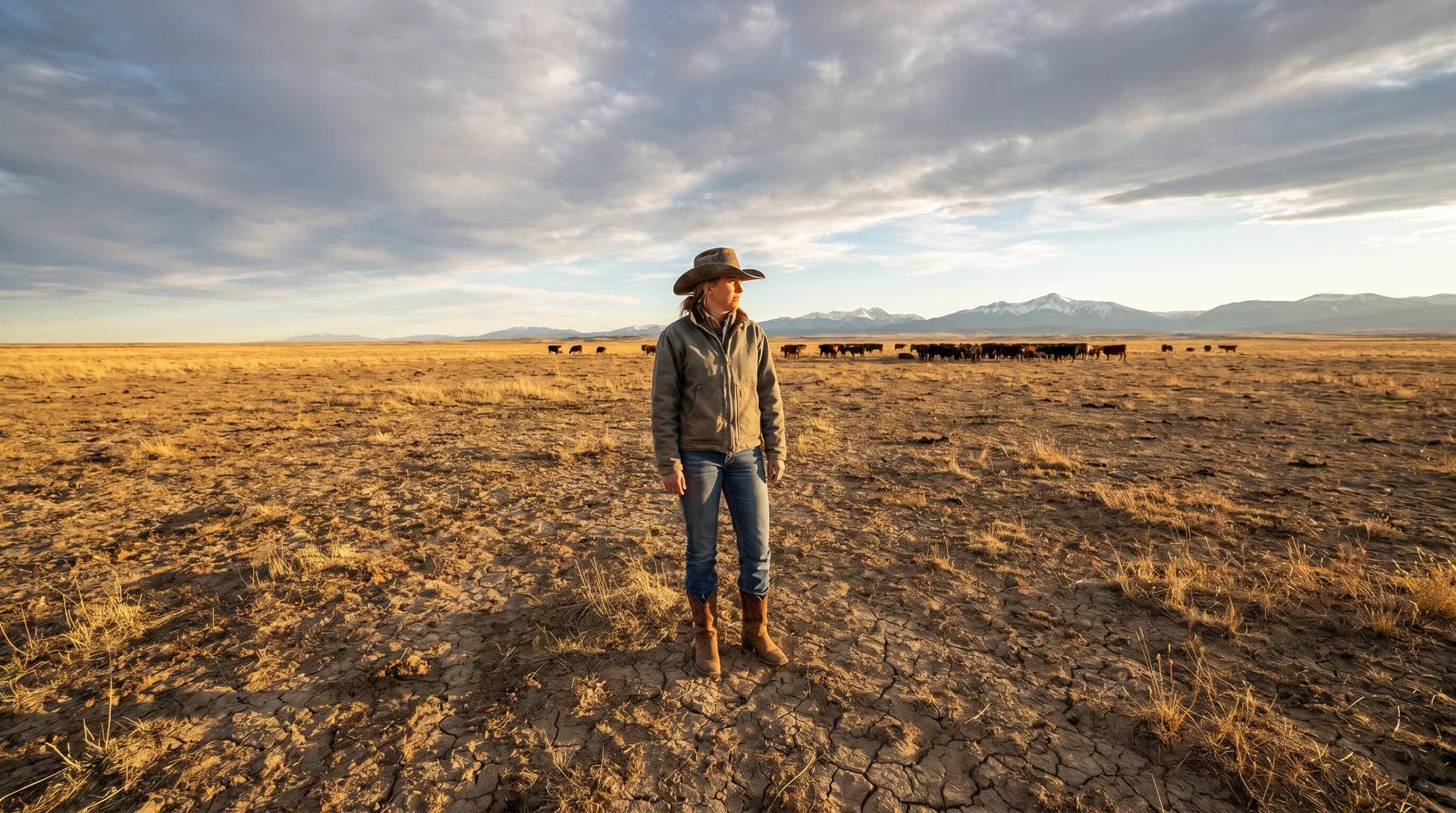
In June 2022, a cattle auction in Texas Lake Country ran nearly 24 hours straight — about 200 cows an hour — as ranchers facing dried-out pastures and dwindling water supplies made the gut-wrenching decision to sell off herds they had spent years building. It wasn't an isolated event. It was the visible face of a megadrought that has now gripped the Southern Plains and American West for six consecutive years, and that shows no sign of relenting in 2026.
As of May 2026, more than 60 percent of the contiguous United States is in drought. All of Utah is experiencing moderate to extreme drought conditions. Southern Idaho and western Wyoming are abnormally dry to severely drought-stricken. Texas is in its sixth consecutive drought year. U.S. cattle inventories have fallen to their lowest level in 75 years. And yet most ranchers across Insure Pacific's territory — Idaho, Nevada, Utah, Texas, and beyond — are still carrying the same livestock and pasture policies they had before the megadrought permanently changed the risk calculus for western ranching.
This guide covers what the current drought means for your ranch insurance program, how USDA's Pasture, Rangeland, and Forage (PRF) insurance actually works and where it falls short, what livestock mortality coverage does and doesn't protect, and — most critically — the gap that virtually no standard policy addresses: the financial devastation of a drought-forced herd sell-off and the cost of rebuilding afterward.
The Gap No Standard Policy Covers
The single most financially devastating drought scenario for ranchers — selling cattle at distressed prices when the market is flooded, then buying back at premium prices when the drought ends and supply is scarce — is not covered by any standard ranch, livestock mortality, or PRF policy. This "sell low, buy high" cycle can cost a mid-size operation $200,000 or more per drought event. Understanding this gap is the first step to building a program that actually protects your operation.
Is Your Ranch Insurance Ready for Drought?
Insure Pacific is licensed in Idaho, Nevada, Utah, Texas, and seven other western states. We specialize in farm and ranch insurance and can review your current coverage against today's drought risk reality — at no cost.
The Drought That Doesn't End: What 2026 Looks Like Across Insure Pacific's Territory
The American West is not experiencing a drought in the traditional sense — a temporary dry spell that breaks with a good winter. Scientists and ranchers alike are increasingly using the word "aridification" to describe what's happening: a permanent, structural shift in the region's water availability driven by rising temperatures, reduced snowpack, and altered precipitation patterns. The megadrought that began around 2000 is the most severe in at least 1,200 years, and the last six years have been its most punishing chapter yet.
For ranchers in Insure Pacific's territory, the conditions vary by state but the direction is the same everywhere. In Idaho, southern portions of the state are experiencing abnormally dry to severe drought conditions as of spring 2026, with reduced Snake River flows affecting irrigation-dependent operations and BLM grazing allotments being cut back. In Nevada, the state is structurally water-scarce and agricultural users face ongoing shortage cuts as groundwater levels decline. In Utah, the situation is most acute: the entire state is in moderate to extreme drought, with the Great Salt Lake at historically low levels and ranchers in the central and southern counties reporting the worst pasture conditions in decades. In Texas, the Southern Plains have been in continuous drought for six years, costing the agriculture sector an estimated $23.6 billion in lost crops, higher feed costs, and forced cattle liquidations from 2020 through 2024 alone.
| State | 2026 Drought Status | Primary Ranch Impact | Insurance Priority |
|---|---|---|---|
| Idaho | Abnormally dry to severe (southern) | Reduced BLM grazing allotments, Snake River irrigation cuts | PRF coverage + livestock mortality |
| Nevada | Ongoing structural drought | Groundwater decline, agricultural water shortage cuts | PRF + parametric drought coverage |
| Utah | Moderate to extreme (entire state) | Worst pasture conditions in decades; Great Salt Lake at historic lows | PRF + herd liquidation planning |
| Texas | 6th consecutive drought year | $23.6B ag losses 2020–2024; cattle herd at 75-year low | Full ranch policy review + LFP enrollment |
| Colorado | Moderate drought (western slope) | Reduced irrigation water from Colorado River tributaries | PRF + water rights documentation |
Sources: USDA Forest Service Seasonal Drought Outlook April 2026; Drought.gov National Current Conditions May 2026; The Conversation, February 2026.
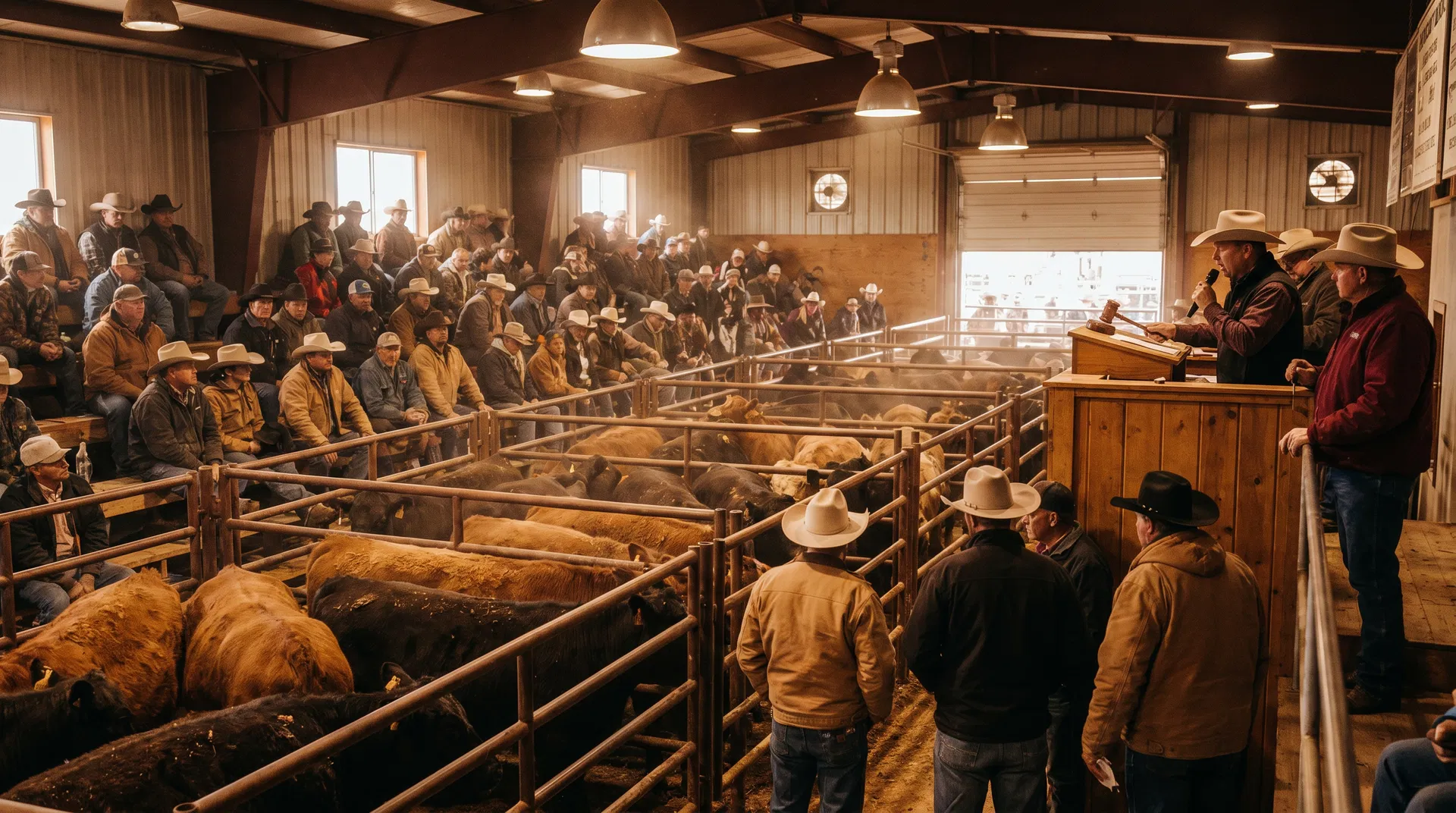
Drought-forced cattle sell-offs flood auction markets, driving prices down at the exact moment ranchers need to liquidate — and up again when they try to rebuild.
The Forced Sell-Off Cycle: The Financial Wound That Standard Insurance Ignores
To understand why drought is so financially devastating for ranchers — and why standard insurance leaves such a large gap — you have to understand the forced sell-off cycle. When drought dries out pastures and water sources, ranchers face a brutal choice: pay escalating costs to haul water and purchase supplemental feed, or sell cattle before they lose condition and value. Most ranchers eventually sell, and they all sell at the same time, flooding the market and driving prices down. A cow that would fetch $1,800 in a normal market might bring $1,200 at a drought auction.
The second blow comes when the drought ends and ranchers try to rebuild their herds. With the market now undersupplied — because everyone sold at the same time — replacement cattle prices spike. That same $1,200 cow now costs $2,200 to replace. The rancher sold low and must buy high, and the difference — often $400 to $800 per head across a herd of hundreds — represents a financial loss that no standard policy covers. During the 2010–2015 Texas drought, cattle producers sold off approximately 20 percent of the statewide herd. Herds had still not returned to pre-2010 levels when the 2022 drought peak forced another mass liquidation. The cycle is compounding.
Rebuilding a herd after a drought-forced sell-off is also slow in ways that compound the financial damage. Pasture recovery can take a year or more after rains return. A newborn heifer takes two years to mature and produce her first calf. A rancher who liquidated a 300-cow breeding herd in 2022 is looking at a five-to-seven-year recovery timeline — during which the operation generates significantly reduced income. This is the true cost of drought for a ranch, and it is almost entirely uncovered by the insurance products most ranchers currently carry.
USDA PRF Insurance: What It Is, How It Works, and Where It Falls Short
The USDA's Pasture, Rangeland, and Forage (PRF) insurance program is the primary federal tool designed to help ranchers manage drought risk on their grazing land. It's a valuable program — and one that many ranchers in Insure Pacific's territory are either not enrolled in or are using incorrectly. Understanding exactly what PRF does and doesn't cover is essential to building a complete ranch insurance strategy.
PRF is an area-based insurance plan that covers perennial pasture, rangeland, or forage used to feed livestock. It works by comparing actual rainfall in your area — measured using NOAA precipitation data interpolated to approximately 17-by-17-mile grids — against historical averages for the same period. When rainfall falls below a threshold you select (coverage levels range from 70 to 90 percent of average), PRF pays an indemnity based on the value of forage production per acre. Producers choose at least two 2-month "index intervals" during the year when precipitation is most critical for forage growth. The sign-up deadline is December 1 each year for the following year's coverage.
PRF has grown dramatically — it covered more than 290 million acres by 2024 — because it fills a real need. But it has three significant limitations that ranchers must understand. First, PRF is a single-peril program covering only rainfall deficit. It does not cover heat stress, wildfire damage to pastures, flooding, or any other cause of forage loss. Second, PRF does not cover livestock mortality — it pays for forage loss, not for the animals themselves. Third, and most importantly, PRF suffers from what insurance professionals call "basis risk": because rainfall is measured at the grid level across a 17-by-17-mile area, a localized drought on your specific ranch may not trigger a payout if adjacent areas within your grid received normal rainfall. Research has documented cases where ranchers experienced severe local drought but received no PRF payment because their grid's average rainfall was normal.
What PRF Covers
Rainfall deficit on perennial pasture, rangeland, and forage
Coverage levels from 70–90% of average rainfall
Both grazing and haying ground
Federally subsidized premiums (typically 50–60% subsidy)
Payouts based on NOAA grid data — no on-farm loss adjustment needed
PRF Limitations
Grid basis risk: 17x17-mile grids can mask local drought conditions
Single peril only: no heat, wildfire, flood, or wind coverage
Does NOT cover livestock mortality or herd value
Does NOT cover drought-forced sell-off losses
December 1 sign-up deadline — no mid-year enrollment
What Fills the Gaps
Livestock mortality insurance for animal death from covered perils
USDA Livestock Forage Disaster Program (LFP) for emergency assistance
Livestock Risk Protection (LRP) for price risk management
Parametric drought insurance layered on top of PRF
Comprehensive ranch policy review to identify all exposure points
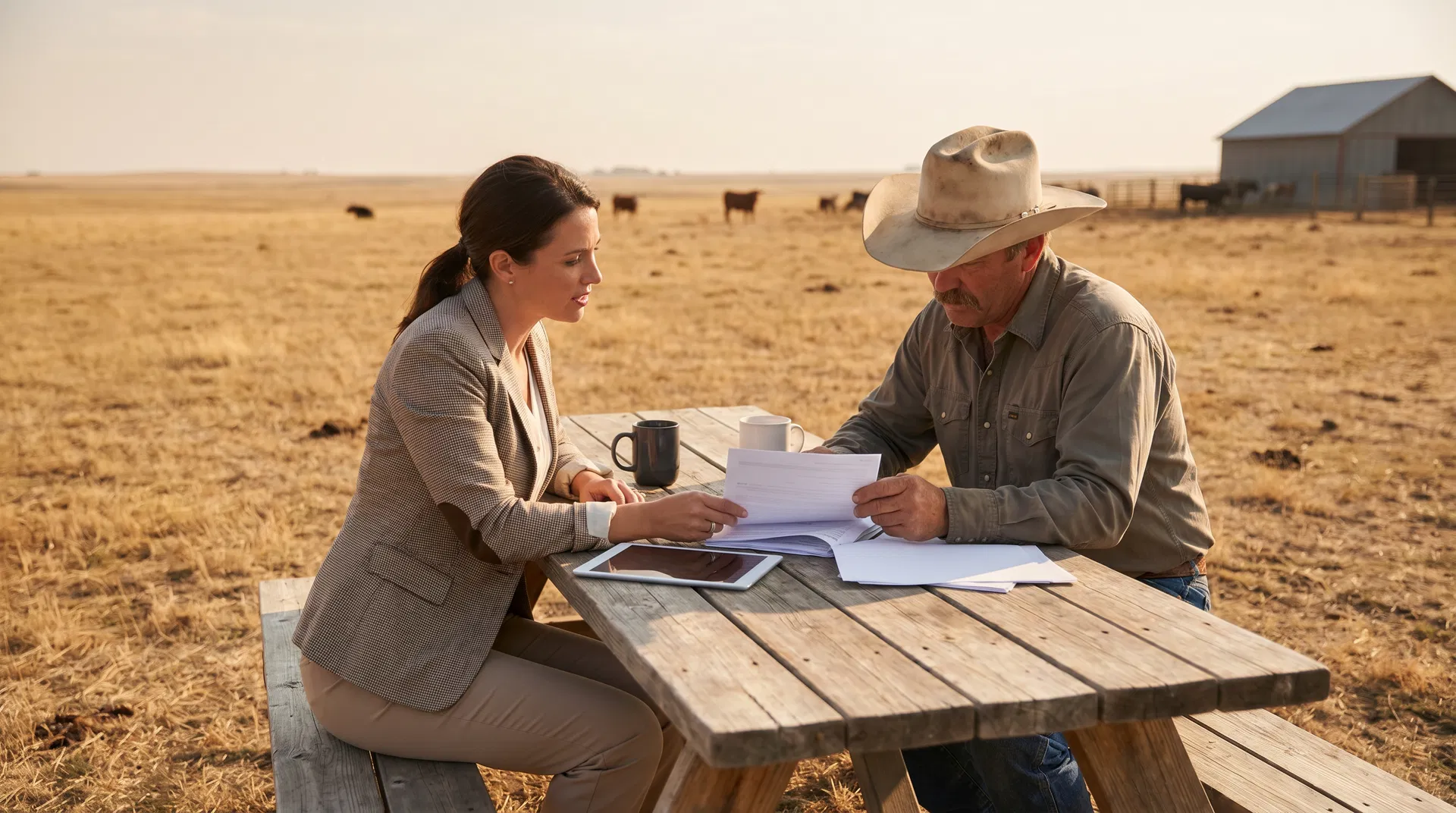
A comprehensive ranch insurance review covers PRF enrollment, livestock mortality, property coverage, and the gaps that standard policies leave open during drought.
Livestock Mortality Insurance: What It Covers — and the Critical Gap It Leaves
Livestock mortality insurance is the product most ranchers think of when they think about insuring their animals. It covers the death of livestock from covered perils — typically illness, injury, and specified natural disasters. A well-structured livestock mortality policy can provide meaningful protection against catastrophic losses from events like disease outbreaks, lightning strikes, or severe weather.
But livestock mortality insurance has a fundamental limitation in the drought context: it covers death, not distress. If your cattle die, you're covered. If you're forced to sell them at a loss because your pastures are dry and you can't afford to feed them, you're not. The policy pays the insured value of the animal at the time of death — it does not cover the difference between the distressed sale price and the replacement cost, it does not cover reduced productivity in surviving animals stressed by drought conditions, and it does not cover the market timing losses of the forced sell-off cycle.
Additionally, most livestock mortality policies have significant exclusions that ranchers don't fully understand until they file a claim. Drought-related starvation or dehydration may be excluded if the rancher had the ability to provide supplemental feed or water. Pre-existing conditions are typically excluded. And the valuation methodology — how the insurer determines what your animal was worth — can be a source of significant disputes, particularly for high-value breeding stock whose market value fluctuates with drought conditions.
What a Standard Ranch Policy Actually Covers — and What It Doesn't
A standard farm and ranch insurance policy is built around physical property: your barn, your equipment, your fencing, your irrigation infrastructure, and your home. It also typically includes farm liability coverage for injuries that occur on your property, and it may include some livestock coverage. What it generally does not include is any coverage for the economic consequences of drought — reduced production, forced liquidation, or the cost of rebuilding after a drought event.
The most important coverage gaps in a standard ranch policy, viewed through a drought lens, are these: first, there is typically no business interruption coverage for reduced ranch income caused by drought. If your pastures produce 40 percent of their normal forage and you have to reduce your herd accordingly, your ranch policy doesn't compensate you for the lost production. Second, there is no coverage for the cost of hauling water to livestock when water sources dry up — a cost that can run thousands of dollars per month on a mid-size operation. Third, there is no coverage for the cost of purchasing supplemental feed when pastures fail. These operational costs are the day-to-day financial burden of drought, and they are entirely outside the scope of a standard ranch policy.
The good news is that some of these gaps can be partially addressed through endorsements and supplemental products. A well-structured ranch policy with a knowledgeable agent can include coverage for irrigation equipment breakdown, water well failure, and in some cases, custom farming operations that change when drought forces operational adjustments. The key is working with an agent who understands ranch operations and asks the right questions — not one who simply quotes the standard form.
The Ranch Drought Coverage Gap: What You Have vs. What You Need
| Drought Risk | Standard Ranch Policy | PRF Insurance | Livestock Mortality |
|---|---|---|---|
| Pasture/forage loss from rainfall deficit | ❌ Not covered | ✅ Covered (with basis risk) | ❌ Not covered |
| Livestock death from covered perils | ⚠️ Limited | ❌ Not covered | ✅ Covered |
| Drought-forced herd sell-off losses | ❌ Not covered | ❌ Not covered | ❌ Not covered |
| Herd replacement cost after sell-off | ❌ Not covered | ❌ Not covered | ❌ Not covered |
| Water hauling costs during drought | ❌ Not covered | ❌ Not covered | ❌ Not covered |
| Supplemental feed costs | ❌ Not covered | ❌ Not covered | ❌ Not covered |
| Barn, equipment, fencing damage | ✅ Covered | ❌ Not covered | ❌ Not covered |
| Farm liability (injuries on property) | ✅ Covered | ❌ Not covered | ❌ Not covered |
USDA Emergency Programs: LFP, ELAP, and the Difference Between Assistance and Insurance
When drought hits, many ranchers rely on USDA emergency assistance programs rather than insurance — and it's important to understand the difference. The Livestock Forage Disaster Program (LFP) provides payments to eligible livestock producers who suffer grazing losses due to drought on federally designated disaster areas. The Emergency Livestock Assistance Program (ELAP) covers additional costs like hauling water and purchasing feed during drought emergencies. These programs provide real financial relief, but they are not insurance — they are discretionary assistance programs that depend on federal funding, congressional authorization, and USDA administrative decisions.
The practical difference matters enormously. Insurance is a contract: you pay a premium, and if a covered loss occurs, the insurer pays. Emergency assistance programs are subject to political and budgetary constraints, application deadlines, and payment rates that may not reflect your actual losses. LFP payments, for example, are calculated based on a formula that often pays significantly less than the actual cost of the forage loss. ELAP payments for water hauling are capped at rates that may not cover actual costs in remote western ranching areas. These programs are valuable supplements to a complete insurance program — they are not substitutes for one.
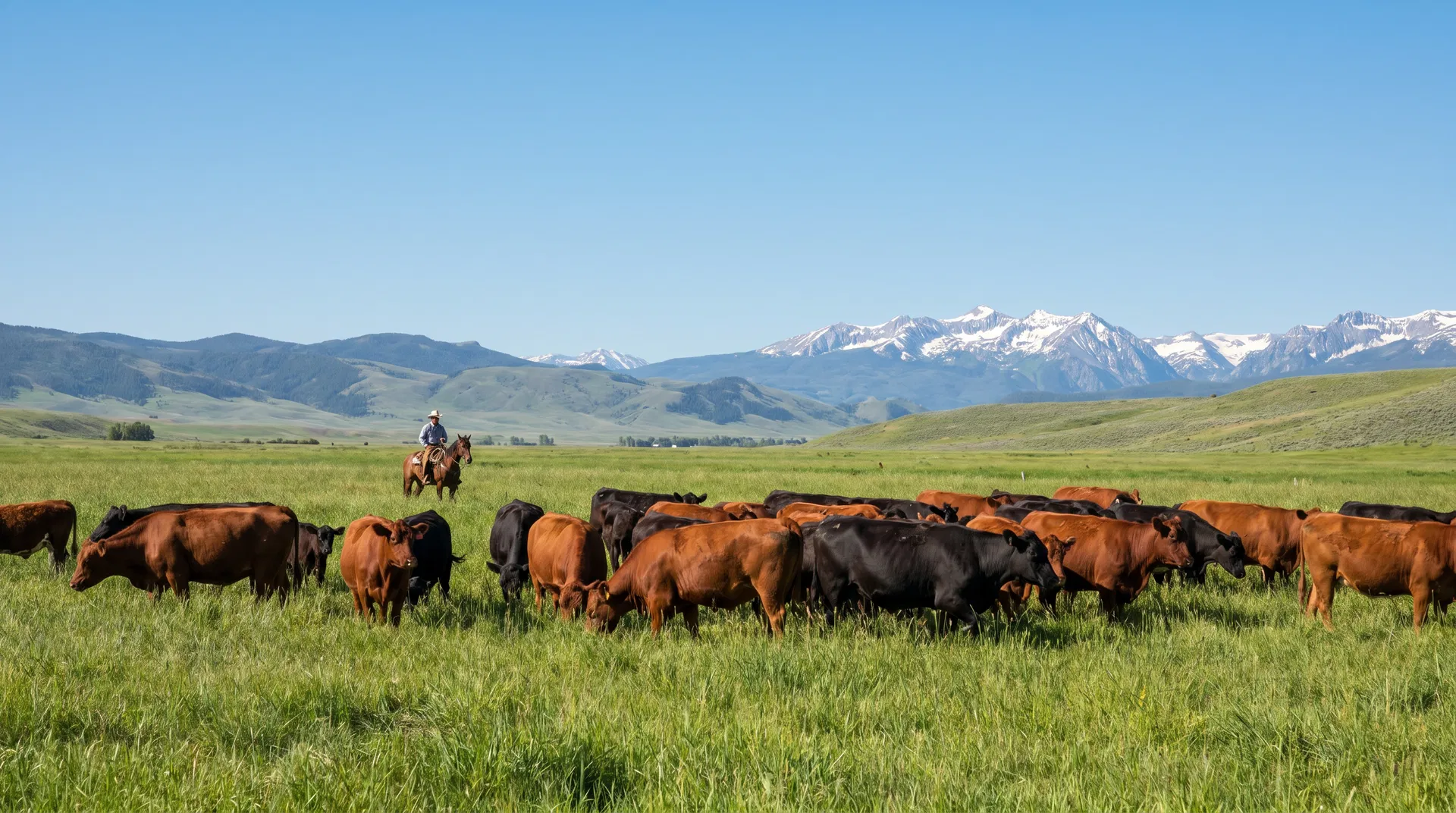
Rebuilding a herd after a drought-forced sell-off can take five to seven years. A complete insurance strategy addresses both the immediate drought losses and the long-term recovery costs.
Parametric Insurance: The Emerging Solution for the Gaps PRF Leaves Open
The insurance industry is beginning to develop products that address the gaps PRF leaves open, particularly the basis risk problem and the need for faster payouts. Parametric insurance — coverage that pays based on a measurable index (rainfall levels, temperature, reservoir levels) rather than actual losses — is gaining traction in the agricultural sector precisely because it can be structured to trigger payouts based on local conditions rather than regional grid averages.
A parametric drought policy layered on top of PRF can address the basis risk gap: if your local rainfall station shows a severe deficit even when your PRF grid shows normal rainfall, the parametric policy can trigger a payout. Parametric policies also pay faster — typically within 15 days of the triggering event, compared to the 3–6 month timeline for traditional insurance claims. For a rancher facing immediate cash flow pressure from a drought event, this speed difference can be the difference between surviving the drought and being forced to sell.
Parametric products are not yet widely available through standard insurance channels, and they require working with a specialist who understands both the agricultural risk and the parametric structure. Insure Pacific works with specialty markets that offer these products, and we can help you evaluate whether a parametric layer makes sense for your operation given your specific location, herd size, and risk tolerance.
Building a Complete Ranch Insurance Program for the Drought Era
Given the coverage gaps outlined above, what does a complete ranch insurance program look like for a western rancher operating in today's drought environment? The answer depends on your operation's size, location, and risk profile — but there are five components that every serious ranch operation should evaluate.
Comprehensive Farm & Ranch Property Policy
The foundation of any ranch insurance program: coverage for your buildings, equipment, fencing, irrigation infrastructure, and home. Make sure your policy is written for your actual operation type — a cattle ranch has different needs than a crop farm, and a policy written for one may have significant gaps for the other. Review your coverage limits annually, as construction costs and equipment values have risen sharply in recent years.
USDA PRF Enrollment (December 1 Deadline)
If you have perennial pasture or rangeland and you're not enrolled in PRF, you're leaving federally subsidized drought protection on the table. PRF premiums are typically 50–60% subsidized, making it one of the most cost-effective risk management tools available. Work with an agent who understands PRF to select the right index intervals and coverage levels for your specific forage production calendar — the choices you make at enrollment significantly affect how well the policy performs.
Livestock Mortality Coverage
For high-value breeding stock, bulls, and horses, a livestock mortality policy provides protection against death from covered perils. Make sure you understand the valuation methodology, the exclusions (particularly around drought-related starvation), and the documentation requirements. Keep current records of animal values, including purchase prices, production records, and veterinary history.
Farm Liability and Umbrella Coverage
Drought-stressed operations often take on additional activities to generate income — agritourism, custom farming, hay sales. Each of these activities creates liability exposure that your standard farm policy may not cover. Review your farm liability limits and consider whether a farm umbrella policy makes sense for your operation. Insure Pacific's umbrella policies can be structured to coordinate across your entire farm and personal insurance program.
Drought Contingency Planning with Your Agent
Insurance is one part of drought risk management — the other part is operational planning. Work with your agent to document your current herd values, establish a relationship before a drought forces a rushed conversation, and understand exactly what your policies will and won't pay in various drought scenarios. Knowing your coverage gaps in advance allows you to make better decisions when drought conditions develop.
Schedule a Ranch Insurance Review Before Drought Season Peaks
Don't wait until drought forces a decision. Insure Pacific's farm and ranch specialists can review your current coverage, identify gaps, and help you enroll in PRF before the December 1 deadline. We're licensed in Idaho, Nevada, Utah, Texas, and seven other western states.
Why Insure Pacific Is Uniquely Positioned to Help Western Ranchers
Most independent insurance agencies are licensed in one or two states. When a rancher in southern Idaho also runs cattle on a Nevada grazing allotment, or when a Texas rancher has a second operation in Utah, they typically end up working with multiple agents who don't coordinate with each other — and who may not understand the full picture of the operation's risk exposure.
Insure Pacific is licensed across ten western states, including Idaho, Nevada, Utah, Texas, Oregon, Arizona, Washington, California, Colorado, and Wyoming. We've been serving agricultural clients since 1935, and we work with more than 50 carriers who write farm and ranch coverage across the American West. That means one agent who understands your full operation, can coordinate your PRF enrollment across multiple states, and can shop the market for the best combination of coverage and price — wherever your land sits.
We also understand that ranch insurance isn't a commodity product. The right policy for a 500-cow cow-calf operation in southern Idaho is different from the right policy for a Texas stocker operation or a Nevada BLM-allotment grazing operation. Our agents take the time to understand your operation before recommending coverage — and we stay in contact through the year, not just at renewal, so you're not discovering coverage gaps when you need to file a claim.
Frequently Asked Questions
What is the PRF insurance sign-up deadline, and what happens if I miss it?
The USDA PRF sign-up deadline is December 1 each year for coverage beginning the following year. If you miss the deadline, you cannot enroll until the next sign-up period — meaning you'll go another full year without PRF coverage. Given the federally subsidized premium rates (typically 50–60% subsidy), missing the deadline is a significant financial decision. Contact Insure Pacific well before December 1 to review your options and complete enrollment.
Does PRF insurance cover my entire ranch, or just specific acreage?
PRF covers specific acres that you designate at enrollment — typically your perennial pasture, rangeland, and forage acres. You choose the acreage, the coverage level (70–90% of average rainfall), and the index intervals (2-month periods when rainfall is most critical for your operation). You can insure different acreage blocks under different intervals to better match your forage production calendar. An agent familiar with PRF can help you structure your enrollment to maximize coverage effectiveness.
My cattle died during a drought — does my ranch policy cover them?
It depends on the cause of death and your specific policy. Standard ranch policies typically include some livestock coverage, but drought-related deaths (starvation, dehydration) are often excluded or subject to strict conditions. A dedicated livestock mortality policy provides broader coverage, but also has exclusions — particularly if the rancher had the ability to provide supplemental feed or water and chose not to. Review your policy language carefully, and contact your agent immediately when animals die to understand your claim options.
Can I get insurance for the cost of hauling water to my cattle during drought?
Standard insurance products don't cover water hauling costs. The USDA Emergency Livestock Assistance Program (ELAP) provides some reimbursement for water hauling during federally designated drought disasters, but payment rates are capped and may not cover actual costs. This is one of the operational drought costs that currently falls outside the insurance market — which is why having adequate PRF coverage to offset the broader forage loss is so important.
I'm on a BLM grazing allotment. How does drought affect my insurance options?
BLM allotment grazing creates unique insurance considerations. PRF can cover BLM allotment acres, but you need to document your authorized AUM (Animal Unit Months) and share of the allotment carefully — the documentation requirements are more complex than for private land. When BLM cuts grazing allotments due to drought, you may need to move cattle to private land or sell early, which creates the forced sell-off risk discussed in this article. Talk to an agent familiar with federal grazing operations before your next PRF enrollment.
How does Insure Pacific's multi-state licensing help ranch operations that span multiple states?
Many western ranching operations run cattle across state lines — summer grazing in Idaho, winter grazing in Nevada, or a Texas operation with a Utah feedlot. When your operation spans multiple states, you need an agent licensed in all of them who can coordinate your PRF enrollment, livestock coverage, and property policies across state lines. Insure Pacific is licensed in 10 western states and can serve as your single point of contact for your entire operation — wherever your land and livestock are located.
Talk to a Ranch Insurance Specialist Today
Insure Pacific has been serving western ranchers since 1935. We're licensed in Idaho, Nevada, Utah, Texas, and seven other states — and we work with 50+ carriers who understand agricultural risk. Let's make sure your operation is protected before the next drought forces a decision.
Our Licensed Coverage Area
States highlighted in blue are states where Insure Pacific holds an active insurance license.
Hover to highlight — click a state to visit its insurance page
Our Oregon Office Locations
Hover over a marker to see the office — click to visit their website.
Hover to highlight — click to visit that office's website
Ready to Get Protected?
Talk to a Local Oregon Insurance Expert
Insure Pacific has been serving Oregon families and businesses since 1935. We work with 50+ carriers so you get real options — not just one company's answer.
Related Articles
 Farm & Ranch
One Ranch, Several Policies: Coordinating Home, Farm, Commercial Auto, and Umbrella Insurance
Read Article → Farm & Ranch
Cattle Ranch Insurance in the American West: The Complete Guide to Property, Livestock, Equipment, Liability, and Income Protection
Read Article → Farm & Ranch
Custom Grazing Insurance: Who Covers Cattle, Fences, Pasture, Death Loss, and Liability?
Read Article → Farm & Ranch
Grain Bin and Feed Storage Insurance: Collapse, Wind Damage, Contamination, and Stored Commodities
Read Article →Get in Touch
Ready to protect what matters most? Contact us today for a no-obligation insurance review. Our experienced agents are here to help you find the right coverage for your needs.


