

Custom Grazing Insurance: Who Covers Cattle, Fences, Pasture, Death Loss, and Liability?
Custom Grazing Insurance: Who Covers Cattle, Fences, Pasture, Death Loss, and Liability?

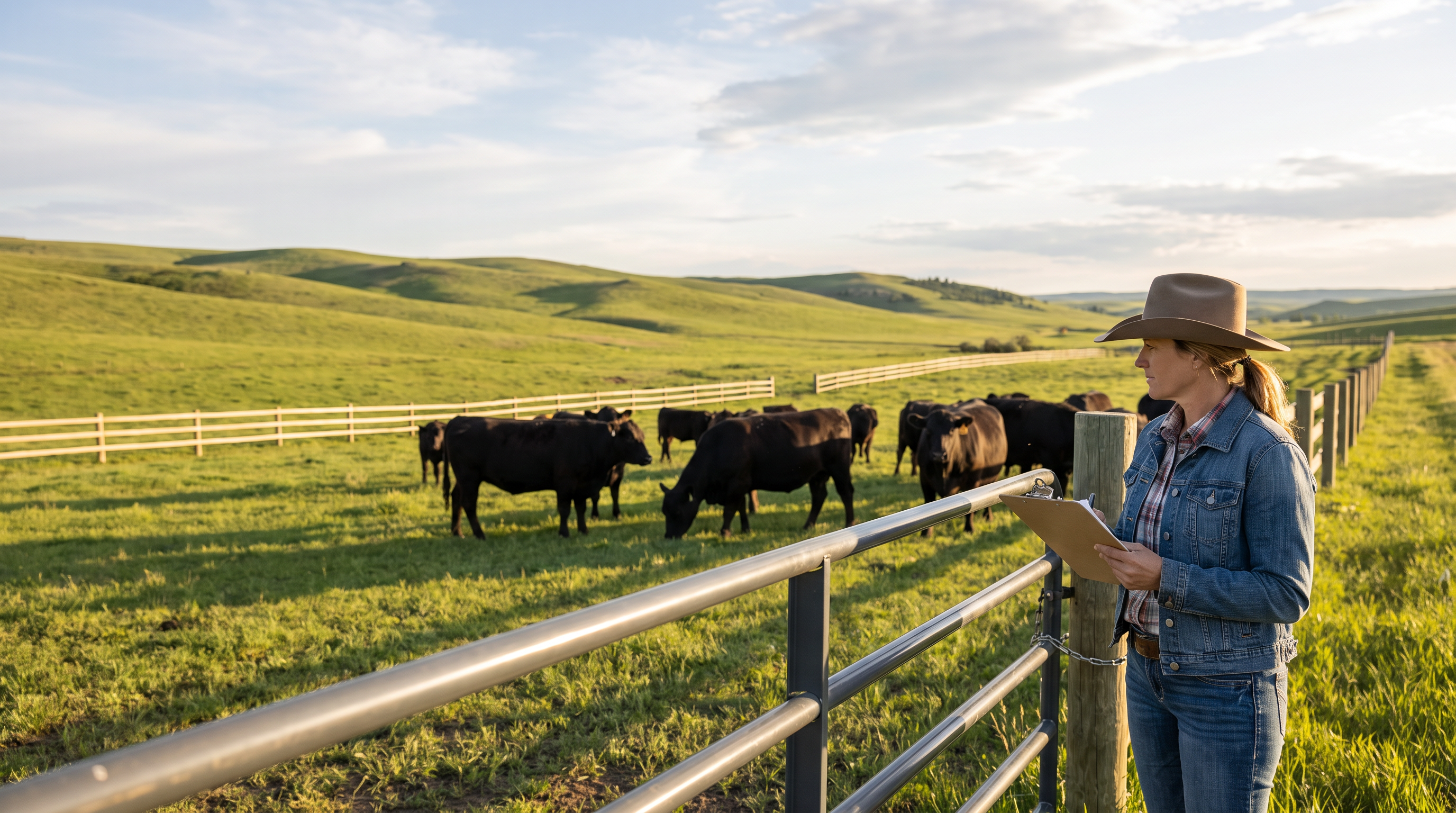
A cattle owner sends a group of bred heifers to a neighboring ranch for a grazing season. The owner still owns the cattle. The grazier supplies pasture, water, fence checks and daily observation. A storm drops a fence, a few cattle enter a road corridor, one animal later dies after treatment, and the parties disagree about notification, hauling, veterinary authority and who was supposed to insure the loss.
That dispute is usually not solved by asking only, “Whose cattle were they?” Custom grazing separates ownership from day-to-day control. It can also separate the party with the livestock-loss exposure from the party with premises, fence, employee, vehicle, contractual and care-custody-control exposure. A clear agreement and a coordinated insurance review help each party understand those distinctions before cattle are unloaded.
This guide explains the questions cattle owners, custom graziers and landowners should take to their insurance professional and attorney. It is not a substitute for the issued policy, endorsement, state law, veterinary advice or a written contract. Start with Insure Pacific’s farm and ranch insurance overview, then build a responsibility map for the particular cattle, land, people and agreements involved.
Quick answer: who covers cattle in a custom grazing arrangement?
The cattle owner commonly retains the property interest in the cattle, while the grazier may carry liability protection for the services and premises they control—but the agreement and actual policy language decide the details. The owner may want livestock mortality or named-peril protection for owned cattle. The grazier may need farm or commercial liability, a carefully reviewed care-custody-control option for non-owned livestock, property coverage for owned infrastructure, and protection for employees or vehicles. A fence, pasture improvement or water system may be the landowner’s property, the grazier’s improvement, or an obligation assigned by contract.
Cornell Small Farms describes a custom-grazing structure in which an independent grazier uses owned or leased land to care for cattle owned by someone else. Its contract guidance emphasizes clear identification, inventory records and written allocation of responsibilities. The National Center for Appropriate Technology (NCAT) similarly identifies dates, head counts, weights, fees, drought, death-loss liability, trucking, veterinary care, insurance, minerals and management protocols as terms worth documenting. Those sources support a simple principle: do not let an unwritten assumption become the insurance plan.
Before cattle arrive, identify five separate things:
Custom grazing, pasture rent and cattle leasing are not the same transaction
A one-page “pasture rent” arrangement can conceal a much more complex operation. In one deal, a landowner rents ground and the cattle owner manages everything. In another, a custom grazier receives cattle and is paid per head per day or by gain. In a third, a cattle lease transfers more economic risk. The insurance review should begin with what the parties actually do, not just the label at the top of an agreement.
A custom grazier may provide grazing management, mineral programs, daily observation, movement between paddocks, water checks, treatment coordination, recordkeeping, gathering and marketing support. A cattle owner may retain ownership, breeding decisions, major veterinary authority and sale authority. A landowner may own the permanent fences, wells and corrals but have no daily role. Each arrangement creates different property and liability questions.
Use a written operating summary alongside the contract. Include the land description, turnout and removal dates, expected head count, tag or brand records, class of cattle, expected weight or condition, pasture rotations, water sources, feeding duties, supplementation, caretaker contacts and emergency authority. Then take that summary to an agent before the animals arrive. The broader farm insurance page can help frame a review of property, liability and operations, but it cannot replace the scheduled values and endorsements on the issued policy.
Why the same event can create several different insurance questions
Consider a severe wind event that damages a fence line. Cattle escape. A driver swerves and alleges injury. The cattle are later gathered with a hauler, and several animals develop stress-related health issues. That one incident can raise separate questions about:
One liability limit does not automatically insure the cattle as property, and a property limit does not automatically resolve a third-party auto or injury allegation. The exact cause, location, ownership, policy definition and contract wording matter.
Start with a responsibility map—not a certificate of insurance
Certificates can show that a policy existed on a particular date, but a certificate does not rewrite exclusions, add a livestock limit, amend a deductible or prove that an agreement’s indemnity obligation is insured. The parties should first map responsibilities, then ask the agent how the actual policies respond.
A practical responsibility map should address the following areas in plain language:
| Exposure or task | Questions for the agreement | Questions for the insurance review |
|---|---|---|
| Owned cattle | Who owns, tags, inventories and values the cattle? | Is the owner’s livestock property or mortality protection adequate for the cattle, causes of loss and locations? |
| Daily care | Who checks cattle, water and fences, and how often? | Does the grazier’s liability form contemplate the actual custom-grazing operation? |
| Non-owned cattle | Is the grazier temporarily responsible for cattle owned by others? | Is there a relevant care-custody-control limitation, endorsement or separate coverage to discuss? |
| Fences and gates | Which party owns, repairs and upgrades permanent and temporary fencing? | Is the fence scheduled or within farm property limits, and at what replacement value? |
| Pasture and water | Who pays for weeds, reseeding, wells, troughs, pumps and drought response? | Are pumps, solar systems, irrigation or leased-land improvements properly described? |
| Death or illness | Who authorizes treatment, pays the veterinarian, preserves evidence and handles salvage? | What property, liability or livestock-loss coverage is actually in force, if any? |
| Transport | Who selects the hauler and pays loading, freight and emergency movement? | Are commercial auto, hired/non-owned auto or livestock-in-transit issues addressed? |
| Workers and visitors | Who employs help, and who may enter the property? | Are workers’ compensation and premises liability coordinated with actual duties? |
Treat this table as a conversation tool, not a policy. A qualified attorney should review the agreement, particularly its indemnity, release, notice, animal-health, dispute-resolution and governing-law provisions. An insurance professional should review the final signed agreement against the policy—not merely against an early draft.
Cattle ownership is different from care, custody and control
The cattle owner’s property interest remains important even when another ranch feeds and supervises the animals. But that does not mean the grazier has no exposure. A loss involving non-owned cattle can be analyzed through contractual duties, negligence allegations, policy restrictions and any applicable care-custody-control wording.
Westfield’s agribusiness guidance describes care, custody and control coverage as a topic for operations managing non-owned livestock under contractual obligations or temporary responsibility. That is a useful coverage question, not a coverage guarantee. General liability forms often contain restrictions involving property in the insured’s care, custody or control. A specialized endorsement may be available in some placements, but its trigger, sublimit, causes of loss, exclusions and territory must be read.
Ask the agent to address these practical scenarios in writing:
The owner’s separate livestock-loss plan and the grazier’s separate liability plan may both matter. Neither party should assume the other’s policy automatically fills the gap. If the operation also keeps owned livestock, raises calves or runs a different class of cattle, differentiate those activities rather than treating “livestock” as a single undivided limit.
Death loss: decide the process before anyone is grieving or arguing
A death-loss provision should not simply say, “The grazier is responsible for cattle.” That phrase may be vague, commercially unrealistic or inconsistent with insurance. Instead, the contract should identify how a death or disappearance is handled and what evidence is preserved.
NCAT identifies death-loss liability, transportation, veterinary care, sick-animal treatment, insurance and management protocols as grazing-contract terms. Cornell recommends animal-level identification and records that change when cattle arrive, are born or leave. Together, those sources point to a better process:
1. Confirm the animal’s identity. Retain the tag, brand, electronic ID or other agreed identifier, plus photographs where appropriate.
2. Notify the stated contacts promptly. Specify primary and backup contacts, reasonable timeframes and a workable method if there is no cell service.
3. Record the facts, not assumptions. Note date, location, apparent condition, weather, feed and water observations, witnesses and actions already taken.
4. Coordinate veterinary authority. State who may approve routine treatment, emergency treatment, diagnostic testing, a necropsy, euthanasia or disposal—and who initially advances the cost.
5. Protect possible claim evidence. Follow veterinary, regulatory and insurer directions; preserve records and receipts; do not dispose of evidence prematurely when a claim or dispute is likely.
6. Determine the financial allocation under the agreement. The contract may distinguish ordinary mortality, a covered casualty, negligence allegations, disease, theft, predator loss, weather and unknown causes.
A contract cannot create property insurance that was not purchased. Likewise, an insurance claim does not automatically decide contractual liability. Give prompt notice to the insurer when a claim, demand, serious incident or potentially covered loss occurs, and do not admit fault or promise payment beyond what the agreement and insurer review support.
Mortality coverage, liability coverage and federal programs serve different jobs
Private livestock property or mortality coverage, if purchased, may address specified property losses subject to its terms. Liability insurance may defend or indemnify certain third-party allegations. USDA programs have different objectives. USDA Risk Management Agency materials describe Livestock Risk Protection as protection against price declines and Livestock Gross Margin as protection against a decline in gross margin. Those are not substitutes for a non-owned-cattle liability or property review.
USDA’s Farm Service Agency describes the Livestock Indemnity Program as potential assistance for eligible livestock owners and contract growers with qualifying eligible losses above normal mortality caused by eligible adverse events. Eligibility, deadlines, proof, inventories, loss evidence and current program rules matter. Do not treat possible disaster assistance as a promise that a private-policy gap will be paid. Preserve records early and verify requirements with the applicable program office.
Fences, gates, corrals and water systems: insure the asset you actually own
Fence disputes often start with a simple question: “Who was supposed to maintain it?” The insurance question is more specific: who owns the damaged property, where is it located, what caused the damage, what limit applies and which party bears the deductible under the agreement?
A permanent boundary fence may belong to the landowner. A cross-fence, portable electric system, temporary panel or cattle guard may belong to the grazier. A cattle owner might pay for an improvement or receive a right to use it without owning it. A lease can allocate upkeep but not necessarily change title. List the assets rather than relying on local custom.
The same review applies to troughs, wells, pumps, solar stock-water systems, pipelines, tanks, corrals, chutes, scales, gates and shade structures. Record the property owner, replacement estimate, location, condition, maintenance duty and expected use. If improvements are on leased ground, coordinate the agreement with the land schedule and property wording. Our leased farmland insurance guide explains why use, ownership, maintenance and insurance responsibility should be considered separately.
Pasture is an operating asset, not just an empty backdrop
Pasture value can be affected by drought, wildfire, flood, noxious weeds, damaged water infrastructure, escaped livestock, trespass, chemical drift, soil conditions and deferred grazing. The contract should say who monitors forage, how stocking decisions change, whether supplemental feed is required, who pays for it, when cattle must be moved and what happens when another pasture must be rented.
Insurance may not pay every operational disappointment. A drought-related feed expense, lost gain, pasture shortage or market decision can have a different coverage analysis than direct physical damage from a covered cause. Some programs, endorsements or specialized products may be relevant depending on the operation and state, but availability and terms vary. Discuss the actual financial exposure rather than assuming the term “business interruption” covers an unfavorable grazing season.
Liability begins where the operation meets other people
Liability insurance is not only about a visitor getting hurt. A custom-grazing operation can face allegations from cattle owners, neighboring landowners, motorists, contractors, recreation users, delivery drivers or employees. The agreement may require one party to defend or indemnify another, name an additional insured or provide a certificate. Those requests need careful review because the policy may be narrower than the contract promise.
Discuss the actual operations under general liability coverage. Tell the agent if the ranch accepts non-owned cattle for compensation, boards animals, sells livestock, hosts events, permits hunting, uses contractors, opens roads to delivery traffic or provides services beyond pasture. A farm policy that worked for owned cattle may require a different underwriting conversation once the operator accepts custody of animals belonging to others.
Ask four contract-and-liability questions:
For severe injury allegations or high-value livestock-related claims, a base liability limit may not be enough. A commercial umbrella insurance review can explore whether excess liability is appropriate above the scheduled underlying policies. An umbrella does not repair an excluded underlying exposure, so the custom-grazing operation must be accurately described at every layer.
Cattle on roads: separate premises liability from auto exposure
A livestock escape can lead to a roadside incident, but that does not mean every resulting claim belongs solely to a farm liability policy. The facts could involve a damaged fence, a driver’s vehicle, a ranch pickup, a livestock trailer, a hired hauler or a third-party road claim. Fault and insurance response depend on the circumstances and policy wording.
Review gate checks, fence inspection logs, storm response, roadway-adjacent pasture procedures, contact details and emergency gathering plans. Consider who can authorize a hauler, where temporary pens are located and who pays for emergency feed or panels. Keep the contract’s property-maintenance allocation realistic; a grazier cannot inspect a fence they have no permitted access to, and a landowner cannot reasonably rely on a vague verbal promise during a storm.
When the ranch uses pickups, trailers, stock racks or other vehicles in the operation, review those vehicles under commercial auto insurance. Ask about owned, hired and non-owned auto exposure, scheduled trailers, permissive drivers, employer-owned vehicles and the responsibilities of a contracted hauler. Do not assume a farm liability policy replaces auto liability, or that a hauler’s certificate settles all cargo, livestock or contractual questions.
Independent Insurance Agency Since 1935
Not Sure If You Have the Right Coverage?
Our licensed agents compare 50+ carriers to find you the best coverage at the right price — at no extra cost to you.
Transport, traceability and biosecurity deserve a written protocol
Cattle move between ranches, sale yards, veterinary facilities, feedlots, seasonal pasture and processing destinations. Transportation creates animal-welfare, property, auto, disease-control and recordkeeping issues. The parties should decide who selects the hauler, books the trip, pays the freight, verifies loading counts, has authority during a breakdown, retains health paperwork and documents delivery.
USDA APHIS explains that animal-disease traceability supports identification of where at-risk animals have been and when. Species-specific interstate movement requirements can change, and state rules may also apply. The insurance-ready record set should align with operational requirements: owner name, origin, destination, tag or brand data, dates, head count, condition, transport provider, health documents when applicable and receiving confirmation.
Do not treat transport documentation as administrative clutter. It can help reconcile inventory, support a claim, satisfy a purchaser or program requirement, and establish when the grazier’s custody began or ended. If animals are moved across state lines or during an outbreak, verify current veterinary and regulatory requirements with the appropriate authorities. An insurance blog cannot provide a universal movement permit rule.
Workers, family labor and contractors change the risk picture
Custom grazing can involve ranch employees, family members, seasonal labor, day workers, fencing crews, veterinary personnel, contract riders, mechanics and trucking providers. Each person’s status affects safety, payroll, workers’ compensation and contract review. Do not rely on a verbal “independent contractor” label when the operation controls the work, equipment or schedule.
Discuss actual duties under workers’ compensation coverage. Describe work around livestock, ATVs and UTVs, fencing, gates, horseback work, stock tanks, loading facilities, pasture maintenance and emergency gathering. State law, payroll classifications and agricultural exemptions can vary, so verify the requirements where people actually work. Obtain appropriate proof of coverage from contractors before the work starts and review any contract language with counsel.
Safety procedures are not a substitute for insurance, and insurance is not a substitute for safe procedures. Use workable rules for handling cattle, working alone, radio or satellite communication, weather response, visitor control, heat/cold exposure, loading, gates and equipment. Keep training and incident records; they can help manage the operation and provide facts if an insurer or attorney later investigates an event.
A contract checklist for cattle owners and custom graziers
A strong agreement is specific enough to operate on a difficult day. Use this checklist for the discussion with an attorney, insurance professional and ranch team:
This is not a fill-in-the-blank agreement. The most useful document reflects the real operation. If the cattle graze on multiple parcels, use hired labor, cross a public road, receive supplements, involve multiple owners or include breeding stock, add facts that match that complexity.
What to do after a cattle, fence or liability incident
Protect people first. Call emergency services for an immediate threat, secure the area if safe to do so and do not place workers or family members in danger to gather cattle or preserve property. For an escaped-livestock event, follow the operational emergency plan and notify the appropriate contacts.
Next, preserve facts. Record date, time, location, weather, cattle IDs, head count, photographs or video from a safe position, gate/fence condition, witnesses, actions taken, veterinarian or hauler details and related receipts. Do not speculate about fault in messages or social media. Do not sign a release, admit responsibility or promise reimbursement without appropriate advice and insurer notice.
Report potential claims promptly under the applicable policy. A liability claim, property claim, livestock loss and auto claim may each have separate notice requirements. Keep the contract, current amendments, inventory reconciliation, treatment records, inspection logs, invoices, transport records and communication history together. Early documentation cannot create coverage, but it can prevent a later dispute about basic facts.
A practical insurance review before turnout
At least several weeks before cattle arrive, send the agent the draft agreement, livestock inventory method, land locations, expected head count, maximum cattle value, grazing dates, fence and infrastructure list, employee/contractor details, transport plan and prior-loss information. Ask the agent to explain what is covered, what is excluded, which limits apply, how deductibles work and what needs an endorsement or separate placement.
A few targeted questions can prevent a broad misunderstanding:
Need a custom-grazing coverage review? Use Insure Pacific’s contact page to send a current agreement and ranch overview. Include who owns the cattle, who manages the pasture, the locations involved, expected head counts, fence and water assets, transport arrangements and the coverage requests already in the contract. The quote, phone and text options on this page can help you start the conversation before turnout.
Frequently asked questions
Does the cattle owner’s insurance automatically cover cattle while a custom grazier has them?
Not automatically. The owner may have a property interest in the cattle, but the policy’s causes of loss, location terms, limits, exclusions and other conditions still matter. The grazier’s liability exposure is also separate. Review both the agreement and the policies before cattle are delivered.
Does general liability cover cattle in the grazier’s care, custody or control?
Do not assume so. Liability forms can restrict property in the insured’s care, custody or control. Some operations may have an endorsement or specialized arrangement to discuss, but the actual wording, limits, covered operations and facts of the loss control. Ask the agent to review the non-owned livestock scenario specifically.
Who pays if a cow dies on leased pasture?
The answer depends on ownership, the contract, cause of death, any negligence allegations and available insurance or program benefits. A death-loss provision should define notification, evidence, veterinary authority, necropsy/salvage decisions and the financial process instead of simply assigning blame after the fact.
Who insures fences in a custom grazing agreement?
Usually the party with the insurable property interest arranges the property coverage, but the agreement should say who owns and maintains each permanent and temporary fence. A maintenance duty is not always proof of ownership. List the fence assets, land locations, replacement values and responsibility for deductibles.
Can USDA livestock programs replace private custom-grazing insurance?
No universal replacement exists. Livestock Risk Protection and Livestock Gross Margin address price or margin risks, while disaster assistance programs may have limited eligibility for qualifying adverse-event losses. Those programs differ from private property, livestock mortality, liability, auto and care-custody-control coverage. Verify current program rules and filing requirements directly.
Should the cattle owner be an additional insured?
That request depends on the agreement and available policy forms. Additional-insured status may address certain liability interests, but it does not automatically insure the owner’s cattle as property or expand coverage beyond policy terms. Have the agent and attorney review the exact request and contract language together.
Does a certificate of insurance prove the custom grazing agreement is fully insured?
No. A certificate is informational and does not amend the policy. It does not confirm every exclusion, endorsement, contractual-liability obligation or livestock limit. Review the policy, endorsements and any insurer-issued additional-insured documentation when those issues matter.
What records matter most after cattle arrive?
Maintain a reconciled inventory with agreed identification, arrival/departure dates, location, head count, condition notes, treatment records, pasture and fence checks, transport documentation, weather/incident notes and invoices. Good records support daily management and can be important in a claim, contractual dispute or program application.
Sources and further reading
*This article provides general educational information, not legal, veterinary, regulatory or coverage advice. Coverage, eligibility and availability depend on the issued policy, endorsements, state law, the agreement, facts of the loss, property ownership, insured locations and underwriting. Consult qualified legal, veterinary, regulatory and insurance professionals for guidance tailored to the operation.*
Our Licensed Coverage Area
States highlighted in blue are states where Insure Pacific holds an active insurance license.
Hover to highlight — click a state to visit its insurance page
Our Oregon Office Locations
Hover over a marker to see the office — click to visit their website.
Hover to highlight — click to visit that office's website
Ready to Get Protected?
Talk to a Local Oregon Insurance Expert
Insure Pacific has been serving Oregon families and businesses since 1935. We work with 50+ carriers so you get real options — not just one company's answer.
Related Articles
 Farm & Ranch
Barn and Farm Building Insurance: Replacement Cost, Older Structures, and Rebuilding After a Loss
Read Article → Farm & Ranch
One Ranch, Several Policies: Coordinating Home, Farm, Commercial Auto, and Umbrella Insurance
Read Article → Farm & Ranch
Cattle Ranch Insurance in the American West: The Complete Guide to Property, Livestock, Equipment, Liability, and Income Protection
Read Article → Farm & Ranch
Grain Bin and Feed Storage Insurance: Collapse, Wind Damage, Contamination, and Stored Commodities
Read Article →Get in Touch
Ready to protect what matters most? Contact us today for a no-obligation insurance review. Our experienced agents are here to help you find the right coverage for your needs.