



Leased Farmland Insurance: Who Covers Fences, Irrigation Systems, Crops, and Liability?
Leased Farmland Insurance: Who Covers Fences, Irrigation Systems, Crops, and Liability?

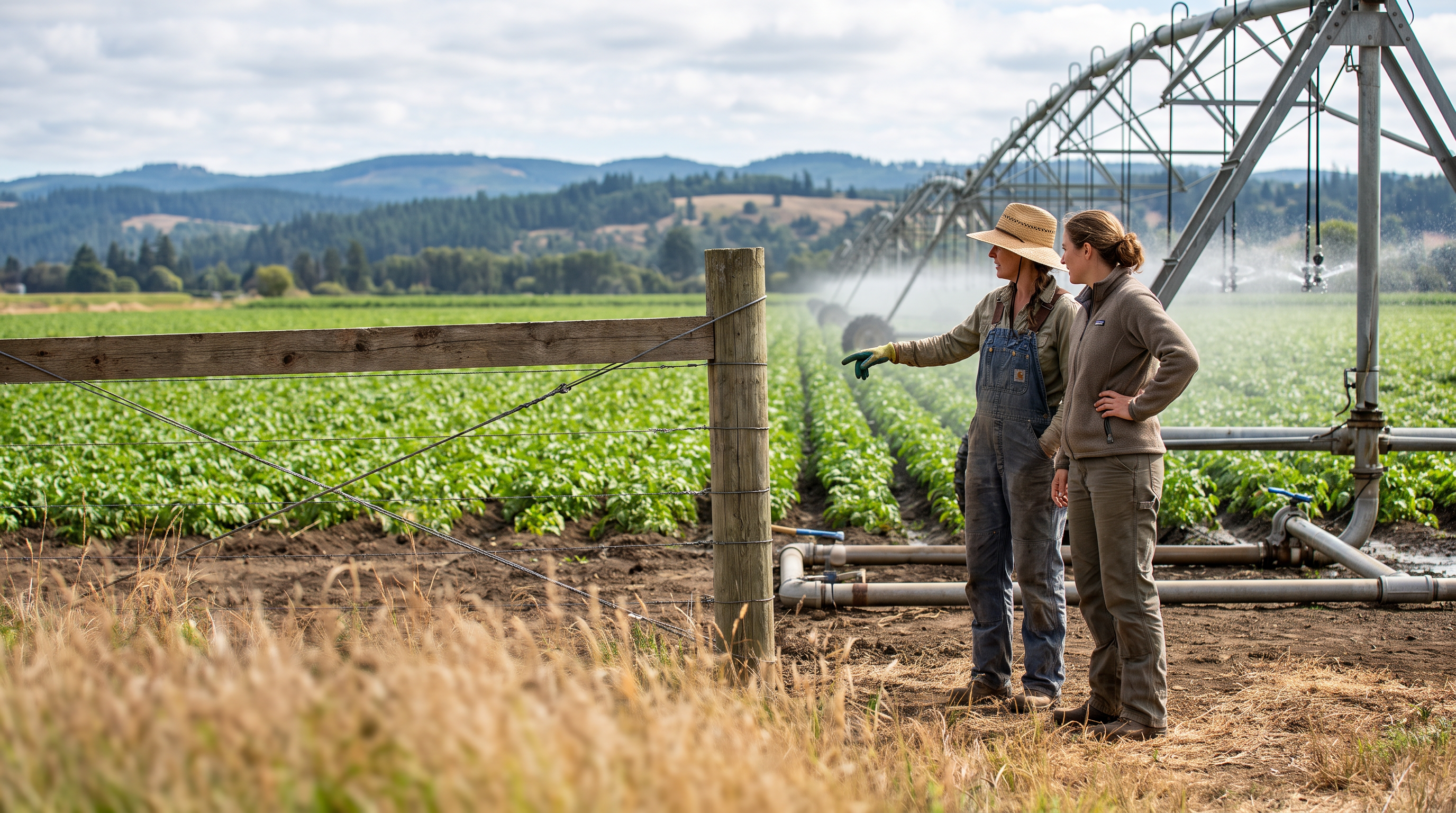
A windstorm drops a fence on a rented pasture. At the same time, the irrigation pump fails while the tenant's crop is growing. The written lease says the operator maintains the land; the landowner says the pump and fence were part of the property. Both have insurance—but neither has checked which policy actually lists the fence, pump or crop. Who pays?
The answer requires two separate decisions: what the lease says each party must do, and what an issued insurance policy covers. A promise to repair a fence is not proof that the fence is insured. Ownership of the farm does not automatically insure a tenant's crop. Naming the landowner on the operator's liability policy is not the same as insuring the owner's irrigation system for property damage.
This guide is for farm owners and operators reviewing rented cropland or pasture across Oregon and other Western states. It addresses cash rent, crop share, improvements, irrigation, workers, visitors and claims. It is educational—not legal advice or a determination of coverage. Have local counsel review your agreement and a licensed agent review the actual policies, declarations and endorsements.
Quick answer: who usually insures what on a leased farm?
| Exposure | Common starting point | What the written lease and policy still need to establish |
|---|---|---|
| Owned buildings, permanent fences and fixed pumps | Landowner often insures owned improvements | Inventory, covered location, valuation, covered perils and who pays the deductible |
| Routine fence, ditch or pivot maintenance | Tenant often handles day-to-day upkeep | Exact tasks, inspection intervals, approval for major repairs and reimbursement |
| Mobile equipment the tenant brings | Operator generally insures its own property | Scheduled equipment, off-premises use, borrowed units and transit |
| Growing crop on cash-rented land | Operator with the financial interest typically arranges crop insurance | Acreage and share reported to the crop insurer, eligible crop and program dates |
| Crop-share production | Each party may insure its own financial share | Exact contractual shares, correct reporting and any approved arrangement to insure the other party's interest |
| Injury or damage arising from farming operations | Operator usually needs farm liability protection | Leased location, operations, limits and any landowner additional-insured endorsement |
| Injury alleged to result from ownership or premises conditions | Landowner may need its own premises liability | Which areas, activities and parties are insured, plus overlapping claim notice |
These are negotiation guideposts, not universal legal rules. University of Wisconsin Extension and Farm Commons both emphasize that the parties can allocate responsibilities differently. The insurer still applies its policy language, not this table. For a broader starting point, compare the agency's farm and ranch coverage overview with the exact parcels and operations you intend to lease.
1. Begin with the agreement, not a certificate of insurance
A farm lease should identify the legal owner and operator, the exact parcel, acreage, access routes, shared areas, structures and allowed uses. Attach a dated schedule of improvements and a field map if available. Record condition at possession with photos: fence lines, gates, well and pump, pivot, buried mains, outbuildings, power supply, bins, roads and drainage. A certificate of insurance is evidence of some listed policies at a moment in time; it does not amend coverage or replace the lease.
Ask the following questions before the season begins:
A short generic sentence saying “tenant insures the premises” leaves too much unanswered. Insure Pacific's farm insurance page is a useful orientation, but the written contract and the carrier's schedule should be compared line by line.
Cash rent and crop share change the financial interests
With cash rent, the operator usually pays a fixed or formula-based rent and bears most production risk, subject to the particular agreement. With crop share, landowner and operator divide part of the production and often some inputs. University of Nebraska–Lincoln Extension describes different customary shares and costs even within one region; never assume a standard percentage. A flexible lease or custom-farming contract can create still different interests.
Record whether rent continues after a casualty, whether the lease continues if irrigation is unavailable, who bears input costs and who owns standing crops when occupancy changes. These clauses affect the parties' economic loss, but do not automatically create an insured claim. A lawyer should draft the lease; an agent should align covered interests and locations with it.
2. Fences, gates and farm buildings: ownership is not enough
A perimeter fence may belong to the landowner, while a temporary livestock panel belongs to the operator. One may be maintained by the tenant but insured by the owner. A new gate may be installed at the operator's expense and later become a permanent fixture. Specify who owns each item at installation, who repairs ordinary wear, what constitutes a major replacement and how to settle its value if the lease ends early.
For property insurance, ask whether fences are covered at all, under which property category and limit, and for which causes of loss. A farmhouse, a barn, a detached shed, a fence and a pivot need not share the same valuation or deductible. Wind, fire, wildfire, flood, vehicle impact, rust, deterioration and damage from livestock can be treated very differently. Obtain the covered-property schedule and endorsement rather than assuming a farm package includes every outdoor asset. If a fence is damaged by an excluded cause, an agreement to repair it can remain a contractual obligation despite no insurance payment.
Practical example: A wildfire burns a fence along a leased grazing parcel. The owner agreed to insure permanent improvements, but the issued policy does not list fences or applies a low outdoor-property sublimit. The tenant agreed to maintain and repair gates only. The outcome depends on the agreement's exact language and the insurer's covered-property terms—not the fact that both carry farm insurance. Discuss wildfire preparation and rural property exposures in the site's Oregon farm and ranch coverage guide.
Improvements and the end of a lease
Landlords and operators frequently share a pump upgrade, install a new fence or construct a shed. Before buying materials, document written consent, design and permits, who funds labor and parts, who maintains the result, whether it may be removed and any reimbursement for remaining value at early termination. Wisconsin Extension notes that a repair restores ordinary function while a capital improvement can enhance long-term value; its lease guidance encourages a separate improvement agreement. Ask tax and legal advisers about ownership and accounting; ask the carrier whose insurable interest and replacement value should appear on the policy.
3. Irrigation: divide the pivot, pump, pipes, power and water right
“Irrigation system” is rarely one item. Inventory wells, pumps, motors, electrical controls, filtration, center-pivot spans, portable pipe, buried mains, valves, ditches, telemetry and access roads separately. Identify serial numbers, location, ownership, approximate replacement cost and maintenance responsibility. A pump may be built into the owner's property while an operator owns mobile pipe. One person may pay the electric bill, another may own the pivot and both may rely on the system to keep a crop alive.
Farm Commons lists major well-pump and irrigation repairs among expenses often carried by owners, while day-to-day upkeep often falls to tenants. Nebraska Extension describes irrigated crop-share examples in which ownership expenses and maintenance are split differently. Neither is a default legal rule for your parcel. The lease should distinguish service and lubrication, winterization, storm response, motor failure, replacement of a buried main and capital upgrades, including approval thresholds for repairs.
Property coverage requires separate questions: Is the pivot fixed equipment, farm personal property or a separately scheduled item? Are electrical surge and mechanical breakdown included, excluded or limited? Is there coverage only for direct physical damage from a covered event, or a separately endorsed equipment-breakdown peril? What are the deductibles and valuation basis? In some cases an interruption or extra-expense provision may help following a covered physical loss; crop yield loss due to irrigation failure is not automatically covered by that property coverage. The agency's equipment breakdown guide explains why electrical and mechanical losses merit their own review.
Water rights and water availability are different questions
A working pivot does not create the legal right to divert water. Oregon's Water Resources Department explains that use generally requires a valid water right, permit or exemption, and that a right usually identifies its place and purpose of use and point of diversion. Verify what right or district entitlement is actually available to the leased acreage, who pays assessments, who keeps measurement records and who addresses curtailment. Do not assume a lease transfers a right to another parcel or permits a change in use. Likewise, conventional farm property and crop policies are not automatic drought or water-shortage guarantees. Consult water-rights counsel or the local watermaster when rights, transfers or availability are unclear.
4. Who insures the growing crop?
The USDA Risk Management Agency (RMA) defines an insurable interest in a crop as the percentage of that crop financially at risk. The RMA's common policy basic provisions require acreage reports to identify the insured share, crop acreage and land identifiers. The policy names an insured person; the owner of the land is not automatically an insured on the tenant's crop policy merely by owning the ground.
For cash rent, the operator commonly has the crop interest and should discuss available federal or private crop products with a qualified crop agent. For crop share, the owner and operator can each have an economic share. The policy's provisions allow certain arrangements in which one party insures another party's share with documented approval and accurate reporting; this is not an invitation to double-insure or assume informal permission. Check the exact lease wording, crop share percentage, crop and practice, acreage reporting date, eligible county, any interest in stored grain and what happens when the lease is modified.
A tenant who farms three rented parcels should reconcile each legal land description or FSA identifier with the acreage report before the deadline. If the owner receives a percentage of crop proceeds, both should make sure the insured shares and names match the agreement. Crop insurance products have different covered causes, exclusions, deadlines, units and yield histories. Direct specific underwriting and claims questions to a licensed crop-insurance specialist; a general commercial property policy should not be presumed to cover the growing crop.
Illustrative share calculation—not an insurance quote
If an agreement says the landowner receives one quarter of production and the operator receives three quarters, the intended financial interests might be 25% and 75% respectively. But rent minimums, other lease clauses and the crop policy's classification can change how the share is treated. RMA's basic provisions expressly distinguish some cash-lease and crop-share combinations. Report the actual arrangement to your crop agent and obtain confirmation instead of translating a handwritten lease into policy percentages on your own.
5. Liability: the landowner and the farming operator need separate answers
A visitor trips over a broken gate, a spray rig damages a neighbor's crop, cattle escape a leased pasture, or a contractor is hurt repairing a pump. These incidents may involve different people and legal theories. The operator's farm liability should be reviewed for its specific farming activities, rented locations, employees and third-party operations; the owner should review its own premises and ownership exposures. A policy in one person's name does not automatically protect everyone associated with the parcel.
Farm Commons notes that leases often require the operator to carry liability insurance and name the landowner as an additional insured. The agreement should state which operations and locations require this, the minimum limits and how proof of the actual endorsement will be delivered. Additional-insured status can be narrower than the landowner's own farm policy: it depends on the endorsement and the claim's connection to the named insured's work or premises. Do not confuse it with an additional named insured, a loss payee, property coverage or a waiver of subrogation. Request both parties' policies and endorsements, and coordinate notice of incidents that might implicate both.
If the acreage hosts u-pick visits, farm stands, school tours, events or short-term rentals, disclose those activities before inception. They can change who enters the premises and what liability form is appropriate. See agritourism insurance if visitors are part of the operating plan. For higher-severity injury allegations, ask whether a commercial umbrella policy includes the applicable farm liability coverage as scheduled underlying insurance.
Workers, contractors and vehicles
The landowner's liability policy is not a substitute for the operator's workers' compensation obligations. Hiring seasonal labor, H-2A crews or a custom harvesting company adds employment and subcontractor questions that vary by state and relationship. Review who employs whom, payroll, certificates and injury protocols alongside the farm labor and workers' compensation guide. Check separately whether pickups, road-going trucks, ATVs and mobile farm machinery are insured for the use planned. A lease cannot override statutory obligations or create workers' compensation through a generic indemnity clause.
6. Mobile machines, borrowed equipment and property in transit
A tenant's tractor may cross five rented properties. The owner may lend the tenant a sprayer; the tenant may hire a custom baler. Make a list of each machine's owner, operator, location, replacement value, permitted users and who pays for a loss while it is borrowed or being hauled. Farm machinery coverage may differ for a tractor on a scheduled farm, a hired machine or tools in transit. Confirm whether collision, overturn, theft, breakdown, breakdown-related contamination and off-premises use need separate provisions. Do not assume an owner's building policy covers a tenant's movable property stored inside it.
Where equipment or harvested property routinely travels between parcels or customers, compare the relevant farm property provisions with inland marine coverage for property in transit. That article focuses on contractors and installers, so use it as a coverage concept—not an assertion that a contractor form is the right policy for a farm. A farm specialist can identify what applies to your machinery and inventory.
7. Three claims that expose a poorly coordinated lease
Independent Insurance Agency Since 1935
Not Sure If You Have the Right Coverage?
Our licensed agents compare 50+ carriers to find you the best coverage at the right price — at no extra cost to you.
A fence loss involving an escaped herd
A windstorm damages a permanent boundary fence overnight. Cattle escape and damage a neighbor's property. The owner may have a property claim for its fence; the operator may face a liability allegation concerning the cattle or inspection and repair. Whether either policy responds depends on covered perils, duties, limits, exclusions and actual alleged negligence. Photograph the fence, secure the animals, notify both insurers promptly, preserve maintenance records and do not decide legal fault on site.
A pump failure at peak irrigation demand
A pump motor shorts during a dry week. The lease makes the owner responsible for major replacement and the tenant responsible for routine upkeep. The owner's property policy might require a distinct breakdown endorsement; crop insurance may have different triggers or exclusions for loss tied to water supply or equipment failure. Tell the carrier and crop agent promptly, preserve diagnostic records, track mitigation and obtain written repair authorization. A crop yield drop does not automatically become a covered property loss.
A tenant-built improvement at handoff
The tenant funded a new gate and buried line on a five-year lease that ends after two years. The agreement never assigned ownership or reimbursement. The insurer lists the owner as the building insured but not the tenant's investment. This is partly a legal and valuation dispute, not simply an insurance claim. Resolve title, removal rights and reimbursement in the lease supplement before construction; then disclose the completed improvement to the property carrier so the insured interest and value are clear.
8. A lease-to-policy checklist before planting or turning out livestock
1. Parcel and use: Map the leased acreage, access routes, buildings, water points and permitted farming or visitor activities.
2. Asset schedule: List permanent and temporary fences, gates, pumps, pivot, pipes, barns and each party's movable equipment. Note ownership and replacement estimates.
3. Duties: Specify routine maintenance, major repair, emergency approvals, inspections and reimbursement, not simply “keep in good repair.”
4. Water: Confirm the right or district allocation, assessments, delivery limitations, winterization and emergency contact.
5. Crops: Give the crop agent the signed agreement, correct interest shares, farm identifiers, intended crop and acreage deadlines.
6. Property policies: Match scheduled locations, outdoor-property terms, valuations, breakdown extensions and exclusions to the asset list.
7. Liability policies: Check owner premises and tenant operations separately; request the actual additional-insured endorsement if required by the lease.
8. People and machines: Identify employees, contractors, visitors, vehicles, borrowed machinery and stored property at each site.
9. Claims and handoff: Record first-notice contacts, evidence preservation, deductible allocations, termination triggers and tenant-funded improvements.
10. Renewal: Reconcile the lease and policies whenever a parcel, crop share, livestock use, major improvement or water arrangement changes.
Ready to compare coverage with the lease? Send Insure Pacific the written lease and a simple asset list through the agency contact page. Ask for an owner-and-operator review rather than a one-size-fits-all “farm” quote; use the quote and phone options on this page to discuss timing before the next crop year.
Frequently asked questions
Does the landowner's farm policy cover a tenant's crops?
Not merely because the landowner owns the ground. Crop insurance follows a reported, insurable financial interest in the crop under a specific policy. A crop-share owner may have such an interest; a cash-rent owner commonly has a different interest. Verify the signed lease, crop policy, acreage report and shares with a qualified crop agent.
Does a tenant have to insure the owner's fence or pivot?
There is no universal answer. The parties can agree that the owner insures owned fixed assets and the tenant performs maintenance, or they can negotiate another arrangement. Even if the tenant promises to insure an asset, the policy must actually be written to cover the correct property, location, interest and peril. Obtain the issued terms.
Is the landowner automatically protected by the tenant's liability policy?
No. Ask for the applicable additional-insured endorsement, verify the scope and duration, and maintain separate owner coverage where needed. A certificate alone does not grant insured status, and additional-insured liability coverage does not insure physical damage to the owner's property.
If irrigation fails, does crop insurance cover the lost yield?
Do not assume it does. The cause, insured crop, practice, adequate water supply, policy provisions, reporting and loss facts matter. A mechanical-breakdown endorsement for the pump is also not a blanket crop-yield guarantee. Ask the crop agent and property insurer about their respective policies before the season.
Does a farm lease transfer an Oregon water right?
A lease describing irrigated ground does not itself rewrite a water right. Oregon rights generally identify authorized place and type of use and the diversion point. Review the actual right or district entitlement and obtain water-law advice before making changes.
What if the lease is oral or a relative owns the property?
Family ownership does not solve an insurance mismatch. Put the parcel, crop share, asset ownership, repair duties and insured status in writing, then provide the actual arrangement to the insurers and crop agent. Review state-specific legal requirements with counsel.
Should we name both landlord and tenant on every policy?
Not reflexively. Named insured, additional insured, loss payee and an approved crop-share arrangement mean different things and can carry different rights and obligations. Identify each party's actual interest and ask the insurer which designation or separate policy is appropriate.
Sources and further reading
*Coverage is subject to underwriting, the issued policy, exclusions, limits, endorsements and applicable law. The examples are illustrative and are not a coverage determination or legal, tax or water-rights advice.*
Our Licensed Coverage Area
States highlighted in blue are states where Insure Pacific holds an active insurance license.
Hover to highlight — click a state to visit its insurance page
Our Oregon Office Locations
Hover over a marker to see the office — click to visit their website.
Hover to highlight — click to visit that office's website
Ready to Get Protected?
Talk to a Local Oregon Insurance Expert
Insure Pacific has been serving Oregon families and businesses since 1935. We work with 50+ carriers so you get real options — not just one company's answer.
Related Articles
 Farm & Ranch
One Ranch, Several Policies: Coordinating Home, Farm, Commercial Auto, and Umbrella Insurance
Read Article → Farm & Ranch
Cattle Ranch Insurance in the American West: The Complete Guide to Property, Livestock, Equipment, Liability, and Income Protection
Read Article → Farm & Ranch
Custom Grazing Insurance: Who Covers Cattle, Fences, Pasture, Death Loss, and Liability?
Read Article → Farm & Ranch
Grain Bin and Feed Storage Insurance: Collapse, Wind Damage, Contamination, and Stored Commodities
Read Article →Get in Touch
Ready to protect what matters most? Contact us today for a no-obligation insurance review. Our experienced agents are here to help you find the right coverage for your needs.


