

Farm Labor Insurance: Seasonal Employees, H-2A Workers, Family Members, Labor Contractors, and Workers’ Compensation
Farm Labor Insurance: Seasonal Employees, H-2A Workers, Family Members, Labor Contractors, and Workers’ Compensation

A seasonal crew can create year-round insurance consequences
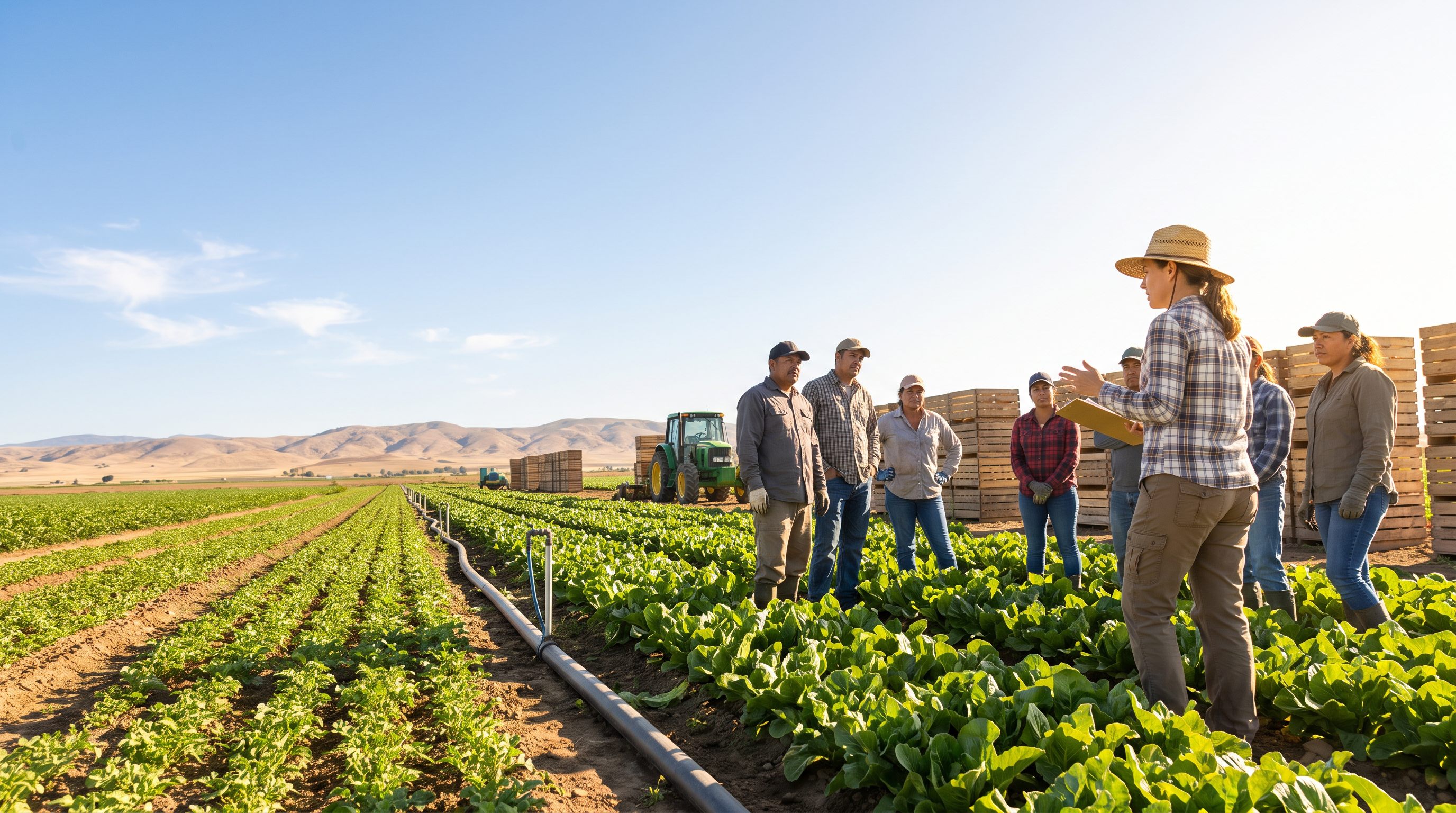
Farm labor changes quickly. A family operation may employ only relatives through winter, add a pruning crew in spring, bring in seasonal harvest workers in summer, use an H-2A labor contractor for a specific crop, and send drivers or equipment operators across state lines before the policy renews. The work may last days or months, but an injury, audit, transportation loss, or employment dispute can affect the business long after the season ends.
That is why farm labor insurance is not simply a question of whether a farm has “employees.” It requires a current map of who performs the work, who directs it, who pays each person, where the work occurs, how workers travel, where they live, and what each person actually does. A coordinated Farm & Ranch Insurance review should connect those facts to workers’ compensation, employers liability, farm or commercial liability, auto, property, equipment, umbrella, and employment-practices coverage.
Coverage is controlled by state law, federal program requirements, the employment relationship, and the actual policy. A worker’s title, family connection, visa category, short tenure, contractor agreement, or cash-payment arrangement does not by itself decide who must be insured.
Start with a worker census—not last year’s payroll estimate
Before discussing limits or premiums, build a roster of every person expected to work during the next policy period. Include people who are often missed when a farm thinks only about full-time payroll:
For each person or group, record the employer of record, supervisor, work location, dates, duties, payroll method, transportation arrangement, housing arrangement, equipment used, and proof of coverage if another business is expected to insure them. This census becomes the foundation for the Workers’ Compensation Insurance application, payroll forecast, class-code review, contractor controls, and seasonal safety plan.
What workers’ compensation generally does—and does not—address
Workers’ compensation is a state-governed system intended to provide defined benefits for occupational injury or disease. Depending on the jurisdiction and claim, benefits may include medical treatment, a portion of lost wages, disability benefits, vocational assistance, and death benefits. Employers liability, often included as Part Two of a workers’ compensation policy, can address certain employer-liability claims that fall outside the exclusive-remedy structure, subject to its terms and limits.
Workers’ compensation does not replace every other farm coverage. It generally is not the policy for damage to a customer’s crop, a collision that injures another motorist, fire damage to worker housing, loss of a tractor, pesticide drift onto neighboring property, wage-and-hour penalties, immigration violations, or a discrimination claim. Those exposures may point to farm liability, commercial auto, property, equipment, employment-practices, cyber, bond, or other specialty coverage—or may be uninsurable.
| Event | Primary coverage area to review | Important limitation |
|---|---|---|
| Employee strains a back lifting produce | Workers’ compensation | Employee status, work connection, state law, and reporting still matter |
| Crew van collides with another vehicle | Commercial auto plus workers’ compensation analysis | Auto liability and worker benefits address different parties and damages |
| Labor housing suffers a fire | Property and premises-liability coverage | Workers’ compensation does not rebuild housing or replace all resident property |
| Supervisor is accused of retaliation | Employment practices liability | Wage, immigration, and statutory-penalty exclusions may apply |
| Employee damages a customer’s irrigation system | Farm/commercial general liability | Care, custody, control and work exclusions require review |
| Farm tool or mobile equipment is stolen off premises | Equipment or inland marine coverage | Scheduled items, valuation, territory, and theft conditions control |
| Catastrophic injury exceeds underlying liability limits | Umbrella/excess plus underlying policies | Umbrella does not automatically broaden every underlying exclusion |
A broader Business Insurance program should be designed around the operation’s real labor and contract structure, not around the assumption that one policy covers “anything involving workers.”
Seasonal employees are still employees
A short work period does not make an employee invisible. Seasonal workers may arrive during the busiest weeks, receive compressed training, work long days, change tasks, use unfamiliar equipment, and operate around people they have never met. Those conditions can increase the chance of miscommunication and injury precisely when supervisors are most focused on weather and production.
Before the first seasonal shift, the farm should confirm:
“Part-time,” “temporary,” “probationary,” “paid cash,” and “harvest-only” are payroll descriptions, not automatic workers’ compensation exemptions. State thresholds and exemptions vary, but a farm should obtain a state-specific answer before work starts rather than after an injury.
H-2A workers: insurance is one part of a much larger obligation
The H-2A program allows qualifying employers to hire foreign workers for temporary or seasonal agricultural labor when program requirements are met. Under 20 CFR § 655.122(e), the employer must provide workers’ compensation insurance that complies with state law and covers occupational injury and disease. If the work is exempt from the state workers’ compensation system, the employer must provide, at no cost to the worker, insurance with benefits at least equal to those available for comparable covered employment in that state. The employer must provide proof for the entire employment period before certification.
The insurance review should match the approved employer, work locations, dates, crops, duties, and headcount. If crews move to an unlisted location, work beyond the policy period, perform materially different tasks, or cross state lines, notify the legal and insurance teams promptly. Do not assume an H-2A filing automatically updates an insurance policy—or that a workers’ compensation policy automatically satisfies every H-2A requirement.
H-2A obligations with insurance consequences
| Obligation | Why the insurance team should know |
|---|---|
| Workers’ compensation at no cost | Carrier, policy number, state, dates, and named employer must align with the certified job |
| Written job terms | Crops, duties, locations, hours, equipment, wages, and transportation help define exposure and payroll |
| Three-fourths guarantee | A production interruption can create wage obligations even when no workers’ compensation claim exists |
| Employer-provided tools and equipment | Equipment condition, guarding, maintenance, and training affect injury prevention |
| No-cost compliant housing for eligible workers | Housing creates property, premises, habitability, fire, heat, and emergency-planning exposures |
| Daily transportation from employer-provided housing | Vehicle ownership, drivers, capacity, routes, maintenance, and insurance must be coordinated |
| Inbound and return transportation obligations | Contractual payment duties are not automatically insured by workers’ compensation |
| Corresponding U.S. workers | Covered U.S. workers may be entitled to terms no less favorable than H-2A workers |
| Hours, earnings, deductions, and job-order records | Accurate records support compliance, payroll audits, injury investigation, and claim handling |
The Department of Labor’s H-2A guidance also addresses recruitment, wages, housing, meals or cooking facilities, transportation, records, prohibited fees, termination notices, and the three-fourths guarantee. Most of those obligations are not “covered losses” merely because the farm carries insurance. Legal compliance and insurance transfer must work in parallel.
Family members: relationship does not answer the coverage question
Family farms often rely on spouses, adult children, siblings, parents, cousins, and multiple generations who move between ownership, management, and physical labor. One family member may be a corporate officer; another may be paid hourly; another may help only during calving or harvest; another may own equipment leased to the operation.
Do not use “family” as a single insurance classification. Review each person’s legal relationship to the insured entity, ownership interest, payroll, state of work, duties, and any statutory election or exclusion. A family-member exemption under one law does not automatically apply under another.
For example, Oregon’s agricultural overtime guidance lists an immediate-family exemption from agricultural overtime. That does not by itself decide workers’ compensation status, unemployment coverage, tax treatment, safety duties, or insurance eligibility. EPA’s Worker Protection Standard also provides certain owner/immediate-family exceptions, but those exceptions are limited and do not erase every pesticide, employment, liability, or state-law obligation.
When a family member is excluded or elects not to be covered where permitted, document the decision and understand the consequence. The farm still needs a plan for medical costs, disability, lost labor, succession, and liability after a serious injury. The right answer may differ for a sole proprietorship, partnership, LLC, corporation, trust, or multiple related entities.
Farm labor contractors do not make the farm’s responsibility disappear
A farm labor contractor may recruit, supply, hire, employ, transport, supervise, house, or pay a crew. That arrangement can be valuable, but it does not automatically transfer every employment and insurance obligation away from the grower.
Under the Migrant and Seasonal Agricultural Worker Protection Act (MSPA), covered farm labor contractors must register with the U.S. Department of Labor. A contractor must be specifically authorized before providing covered housing or transportation. Agricultural employers must take reasonable steps to confirm that a contractor holds a valid certificate for the services performed.
DOL Fact Sheet #35 explains that agricultural workers can have more than one employer. Where joint employment exists, each employer is responsible for MSPA obligations. The analysis looks at economic reality, including control, hiring and firing power, permanence, integration into the agricultural operation, work location, payroll, workers’ compensation, transportation, housing, tools, and equipment. A labor contractor’s license or a contract calling the contractor “independent” does not alone decide the issue.
Contractor due diligence before the crew arrives
Obtain and verify:
A certificate of insurance is evidence at a moment in time. It does not amend the policy, prove that every worker is covered, or guarantee that limits remain available. Oregon SAIF specifically warns that workers’ compensation responsibility can extend to contractor labor even when the parties have a written independent-contractor agreement. For labor that is normal and customary to the business, timing and proof of the contractor’s coverage can be critical.
Worker transportation needs its own coverage map
Transportation can involve a farm-owned pickup, a crew van, a labor contractor’s bus, an employee’s personal vehicle, a rented SUV, a trailer, a driver paid separately, or a worker-organized carpool. Each arrangement raises different questions.
DOL’s MSPA transportation guidance requires covered transportation to meet applicable safety, driver-licensing, and insurance rules. Its fact sheet describes three general financial-responsibility paths: vehicle liability of at least $100,000 per seat up to $5 million per vehicle; a qualifying $500,000 liability bond; or state workers’ compensation plus at least $50,000 of property-damage protection. The permitted route depends on the circumstances, and state requirements can be more protective.
The same guidance warns that workers’ compensation may not cover every trip. Grocery, laundry, recreational, commuting, interstate, or otherwise non-work travel can be treated differently. A farm should coordinate Commercial Auto Insurance, hired and non-owned auto, workers’ compensation, driver qualification, vehicle maintenance, seating capacity, trailer use, and the labor contractor’s transportation authorization.
Create a written transportation matrix showing who owns each vehicle, who drives it, whose workers ride in it, every regular route, seating capacity, personal versus business use, and which policy is expected to respond. Confirm that personal auto policies are not being relied upon for an excluded commercial or worker-transportation exposure.
Worker housing creates property, liability, and operational risk
Employer-provided or arranged housing can be a home, bunkhouse, apartment, motel, mobile unit, or camp. H-2A and MSPA rules impose specific requirements in covered situations, and state or local housing, fire, building, sanitation, and heat rules may also apply.
Workers’ compensation does not replace property and premises coverage for housing. Review:
A property loss can become a labor crisis if replacement housing is unavailable during peak season. Estimate that contingency before deciding limits and deductibles.
The highest-value loss-control work happens before day one
OSHA identifies agriculture as a high-hazard industry associated with traumatic injury, fatalities, respiratory disease, noise-induced hearing loss, skin disease, chemical exposure, and prolonged sun exposure. Farm insurance works best when risk control is specific to the crop, animals, terrain, equipment, and workforce.
A preseason onboarding program should cover emergency reporting, stop-work authority, heat illness, smoke, wildfire evacuation, severe weather, machinery, lockout procedures, power take-offs, rollovers, falls, lifting, repetitive motion, animals, confined spaces, grain, chemicals, road travel, and the exact tasks each person performs. Supervisors need the same training plus clear responsibility for documentation and prompt injury reporting.
Training should be understandable, demonstrated, and verified—not simply signed. Use bilingual or multilingual materials when needed. Document the trainer, date, subject, attendees, practical demonstration, questions, and any retraining. A signed sheet does not cure unsafe equipment or inadequate supervision, but reliable records help show what was communicated and identify gaps before an incident.
Pesticides require a separate Worker Protection Standard review
EPA’s Agricultural Worker Protection Standard (WPS) protects workers and pesticide handlers at covered farms, forests, nurseries, greenhouses, and commercial pesticide-handling establishments. EPA’s current guidance addresses annual training, pesticide and safety information, decontamination supplies, emergency assistance, application exclusion zones, restricted-entry intervals, notification, equipment safety, personal protective equipment, and respirator requirements.
The coverage and safety review should identify:
Occupational exposure may involve workers’ compensation; off-target damage or injury to others may involve liability; damaged crops or application errors may raise separate property, professional, or pollution questions. A policy should never be treated as permission to skip label, WPS, licensing, or safety requirements.
Heat, smoke, and acclimatization are insurance issues because they are injury issues
Seasonal workers may enter strenuous outdoor work without time to acclimatize. Oregon OSHA’s heat-illness rule applies when the heat index reaches 80°F and addresses shade, water, high-heat practices, emergency response, acclimatization, written prevention planning, training, and documentation. At a heat index of 90°F or more, Oregon employers must implement a protective written rest-break schedule. Other Western states use different thresholds and rules.
A practical heat plan should specify who monitors conditions, where readings come from, how water and shade move with the crew, when rest schedules change, how supervisors identify symptoms, who can call emergency services, how a remote worker is located, and what happens when a worker is new or returning after an absence. Worker housing also needs a high-heat recovery plan.
Wildfire smoke requires a separate state and respiratory-protection review. A farm should plan for air-quality monitoring, communication, respirators where required, work modification, indoor alternatives, evacuation, and payroll decisions. Workers’ compensation may address an occupational illness, but it does not substitute for complying with heat, smoke, pesticide, or emergency-response rules.
Class codes and payroll should follow actual work
Workers’ compensation premium commonly reflects payroll, classification, experience, and carrier or state rating rules. Agricultural operations can be difficult because one worker may prune, harvest, irrigate, repair equipment, operate a truck, pack products, work in a retail stand, and perform office duties during one season.
Do not select the lowest class code by job title. Describe actual duties, locations, equipment, and time allocation to the agent and carrier. Ask how payroll should be divided, which records are acceptable, and whether any activity requires a separate classification or policy.
Oregon SAIF explains that verifiable time records can allow payroll to be divided when an employee works in more than one classification. If required records are not kept, payroll may be assigned to the highest-rated applicable class. SAIF states that class code 0083 farm employers must maintain verifiable time records and describes consistent acreage- or hours-based methods for eligible farm payroll reporting.
Good records include original time entries, dates, hours, class or task, work location, crop or activity, supervisor, and payroll conversion. Estimates prepared at the end of the season are weaker than records created when the work occurs.
2026 Oregon overtime and premium planning
Oregon BOLI states that agricultural overtime applies after 48 hours in a workweek through 2026, subject to listed exemptions, and is scheduled to move to 40 hours in 2027. Overtime law and workers’ compensation premium rules are separate. A farm should coordinate payroll, legal, accounting, and insurance advice so that overtime premiums, piece rates, bonuses, housing or meal deductions, and other remuneration are handled correctly.
A wage-and-hour obligation is not transformed into a workers’ compensation claim merely because payroll affects premium. Employment-practices policies also commonly limit or exclude wage-and-hour claims. Review Employment Practices Liability Insurance, but do not assume it pays unpaid wages, H-2A guarantees, civil penalties, or immigration-related obligations.
Multi-state crews need coverage before they cross the line
Insure Pacific serves farms and businesses across ten Western states, and agricultural workers’ compensation rules vary significantly. The National Agricultural Law Center’s state comparison shows that some states require coverage broadly for agricultural workers, some use employee-count, workday, payroll, equipment, or occupation thresholds, and some provide broad agricultural exemptions. H-2A requirements can still require equivalent protection when state law exempts the work.
An Oregon policy is not automatically a ten-state policy. SAIF warns that coverage may be inadequate for workers assigned outside Oregon for extended periods or permanently. Before a crew travels, review:
Make this review before bidding a contract, renting housing, moving equipment, or dispatching a crew. Retroactive fixes may not cure an uninsured exposure.
The farm labor coverage stack
No single policy addresses the full workforce exposure. A coordinated review may include:
| Coverage | Farm-labor role | Questions to ask |
|---|---|---|
| Workers’ compensation and employers liability | Occupational injury and disease plus certain employer-liability claims | Who is covered, in which states, under which classes and payroll? |
| Farm or commercial general liability | Third-party bodily injury, property damage, and premises exposure | Are labor housing, custom work, off-premises operations, and pesticide exposures addressed? |
| Commercial auto | Farm-owned vehicles and worker transportation | Who owns and drives each vehicle, and are passenger and route exposures disclosed? |
| Hired and non-owned auto | Rented vehicles and employee-owned vehicles used for business | Does the farm direct or reimburse the travel, and what personal-policy exclusions apply? |
| Property and housing coverage | Bunkhouses, residences, contents, and loss of use | Is worker occupancy disclosed, and what replacement housing expense is available? |
| Equipment and inland marine | Mobile machinery, tools, and equipment away from premises | Are values, operators, transit, theft, and rented or borrowed equipment included? |
| Employment practices liability | Certain discrimination, harassment, retaliation, and employment claims | Are seasonal, temporary, H-2A, contractor-supplied, or third-party workers included? |
| Cyber and crime | Payroll diversion, worker records, identity data, and payment fraud | Who has access to passport, banking, medical, and payroll information? |
| Umbrella or excess liability | Additional limits above scheduled underlying policies | Which policies and exposures are actually scheduled underneath? |
A Commercial Umbrella Insurance review is especially important when the farm transports crews, houses workers, hosts the public, operates heavy vehicles, or faces severe injury potential. The umbrella’s underlying-policy schedule, exclusions, attachment points, and follow-form terms must be checked rather than assumed.
Mobile tools and equipment used by irrigators, mechanics, and field crews may also need an Inland Marine Insurance review. Workers’ compensation protects people under its terms; it does not replace stolen tools, mobile pumps, portable electronics, or equipment away from a scheduled building.
Contracts and certificates: verify facts, not paper volume
A farm can collect dozens of certificates and still have a gap. Build a contractor file that connects each certificate to a signed agreement, verified license, actual policy period, work scope, state, crew, vehicle, and housing arrangement.
Review the file at onboarding and again before each season or contract extension. Require notice of changes, but understand that a certificate’s cancellation language may not create the same rights as an endorsement. If additional insured status, a waiver of subrogation, primary/noncontributory wording, or specific limits are required, request and review the actual endorsement when available.
The grower’s insurance advisor and attorney should coordinate responsibility for:
A contract may allocate responsibility between businesses, but it does not necessarily change a worker’s legal status, an agency’s enforcement authority, or an insurer’s policy wording.
Independent Insurance Agency Since 1935
Not Sure If You Have the Right Coverage?
Our licensed agents compare 50+ carriers to find you the best coverage at the right price — at no extra cost to you.
Injury reporting should work at 5 a.m., in the field, and in more than one language
A claim procedure is only useful if the crew can use it during real work. Post and distribute clear instructions for emergencies and non-emergency injuries. Supervisors should know how to arrange care, preserve evidence, identify witnesses, photograph the scene when appropriate, record equipment and chemical details, and notify management and the insurer promptly.
Do not discourage reporting, delay care to finish a shift, or make promises about compensability. Record the worker’s account accurately, provide required forms and notices, and preserve relevant time, training, maintenance, weather, PPE, and work-assignment records. For pesticide exposure, provide treating personnel with required product and application information. For heat illness, treat suspected heat stroke as an emergency.
A useful incident file includes:
Prompt reporting supports treatment and investigation. It also allows the farm to correct a hazard before another worker is injured.
Return-to-work planning is harder after the harvest has ended
Seasonal operations should design transitional work before an injury. SAIF’s return-to-work guidance recommends identifying work within medical restrictions, documenting physical requirements, obtaining medical approval, providing a written offer, and keeping the adjuster informed.
Potential modified duties might include inventory, light inspection, documentation, safety observations, produce labeling, parts organization, phone support, monitoring, or other genuinely necessary work that fits restrictions. The farm should never invent meaningless tasks, exceed medical limitations, retaliate, or pressure a worker to return prematurely.
Season end, visa terms, housing, transportation, and the worker’s location can complicate return to work. Coordinate with the adjuster and qualified employment or immigration counsel. A written bilingual process helps supervisors respond consistently.
A 30-day pre-season insurance and labor review
| Timing | Operational action | Insurance action |
|---|---|---|
| Days 1–7 | Build the worker census; list entities, states, dates, duties, housing, transportation, and contractors | Send projected payroll, headcount, classifications, locations, and vehicles to the agent |
| Days 8–14 | Verify contractor licenses, workers’ compensation, auto, bonds, drivers, contracts, and H-2A job details | Confirm named insureds, states, policy dates, endorsements, underlying limits, and certificates |
| Days 15–21 | Complete equipment, pesticide, heat, smoke, emergency, housing, and transportation inspections | Resolve underwriting conditions, driver issues, property occupancy, and equipment schedules |
| Days 22–30 | Conduct multilingual orientation, supervisor training, reporting drills, and return-to-work planning | Bind changes before work starts; distribute claim contacts and retain final evidence |
Repeat the review when headcount rises, a crew moves, duties change, a new contractor arrives, housing opens, a new vehicle transports workers, an H-2A job order changes, or the farm adds direct sales, processing, custom work, or agritourism.
Questions to ask at the 2026 farm labor renewal
1. Which legal entities employ workers, and are all of them correctly named or insured?
2. Which family members, owners, officers, partners, or members are included, excluded, or eligible to elect coverage?
3. Are seasonal, part-time, temporary, H-2A, and corresponding U.S. workers included in payroll and classifications?
4. Does the policy cover every state where employees will work?
5. Are farm labor contractors licensed for recruiting, supplying, housing, and transportation as applicable?
6. Have we verified the contractor’s workers’ compensation directly rather than relying only on a certificate?
7. Who can direct, hire, fire, discipline, pay, transport, or house each crew—and could joint employment apply?
8. Are vehicles, drivers, seating capacity, trailers, and personal-vehicle business use disclosed?
9. Is employer-provided housing properly insured for its actual occupancy and replacement cost?
10. Are pesticide handlers, equipment operators, drivers, packers, retail workers, and office staff correctly classified?
11. Do verifiable time records support any split payroll classifications?
12. Are overtime, bonuses, piece rates, allowances, and other remuneration handled correctly for premium reporting?
13. Does the incident-reporting plan work after hours, in remote fields, and in workers’ preferred languages?
14. Are heat, smoke, pesticide, machinery, livestock, and transportation controls documented and practiced?
15. Is there a realistic modified-duty plan for seasonal employees within medical restrictions?
16. Do liability, auto, property, equipment, EPLI, cyber, crime, and umbrella policies coordinate with the labor structure?
Frequently asked questions
Do seasonal farm workers need workers’ compensation?
Often yes, but the legal requirement depends on the state and facts. Short duration, part-time status, piece-rate pay, or a harvest-only schedule does not automatically create an exemption. Confirm the rule for each state before work begins.
Does an H-2A worker have to be covered by workers’ compensation?
H-2A regulations require the employer to provide workers’ compensation in compliance with state law. If the work is exempt under state law, the employer must provide no-cost insurance with benefits at least equal to comparable covered employment in that state. Proof must cover the entire employment period.
Are family members automatically excluded?
No. Family-member treatment depends on the state, entity, relationship, ownership, duties, and applicable election or exclusion. An exemption under overtime, pesticide, tax, or another law does not automatically determine workers’ compensation status.
If a labor contractor provides the crew, is the farm protected?
Not automatically. Verify the contractor’s licenses, authorizations, workers’ compensation, auto, liability, bond, drivers, vehicles, and policy dates. Joint employment or state workers’ compensation responsibility may still apply based on control and the actual relationship.
Does a certificate of insurance prove every worker is covered?
No. A certificate summarizes information and usually does not alter the policy. Verify coverage with the state or carrier when possible and review the policy, endorsements, named insured, states, dates, limits, and work scope.
Does workers’ compensation cover transportation accidents?
It may address occupational injuries to employees, but it does not replace auto liability, property-damage coverage, driver qualification, or MSPA transportation compliance. Some trips may fall outside state workers’ compensation. Review the actual route, purpose, vehicle, driver, and passengers.
Does workers’ compensation cover worker housing?
Not as property insurance. A work-related injury may implicate workers’ compensation, but building damage, contents, temporary housing, premises liability, habitability, fire, heat, and code issues require separate analysis.
Can one policy cover crews working in several Western states?
Possibly, but not automatically. State laws, policy state listings, other-states provisions, monopolistic-state rules, duration, payroll, and H-2A locations matter. Arrange coverage before the crew crosses state lines.
What records matter most at audit?
Payroll journals, time records, job duties, class codes, locations, crop or activity, owner and officer status, contractor payments, certificates, proof-of-coverage searches, H-2A records, and vehicle or housing arrangements can all matter. Ask the carrier what it requires and keep records as the work occurs.
What should a farm do first after an injury?
Provide emergency care, stop any continuing hazard, follow required reporting procedures, preserve relevant evidence, notify the insurer promptly, and avoid deciding or promising coverage. For heat stroke, pesticide exposure, vehicle crashes, and severe trauma, follow emergency protocols immediately.
Protect the people who keep the operation moving
Farm labor insurance should reflect the crew that will actually work the season—not the workforce that existed when last year’s application was completed. Seasonal employees, H-2A workers, family labor, contractor-supplied crews, drivers, pesticide handlers, and multi-state assignments each add distinct questions.
Insure Pacific can help farms and ranches organize those questions, compare available carrier approaches, and coordinate workers’ compensation with farm liability, auto, property, equipment, EPLI, and umbrella coverage. Review the broader Ranch Insurance resources, request an insurance quote, or contact the Insure Pacific team before the next crew arrives.
Sources and further reading
Coverage requirements, employee status, family-member treatment, H-2A obligations, labor-contractor responsibility, state laws, policy forms, endorsements, limits, classifications, payroll rules, exclusions, and claim outcomes vary. This article is general educational information, not legal, immigration, tax, wage-and-hour, safety, human-resources, or claims advice. Consult qualified professionals and the current policy and regulations for the actual operation.
Our Licensed Coverage Area
States highlighted in blue are states where Insure Pacific holds an active insurance license.
Hover to highlight — click a state to visit its insurance page
Our Oregon Office Locations
Hover over a marker to see the office — click to visit their website.
Hover to highlight — click to visit that office's website
Ready to Get Protected?
Talk to a Local Oregon Insurance Expert
Insure Pacific has been serving Oregon families and businesses since 1935. We work with 50+ carriers so you get real options — not just one company's answer.
Related Articles
 Farm & Ranch
Barn and Farm Building Insurance: Replacement Cost, Older Structures, and Rebuilding After a Loss
Read Article → Farm & Ranch
One Ranch, Several Policies: Coordinating Home, Farm, Commercial Auto, and Umbrella Insurance
Read Article → Farm & Ranch
Cattle Ranch Insurance in the American West: The Complete Guide to Property, Livestock, Equipment, Liability, and Income Protection
Read Article → Farm & Ranch
Custom Grazing Insurance: Who Covers Cattle, Fences, Pasture, Death Loss, and Liability?
Read Article →Get in Touch
Ready to protect what matters most? Contact us today for a no-obligation insurance review. Our experienced agents are here to help you find the right coverage for your needs.