



Grain Bin and Feed Storage Insurance: Collapse, Wind Damage, Contamination, and Stored Commodities
Grain Bin and Feed Storage Insurance: Collapse, Wind Damage, Contamination, and Stored Commodities

A windstorm damages a grain-bin roof just after harvest. Rain reaches the wheat inside, the unloading equipment is unusable, and trucks cannot collect a contracted load. The farm faces three different problems: repairing the structure, determining what grain can safely be sold, and finding a way to keep operating. One farm property limit does not necessarily pay for all three.
Grain bin and feed storage insurance is a coordinated coverage review, not one universal policy. A bin, its attached systems, the commodities inside, and the farm's income can fall under different coverage sections. Ownership, insured location, cause of loss and settlement terms each matter. For Oregon farms and ranches and operations in the other states Insure Pacific serves, the goal is to identify these differences before storage reaches its seasonal peak. Begin with our farm and ranch insurance overview, then evaluate the actual buildings, equipment and inventory on your own policy.
Quick answer: what insurance covers grain bins and stored feed?
Farm structure coverage may insure the bin; farm personal property or a commercial inventory form may insure its contents. Wind, fire and certain other events may be covered causes of loss, depending on the form. Collapse, deterioration, spoilage, contamination, equipment failure and interruption require separate questions. A policy that insures the steel structure does not automatically include every bushel inside it, every type of feed, customer-owned grain or the income lost while it is repaired.
Ohio State University's Farm Insurance: Covering Your Assets explains this central distinction: farm structures and farm personal property, such as grain and machinery, are separate asset categories. Basic and broad forms cover specified causes of loss; special forms generally cover direct physical loss subject to exclusions and conditions. Different categories on the same policy can have different forms. “Special” is not another word for unlimited protection.
Ask for four answers in writing: What property is insured? Where is it insured? Which causes of loss apply? How is its value determined? Then add a fifth question: what happens to operating income and extra expense when the property cannot be used? This approach is more useful than asking only, “Are my bins covered?”
Insure the entire storage system, not just the visible steel shell
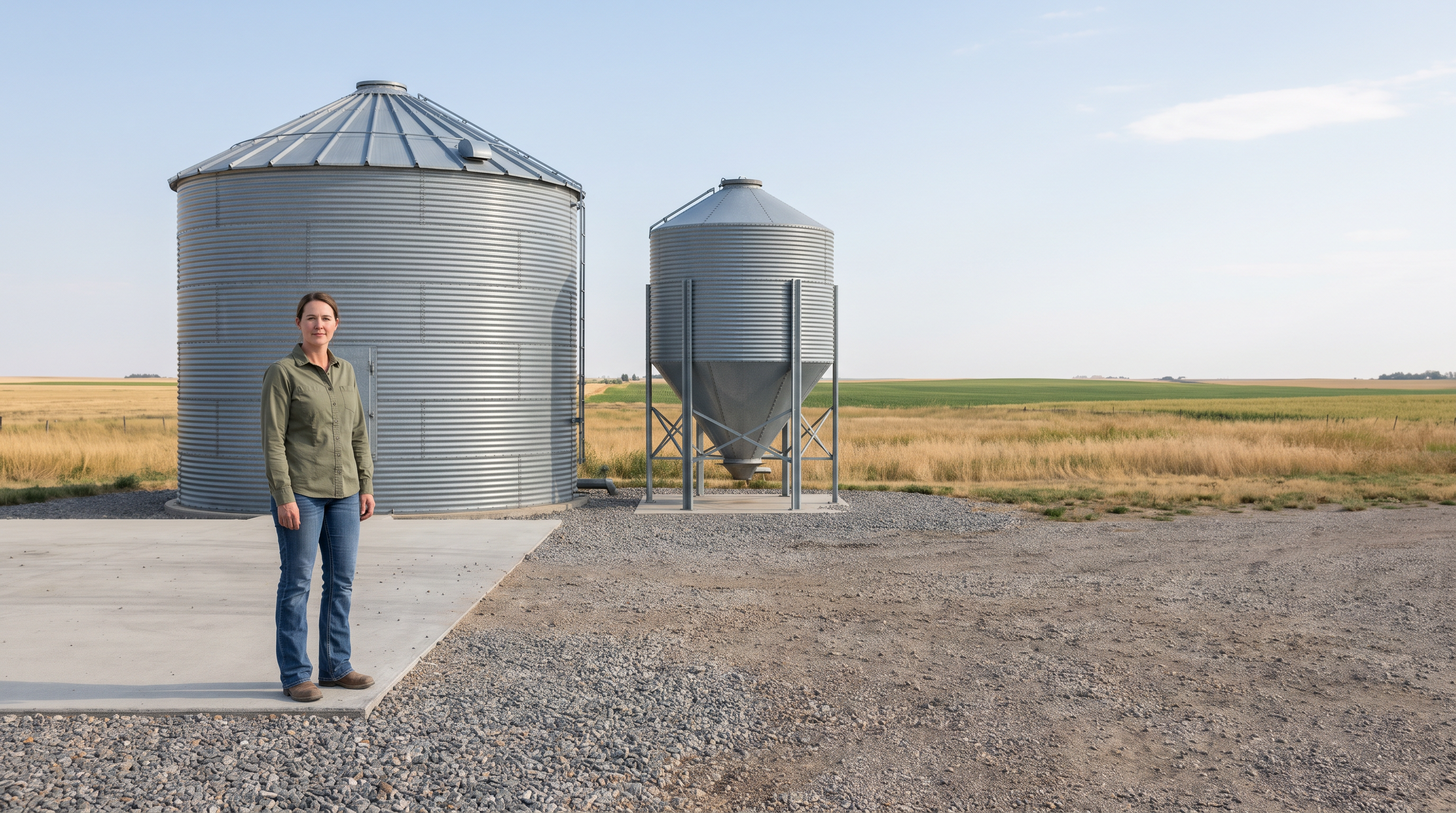
A storage installation can include a foundation and anchors, the bin shell and roof, unloading equipment, aeration floors, fans, electrical panels, sensors, conveyors, grain legs and dryers. A hopper-bottom feed bin can have support legs and delivery equipment that differ from a flat-bottom grain bin. A shed holding bagged feed is another structure with another inventory exposure. Do not assume the value of the shell includes all associated components.
Review the declarations, location schedule and property descriptions against a current site inventory. Identify each bin's capacity, age, manufacturer if known, construction, attachments and replacement estimate. Determine how the insurer classifies permanently installed equipment versus movable machinery. Ask whether foundations, below-ground components, electrical connections and detached equipment are included, restricted or separately scheduled. A new dryer or rebuilt unloading system can change both value and underwriting even when the bin looks unchanged from the road.
Take photos from safe ground-level positions and keep invoices, installation records and engineering documents. Describe off-site or leased storage too. A farm policy may restrict coverage to scheduled premises or apply different limits away from them. If the farm owns a bin on leased land, the lease and the insurance should identify that interest. Our leased farmland insurance guide explains why ownership, maintenance responsibility and insurance responsibility must be considered separately.
Replacement cost is not the used-bin sale price
A bin's auction value or depreciated accounting value may be far below the cost of a replacement installation. Obtain a current estimate that considers necessary demolition, site work, labor, compatible components, freight and any engineering or permit work. Ask about debris-removal limits and ordinance-or-law coverage where reconstruction must meet current requirements. Do not assume a standard building payment includes every code-related expense.
Replacement cost and actual cash value settlement can produce different results; replacement-cost payment may require actual repair or replacement within the policy's conditions. Coinsurance, if present, can reduce an otherwise covered claim when values are too low. A blanket limit may still have location, category or margin restrictions. Our commercial property insurance page introduces the broader valuation issues, but the issued farm or agribusiness forms control the bin's treatment.
Wind damage: why an empty bin still needs insurance
An empty bin may hold little commodity value, but it still represents a substantial structure exposure. South Dakota State University Extension explains that empty bins can be more susceptible to wind damage than full ones. Wind can deform walls, damage the roof and affect anchors or attached systems. Corrosion and loading history can also reduce structural strength.
Do not try to protect a bin by filling it contrary to the manufacturer's instructions. Wind resistance is an engineering issue involving design, foundations, anchors, spacing and condition. A qualified bin specialist should evaluate repairs or upgrades. A historical wind rating for one design is not proof that another bin is safe at that speed, and a stronger design is not a guarantee that insurance covers every failure.
After a storm, separate the questions of what happened and what the policy covers. SDSU notes that storm damage can resemble damage caused by improper filling, unloading, maintenance or aeration. Preserve dated exterior photos, prior inspection records, repair history and weather information. The insurer may need an engineer's assessment to determine the cause and extent of damage.
Confirm any wind/hail deductible, whether it is a fixed amount or calculated as a percentage, and how it applies to the scheduled property or occurrence. Ask about grain damaged by rain entering through a storm-created opening versus long-term leakage from a deteriorated roof. These can be materially different claims. Flood and groundwater are separate issues; a farm's wind protection should never be treated as a substitute for specifically arranged flood coverage.
Collapse coverage depends on the cause and the definition
A bin can fail because of a storm, fire, snow loading, impact, structural deterioration, foundation problems or improper operation. “The bin collapsed” describes the outcome, not necessarily an insured cause. Some forms contain a collapse provision with specified triggers and a defined meaning of collapse. Other losses may be analyzed under wind or another covered peril. Obtain the actual wording rather than assuming all sudden failures qualify.
Ask whether the policy addresses abrupt collapse, and whether bending, bulging, cracking, settling or a structure merely in danger of collapse is excluded from that definition. Also review wear and tear, corrosion, faulty design or workmanship, mechanical breakdown and loading/unloading provisions. Depending on the form, an exclusion may have a limited exception for resulting covered damage. Only the applicable wording and facts establish whether that exception helps.
Maintenance records are evidence, not an automatic coverage guarantee. Keep records of qualified inspections, anchor and foundation concerns, corrosion repairs and manufacturer-directed operation. Do not continue filling or unloading a suspect bin to test it. A damaged foundation, leaning wall or buckled support can be a life-safety emergency. Keep people away and obtain qualified structural advice before work resumes.
Safety comes before documenting a claim
OSHA's grain-handling guidance identifies engulfment, moving equipment, grain dust fires and explosions, falls and hazardous atmospheres as serious risks. Never enter a damaged bin, walk on stored grain or attempt an improvised rescue. Do not energize a damaged auger or conveyor to see whether it still works. Call emergency responders for an immediate threat and use qualified personnel for inspection and stabilization.
Commercial grain-handling facilities and on-farm operations can fall under different regulatory requirements. Check the rules that actually apply to your site and workforce. Insurance does not replace training, guarded equipment, appropriate energy isolation or a professionally developed entry and rescue program. The article is not a bin-entry procedure.
Stored commodities need their own ownership and valuation review
Insuring a bin for $150,000 says nothing by itself about whether $200,000 of wheat inside is insured. Identify the commodity coverage separately: harvested grain, seed, purchased feed, supplements, bagged products and other inventory may not all be treated alike. Confirm quantities, locations and ownership, and whether property is specifically scheduled, covered under a blanket farm personal property limit or reported periodically.
The right valuation question depends on use. Grain held for sale, seed reserved for planting and feed held for your own livestock have different business consequences if destroyed. Ask how the form values each category: local market value, replacement cost, another defined basis or a specific limitation. Keep scale tickets, purchase invoices, production records, delivery receipts and reliable bin measurements. An accountant's balance-sheet total does not prove the amount or condition of grain at the loss location.
If commodities share one limit with machinery, livestock or other farm property, compare that limit with the combined maximum exposure. Do not count the same dollars twice. Ask about per-location, per-bin, per-commodity and unnamed-location restrictions, and any reporting conditions. The farm insurance page is a starting point for coordinating property categories across the operation.
Crop insurance does not automatically continue as stored-grain insurance
Crop-production coverage and post-harvest property coverage serve different purposes. USDA's RMA interpretation of crop policy provisions explains the end-of-insurance concept in relation to harvest, destruction and the end of the insurance period. That determination concerns particular crop provisions; current crop-year terms and the definition of harvest must be checked with the crop agent.
The practical lesson is not to assume a crop policy pays for a fire, roof leak or spoiled inventory months after grain enters storage. Some specialized policies or endorsements may provide particular post-harvest protection, but their scope must be confirmed. Ask the crop agent where production coverage ends and the farm property agent where storage coverage begins. Reporting a crop loss before harvest is not the same process as documenting a later storage claim.
Peak-season limits: size the coverage for harvest, not the annual average
A farm can be adequately insured in June and underinsured after harvest. Quantity, commodity price and the number of months grain is held can all change the maximum value at risk. Purchased feed can accumulate alongside the farm's own grain. An average inventory figure may conceal the period when nearly every bin is full.
Nationwide's optional farm coverage guidance describes a peak-season endorsement for times when more product is stored on the property. This is an example of an available coverage approach, not a promise that every insurer offers the same endorsement. Confirm the commodities, locations, extra limit and exact effective dates. If harvest arrives early or sales are delayed, a scheduled seasonal increase may need adjustment.
Illustrative limit check, not a quote or claim calculation: 30,000 bushels valued at an assumed $6 per bushel equal $180,000 of stored value. If the applicable commodity limit is only $100,000, the value exceeds that limit by $80,000 before considering a deductible, valuation conditions, exclusions or other policy provisions. A fully insured steel bin does not eliminate that inventory gap. The assumed price is for arithmetic only, not an October 2026 market quotation.
Review values before renewal, before filling newly added storage and when you retain grain longer than planned. Tell the agent about overflow in rented bins, temporary storage or a new feed purchase. Confirm the change is accepted and effective; sending an email requesting more coverage is not the same as receiving an endorsement that provides it.
Contamination and spoilage: identify the cause before assuming coverage
Stored grain can lose quality through excessive moisture, inadequate aeration, insects, roof leakage, fungal growth, chemical exposure or mixing with unsuitable material. Feed may be rejected because of testing results or an incorrect formulation. These losses are not automatically insured just because the commodity has a property limit. Deterioration, inherent vice, infestation, fungi, contamination and maintenance-related exclusions can be important.
Compare two situations. Wind damages a roof and rain ruins previously sound grain. In another bin, grain was stored too wet and gradually deteriorates with no covered event. The outcomes may look similar, but the causes—and potential coverage—are different. Even when the initial physical damage is insured, testing, disposal, decontamination and the value of affected inventory may have separate conditions or sublimits.
Ask whether a spoilage endorsement is available for the actual product and cause. A temperature-sensitive-product endorsement is not necessarily comprehensive insurance for all dry grain or feed. Grinnell Mutual's commercial agribusiness overview lists optional equipment breakdown, spoilage for perishable farm personal property and disruption coverages, illustrating why these protections require specific attention. Eligibility and wording vary, and these examples are not carrier-placement commitments from Insure Pacific.
Mycotoxins need testing and traceability, not assumptions
The Crop Protection Network's 2025 corn-storage guidance explains that drying can stop further fungal growth but does not remove mycotoxins already present. Contamination can originate before harvest or develop further in storage. That distinction matters to both safe disposition and establishing the timing and cause of a claimed loss.
Use qualified sampling and laboratory advice, preserve lot identification and track affected material separately. Do not assume acceptable odor or appearance establishes safety. Do not blend, sell or feed suspect commodities based on an insurance assumption. Consult agricultural, veterinary or regulatory professionals about lawful use or disposal. Appropriate moisture and temperature targets depend on the crop, intended use and storage duration; one number is not suitable for every grain, seed or feed product.
Equipment breakdown and power loss are different from storm damage
Fans, motors, dryers, controls and unloading machinery can fail without a fire or external impact. Standard property coverage may exclude the failed equipment's mechanical or electrical breakdown even when the farm has broad property insurance. Equipment breakdown coverage can address specified failures, but wear, corrosion and maintenance remain important exclusions. Determine whether the equipment and any resulting commodity damage are included.
An internal fan failure, utility outage and storm-damaged electrical line are different scenarios. Ask about spoilage following equipment failure, off-premises utility interruption, overhead-line restrictions, waiting periods and loss-of-income extensions. A utility service endorsement may require damage to specified supplier property caused by an insured peril. A simple interruption of electricity may not meet that trigger.
Use our equipment breakdown insurance guide to frame the distinction between external property damage and internal system failure. For the grain operation, have the agent identify the exact dryer, fan and control-system wording. Keep maintenance and alarm-response records. Remote monitoring is valuable only when alerts reach someone who can take a safe, timely action; it does not amend the insurance contract.
Independent Insurance Agency Since 1935
Not Sure If You Have the Right Coverage?
Our licensed agents compare 50+ carriers to find you the best coverage at the right price — at no extra cost to you.
Customer grain, purchased feed and leased bins create additional interests
Storing a neighbor's wheat introduces ownership and responsibility questions beyond insuring your own harvest. Do you merely rent the bin, receive grain for storage, dry it for a fee or commingle it with your inventory? Ask about property of others coverage, warehouse legal liability or other bailee arrangements as appropriate to the operation. Legal-liability coverage is not necessarily direct protection for every customer commodity loss regardless of fault.
General liability may restrict property in your care, custody or control. A storage agreement promising reimbursement can also create contractual duties beyond what a policy accepts. Have an attorney review duties, testing, segregation, access, indemnity and release procedures. Have the agent review those agreements against the issued coverage. Naming a customer as a certificate holder does not by itself insure the customer's grain.
A farm that adds commercial storage, feed blending, grain merchandising or a dealership may need an agribusiness approach rather than assuming the farmowners form accepts the new activity. Grinnell's specialist guidance identifies feed mills, grain elevators and seed/feed dealerships as distinct commercial exposures. Disclose changes before accepting customer inventory. Review truck movement and grain in transit as well; our inland marine and property-in-transit guide explains why on-premises inventory and goods moving between locations are separate questions.
Contaminated feed liability is not the same as insuring your own feed
If purchased or produced feed is damaged before it is used, the farm has an own-property question. If feed sold or supplied to someone else allegedly injures animals, the business faces a third-party liability allegation. If a supplier recalls a batch, the farm may face replacement, disposal and interruption costs without having sold anything itself. Each situation needs separate analysis.
Review product liability insurance if the operation sells or distributes feed. Ask about the covered operations, contamination exclusions, your-product exclusions and any livestock or agricultural restrictions. Liability insurance generally does not turn a defective product itself into insured inventory, and recall expenses often need separate arrangements. Do not assume a supplier's insurance or a purchase contract automatically reimburses all your losses.
Premises exposures remain important too: a delivery driver falls, a contractor damages equipment or a visitor is struck in the yard. Coordinate the storage operation with appropriate general liability coverage. Employee injuries involve a different coverage system; discuss actual farm and grain-handling duties under workers' compensation insurance and the rules in the state where work occurs. A property claim on the bin does not resolve those injury exposures.
Lost income and extra expense can exceed the repair bill
A damaged bin may delay delivery, force grain into paid storage or require emergency trucking. A ranch may buy replacement feed at short notice. A commercial storage operator may lose handling revenue. But a drop in sales or an increased operating bill does not automatically establish an insured interruption claim.
Review the trigger: must there be covered physical damage to an insured building, scheduled equipment or other specified property? Is a farming-operations disruption endorsement included? Which income and necessary extra expenses are covered? What waiting period, limit and restoration period apply? Nationwide's example ties farming disruption protection to covered building loss; another form may differ. Equipment breakdown or utility interruption can need their own income extensions.
Avoid double counting. Payment for destroyed grain and an income-loss calculation should be coordinated so the same value is not claimed twice. Contract penalties, commodity-price movements, ordinary market rejection and failure to deliver are not necessarily insured income losses. Retain sales contracts, previous operating records, emergency storage receipts and documentation of expenses saved. Ask whether the policy helps with the practical cost of maintaining operations, not just rebuilding steel.
What to do after a storage loss
Protect people first. Keep staff, family, drivers and livestock away from damaged structures, electrical equipment and contaminated materials. In an emergency call responders. Do not enter bins, attempt rescue or improvise structural repairs. Qualified personnel should determine safe access, stabilization and equipment isolation.
Notify the insurer promptly and document from a safe position. Record when the damage or alarm was discovered, exterior conditions, relevant weather, system status and what was stored where. Preserve monitoring data, maintenance records, inventory documents, lab results and ownership records. Avoid guesses about the cause; describe observations and let qualified investigation establish it.
Mitigate safely and preserve evidence. Discuss necessary emergency measures, qualified sampling, moving unaffected grain and safe temporary storage with the adjuster and appropriate specialists. Do not delay urgent safety or legally required action while waiting for insurance permission. Where feasible, coordinate disposal and major permanent repairs before evidence is lost. Retain records of decisions, costs, retained samples and any salvage value. Do not sign a broad release or promise reimbursement to a customer without appropriate advice.
A practical insurance review before the next bin is filled
Gather the property schedule, current declarations and endorsements, updated replacement estimates and photos. Prepare the maximum stored quantity and value for each location, identify customer-owned material and describe leased facilities. Add the grain-handling equipment list, monitoring arrangements, safety procedures and anticipated inventory dates. Explain what would happen operationally if a key bin, dryer or electrical system failed for several weeks.
Ask the agent to identify coverage for wind, collapse, stored commodities, contamination, spoilage, breakdown, utility interruption, debris removal, property of others and income. Request the actual limits, deductibles and endorsements, not just a certificate or summary. Make sure the agreed effective dates precede storage or a new business activity.
Want a storage-specific review? Send the bin schedule, inventory estimate and current policy through Insure Pacific's contact page. Tell us whether the grain or feed belongs to you or someone else, where it is held and when values peak. Use the quote, phone or text buttons to discuss options before harvest inventory outgrows the existing coverage.
Frequently asked questions
Does farm insurance automatically cover grain bin collapse?
No universal answer applies. Review the insured bin, covered causes of loss, collapse definition and exclusions. Wind-related destruction, corrosion, improper operation and a structure merely at risk of failure can receive different treatment. An engineer's assessment may be important to the cause-of-loss investigation.
Is grain inside an insured bin automatically covered?
Not necessarily. Grain and feed need applicable commodity or farm personal property coverage, at the correct location and sufficient limit. Ownership, valuation, covered cause and policy restrictions still apply. The structure's rebuilding limit is not the inventory limit.
Does crop insurance cover grain after it is harvested?
Do not assume production coverage continues through storage. Check the current crop provisions, definition of harvest and end of insurance period with the crop agent. Review any separate post-harvest coverage explicitly; a later bin fire or storage spoilage may need different insurance.
Is mold or mycotoxin contamination covered?
Coverage depends on the cause, timing and policy. Gradual deterioration, fungus, infestation and contamination can be excluded or restricted. A covered storm followed by commodity damage presents a different question from grain stored with excessive moisture. Testing and records matter, but they do not create coverage that the form excludes.
Do I need more coverage when bins are full at harvest?
Often the maximum value needs a higher limit than the annual average. Ask about peak-season dates, extra limits, commodity prices and off-site overflow. Confirm an endorsement is effective before the added exposure begins, and review changes if grain is held longer than expected.
Does equipment breakdown insurance include spoiled grain?
Only if the applicable coverage includes the equipment, event and resulting commodity loss. A fan failure, worn motor and off-premises outage are not interchangeable. Ask about spoilage extensions, utility coverage, waiting periods and sublimits.
Can my farm policy insure a neighbor's grain stored in my bins?
Possibly, with the appropriate property-of-others or legal-liability arrangement and acceptance of the storage activity. Do not assume a blanket limit for your own grain covers it. Tell the agent about contracts, fees, commingling and customer ownership before accepting the load.
Can sensors or a stronger bin guarantee insurance coverage?
No. Monitoring and qualified engineering can reduce risk and support underwriting, but policy terms still control. Keep devices maintained and alarms actionable. Ask whether any credit or underwriting benefit is available; do not assume a discount or guaranteed eligibility.
Sources and further reading
*This article is general educational information, not engineering, food/feed safety or legal advice and not a coverage determination. Coverage and availability depend on the issued policy, cause of loss, property ownership, insured locations, state rules and underwriting. Carrier examples illustrate coverage concepts, not a promise that Insure Pacific can place a particular product in every state.*
Our Licensed Coverage Area
States highlighted in blue are states where Insure Pacific holds an active insurance license.
Hover to highlight — click a state to visit its insurance page
Our Oregon Office Locations
Hover over a marker to see the office — click to visit their website.
Hover to highlight — click to visit that office's website
Ready to Get Protected?
Talk to a Local Oregon Insurance Expert
Insure Pacific has been serving Oregon families and businesses since 1935. We work with 50+ carriers so you get real options — not just one company's answer.
Related Articles
 Farm & Ranch
One Ranch, Several Policies: Coordinating Home, Farm, Commercial Auto, and Umbrella Insurance
Read Article → Farm & Ranch
Cattle Ranch Insurance in the American West: The Complete Guide to Property, Livestock, Equipment, Liability, and Income Protection
Read Article → Farm & Ranch
Custom Grazing Insurance: Who Covers Cattle, Fences, Pasture, Death Loss, and Liability?
Read Article → Farm & Ranch
Dairy Farm Insurance Beyond the Barn: Bulk-Tank Failure, Milk Contamination, Power Outages, Rejected Loads, and Lost Income
Read Article →Get in Touch
Ready to protect what matters most? Contact us today for a no-obligation insurance review. Our experienced agents are here to help you find the right coverage for your needs.


