



From Seed to Sale: 12 Insurance Risks Facing Hemp, CBD, and Cannabis Businesses in the American West
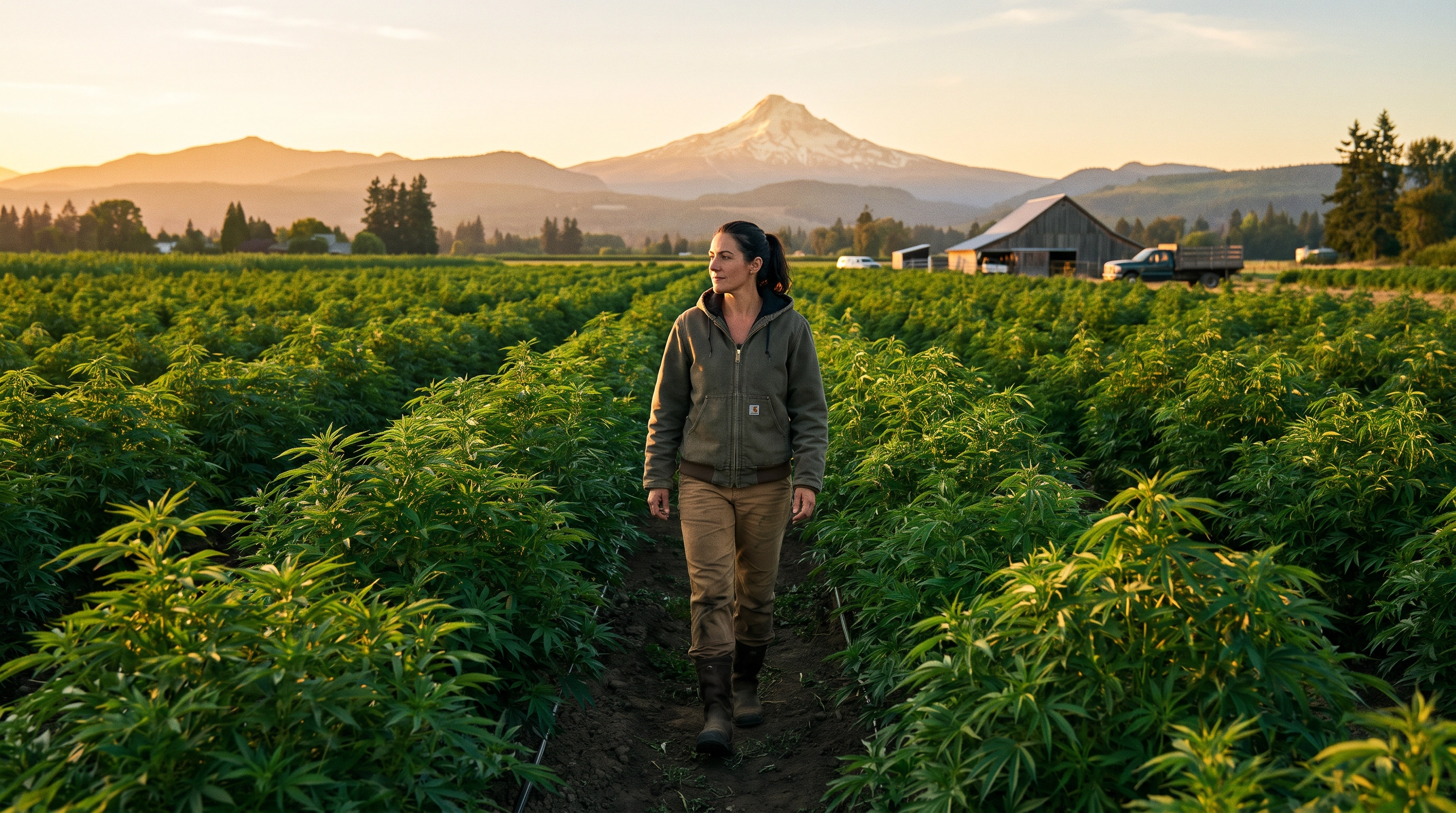
From Seed to Sale: 12 Insurance Risks Facing Hemp, CBD, and Cannabis Businesses in the American West

On November 12, 2026, the federal definition of hemp shifts to a total THC standard. Products with more than 0.3% total THC per container will be reclassified as marijuana under federal law — potentially voiding existing insurance policies. Review your coverage with an agent before this deadline.
The biggest insurance mistake a hemp business can make is simply describing itself as "a hemp company."
A hemp farm, CBD gummy manufacturer, extraction facility, testing laboratory, hempcrete producer, and cannabis dispensary may all work with the same plant — but their operations, regulatory requirements, and insurance risks can be completely different.
For hemp, CBD, and cannabis businesses across Oregon and the American West, effective insurance begins with understanding exactly what the company grows, manufactures, transports, sells, and represents to consumers. This guide walks through 12 critical insurance issues every business in this space should review in 2026.
The Landscape: What Operations This Covers
Hemp and cannabis businesses span an extraordinarily wide range of operations. On the agricultural side, this includes industrial hemp farms, greenhouses, indoor cultivation facilities, nurseries, seed and genetics companies, and harvesting and drying operations. Cannabinoid and consumer product businesses include CBD, CBG, and CBN extract producers, full-spectrum and broad-spectrum product manufacturers, edible and beverage makers, smokable hemp flower and pre-roll operations, vape product companies, and topical and cosmetic manufacturers.
Industrial hemp operations cover an entirely different set of risks: hemp hearts, protein powder, flour, and seed oil producers; textile, clothing, canvas, and rope manufacturers; paper and packaging companies; hempcrete and building material producers; insulation manufacturers; bioplastics and composite material companies; and biofuel, lubricant, paint, and coating operations.
Cannabis businesses — dispensaries, processors, delivery services, and testing laboratories — operate under separate state licensing requirements and generally require specialized carriers and distinct underwriting. Oregon's cannabis insurance requirements are administered through the OLCC, which mandates minimum general liability coverage of $1 million per occurrence and $2 million aggregate for licensed cannabis businesses.
Changing Legal Classification
A product's cannabinoid content, manufacturing method, and packaging can affect whether it legally qualifies as hemp under federal law — and that classification directly affects carrier eligibility and policy exclusions.
Under Section 781 of the federal Continuing Resolution, which takes effect November 12, 2026, the federal definition of hemp shifts to a total THC standard. Products containing more than 0.3% total THC per container will be reclassified as marijuana under federal law, regardless of how they were previously marketed or sold. This affects hemp-derived Delta-8, Delta-9, Delta-10, and other intoxicating cannabinoid products that have operated in a legal gray area since the 2018 Farm Bill.
If your policy was written based on your product being federally legal hemp, and that product is reclassified as marijuana after November 2026, the policy may no longer apply. Review your policy applications and coverage with your agent now — well before the deadline.
"Hot" Hemp Crops
A hemp crop that tests above the permitted THC threshold may be required by state law to be remediated or destroyed. This is one of the most financially devastating events a hemp grower can face — and critically, excessive THC is generally not an insured cause of loss under federal USDA hemp crop insurance.
The USDA Risk Management Agency's Actual Production History (APH) hemp pilot program explicitly excludes mandatory destruction due to THC levels exceeding governing authority limits. That means a grower who loses an entire crop to a hot test has no federal crop insurance backstop for that loss. Market rejection, processor cancellation, and inability to sell hot hemp are also typically excluded from standard policies.
Oregon hemp growers should ask their agent about private market endorsements or surplus lines options that may address hot crop risk. Genetics selection, soil testing, and harvest timing practices that reduce THC accumulation are also risk management tools some insurers consider when underwriting.
Live Plants and Crop Valuation
Standard commercial property insurance may not adequately cover plants growing indoors, outdoors, or in greenhouses. Seeds, seedlings, harvested flower, and finished inventory can each require different valuation methods — and many standard property policies explicitly exclude growing crops or plants.
Indoor cultivation facilities face additional complexity: the value of plants at various stages of growth (clone, vegetative, flowering, harvested) can vary enormously, and the replacement cost of a mature canopy is far higher than the cost of seeds. Greenhouse operations need to confirm whether their policy covers the structure, the growing medium, irrigation systems, and the plants themselves as separate line items.
Hemp growers should work with their agent to confirm that their policy language specifically addresses agricultural property, growing crops, and the valuation method used for plants at each growth stage.
Fire and Explosion
Extraction facilities present some of the most serious fire and explosion risks in the hemp and cannabis industry. Ethanol extraction, butane hash oil (BHO) production, and other solvent-based processes involve flammable and explosive materials that require specialized commercial property coverage and careful attention to policy exclusions.
OSHA specifically identifies fires, explosions, chemical exposure, and electrical hazards as primary risks within cannabis and hemp processing facilities. Standard commercial property policies may exclude or limit coverage for operations involving flammable solvents. Extraction businesses must confirm their carrier is aware of the specific extraction method in use.
Equipment Breakdown and Utility Failure
HVAC systems, irrigation, lighting, extraction machinery, refrigeration units, and environmental controls are essential to hemp and cannabis operations. A mechanical failure or power interruption can destroy an entire crop or halt production even when the building itself remains completely undamaged — and standard property policies do not cover equipment breakdown.
Equipment breakdown coverage (sometimes called boiler and machinery coverage) is a separate policy form that covers the cost of repairing or replacing mechanical and electrical equipment that fails due to internal causes. For hemp and cannabis operations, this coverage is particularly important because the equipment involved — climate control systems, CO2 generators, extraction machines, trimming equipment — is expensive and often has long lead times for replacement parts.
Business interruption coverage tied to equipment breakdown is equally important: the income lost during the period a facility is offline can far exceed the cost of the equipment itself.
Product Liability
Product liability is one of the most significant insurance risks facing CBD and cannabis product manufacturers. Claims can arise from inaccurate potency labeling, unexpected intoxication effects, allergic reactions, contamination, pesticide residue, adverse health effects, inadequate warnings, or products being consumed by children.
The legal exposure is compounded by the fact that CBD and hemp-derived products are sold to consumers who may have no prior experience with cannabinoids and who may be using the products alongside prescription medications. A product that causes an unexpected drug interaction, or that is mislabeled for potency, can generate significant liability exposure.
[General liability insurance](/commercial/general-liability) typically includes products and completed operations coverage, but hemp and cannabis businesses must confirm their policy does not contain a blanket cannabis or controlled substances exclusion. Many standard market carriers include such exclusions — making specialized hemp and cannabis carriers essential.
Product Recall and Contamination
General liability insurance does not ordinarily pay the full cost of withdrawing products from the market, notifying customers, destroying contaminated inventory, testing replacement batches, or rebuilding customer confidence after a contamination event. Dedicated product recall and contamination coverage addresses these costs specifically.
For hemp food products, edibles, beverages, and topicals, the recall exposure is particularly significant. A contamination event — whether from pesticides, heavy metals, microbial contamination, or mislabeled potency — can require a nationwide recall affecting thousands of units across multiple distribution channels. The costs of such a recall can easily exceed the limits of a standard general liability policy.
Labeling and Health Claims
CBD and other cannabis-derived products remain subject to FDA requirements applicable to their product category. Foods, dietary supplements, cosmetics, animal products, and products marketed with medical or health claims each create different regulatory and liability risks.
The FDA has consistently stated that CBD cannot legally be added to food or marketed as a dietary supplement under current federal law — though enforcement has been inconsistent. Products that make disease treatment claims face heightened regulatory scrutiny. Hemp businesses should work with legal counsel to review labeling and marketing claims, and confirm with their agent that their policy covers regulatory defense costs.
Employee Injuries and Occupational Illness
Workers in hemp and cannabis operations may encounter pesticides, solvents, dust, mold, repetitive-motion injuries, machinery hazards, lifting injuries, and respiratory exposures from terpenes and plant matter. Workers' compensation insurance is required for most Oregon employers with one or more employees, and the classification codes used to rate the policy must accurately reflect the actual work being performed.
Workers' compensation classifications for hemp and cannabis operations can be complex. A business that grows hemp, processes it, manufactures consumer products, and operates a retail storefront may have employees in four or five different classification codes — each with different rates. Misclassification is one of the most common and costly workers' compensation errors in this industry.
Theft, Cash, and Transportation
Hemp-derived consumer products and cannabis inventory may attract theft — both from external burglary and from employee dishonesty. Cannabis businesses face an additional layer of exposure because many cannot access traditional banking services, resulting in significant cash on hand that creates both theft and crime coverage needs.
Inventory in transit — whether being shipped from a manufacturer to a distributor, or from a farm to a processor — may not be covered under a standard commercial property policy. Cargo insurance, inland marine coverage, or stock-throughput policies may be needed to protect products while they are being transported.
Commercial auto insurance for delivery vehicles must also specifically address the nature of the cargo being transported. A standard commercial auto policy may not cover a cannabis delivery vehicle, and the driver's personal auto policy almost certainly will not.
Pollution and Environmental Liability
Pesticides, fertilizers, extraction chemicals, wastewater, spills, odors, and contaminated soil from hemp and cannabis operations may not be covered adequately by standard property or liability policies. Most standard commercial general liability policies contain a pollution exclusion that can be interpreted broadly to exclude claims arising from chemical releases, odors, or contaminated runoff.
Pollution liability coverage is a separate policy form that addresses these exposures specifically. For extraction facilities, farms using pesticides or fertilizers, and operations that generate chemical waste, pollution liability coverage is an important component of a complete insurance program.
Cyber and Management Liability
Online retailers, dispensaries, manufacturers, and delivery operations collect customer and payment information that creates cyber liability exposure. A data breach affecting customer records, payment card data, or medical information (for medical cannabis operations) can result in significant notification costs, regulatory fines, and third-party liability claims.
Cyber liability insurance covers the costs of responding to a data breach, including forensic investigation, customer notification, credit monitoring, regulatory defense, and third-party liability. For cannabis businesses that cannot use standard payment processors and rely on point-of-sale systems with stored customer data, this coverage is particularly important.
Management liability — including directors and officers liability, employment practices liability, and crime coverage — addresses claims from investors, employees, and regulators that are not covered by general liability or property policies.
What Does Hemp and Cannabis Insurance Cost in Oregon?
Premiums for hemp, CBD, and cannabis businesses vary significantly based on operation type, revenue, number of employees, product categories, and prior loss history. The table below reflects typical annual premium ranges for Oregon and American West operations in 2026. These are estimates only — your actual premium will depend on your specific operation, carrier, and coverage selections.
| Operation Type | General Liability | Property + Equipment | Workers' Comp | Full Program Estimate |
|---|---|---|---|---|
| Small hemp farm (under 50 acres) | $1,500 – $3,500 | $2,000 – $5,000 | $2,000 – $6,000 | $6,000 – $15,000 |
| CBD product manufacturer (small) | $3,000 – $7,500 | $3,000 – $8,000 | $3,000 – $8,000 | $10,000 – $25,000 |
| Extraction facility | $5,000 – $15,000 | $8,000 – $20,000 | $5,000 – $12,000 | $20,000 – $50,000 |
| Cannabis dispensary (Oregon) | $4,000 – $10,000 | $3,000 – $8,000 | $4,000 – $10,000 | $12,000 – $30,000 |
| Industrial hemp processor | $3,500 – $9,000 | $5,000 – $15,000 | $4,000 – $10,000 | $15,000 – $35,000 |
| Multi-state CBD brand | $8,000 – $25,000 | $10,000 – $30,000 | $6,000 – $15,000 | $25,000 – $75,000 |
Key cost factors for hemp and cannabis businesses include: operation type and product category (extraction facilities and edibles manufacturers pay more than raw hemp farms), annual revenue and inventory value, number of employees and their job classifications, prior loss history, states of operation, and whether the business holds an OLCC license. Because standard market carriers often decline or heavily surcharge hemp and cannabis risks, most businesses in this space are placed through surplus lines markets — where an experienced independent agent's access to specialty carriers makes a significant difference in both price and coverage quality.
The November 2026 federal THC rule change, hot crop exclusions, and product liability gaps are creating real coverage risks for Oregon hemp businesses right now. Get a review from an independent agent who understands this industry.
Independent Insurance Agency Since 1935
Not Sure If You Have the Right Coverage?
Our licensed agents compare 50+ carriers to find you the best coverage at the right price — at no extra cost to you.
Insurance Coverage Checklist for Hemp, CBD, and Cannabis Businesses
Why an Independent Agent Matters for Hemp and Cannabis Insurance
The hemp and cannabis insurance market is highly specialized. Many standard market carriers either exclude cannabis-related operations entirely or write policies with exclusions that effectively void coverage for the most significant risks these businesses face. Finding carriers that will write hemp and cannabis risks — and confirming that the policy language actually covers the operations involved — requires access to the surplus lines market and relationships with specialized program carriers.
Insure Pacific works with businesses across Oregon and the American West to review their operations, identify potential coverage gaps, and explore insurance options built around what they actually grow, manufacture, distribute, and sell. Whether you operate a hemp farm in the Willamette Valley, a CBD extraction facility in Bend, a dispensary in Portland, or an industrial hemp manufacturing operation anywhere in the West, the right coverage program starts with an honest conversation about your specific operations and risks.
This is not a standard business insurance placement. It requires an agent who understands the regulatory environment, the carrier landscape, and the specific risks of your operation — and who will take the time to confirm that your policy actually covers what you think it covers.
Insure Pacific helps hemp farms, CBD manufacturers, extraction facilities, dispensaries, and industrial hemp operations across Oregon and the American West review their coverage and find policies built around their actual operations. No cost, no obligation.
Our Licensed Coverage Area
States highlighted in blue are states where Insure Pacific holds an active insurance license.
Hover to highlight — click a state to visit its insurance page
Our Oregon Office Locations
Hover over a marker to see the office — click to visit their website.
Hover to highlight — click to visit that office's website
Ready to Get Protected?
Talk to a Local Oregon Insurance Expert
Insure Pacific has been serving Oregon families and businesses since 1935. We work with 50+ carriers so you get real options — not just one company's answer.
Related Articles
 Commercial Insurance
Multi-State Workers’ Compensation: Remote Employees, Traveling Crews, and Out-of-State Jobs
Read Article → Commercial Insurance
Import and Export Cargo Insurance: Ocean Freight, Ports, Customs, and Inland Transportation
Read Article → Commercial Insurance
Has Your Business Outgrown Its Insurance? Revenue, Payroll, New Locations, and New Services
Read Article → Commercial Insurance
Buying a Commercial Building: Insurance Questions to Answer Before Closing
Read Article →Get in Touch
Ready to protect what matters most? Contact us today for a no-obligation insurance review. Our experienced agents are here to help you find the right coverage for your needs.


