



Insurance for the Experience Economy: How Adventure, Hospitality, Wellness, Wine, and Events Are Changing Commercial Risk
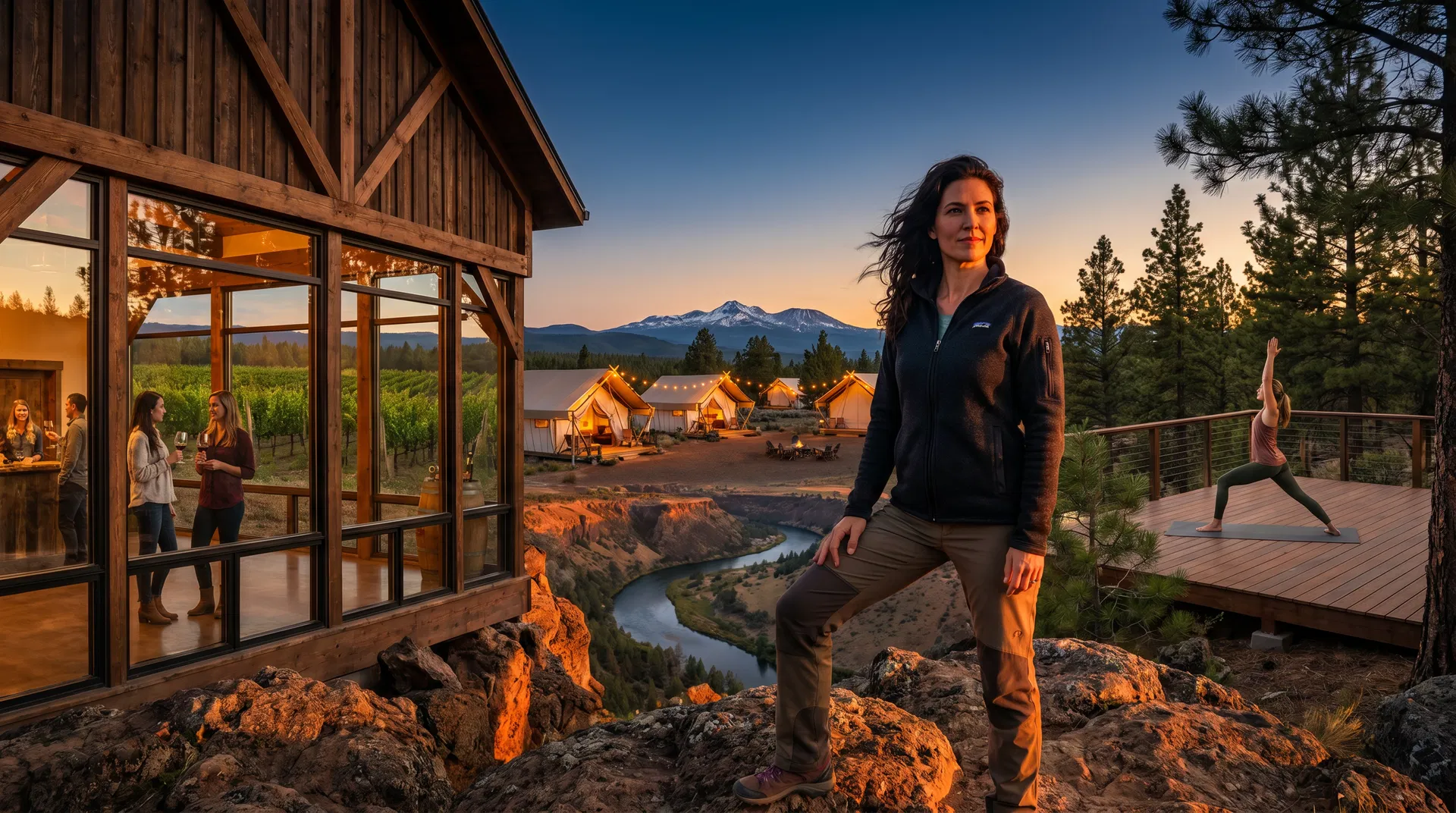
Insurance for the Experience Economy: How Adventure, Hospitality, Wellness, Wine, and Events Are Changing Commercial Risk

Something fundamental has shifted in how Americans spend money. For decades, the dominant consumer aspiration was ownership — a bigger house, a newer car, more stuff. Today, the dominant aspiration is experience. People are spending on adventure, on connection, on stories they can tell. They are booking rafting trips down the Deschutes, reserving glamping tents in the Cascades, attending harvest dinners at Willamette Valley wineries, and flying across the country for a weekend wellness retreat in the Oregon Coast Range.
The global experience economy is now estimated to be worth more than $1 trillion, and the American West — with its public lands, wine country, outdoor culture, and wellness traditions — sits at the center of it. Oregon, in particular, has become a destination for exactly the kinds of businesses that define this economy: adventure outfitters, agritourism operations, yoga retreats, farm-to-table events, winery hospitality, and branded outdoor experiences that blend multiple categories at once.
The problem is that the insurance industry has not always kept pace. The standard commercial policies written for a retail store or a professional services firm were not designed for a business that guides kayak tours in the morning, serves wine at a tasting room in the afternoon, and hosts a farm dinner under the stars at night. Each of those activities carries distinct liability exposures — and when they are combined in a single operation, the risk profile becomes genuinely complex.
The experience economy creates what underwriters call "stacked exposures." A winery that hosts events has liquor liability, event liability, and premises liability all operating simultaneously. A wellness retreat that offers outdoor excursions adds professional liability, participant accident, and guide liability on top of standard hospitality coverage. Standard BOPs were not written for this. Specialty coverage — placed by an independent agent who understands the sector — is what actually protects these businesses.
This post breaks down the five major categories of experience economy business — adventure and outdoor recreation, glamping and outdoor hospitality, wellness and retreat operations, wineries and agritourism, and food and beverage events — and explains what each one actually needs from a commercial insurance program. If you operate in any of these spaces, or if your business is evolving toward them, this is the coverage conversation you need to have.
Adventure Tourism and Outdoor Recreation: Where the Risk Is Highest
Adventure tourism is the fastest-growing segment of the experience economy, and it carries the most acute liability exposure of any category. When your business puts clients in physical environments — rivers, cliffs, trails, backcountry terrain — the potential for serious injury is real, and the legal and financial consequences of an uninsured or underinsured claim can be catastrophic.
Oregon's outdoor recreation sector is enormous. White-water rafting on the Rogue and Deschutes, rock climbing at Smith Rock, kayaking on Crater Lake, zip-line tours in the Coast Range, guided fly-fishing on the Metolius — these businesses collectively serve millions of visitors each year. What many operators do not realize is that a standard general liability policy often excludes or severely limits coverage for "high-hazard" outdoor activities. The policy that covers a retail shop does not automatically cover a guided rappelling operation.
Core Coverage Requirements for Adventure Operators
- • Activity-Specific General Liability: Must explicitly list covered activities — rafting, climbing, zip-lining, hiking tours, kayaking — or claims may be denied
- • Professional Liability / Guide Liability: Covers claims arising from guide negligence, incorrect safety instruction, or failure to assess participant fitness
- • Participant Accident Insurance: Pays medical expenses for injured participants regardless of fault — essential for maintaining client relationships after an incident
- • Inland Marine / Equipment Floater: Covers high-value mobile gear (kayaks, rafts, climbing equipment, bikes) that moves with operations
- • Commercial Auto: Shuttle vans, trailers, and vehicles used to transport clients require commercial — not personal — auto coverage
- • Umbrella / Excess Liability: $2M–$5M excess layer above primary GL is standard for high-risk outdoor operations
Waivers are a critical risk management tool for adventure operators, but they are not a substitute for insurance. Oregon courts have upheld well-drafted waivers in many circumstances, but they can be challenged on grounds of public policy, ambiguous language, or failure to adequately disclose specific risks. An attorney-reviewed waiver combined with proper insurance is the only complete protection.
Our commercial insurance team works with outdoor recreation operators across Oregon to place activity-specific coverage through carriers that specialize in adventure tourism. Standard carriers often decline or heavily exclude this sector — specialty placement is the difference between real coverage and a policy that looks good until you file a claim.
Glamping and Outdoor Hospitality: The Coverage Gap Nobody Talks About
Glamping — the combination of camping and luxury hospitality — has exploded across the American West. Yurt villages, treehouse retreats, safari-tent resorts, and Airstream parks are appearing throughout Oregon's most scenic landscapes, from the Cascades to the high desert to the coast. These operations are genuine hospitality businesses, but they exist in a coverage no-man's-land that standard hotel or campground policies were not designed to address.
The structural challenge is that glamping properties combine multiple exposure categories simultaneously. The physical structures — yurts, treehouses, canvas tents on platforms — may not qualify as "buildings" under standard commercial property definitions, creating gaps in property coverage. The outdoor setting introduces wildfire risk, which is a critical consideration in Central Oregon and the Cascades. If the property serves alcohol, liquor liability applies. If it offers activities — guided hikes, kayaking, horseback riding — adventure tourism liability applies on top of hospitality liability.
Unique Glamping Coverage Considerations
- • Non-Standard Structures: Yurts, treehouses, and canvas tents require specialty property coverage — standard commercial property policies may exclude them
- • Wildfire Exposure: Properties in fire-prone areas of Oregon face carrier restrictions; defensible space documentation and mitigation measures are essential for placement
- • Premises Liability: Guest injuries on uneven terrain, in outdoor hot tubs, or during property activities require robust GL limits
- • Liquor Liability: If wine, beer, or cocktails are served on property, a separate liquor liability policy is required — GL does not cover alcohol-related claims
- • Business Interruption: Seasonal operations face unique BI exposure — a wildfire evacuation or severe weather event during peak season can eliminate an entire year's revenue
Glamping operators in wildfire-prone areas of Oregon face a particularly difficult insurance market. Many standard carriers have restricted or exited the high-risk property market in Central Oregon and the Cascades. As an independent agency working with 50+ carriers, we have access to specialty markets that can write these properties — including admitted and non-admitted options for structures and locations that standard carriers decline. See our wildfire insurance resources for more on how we approach coverage in fire-risk areas.
Does Your Experience Business Have the Right Coverage?
Standard commercial policies leave dangerous gaps for adventure, hospitality, wellness, and event businesses. Let us review your current program and identify what needs to change.
Wellness Retreats, Yoga Studios, and Spa Operations: The Professional Liability Problem
Wellness tourism was valued at $817 billion globally in 2022 and is projected to reach $1.3 trillion by 2025, according to the Global Wellness Institute. Oregon has become a significant destination in this sector, with yoga retreats, meditation centers, spa resorts, sound healing studios, and integrative wellness operations drawing visitors from across the country. The insurance needs of these businesses are genuinely distinct from standard commercial operations — and frequently misunderstood.
The core issue is professional liability. When your business involves physical contact with clients — massage, bodywork, yoga adjustments, fitness instruction — or when you are providing guidance that affects someone's health and wellbeing, you are operating in a professional services context. General liability covers slip-and-fall accidents on your premises. It does not cover a claim that your instructor's adjustment caused a back injury, or that your nutritional guidance contributed to a health problem. That requires professional liability (errors and omissions) coverage.
Essential Coverage for Wellness Operations
- • Professional Liability / E&O: Covers claims arising from instruction, treatment, or guidance — the most commonly missing coverage in wellness businesses
- • Abuse and Molestation Coverage: Required for any business involving physical contact with clients; often excluded from standard GL and must be added separately
- • Third-Party Vendor Verification: If you contract with independent instructors, therapists, or coaches, their professional liability must be verified — their errors can become your liability
- • Participant Accident Insurance: Covers medical expenses for retreat guests injured during activities, regardless of fault
- • Event Cancellation: Retreat businesses that collect deposits months in advance face significant exposure if a cancellation forces refunds — event cancellation coverage protects that revenue
- • Cyber Liability: Wellness businesses collect sensitive health information; a data breach involving client health records carries significant regulatory and legal exposure
Wellness retreat operators who offer outdoor activities — guided hikes, paddleboarding, forest bathing, equine therapy — face the additional layer of adventure tourism liability on top of their wellness professional liability. These stacked exposures require a policy structure that explicitly covers both categories. Our yoga studio and wellness business insurance resources go deeper on the specific coverage needs of this sector.
One area that is frequently overlooked is the distinction between employees and independent contractors. Many wellness businesses use a mix of staff instructors and contracted specialists. The insurance implications are significant — contractors' professional errors may not be covered under your policy unless specifically endorsed, and misclassification of employees as contractors creates workers' compensation exposure. This is a conversation worth having with your agent before your next retreat season begins.
Wineries, Tasting Rooms, and Agritourism: Oregon's Liquor Liability Landscape
Oregon is one of the premier wine-producing states in the country, and the Willamette Valley, Rogue Valley, and Walla Walla AVAs have become major tourism destinations in their own right. Wineries that once focused purely on production have evolved into full hospitality operations — tasting rooms, event venues, farm dinners, harvest festivals, and overnight accommodations. Each layer of hospitality adds a corresponding layer of insurance complexity.
The foundational issue for any Oregon business that serves alcohol is the state's dram shop liability framework. Under Oregon Revised Statute 471.565, licensed alcohol vendors can be held liable for damages caused by intoxicated patrons — including third-party injuries in auto accidents after a guest leaves the property. This is not a theoretical risk. Oregon courts have upheld significant dram shop claims against wineries, restaurants, and event venues. Liquor liability insurance is not optional for any Oregon business that serves alcohol; it is a legal and financial necessity.
Complete Coverage Program for Oregon Wineries
- • Liquor Liability: Separate policy covering dram shop claims, over-service liability, and third-party injuries caused by intoxicated patrons — not included in standard GL
- • Tasting Room / Premises Liability: Guest injuries, property damage, and slip-and-fall claims in the tasting room and on winery grounds
- • Event Liability: Weddings, harvest dinners, concerts, and private events hosted on winery property require event-specific coverage or a blanket event endorsement
- • Agricultural Property: Vineyard equipment, irrigation systems, barrels, tanks, and wine inventory require specialty agricultural property coverage
- • Crop Insurance: Vineyard crops face exposure to frost, hail, wildfire smoke taint, and drought — federal crop insurance programs and private options exist for Oregon vineyards
- • Product Liability: Covers claims arising from wine consumption — contamination, allergic reactions, or labeling issues
Agritourism operations — farms, ranches, and agricultural properties that open to the public for tours, u-pick experiences, farm stays, or educational events — face a similar stacked exposure profile. Oregon's agritourism sector is growing rapidly, and the Oregon Sea Grant program has published guidance on risk management for agritourism operators that is worth reviewing. The key point is that standard farm insurance does not automatically cover public-facing hospitality activities on the property.
Our farm and ranch insurance team works with Oregon agricultural operations that have added agritourism, events, or hospitality components to their business. We also work closely with winery and vineyard operators across the state to structure coverage programs that address the full scope of their operations — from vine to glass to guest.
Running a Winery, Retreat, or Experience Business in Oregon?
We specialize in placing coverage for Oregon's experience economy businesses — including operations that standard carriers decline. Let us build a program that actually covers what you do.
Food Events, Pop-Ups, and Farmers Markets: The Temporary Venue Problem
The food and beverage event sector has become one of the most dynamic segments of the experience economy. Farm-to-table dinners in the fields, pop-up restaurants in warehouse spaces, food truck festivals, farmers market vendor operations, harvest dinners at wineries, and ticketed culinary events have created an entirely new category of food business — one that operates in temporary or non-traditional venues and often combines food service with entertainment, alcohol, and outdoor settings.
The insurance challenge for food event operators is that their exposure profile changes with every event. A fixed-location restaurant has a stable, predictable risk profile that a standard commercial policy can address. A chef who hosts six pop-up dinners per year in six different locations — a barn, a rooftop, a vineyard, a forest clearing — has a different exposure at each event, and a policy written for a fixed location may not follow them to those venues.
Coverage Essentials for Food Event Operators
- • Event Liability / Special Event Insurance: Per-event or blanket coverage that follows the operation to each venue — most Oregon venues require $1M–$2M minimum
- • Product Liability / Food Contamination: Covers claims arising from foodborne illness, allergic reactions, or contamination — critical for any food service operation
- • Liquor Liability: If alcohol is served at events, a separate liquor liability policy or endorsement is required — even for private events
- • Inland Marine / Equipment Floater: Covers portable cooking equipment, generators, tents, and other gear that moves between event locations
- • Event Cancellation: Covers revenue loss from weather, venue cancellation, or other covered causes — particularly valuable for ticketed events with advance sales
- • Vendor Liability: Farmers market vendors need their own GL coverage — the market's policy covers the market, not individual vendors
Our complete guide to event insurance in Oregon covers the specific requirements for different event types, including the minimum coverage limits required by Oregon venues and municipalities. For food truck operators and mobile food businesses, our food truck and street food insurance guide addresses the specific coverage structure for mobile operations.
The Multi-Exposure Business: When You Do All of the Above
The most interesting — and most complex — businesses in the experience economy are the ones that combine multiple categories. A Central Oregon property that offers glamping accommodations, guided river trips, a farm-to-table dinner series, a tasting room featuring local wines, and a weekend yoga retreat program is not unusual. In fact, this kind of integrated experience business is increasingly the model that destination operators are pursuing, because it maximizes revenue per guest and creates the kind of immersive, multi-day experience that drives premium pricing and repeat visits.
From an insurance perspective, this business has stacked exposures that require a carefully structured program — not a single policy, but a coordinated set of coverages that address each activity type without gaps or overlaps. The worst outcome is discovering, after a claim, that the activity that caused the loss was not explicitly covered under any of the policies in force.
The Experience Economy Coverage Checklist
For businesses combining multiple experience categories, verify that your program addresses each of the following:
The independent agent model is particularly well-suited to experience economy businesses because the coverage needs do not fit neatly into any single carrier's standard product. As an independent agency working with more than 50 carriers, we can place different components of your program with the carriers best suited to each exposure — a specialty outdoor recreation carrier for your adventure activities, an agricultural carrier for your farm and vineyard property, a hospitality carrier for your accommodations, and a specialty events carrier for your event program. The result is a program that actually covers what you do.
Our post on when your business outgrows its insurance covers the broader triggers for a coverage review — many of which apply directly to experience economy businesses that have added new activities, venues, or revenue streams since their last policy review. And our independent agent advantage post explains why the carrier access of an independent agency matters so much for complex, multi-exposure operations.
Non-Profits, Community Events, and the Experience Economy
Non-profit organizations are significant participants in the experience economy — hosting fundraising galas, outdoor festivals, community events, wellness programs, and educational experiences that serve both their mission and their revenue needs. The insurance needs of non-profits that host events are distinct from both commercial event operators and standard non-profit liability programs.
A non-profit that hosts a 500-person outdoor fundraiser with a beer and wine garden, a live music stage, food vendors, and a silent auction has exposures that span event liability, liquor liability, vendor liability, and entertainment liability — none of which are automatically covered under a standard non-profit general liability policy. The organization's directors and officers liability (D&O) coverage, which protects board members from governance-related claims, does not extend to event operations.
Our non-profits and events insurance page covers the specific coverage needs of Oregon non-profits that host events, including the minimum coverage requirements for Oregon venues and municipalities, and how to structure a program that protects both the organization and its event participants. For organizations that host recurring events, a blanket event policy is often more cost-effective than purchasing individual event coverage for each occurrence.
The Bottom Line: Experience Economy Businesses Need Experience Economy Insurance
The experience economy is not a niche. It is the direction that consumer spending is moving, and Oregon is one of the states best positioned to benefit from it. The businesses that will thrive in this environment are the ones that understand their risk profile as clearly as they understand their guest experience — and that have insurance programs built to match.
Standard commercial policies were not written for businesses that guide kayak tours, serve wine at sunset, host yoga retreats in the forest, and run farm dinners under the stars. The gap between what a standard policy covers and what an experience economy business actually does is where the most expensive claims live — and where the most preventable financial disasters happen.
Insure Pacific has been working with Oregon businesses since 1935. We have watched the state's economy evolve from timber and agriculture through manufacturing and technology to the experience-driven economy of today. We understand the specific risk profile of the businesses that define modern Oregon — and we have the carrier relationships and specialty market access to build programs that actually protect them.
If you operate an adventure tourism business, a glamping property, a wellness retreat, a winery, a food event operation, or any business that combines multiple experience categories, we would welcome the opportunity to review your current coverage and identify what needs to change. The conversation costs nothing. The gap it closes could save your business.
Insure Pacific — Oregon's Experience Economy Insurance Specialists
Bend · Prineville · Brookings · Serving Oregon and the Western United States
We work with adventure operators, glamping properties, wellness retreats, wineries, agritourism businesses, and event operators across Oregon. 50+ carrier relationships. Specialty market access. Real coverage for real experience businesses.
Our Licensed Coverage Area
States highlighted in blue are states where Insure Pacific holds an active insurance license.
Hover to highlight — click a state to visit its insurance page
Our Oregon Office Locations
Hover over a marker to see the office — click to visit their website.
Hover to highlight — click to visit that office's website
Ready to Get Protected?
Talk to a Local Oregon Insurance Expert
Insure Pacific has been serving Oregon families and businesses since 1935. We work with 50+ carriers so you get real options — not just one company's answer.
Related Articles
 Commercial Insurance
Has Your Business Outgrown Its Insurance? Revenue, Payroll, New Locations, and New Services
Read Article → Commercial Insurance
Buying a Commercial Building: Insurance Questions to Answer Before Closing
Read Article → Commercial Insurance
Non-Emergency Medical Transportation Insurance: Passenger Injuries, Wheelchair Lifts, Driver Screening, Contracts & Commercial Auto Limits
Read Article → Commercial Insurance
General Contractor Insurance and Subcontractor Risk: Certificates, Additional Insured Status, Waivers of Subrogation, and Indemnity
Read Article →Get in Touch
Ready to protect what matters most? Contact us today for a no-obligation insurance review. Our experienced agents are here to help you find the right coverage for your needs.


