



Pickleball and Padel Club Insurance: Court Injuries, Leagues, Instructors, Alcohol, and Facility Liability
Pickleball and Padel Club Insurance: Court Injuries, Leagues, Instructors, Alcohol, and Facility Liability

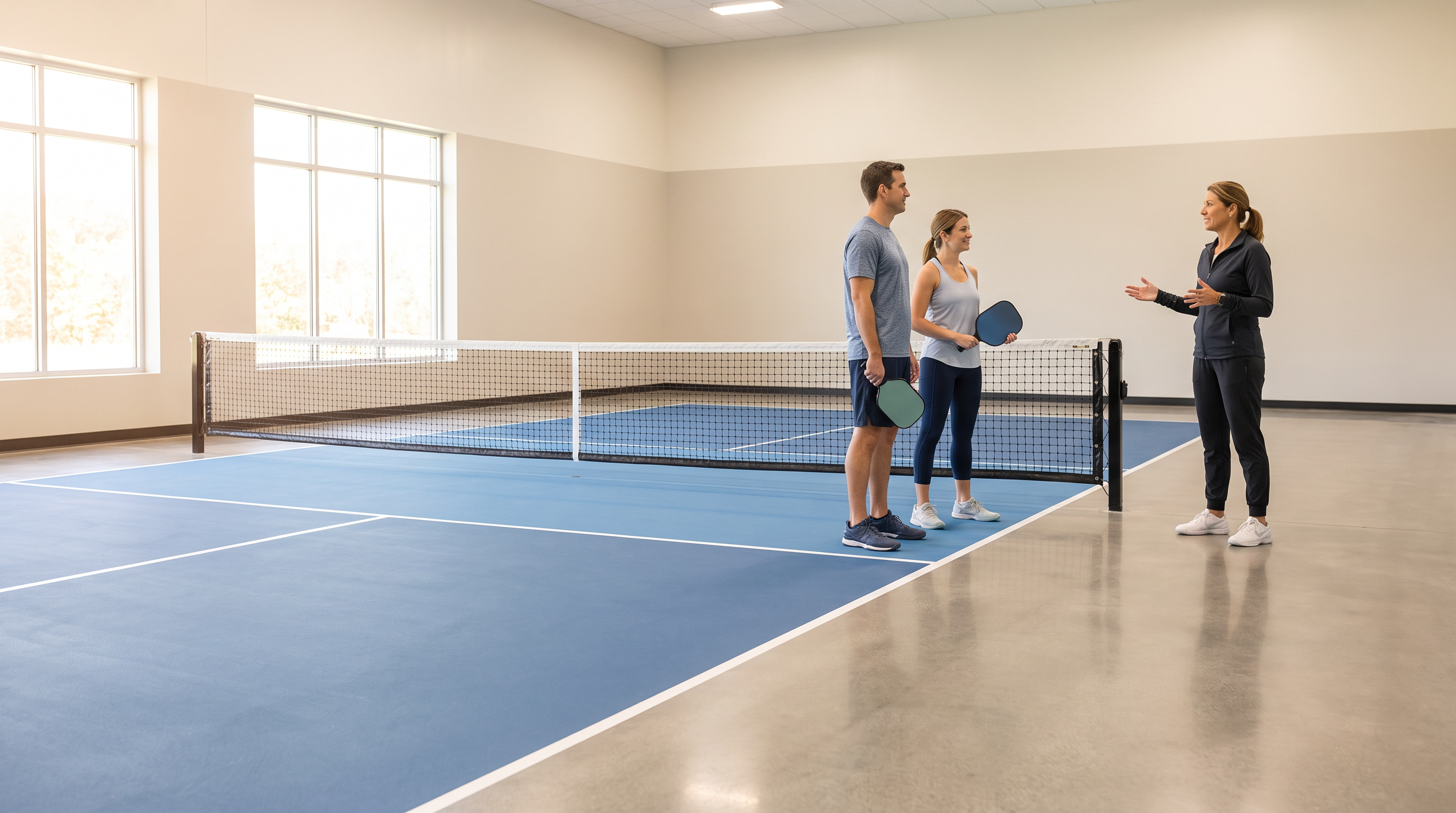
A pickleball or padel club is not simply a group of courts. A modern operation may combine memberships, drop-in play, lessons, leagues, youth clinics, tournaments, food or beverage service, pro-shop sales, vendors, employees, customer data, installed equipment and a building that needs to be open when players expect it. Each activity can change the insurance questions an operator should bring to a broker.
The useful starting point is not, “What is the one policy for pickleball?” It is, “What does our club actually do, who does it for us, and what could go wrong?” A club that leases two indoor courts has a different exposure profile than a multi-location padel facility with glass walls, paid instructors, a bar, a tournament calendar and an online booking system. This guide is educational information, not a coverage determination, legal advice, safety certification or substitute for the issued policy. Actual protection depends on the application, declarations, endorsements, exclusions, definitions, limits, retentions, contracts, facts and applicable law.
For a starting point, compare the club’s real operation with the scope of its sports and recreation business insurance discussion. Then build an inventory of each location, activity, participant type, instructor relationship, event, vendor, alcohol plan, property item and technology system. That operational map makes the insurance conversation much more useful than a generic request for “court coverage.”
The quick answer: insurance and operating controls have different jobs
Pickleball and padel clubs should review coverage and operating controls together. A complete conversation may include third-party injury and property-damage allegations, participant accident medical benefits, instructor services, commercial property, business income, alcohol, events, youth activities, cyber risk and workers compensation. Those are coverage questions. Court inspection, maintenance, staffing, waivers, contracts, emergency planning, permits, supervision and incident documentation are operating controls. One does not replace the other.
A policy may respond to a covered allegation or loss, subject to its terms. It does not inspect a court, obtain an alcohol permit, make an instructor agreement enforceable, certify a glass installation, train staff, keep a player safe or guarantee that a claim will be paid. Likewise, a signed waiver, a sanctioning logo or a certificate of insurance is not proof that the club has the required coverage for a particular activity.
| Club activity or asset | The insurance question to raise | The control that still matters |
|---|---|---|
| Open court play and leagues | Could the liability program address a covered participant or visitor injury allegation? | Court inspections, emergency response, incident reports and clear rules. |
| Classes and paid instruction | Are instructor services, entity status and professional-services allegations contemplated? | Credential review, lesson plans, supervision, contracts and reporting procedures. |
| Courts, glass, lighting and HVAC | Is the item covered property, and what causes of loss, valuation and deductible apply? | Maintenance, prompt shutdown of damaged areas, repair records and reopening approval. |
| Tournaments and vendors | What does the contract require, and who must be an insured or additional insured? | Written agreements, permit review, COI/endorsement verification and a practiced event plan. |
| Alcohol service | Does the club’s particular alcohol activity create a liquor-liability or licensing question? | Service rules, trained people, ID checks, incident escalation and transportation planning. |
| Booking, POS and customer systems | What privacy, network-security, fraud and interruption terms apply? | Access control, MFA, vendor review, backups and an incident-response plan. |
Start with a club profile, not an insurance label
An insurer and broker need an accurate description of the facility. Before seeking terms, the owner or manager should be able to explain whether the club owns or leases the location; how many indoor and outdoor courts it operates; whether padel walls, fencing, lighting and scoreboards are owned or installed improvements; who uses the facility; what revenue comes from memberships, guests, leagues, instruction, events, retail or alcohol; and which people are employees, independent contractors, volunteers or vendors.
The profile should also identify what changes after ordinary court play ends. Do instructors sell lessons through the club? Does the club schedule youth camps? Does it host a sanctioned tournament, sponsor activation, fundraiser, food truck or beer-and-wine social? Does it accept cash, card payments or saved payment credentials? Does it use smart locks, door codes, cameras, a booking platform, point-of-sale equipment, Wi-Fi and member-management software? Each answer can affect underwriting, contract review and loss-control planning.
An operator should also identify the legal entity that signs leases and contracts, the legal entity that employs staff, and the legal entity that markets the program. A policy issued to one entity may not automatically solve questions for every affiliate, landlord, instructor, tournament organizer or sponsor. Insured status must be confirmed in the actual policy and endorsements; it should never be assumed from a website, a certificate or a handshake.
Court injuries: prepare the incident pathway before someone gets hurt
Court sports can produce falls, collisions, eye injuries, heat-related concerns, overuse injuries and medical emergencies. USA Pickleball’s Health and Safety Hub emphasizes practical player-safety measures such as court awareness, warming up, balance work, suitable shoes, eye protection, hydration and cooling down. These are sensible prevention practices. They are not insurance replacements and they do not determine legal liability.
When an incident occurs, the club’s first job is to protect people. Call emergency services when appropriate, provide only the aid the club is trained and equipped to provide, and follow the facility’s emergency plan. A manager should then preserve facts without announcing a conclusion about fault or promising payment. Record the date and time, court and activity, observable court and equipment conditions, people present, witnesses, immediate steps, photos or video preserved, and the person who escalated the report. Keep the report factual: “player reported slipping near the baseline” is more useful than a conclusion about why the incident occurred.
A commercial general liability insurance review is often where a club begins for covered third-party bodily-injury or property-damage allegations. But policy language controls. The insurer will need to understand the actual activity, the insureds, the court condition, the incident facts, prior knowledge, reporting timing and policy terms. General liability is not the same thing as participant accident medical benefits, a property policy or a waiver.
Participant accident, liability and waivers each do something different
A participant accident form, when purchased and applicable, may offer medical benefits for defined participants during defined activities. It can have its own enrollment rules, benefit schedule, deductible, treatment period, exclusions and primary-or-excess structure. It is not a general liability form. A club should ask who is included: members, guests, volunteers, employees, clinic attendees, league players, tournament entrants or youth participants. It should also ask what reporting procedure and medical documentation the policy requires.
General liability, by contrast, is commonly associated with covered allegations of third-party bodily injury or property damage. One player’s medical bill does not automatically tell the club whether liability exists or whether the policy responds. The circumstances and the wording decide that question.
A waiver is one possible risk-transfer tool. It should not be presented as an all-purpose liability shield. Its effect can depend on the wording, how it was presented and accepted, the activity, the participant’s age, local law, public-policy considerations and statutory duties. A waiver does not correct a hazardous court, replace emergency planning or eliminate a club’s need to report a serious incident. Clubs should have qualified local counsel review their forms, especially electronic acceptance, minors, guardian signatures and the relationship between a membership agreement, lesson agreement and tournament registration.
Everyday readiness deserves a documented owner
A practical court-safety program does not need to be complicated, but it needs to be real. Assign a person or role to complete opening inspections, identify hazards, remove a court from use, notify a manager, coordinate repairs and authorize reopening. The checklist should match the facility. It can include playing surface, markings, net posts, gates, glass, fencing, lighting, exits, walkways, seating, drainage, ball machines, scoreboards, HVAC, electrical equipment, first-aid supplies and emergency contact information.
The American Heart Association’s sports-facility cardiac emergency-response materials support a written, practiced emergency pathway with clear roles. USA Pickleball’s event guidance also identifies first-aid, AED/emergency planning, volunteer roles and serious-injury reporting as important event-planning topics. Those sources do not establish a universal legal or insurance requirement for every club. They illustrate why a busy facility should decide, in advance, who calls for help, who meets responders, who directs participants, who documents the facts and who has authority to close or reopen a court.
Facility liability lives in the details between claims
A sport facility’s physical risks are broader than the playing surface. For an indoor pickleball club, claims can arise from a wet entryway, glare, uneven flooring, loose net hardware, damaged fencing, a poorly placed bench, a ball machine, a dropped ceiling item, an HVAC issue, a blocked exit or a maintenance contractor’s unfinished work. Padel facilities add their own design and maintenance questions around glass, doors, fencing, lighting, circulation and manufacturer specifications.
USA Pickleball offers court-construction guidance, while the International Padel Federation publishes technical rules and facility concepts. Neither source should be treated as the complete building, fire, electrical, accessibility or local-code standard for a specific club. The actual facility still needs appropriate local, professional and manufacturer review. A club should keep records of installation documents, maintenance schedules, inspections, service tickets, repairs, incident reports and any decision to isolate a court.
Commercial property coverage commonly becomes part of the conversation for building contents, equipment and certain improvements. Whether a specific installed court component, sign, glass panel, light system, fence, leased improvement or business personal property is insured—and for what causes of loss—depends on the form, valuation, deductible, policy limits and endorsements. Review the facility’s schedule, property values and lease requirements with commercial property insurance in mind, rather than assuming a landlord policy protects every tenant-installed item.
Property loss also produces an operating problem. If a broken glass panel, water damage, electrical failure or court closure prevents play, the club can still have payroll, rent, loan, membership, vendor and communication obligations. A business-income or extra-expense discussion should focus on the policy’s trigger, waiting period, covered cause of loss, restoration period, exclusions and limits. Standard coverage is not a promise that every closure, utility disruption, cyber outage, vendor issue or cancellation is covered.
Equipment failures require their own underwriting discussion
Courts increasingly rely on powered assets: lighting, ventilation, HVAC, dehumidification, point-of-sale hardware, access-control systems, scoreboards, audio equipment, ball machines and networked devices. Electrical or mechanical breakdown may not be treated the same as a fire, wind or water loss. Wear, tear, deferred maintenance and some breakdown causes may be excluded or limited.
Tell the broker which equipment controls revenue or safe operations. Ask how the policy treats electrical arcing, mechanical failure, a damaged compressor, a failed access system, spoiled inventory, resulting business income and temporary operating costs. The goal is not to assume a policy pays for every repair. It is to understand the gap before a court is closed on a peak weekend.
Paid instructors, contractors and youth programs change the conversation
A club may host independent instructors, employ coaches, sell lesson packages itself, or do all three. Those details matter because an allegation about court conditions is not the same as an allegation about professional instruction, coaching advice, a lesson plan, supervision or failure to communicate a material limitation. The club should disclose who schedules lessons, who collects payment, who markets the instructor, who sets the rules, who supervises the program and who handles a complaint.
A professional liability insurance conversation can be relevant where services, advice, instruction or professional errors are part of the operation. It is distinct from general liability. The form must be checked to see whether the club’s actual sport-instruction services and the relevant individuals are contemplated. A coach’s own policy, credential, certificate or contract does not automatically add the club as an insured or protect the club from an allegation tied to the club’s own actions.
Written instructor agreements should identify responsibilities for instruction, credentials, screening, insurance, incident reporting, access, participant communications, use of club branding and who may make commitments to players. The club should preserve the actual insurance documents and endorsements it relies upon, not simply a spreadsheet showing that a certificate was received.
For youth programs, safeguarding is an operational issue before it is an insurance question. The U.S. Center for SafeSport’s Minor Athlete Abuse Prevention Policies provide planning concepts for youth-facing organizations, including observable-and-interruptible interactions, individual meetings, communications, transportation, changing spaces and lodging. These policies are mandatory within the U.S. Olympic and Paralympic Movement; they are not automatically mandatory for every private pickleball or padel club. Local law, affiliation and the club’s facts still matter.
Youth clubs should establish a written supervision and reporting process, determine which adults have regular access to minors, clarify communication rules, restrict private one-on-one situations where appropriate, use consistent screening and training procedures, and seek qualified legal advice about mandatory reporting and state-specific requirements. An abuse and molestation coverage review may be appropriate when the operation includes youth participation, but no article can tell a club that a particular claim will be covered. Ask about entity and individual insureds, negligent hiring or supervision allegations, defense costs, reporting requirements, exclusions, sublimits and claims-made terms.
Employees and contractors should not be classified by habit
A club may use front-desk staff, maintenance workers, event crew, coaches, cleaners, food-service workers and independent instructors. The workers-compensation question is separate from a customer injury claim. The U.S. Department of Labor directs private-company and state/local workers to the applicable state workers-compensation system, and requirements vary by state, classification, employment arrangement and other factors.
Review payroll, job duties, state of operation, contractor agreements and certificates with workers compensation insurance in mind. Do not decide worker status based on the title “contractor” alone. A club should obtain appropriate legal, payroll and insurance guidance for the work relationship it actually has.
Leagues, tournaments, vendors and certificates: read the contract, not just the COI
Leagues and tournaments introduce more people, more contracts and more moments when the club is not the only organizer in the room. The event may involve a sanctioning body, a host venue, a tournament director, sponsor, food vendor, beverage provider, equipment vendor, temporary contractor, volunteer team and a municipal or school-facility requirement. A club needs to identify the event owner, the site controller and the parties that are contractually responsible for particular tasks.
USA Pickleball explains that sanctioned tournaments can involve specific insurance and accident-benefit arrangements, and its event materials tell organizers to request a certificate of insurance in advance. That does not make a sanction, registration or event guide proof that a particular club, event, date, venue, activity or vendor is insured. Confirm actual eligibility, insured parties, dates, limits, exclusions, endorsements, reporting conditions and the scope of the issued policy for the real event.
A certificate of insurance is evidence that coverage was in force when the certificate was issued. It is not the full policy and, by itself, does not grant a certificate holder additional-insured rights. Oregon State University’s risk-management guidance makes that distinction clear. If a club needs additional-insured, primary-and-noncontributory, waiver-of-subrogation or other contractual wording, it should ask for the applicable insurer-issued endorsement and have qualified counsel and insurance advisers review the requirement before assuming it has been met.
A practical pre-event file might include the signed venue agreement, sanction or organizer agreement, vendor agreements, current certificates and endorsements, permits, event map, emergency plan, staff/volunteer roster, food and alcohol arrangements, first-aid/AED plan, weather plan, incident-reporting process and the right broker/carrier contacts. The file should also state who has authority to delay play, close a court, call emergency services, cancel an event or communicate with participants.
Alcohol at leagues and events: treat Oregon rules as Oregon-specific
Adding beer, wine or other alcohol to a club social, league night or tournament can change both operations and insurance questions. A club should distinguish its particular facts: Is alcohol sold? Is it included with admission, a required donation or a package? Is the club licensed? Who serves it? Is service on the club’s premises, an outdoor temporary area or a third-party venue? Are food, security, transportation and age-verification procedures in place?
Oregon OLCC rules may apply to particular alcohol structures. For example, its special-event guidance addresses events where alcohol is sold or is available in connection with certain required payments. Its license pages also set out requirements for specific licensed settings. In one Oregon license context, OLCC lists proof of at least $300,000 in liquor-liability coverage. That is a license-specific proof requirement in the cited context—not a universal insurance recommendation and not evidence that $300,000 is sufficient for every club or event.
The coverage conversation is likewise fact-specific. Liquor liability is commonly discussed for businesses that sell, serve, distribute, manufacture or otherwise supply alcohol. Host-liquor exposure may be a different discussion when a business is not in the alcohol business. General liability may contain liquor-related exclusions for a business that profits from alcohol. The club should provide the complete service plan to its broker before promoting the event, then verify the applicable licensing and service requirements with OLCC, local authorities and qualified advisers.
Training and written controls still matter. Oregon rules and responsible-service guidance focus on issues such as checking identification, not serving minors or visibly intoxicated people, keeping alcohol in the authorized area, escalation for fights or illegal activity, and preventing staff from drinking while on duty. Offer nonalcoholic options and plan for safe transportation. Insurance does not make an unsafe alcohol plan safe.
If alcohol is part of the club’s model, discuss the facts before the first sale or event under a broader business owners policy and liability review. The club may also need a separate liquor-liability conversation, a special-event discussion, higher limits or different contractual requirements. Policy forms and the actual alcohol operation decide which questions matter.
Independent Insurance Agency Since 1935
Not Sure If You Have the Right Coverage?
Our licensed agents compare 50+ carriers to find you the best coverage at the right price — at no extra cost to you.
Booking systems, payment data and cyber risk can close a club without a broken court
A club may hold names, email addresses, memberships, signed waivers, payment tokens, booking history, staff records, door codes, camera information and perhaps health or accommodation information. That data can appear in booking platforms, point-of-sale systems, smartphones, spreadsheets, email inboxes, accounting tools, access-control systems and vendor portals. A single compromised administrator account can create a customer-service, privacy, fraud and operational outage at the same time.
The Federal Trade Commission’s small-business cybersecurity guidance follows a simple progression: know what information you have, keep only what you need, protect it, dispose of it safely and prepare for an incident. For a club, that can mean unique accounts, multifactor authentication, role-based access, prompt removal of former staff and instructors, secure payment-device procedures, backup and patching practices, a separate guest network where appropriate, vendor due diligence and a written escalation path for suspicious refunds, payment changes or ransomware.
A cyber liability insurance review can address whether the club’s program contemplates its booking system, point-of-sale data, privacy incident response, cyber extortion, fraudulent transfer concerns and cyber-related business interruption. The actual form may have its own security, retention, notice, waiting-period, sublimit and vendor conditions. Cyber coverage does not replace PCI obligations, breach-notice duties, security controls or a practiced incident plan.
The club should test a weekend scenario: the booking system is unavailable, a front-desk employee receives a fake refund instruction, a manager’s account is compromised, or the access-control system stops working two hours before a league. Who makes the decision? What information is preserved? How are players notified? Which accounts are disabled? Who calls the broker or carrier? A tested plan can reduce confusion even though it cannot guarantee a claim result.
Property, contracts and limits should fit the real operation
A growing club can quickly outgrow a generic policy application. An owned building, a leased warehouse, tenant-installed courts, glass walls, expensive lighting, sports equipment, pro-shop inventory and membership revenue deserve a current property and liability review. The lease may require insurance limits, a waiver of subrogation, additional-insured status, particular property responsibilities or an indemnity provision that reaches farther than the club expects.
Before signing a new lease, event agreement, vendor agreement or sponsorship agreement, bring the contract to the broker and qualified counsel. Ask who is agreeing to indemnify whom, whether the club is accepting responsibility for another party’s negligence, whether required endorsements are available, and how the agreement interacts with exclusions and limits. A contract can create obligations, but it cannot create insurance coverage that was not purchased.
Consider the limits conversation too. A crowded tournament, a multi-court facility, a youth program, alcohol service, a high-value property improvement or a significant contract can change the severity question. A commercial umbrella insurance review can explore added liability capacity over scheduled underlying policies. It does not automatically expand every form of coverage or turn E&O, cyber, property or participant accident coverage into umbrella coverage. The underlying policies and umbrella terms must be read together.
A renewal checklist for pickleball and padel club operators
Use this checklist before buying coverage, renewing a program, adding courts, opening a new location or signing an event agreement:
1. List every site and identify whether it is owned, leased, shared, indoor or outdoor.
2. Inventory courts, glass, fencing, lighting, scoreboards, ball machines, HVAC, access systems, POS hardware, retail stock and installed improvements.
3. Document revenue sources: memberships, guests, lessons, leagues, tournaments, retail, food, alcohol, sponsorships and rentals.
4. Identify every participant type: member, guest, player, youth participant, volunteer, instructor, employee, contractor, vendor and spectator.
5. Gather leases, instructor agreements, vendor agreements, tournament/sanction contracts, sponsor agreements and current certificates/endorsements.
6. Review opening inspections, maintenance logs, court-closure authority, emergency actions, injury reports, first-aid/AED planning and reopening steps.
7. Map youth-program safeguards, communication channels, supervision, screening and reporting procedures where youth activities are offered.
8. Describe every alcohol activity accurately, then confirm current licensing and service requirements for each Oregon event or location.
9. Map booking, access-control, POS and payment systems; test MFA, access removal, backups, incident escalation and refund/payment-change controls.
10. Ask the broker to compare general liability, participant accident, professional liability, property, equipment breakdown, workers compensation, cyber, liquor liability, business income and umbrella questions with the club’s actual operations.
Planning a pickleball or padel program, facility or event? Contact Insure Pacific with a non-confidential overview of your courts, lease, instruction, leagues, youth activities, vendors, alcohol plans, property, systems and biggest concerns. We can help start a tailored insurance conversation. The quote, phone and text options on this page are available when you are ready.
Frequently asked questions
Does general liability insurance cover a pickleball injury?
It may address a covered third-party bodily-injury allegation, but the policy language, endorsements, exclusions, limits, insured status, facts and applicable law control. It is not a substitute for court inspection, emergency response, incident documentation or prompt notice under the policy.
Is participant accident insurance the same as liability insurance?
No. Participant accident coverage may offer medical benefits for defined people during defined activities, often with its own deductibles, limits, exclusions and primary-or-excess structure. It is not a general liability policy. Confirm who qualifies, what expenses are eligible and how an incident must be reported.
Does a waiver protect a pickleball or padel club from every claim?
No. A waiver is one potential risk-transfer tool. Its effect can depend on drafting, acceptance, participant age, the activity, local law and other facts. It does not eliminate a club’s duty to manage its facility, respond to emergencies or comply with applicable requirements. Seek qualified local legal advice for the club’s forms.
Is a certificate of insurance enough to make a vendor or venue an additional insured?
No. A certificate is evidence that insurance was in force when it was issued. It does not itself grant additional-insured status or change a policy’s terms. Additional-insured status is typically established through insurer-issued policy wording or an endorsement. Verify the actual endorsement and the contract requirement.
Do Oregon pickleball clubs need liquor liability insurance?
It depends on the club’s alcohol structure, license or permit, location, policy terms and other facts. Oregon-specific OLCC requirements can apply when alcohol is sold or offered in connection with certain payments. Do not use a general online rule or a license-specific minimum as a universal answer; discuss the actual event with the broker and confirm licensing requirements with OLCC and local authorities.
When should a club notify its broker or carrier?
Follow the reporting language in the issued policy. A serious injury, written demand, property loss, data incident, allegation involving a coach or youth program, alcohol-related incident, vendor dispute or event circumstance may require prompt escalation. Some policies are claims-made and can have important notice rules. Early reporting is not an admission of fault.
Sources and further reading
*This article is general educational information, not legal, safety, licensing, employment, cybersecurity or insurance coverage advice. Coverage availability and claim outcomes depend on the actual policy, endorsements, exclusions, limits, retentions, application, contracts, jurisdiction and facts. Clubs and operators should obtain qualified legal, regulatory, safety and insurance advice for their specific operations.*
Our Licensed Coverage Area
States highlighted in blue are states where Insure Pacific holds an active insurance license.
Hover to highlight — click a state to visit its insurance page
Our Oregon Office Locations
Hover over a marker to see the office — click to visit their website.
Hover to highlight — click to visit that office's website
Ready to Get Protected?
Talk to a Local Oregon Insurance Expert
Insure Pacific has been serving Oregon families and businesses since 1935. We work with 50+ carriers so you get real options — not just one company's answer.
Related Articles
 Commercial Insurance
Import and Export Cargo Insurance: Ocean Freight, Ports, Customs, and Inland Transportation
Read Article → Commercial Insurance
Has Your Business Outgrown Its Insurance? Revenue, Payroll, New Locations, and New Services
Read Article → Commercial Insurance
Buying a Commercial Building: Insurance Questions to Answer Before Closing
Read Article → Commercial Insurance
Non-Emergency Medical Transportation Insurance: Passenger Injuries, Wheelchair Lifts, Driver Screening, Contracts & Commercial Auto Limits
Read Article →Get in Touch
Ready to protect what matters most? Contact us today for a no-obligation insurance review. Our experienced agents are here to help you find the right coverage for your needs.


