



Restaurant and Food Service Insurance in Oregon: What Every Owner Needs Before Opening Day
Restaurant and Food Service Insurance in Oregon: What Every Owner Needs Before Opening Day

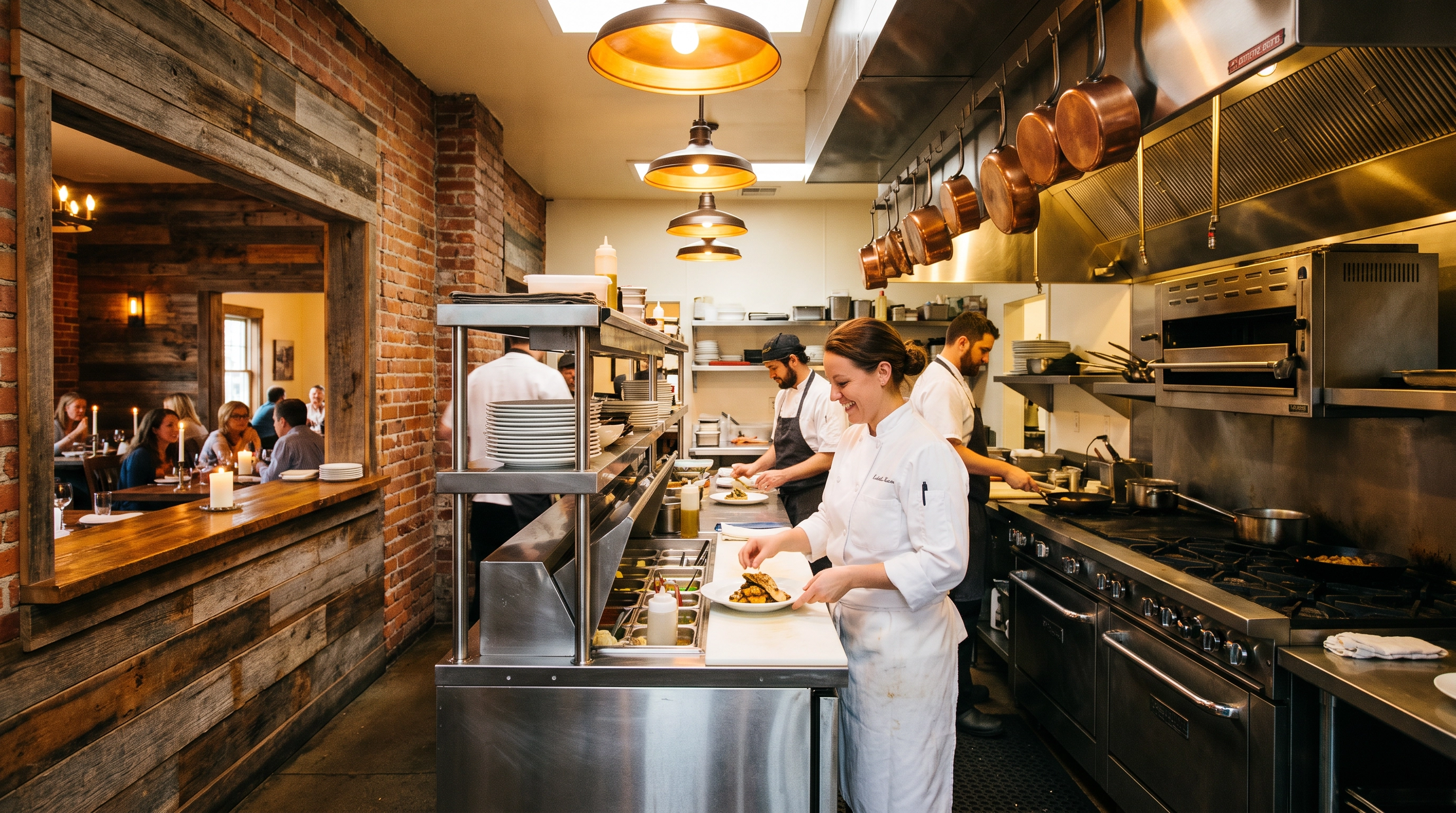
Opening a restaurant is one of the most exciting — and financially complex — things you can do in business. Between the commercial kitchen equipment, the staff, the customers, the OLCC license, and the lease, there are a dozen ways something can go wrong on any given day. The right insurance program doesn't eliminate that risk, but it means a single bad day doesn't end your business permanently.
Oregon's food service industry is one of the most regulated in the West. The Oregon Liquor and Cannabis Commission (OLCC) requires proof of liquor liability insurance before issuing or renewing a license. Oregon law mandates workers' compensation coverage for any employee — even part-time and seasonal kitchen staff. And the Oregon Division of Financial Regulation (DFR) has published specific guidance on the complex coverage needs restaurants face, noting that the high-risk nature of food service operations means standard small-business policies often leave critical gaps.
This guide explains exactly what insurance every Oregon restaurant, café, bar, food truck, and catering operation needs in 2026 — what each coverage does, what it costs, and what happens when you skip it.
What Oregon Law Requires
Before discussing optional coverages, it is important to understand what is legally required for Oregon food service businesses.
Workers' Compensation is mandatory under Oregon law for any business with employees — including part-time, seasonal, and temporary workers. Restaurants have some of the highest injury rates of any industry: burns from commercial fryers and ovens, cuts from prep work, slips on wet kitchen floors, and musculoskeletal injuries from carrying heavy loads. Oregon workers' compensation rates for kitchen staff typically run $2 to $5 per $100 of payroll, depending on the specific job classification. Failure to carry workers' comp in Oregon exposes the business owner to personal liability for employee injuries and significant state penalties. For a full overview of Oregon requirements, see our guide to workers' compensation insurance for Oregon employers.
Liquor Liability Insurance is required under Oregon Administrative Rule 845-005-0400 for any business holding an OLCC license that permits on-premises alcohol consumption. Oregon's dram shop laws create direct liability for restaurants and bars that serve alcohol to a visibly intoxicated person who later causes injury to themselves or others. The OLCC will not issue a Temporary Letter of Authority — the document that allows a business to begin serving alcohol before the full license is issued — without proof of liquor liability coverage. Most Oregon commercial landlords also require it as a lease condition. For a deeper look at Oregon's dram shop liability framework, see our dedicated guide to liquor liability insurance for Oregon bars, restaurants, and venues.
Commercial Auto Insurance is required if the business owns vehicles used for deliveries, catering, or supply runs. If employees use their personal vehicles for business purposes — picking up supplies, making deliveries, or transporting equipment — the business also needs Hired and Non-Owned Auto (HNOA) coverage, because personal auto policies exclude business use. See our guide to delivery driver and business insurance for a full explanation of the HNOA coverage gap.
The Core Coverage Program Every Oregon Restaurant Needs
Beyond the legal requirements, a complete restaurant insurance program includes several additional coverages that protect the business from the most common and costly claims scenarios.
General Liability Insurance covers customer slip-and-fall accidents, food poisoning claims, property damage caused by the business, and legal defense costs. A patron slipping on a wet floor near the bar is the most common general liability claim in the restaurant industry. Most Oregon commercial leases require a minimum of $1 million per occurrence and $2 million aggregate, with the landlord named as an Additional Insured. Typical cost for a full-service restaurant runs $500 to $2,500 per year. For more on what general liability covers and excludes, visit our commercial general liability page.
Commercial Property Insurance covers the building (if owned), commercial kitchen equipment, furniture, fixtures, and inventory against fire, theft, vandalism, and weather damage. For a full-service restaurant, kitchen equipment replacement alone can easily exceed $100,000 — commercial ranges, hood systems, walk-in refrigeration units, dishwashers, and prep equipment add up quickly. One important distinction: standard commercial property insurance covers external perils like fire and theft, but it does not cover internal mechanical failures. A walk-in cooler that breaks down due to a compressor failure is an equipment breakdown claim, not a property claim.
Business Interruption Insurance is the coverage most restaurant owners wish they had purchased — after it is too late. If a kitchen fire, burst pipe, or major equipment failure forces the restaurant to close temporarily, business interruption insurance covers lost revenue and ongoing fixed expenses (rent, payroll, utilities, loan payments) while the business rebuilds. For Oregon restaurants in fire-prone areas of Central Oregon or the Rogue Valley, this coverage is especially critical. A three-month closure following a kitchen fire can cost $50,000 to $200,000 in lost revenue depending on the size of the operation.
Equipment Breakdown Insurance fills the gap that standard property insurance leaves. It covers the cost of repairing or replacing commercial kitchen equipment that fails due to an internal mechanical or electrical cause — compressor failures, motor burnouts, electrical shorts, and pressure vessel failures. It also typically includes coverage for food spoilage resulting from refrigeration failure and business income loss while the equipment is being repaired. Commercial kitchen equipment runs continuously under high heat and stress, making breakdown claims a near-certainty over the life of a restaurant. For more on this coverage, see our guide to equipment breakdown insurance for Oregon businesses.
Insure Pacific works with restaurants, bars, cafés, food trucks, and catering operations across Oregon and the Pacific Northwest. We compare programs from 50+ carriers — general liability, liquor liability, equipment breakdown, workers' comp, and more — and find the right combination for your operation. No cost, no obligation.
Get a Free Coverage Review → (541) 238-7775 Text Us!Additional Coverages Worth Considering
Depending on the type of operation, several additional coverages can fill important gaps that a standard BOP or restaurant package policy does not address.
Food Contamination and Spoilage Coverage addresses two distinct exposures. Food spoilage coverage reimburses the cost of perishable inventory lost due to a power outage or equipment failure — for a restaurant with a full walk-in cooler and freezer, this can mean thousands of dollars in a single incident. Food contamination liability coverage addresses claims from customers who allege illness from contaminated food served at the establishment, including the cost of a health department investigation and any forced closure that follows. Both pieces of coverage are essential for any food service operation, and neither is automatically included in a standard BOP.
Employment Practices Liability Insurance (EPLI) covers claims of wrongful termination, workplace harassment, discrimination, and wage-and-hour violations. Restaurants have high employee turnover, a young and diverse workforce, and a physically demanding work environment — all factors that increase EPLI exposure. Oregon has specific wage and hour rules for tipped employees, and misclassification of workers can trigger back-premium assessments and regulatory penalties. EPLI coverage is increasingly important for any Oregon restaurant with more than a handful of employees.
Cyber Liability Insurance covers the cost of a data breach involving customer payment information. Every restaurant that accepts credit cards is a potential target for payment card data theft. A breach can trigger notification costs, credit monitoring expenses, regulatory fines, and legal fees that easily exceed $50,000 for a small restaurant. For more on cyber liability for Oregon businesses, visit our commercial cyber liability page.
Commercial Umbrella Insurance provides an additional layer of liability protection above the limits of the general liability and liquor liability policies. A serious liquor liability judgment — a patron who causes a fatal accident after being served at a restaurant — can easily exceed a $1 million primary policy limit. A $1 million umbrella policy typically costs $500 to $1,500 per year and provides critical protection against catastrophic claims. For more information, visit our umbrella insurance page.
Understanding the Business Owner's Policy (BOP) for Restaurants
A Business Owner's Policy (BOP) bundles general liability and commercial property insurance into a single policy at a discounted combined rate. It is a good starting point for smaller, lower-risk food service operations — counter-service restaurants, cafés, and bakeries with no alcohol service. However, a standard BOP has important limitations that every Oregon restaurant owner needs to understand.
A BOP does not include workers' compensation, which must be purchased separately. It does not include liquor liability, which is specifically excluded from standard general liability policies and must be added as a separate policy or endorsement. It does not include equipment breakdown coverage, which requires a separate policy or BOP endorsement. And it does not include food contamination liability, EPLI, or cyber liability.
For a full-service restaurant with alcohol service, a BOP is a starting point — not a complete solution. The Oregon DFR's guide to commercial insurance for restaurants notes that the ratio of alcohol to food sales is a critical underwriting factor, and that larger or higher-risk restaurant operations may need a Commercial Package Policy (CPP) rather than a BOP to access the coverage limits and specialty endorsements they require.
What Restaurant Insurance Costs in Oregon
Restaurant insurance costs vary significantly based on the type of operation, alcohol service, seating capacity, kitchen equipment values, claims history, and number of employees. The following table provides typical annual cost ranges for Oregon food service businesses in 2026.
| Operation Type | Estimated Annual Cost |
|---|---|
| Counter-service / no alcohol (café, bakery) | $1,200 – $3,500 |
| Full-service restaurant with alcohol service | $3,500 – $8,000 |
| Bar or nightlife venue with late-night service | $5,000 – $12,000+ |
| Food truck (mobile operation) | $1,500 – $4,000 |
| Catering operation (off-premises service) | $2,500 – $6,000 |
| Multi-location restaurant group | Custom pricing |
These figures represent the total cost of a complete program including general liability, commercial property, business interruption, equipment breakdown, workers' compensation, and liquor liability where applicable. Individual coverage costs vary: general liability typically runs $500 to $2,500 per year; liquor liability $500 to $2,000; equipment breakdown $300 to $800; and workers' compensation $2 to $5 per $100 of payroll for kitchen staff.
Independent Insurance Agency Since 1935
Not Sure If You Have the Right Coverage?
Our licensed agents compare 50+ carriers to find you the best coverage at the right price — at no extra cost to you.
The 5 Most Common Restaurant Insurance Mistakes in Oregon
Skipping business interruption insurance is the single most costly mistake Oregon restaurant owners make. One kitchen fire, burst pipe, or major equipment failure can close a restaurant for weeks or months. Without business interruption coverage, the owner continues paying rent, payroll, and loan payments with zero revenue coming in.
Underinsuring commercial kitchen equipment is a close second. Equipment values change over time, and many restaurant owners are still carrying coverage limits based on what they paid for equipment five or ten years ago. Current replacement costs for commercial kitchen equipment are significantly higher than they were even three years ago due to supply chain disruptions and inflation.
Assuming a BOP covers everything is a mistake that surfaces at claim time. A standard BOP does not include workers' compensation, liquor liability, or equipment breakdown. Restaurant owners who purchase a BOP without understanding its exclusions often discover the gaps only after a claim is denied.
Not requiring certificates of insurance from contractors creates significant exposure during renovations and repairs. If an uninsured contractor is injured in the kitchen, the restaurant owner can be held liable. Always require a current certificate of insurance from any contractor before allowing them on the premises.
Choosing the cheapest policy without reading the exclusions is a false economy. The cheapest restaurant insurance policy is rarely the best value. An independent agent who specializes in food service businesses can identify exclusions and coverage gaps that a direct-to-consumer policy comparison tool will not surface.
How an Independent Agent Builds a Restaurant Insurance Program
Oregon's restaurant insurance market includes both standard admitted carriers and specialty surplus lines markets for higher-risk operations. An independent agent who works with multiple carriers — rather than a captive agent who represents a single company — can compare programs across the full market and identify the right combination of coverages for a specific operation.
For Oregon restaurants with alcohol service, the independent agent process typically includes reviewing the OLCC license type and alcohol-to-food sales ratio, confirming lease requirements for general liability limits and Additional Insured status, structuring equipment breakdown coverage to match the actual replacement value of kitchen equipment, setting workers' compensation classifications correctly for each employee role, and adding umbrella limits appropriate to the operation's liability exposure.
Insure Pacific's agents work with restaurants, bars, cafés, food trucks, and catering operations across Oregon and the Pacific Northwest. We compare programs from more than 50 carriers and build coverage programs that address the specific risks of food service operations — not just the minimum required by law. For a full overview of commercial insurance options for Oregon businesses, visit our small business insurance page or our commercial insurance overview. You can also visit our dedicated restaurant insurance Oregon page for more information.
Insure Pacific's independent agents specialize in Oregon food service businesses. We compare restaurant insurance programs across 50+ carriers — general liability, liquor liability, equipment breakdown, workers' comp, food contamination, cyber liability, and umbrella — and find the right combination for your operation. No cost, no obligation, no pressure.
Our Licensed Coverage Area
States highlighted in blue are states where Insure Pacific holds an active insurance license.
Hover to highlight — click a state to visit its insurance page
Our Oregon Office Locations
Hover over a marker to see the office — click to visit their website.
Hover to highlight — click to visit that office's website
Ready to Get Protected?
Talk to a Local Oregon Insurance Expert
Insure Pacific has been serving Oregon families and businesses since 1935. We work with 50+ carriers so you get real options — not just one company's answer.
Related Articles
 Commercial Insurance
Multi-State Workers’ Compensation: Remote Employees, Traveling Crews, and Out-of-State Jobs
Read Article → Commercial Insurance
Import and Export Cargo Insurance: Ocean Freight, Ports, Customs, and Inland Transportation
Read Article → Commercial Insurance
Has Your Business Outgrown Its Insurance? Revenue, Payroll, New Locations, and New Services
Read Article → Commercial Insurance
Buying a Commercial Building: Insurance Questions to Answer Before Closing
Read Article →Get in Touch
Ready to protect what matters most? Contact us today for a no-obligation insurance review. Our experienced agents are here to help you find the right coverage for your needs.


