



Winery, Farm Stand & Agritourism Insurance in Oregon: Preparing for Visitors, Events & Direct Sales
Winery, Farm Stand & Agritourism Insurance in Oregon: Preparing for Visitors, Events & Direct Sales

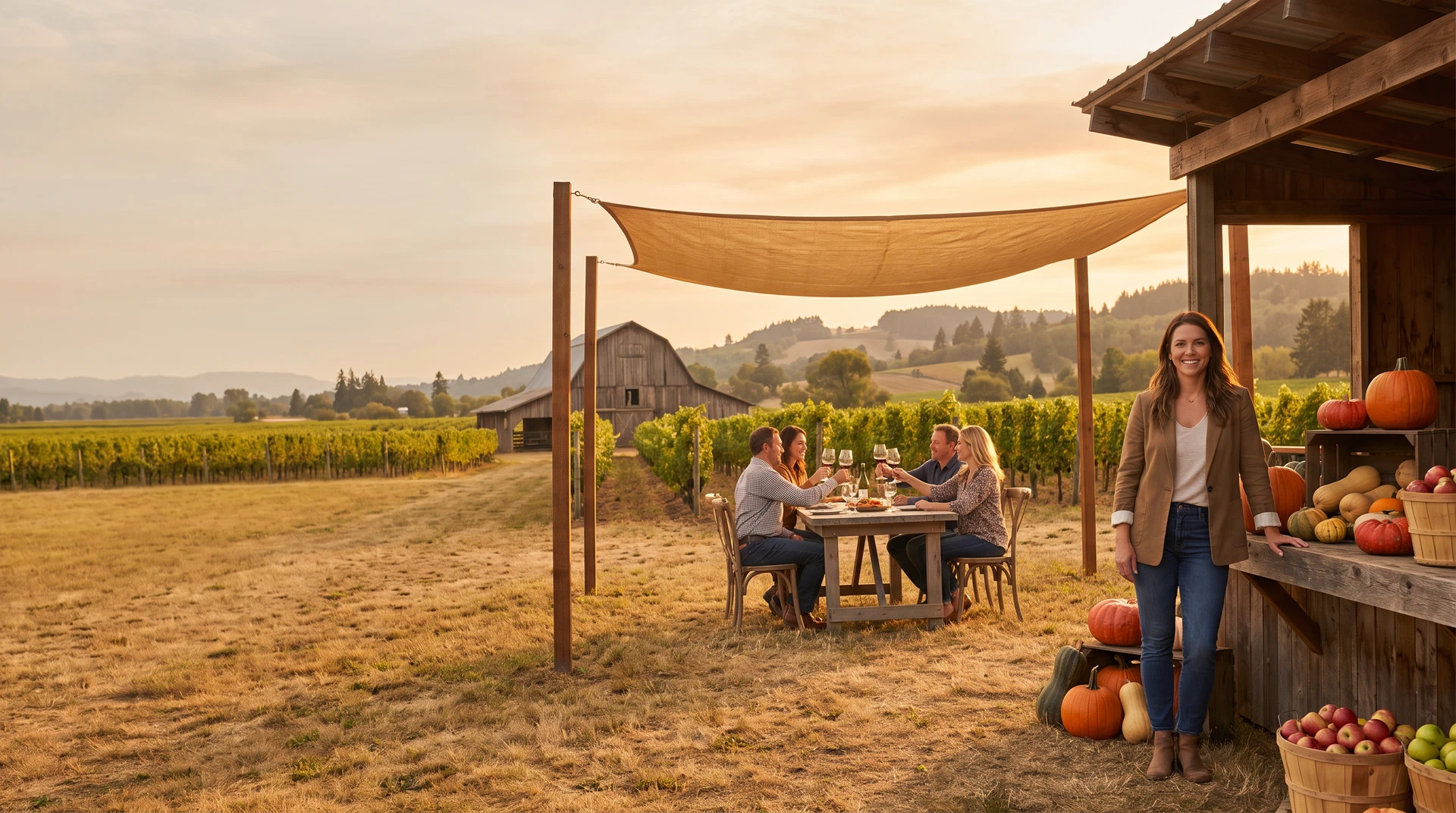
A winery, farm stand, U-pick field, harvest dinner, farm tour, or weekend market can bring customers closer to Oregon agriculture. It can also turn one property into a production site, retail location, event venue, food-service setting, parking area, and workplace at the same time. The right insurance discussion begins with the operation visitors actually experience—not the operation it was before direct sales or events were added.
This guide is educational. Coverage, limits, exclusions, eligibility, permits, valuation, and claim outcomes depend on the policy, carrier, operations, contracts, and facts of a loss.
Start with the visitor experience, from arrival to departure
Oregon State University identifies direct sales, U-pick activities, classes, tours, festivals, meals, hospitality, and outdoor recreation as common agritourism activities.1 Walk your property as a first-time customer would. Look at the road entrance, parking, walking surfaces, restrooms, animal areas, food service, tasting areas, equipment storage, field access, lighting, exits, and the return trip to the car.
That walkthrough produces a better insurance conversation because it identifies the activities that may not have existed when the original farm or vineyard policy was written. Start with Farm & Ranch Insurance and make a written list of every visitor activity, employee role, building, vehicle, product, vendor, and event date.
A farm stand is both a retail operation and part of the farm
Farm stands can range from a roadside produce table to a staffed, walk-in store with packaged products, point-of-sale systems, coolers, displays, and regular public traffic. The operation’s location, layout, hours, staffing, products, and customer access can change the insurance questions. OSU advises that activities involving farm stands or fee-based events may require county planning review depending on their scale and operation.2
Review premises liability, products liability, spoilage or refrigeration exposure, stock values, hired staff, cash handling, delivery vehicles, and vendor agreements. If your stand sells items made by another producer, confirm who is responsible for the product and what the agreement requires. A conversation about General Liability Insurance, Business Property Insurance, and Cyber Insurance can help organize these different exposures.
Wineries and tasting rooms need a separate event-and-product lens
Vineyard and winery risks extend well beyond grape production. A tasting room may serve alcohol, host private parties, welcome tour groups, store wine stock, rely on refrigeration or production equipment, and operate around seasonal harvest pressure. A calendar of every event type is useful: tastings, wine-club gatherings, weddings, live music, food-pairing dinners, private rentals, outdoor festivals, and off-site pours can each change the facts an underwriter needs.
Review alcohol-service practices, outside caterers, security, transportation, attendance estimates, weather plans, vendor certificates, lease requirements, music or entertainment contracts, and any additional-insured request before the event is advertised. For a winery-specific foundation, see Winery & Vintners Insurance. Event-specific discussions may also involve Event Insurance and Commercial Umbrella Insurance.
Oregon agritourism signage is not a substitute for insurance
Oregon’s agritourism inherent-risk law can provide conditional protections when the statute’s requirements are met, but it does not replace liability insurance and does not protect against negligence.1 Signage should be reviewed against the current statutory requirements and your activities with appropriate legal counsel. Insurance should still be discussed in terms of the actual premises, visitors, food, alcohol, animals, vehicles, contractors, and events.
Use practical controls as well as insurance: separate visitors from farm equipment; fill holes and manage hoses, irrigation lines, and uneven surfaces; direct traffic; designate loading zones; mark animal boundaries; maintain restrooms and handwashing; record inspections; and establish weather, emergency, and incident-response procedures. Travel Oregon emphasizes that agritourism risk varies materially by operation and activity, so the risk assessment should be specific rather than generic.3
Property, stock, equipment, and seasonal income deserve current values
Update the property schedule when a tasting room is renovated, a barn becomes event space, new refrigeration is installed, a farm stand expands, or inventory grows before harvest. Consider buildings, tenant improvements, wine or product stock, tables and fixtures, signage, refrigeration, portable equipment, irrigation, generators, farm machinery, and property at a temporary event location. Ask how deductibles, valuation, off-premises property, equipment breakdown, and business-income features apply to the real operation.
Mobile equipment and property that travels to markets, festivals, or multiple locations may call for a dedicated Inland Marine Insurance discussion. If a fire, wind event, or other property loss affects the season’s income, map the critical bottlenecks: refrigeration, processing space, customer reservations, harvest equipment, direct-sales infrastructure, and access roads. Oregon owners should also review Wildfire Insurance and defensible-space readiness before peak visitor season.
People, vehicles, and contracts can create a larger exposure than the building
Seasonal employees may staff a stand, drive a farm pickup, pour at a tasting room, park cars, use a loader, or lead a tour. Their duties and payroll should be current before the season begins. Review workforce questions with Workers’ Compensation Insurance, including seasonal roles, safety training, and staffing through a labor provider.
Likewise, farm pickups, food-delivery vehicles, event shuttles, trailers, and ATVs need an honest use-and-driver review. Explore Commercial Auto Insurance when vehicles are titled to the operation, used for deliveries, driven by staff, or move product and equipment. Keep event contracts, vendor agreements, land leases, certificates, and additional-insured requests in one file before signing.
Winery production, wine stock, and food products need their own inventory conversation
The vineyard, winery, tasting room, and farm stand may hold property that behaves very differently during a loss. Grapes in the field, bulk wine, barrels, bottled stock, labels, packaging, retail goods, refrigerated food, point-of-sale equipment, tanks, crush equipment, pumps, bottling lines, and custom fixtures should not simply be assumed to fit under one generic property figure. Build an inventory that identifies what is owned, where it is located, its seasonal peak value, and whether it can be moved or is in the care of another party.
For direct-sale food products, ask what happens if a product is alleged to cause illness, if refrigeration fails, if an ingredient supplier has a problem, or if a recall is necessary. The insurance conversation may include premises and products liability, property, spoilage, equipment breakdown, product withdrawal or recall options, and business income. The exact policy terms matter, so avoid treating a label, endorsement name, or product description as a guarantee of coverage.
Alcohol service should be planned before the tasting room or event opens
Serving, selling, or allowing the consumption of alcohol adds a distinct exposure. An operating plan should identify who checks age, who has authority to stop service, how visible intoxication is handled, whether samples are complimentary or sold, whether private events use outside bartenders, and how guests leave the property. Confirm which entity is named on permits, leases, alcohol-service agreements, and the insurance program.
Do not overlook third-party promoters, caterers, musicians, food trucks, rental companies, security, and shuttle providers. Request certificates of insurance early, confirm the required limits and additional-insured wording with the party requesting them, and retain the documents. A certificate is evidence of insurance at a point in time; it is not the insurance contract itself. Your agent and legal counsel can help review contract insurance provisions before a deposit is accepted or an event is advertised.
Independent Insurance Agency Since 1935
Not Sure If You Have the Right Coverage?
Our licensed agents compare 50+ carriers to find you the best coverage at the right price — at no extra cost to you.
Events turn a rural property into a temporary venue
An event calendar should specify attendance, alcohol service, food service, entertainment, parking, portable restrooms, tents, generators, weather contingencies, and emergency access. A small wine-club pickup night differs from a ticketed harvest concert or a wedding with vendors and shuttles. Consider the path of travel from road to parking to entrance to restroom to event area; the use of uneven ground after dark; temporary electrical runs; crowd-control responsibilities; and the boundaries that keep visitors away from work areas, animals, loaders, and irrigation equipment.
For major dates, create an event file with the contract, site map, vendor certificates, contact sheet, emergency plan, alcohol-service plan, traffic plan, and incident-report form. A discussion of Event Insurance should be early enough to allow time for carrier questions and contract changes.
Business income and continuity planning: identify the operations that cannot pause
The important question after a property loss is not only “what was damaged?” It is “what prevents the operation from generating income?” A damaged tasting room, smoke-contaminated event area, failed cooler, inaccessible driveway, destroyed POS hardware, damaged crop-processing equipment, or canceled peak-season weekend can disrupt revenue even if another part of the farm remains open.
List the critical dependencies: power, water, refrigeration, internet and payment processing, access roads, crop processing, inventory storage, wine-club fulfillment, reservation systems, staff, alternate sales locations, and vendor relationships. Then document which expenses continue while revenue is interrupted. Discuss business-income, extra-expense, equipment-breakdown, off-premises utility, and civil-authority questions with an agent based on the policy forms available for the operation.
Wildfire, smoke, weather, and rural access deserve a pre-season plan
Oregon operations can face smoke, wind, wildfire evacuation, utility shutoffs, drought conditions, freeze events, and limited rural access. Property protection and insurance planning work better together: maintain defensible space where appropriate, preserve access for emergency vehicles, keep equipment and fuel areas organized, maintain updated building and equipment photos, back up sales and inventory records, and decide how customers will be notified if an event is canceled or access is restricted.
See Insure Pacific’s Wildfire Protection Technology resource for preparedness-conversation ideas. For your insurance review, bring prior loss information, seasonal revenue data, building and equipment values, and the details of new visitor or sales activities.
Digital sales, reservations, and payment systems are business assets too
Reservation lists, wine-club records, e-commerce orders, card-payment systems, customer email lists, security cameras, Wi-Fi networks, and vendor portals are part of modern visitor operations. Establish who has access, how payments are processed, where backups are stored, and how a fraudulent invoice, compromised credential, or outage would be handled on a busy weekend. A cyber conversation should include operational resilience as well as privacy and response expenses.
A pre-season review worksheet
| Area | Questions to bring to an insurance review |
|---|---|
| Visitors | Which activities are open to the public, when, where, and at what expected attendance? |
| Events | Are there tastings, dinners, weddings, festivals, music, classes, food vendors, or alcohol service? |
| Products | What is grown, made, bottled, packaged, sold, sampled, delivered, or sold online? |
| Property | What buildings, wine stock, inventory, equipment, refrigeration, signage, and improvements need updated values? |
| People | Who is employed, contracted, volunteering, driving, serving, handling food, or guiding visitors? |
| Agreements | Which leases, vendor contracts, certificates, additional-insured demands, and waivers need review? |
An independent review works best before the event calendar, crop season, or holiday market is underway. Request an insurance review, call Insure Pacific at (541) 238-7775, or text the agency with the visitor, sales, and event activities you plan for the coming season.
References
[1] Oregon State University Extension — Adding agritourism to your farm in Oregon
[2] Oregon State University Extension — Laws for u-pick and farm stands
Our Licensed Coverage Area
States highlighted in blue are states where Insure Pacific holds an active insurance license.
Hover to highlight — click a state to visit its insurance page
Our Oregon Office Locations
Hover over a marker to see the office — click to visit their website.
Hover to highlight — click to visit that office's website
Ready to Get Protected?
Talk to a Local Oregon Insurance Expert
Insure Pacific has been serving Oregon families and businesses since 1935. We work with 50+ carriers so you get real options — not just one company's answer.
Related Articles
 Farm & Ranch
One Ranch, Several Policies: Coordinating Home, Farm, Commercial Auto, and Umbrella Insurance
Read Article → Farm & Ranch
Cattle Ranch Insurance in the American West: The Complete Guide to Property, Livestock, Equipment, Liability, and Income Protection
Read Article → Farm & Ranch
Custom Grazing Insurance: Who Covers Cattle, Fences, Pasture, Death Loss, and Liability?
Read Article → Farm & Ranch
Grain Bin and Feed Storage Insurance: Collapse, Wind Damage, Contamination, and Stored Commodities
Read Article →Get in Touch
Ready to protect what matters most? Contact us today for a no-obligation insurance review. Our experienced agents are here to help you find the right coverage for your needs.


